
Table of Contents
Frequently Asked Questions
What is activity code 4653 and what does it cover for a Dubai wholesale business
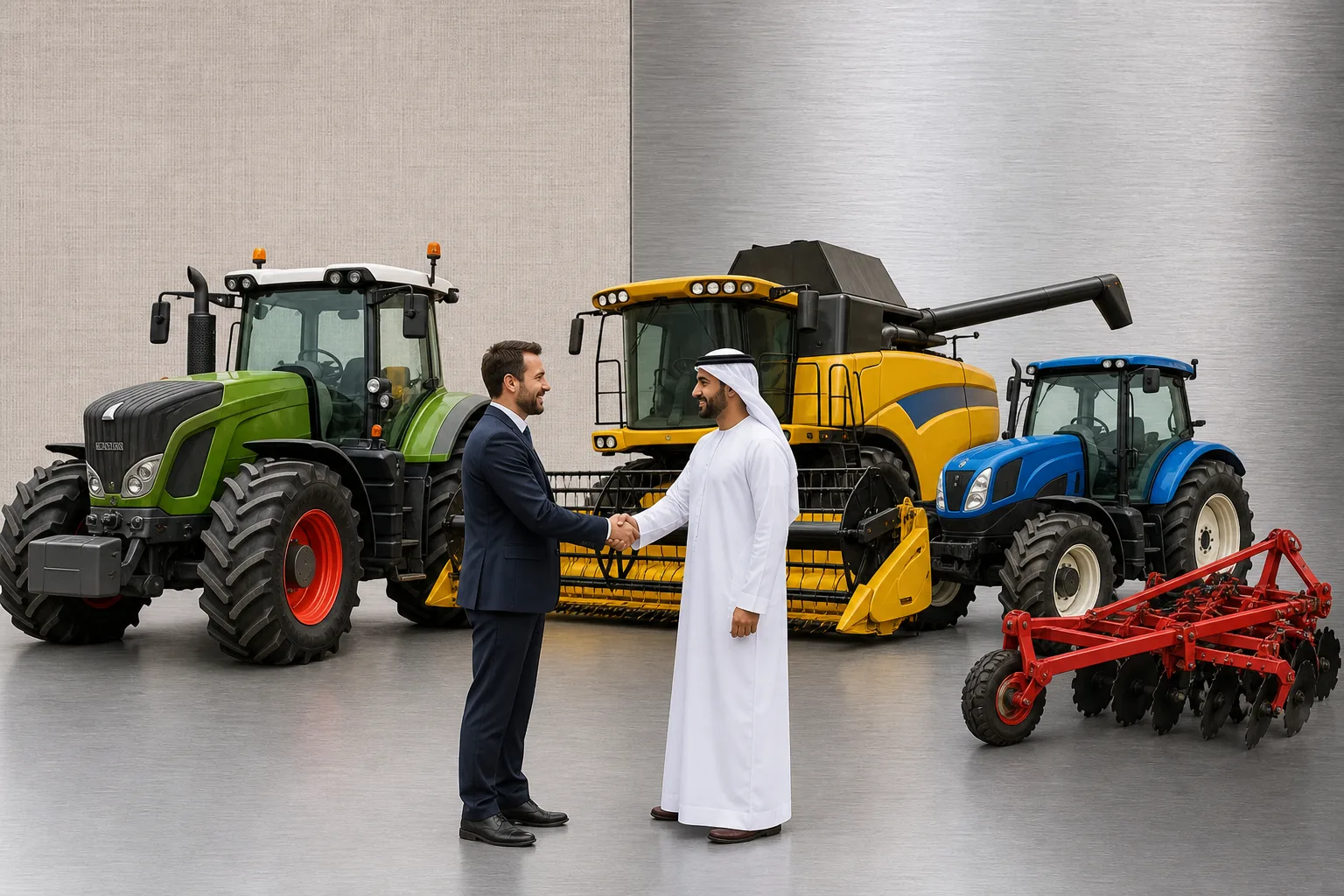
Activity code 4653 refers to the Wholesale of Agricultural Machinery, Equipment and Supplies. It covers the B2B trade of tractors, irrigation systems, harvesting equipment, soil preparation machinery, and ancillary agri-supplies.
This classification is strictly wholesale — meaning you supply retailers, large-scale farms, government agricultural bodies, and overseas importers. Retail sales directly to end consumers fall outside this activity code and require a separate licence classification.
Why is Dubai a strategically strong base for agricultural machinery wholesale
Dubai sits at the centre of a regional supply chain connecting GCC farms, African importers, and South Asian markets. Its port infrastructure — anchored by Jebel Ali Port, the largest port in the Middle East — handles over 14 million TEUs annually and connects to more than 150 ports globally, enabling rapid dispatch to downstream markets.
Beyond logistics, Dubai's free zone framework allows 100% foreign ownership, zero corporate tax on qualifying income, and efficient re-export corridors. These structural advantages make it commercially superior to most other regional distribution bases.
Who are the primary target customers for an agricultural machinery wholesale business in Dubai
The core B2B customer segments include GCC agricultural ministries and state-owned farming enterprises, private large-scale farms across Saudi Arabia, Oman, and the UAE, and equipment dealers or distributors operating in East Africa and South Asia.
Export trading companies sourcing machinery for onward supply are also a significant segment. Positioning as a regional stocking distributor — holding inventory in Dubai for rapid dispatch — adds particular value for buyers who cannot absorb long manufacturer lead times from Europe or Asia.
What are the main revenue streams for this type of wholesale operation
The primary revenue stream is direct wholesale margins on machinery and equipment sales. Operators can also generate income through exclusive or non-exclusive distribution agreements with overseas manufacturers, which can provide more predictable volume and pricing structures.
A particularly valuable secondary stream is the supply of after-sales parts and consumables. This recurring revenue stabilises cash flow between large equipment orders, which can be infrequent and cyclical by nature.
What licence structure is recommended and what ownership rights does it provide
The article recommends licensing through Meydan Free Zone under activity code 4653. A free zone licence under this structure permits 100% foreign ownership with no requirement for a UAE national sponsor or local partner.
This is a material commercial advantage for international founders, as it provides full control over equity and profit distribution — something that mainland licence structures have historically not always offered to foreign investors.
What is driving demand for agricultural machinery across the MENA and GCC region
GCC governments have committed substantial capital to food security programmes, domestic agricultural expansion, and farmland investment abroad. These national initiatives translate directly into procurement of tractors, irrigation systems, harvesting equipment, and related machinery.
According to IMARC Group, the Middle East and Africa agricultural equipment market is on a sustained growth trajectory through 2030, driven by mechanisation programmes and water-efficient farming investment across the Gulf and East Africa.
What customs and regulatory requirements apply to importing and exporting agricultural machinery through Dubai
Import and export of agricultural machinery is subject to UAE Customs procedures and falls under the oversight of the Ports, Customs and Free Zone Corporation (PCFC). Standard customs documentation is required, including commercial invoices and certificates of origin.
Free zone operators benefit from streamlined customs processes given their position within designated trade zones, but compliance with standard documentation requirements remains mandatory for all cross-border shipments moving through facilities such as DP World's Jebel Ali terminals.
What tax advantages does a Dubai free zone licence offer for this type of wholesale business
Free zone operators in Dubai benefit from zero corporate tax on qualifying income under the UAE's current tax framework, as confirmed by the Federal Tax Authority. This applies to income generated through permitted free zone activities, including wholesale trade under code 4653.
Combined with the absence of personal income tax and the UAE's broad double taxation treaty network, the free zone structure offers a highly competitive overall tax position for international wholesale operators distributing into regional markets.
How to Start an Agricultural Machinery Wholesale Business in Dubai
Dubai sits at the centre of a farm machinery supply chain serving Gulf farms, African importers and South Asian markets. Its ports, its free zone rules and its re-export routes give a wholesaler real advantages that few other places in the region can match.
This guide covers activity code 4653, Wholesale of Agricultural Machinery, Equipment and Supplies. You will learn who buys from you, how the money works, what the rules ask, and how to set up with Meydan Free Zone.
Key Stats at a Glance
| What to know | The detail |
|---|---|
| Market growth | The Middle East and Africa agricultural machinery market is set to grow steadily through 2030, backed by Gulf food security plans. Figures from IMARC Group. |
| Trade volume | UAE non-oil foreign trade has passed AED 2.2 trillion in recent years, with re-exports a critical share. See Invest in Dubai. |
| Port reach | Jebel Ali handles over 14 million TEUs a year and links directly to more than 150 ports worldwide. Source: DP World. |
| Ownership and tax | Free zone companies get 100% foreign ownership and no corporate tax on qualifying income under current UAE rules. See the Federal Tax Authority. |
| VAT threshold | Registration is required once taxable turnover passes AED 375,000 a year. |
What Activity Code 4653 Covers

This is wholesale only. You supply retailers, large farms, government agricultural bodies and overseas importers. Selling direct to end consumers needs a different license activity and sits outside this code.
What you trade. Tractors, irrigation systems, harvesting equipment, soil preparation machinery, and the supporting farm supplies that go with them.
Who Buys From You
Government bodies. Gulf agriculture ministries and state-owned farming enterprises.
Large private farms. Across Saudi Arabia, Oman and the UAE.
Dealers and distributors. Operating in East Africa and South Asia, buying stock to sell on.
Export trading companies. Sourcing machinery to supply onward.
One position worth aiming for: become the regional stocking distributor. Hold inventory in Dubai and dispatch fast. That is worth real money to buyers who cannot wait on long manufacturer lead times out of Europe or Asia.
How You Make Money
Wholesale margins. The core of it, on machinery and equipment sales.
Distribution agreements. Exclusive or non-exclusive deals with overseas manufacturers, which give you steadier volume and pricing.
Parts and consumables. The after-sales side. This is recurring income and it steadies your cash flow between big equipment orders, which come round irregularly.
[blockCTACostCalculator]
What the Rules Ask of You
Ownership. A Meydan Free Zone license gives you 100% foreign ownership with no UAE national sponsor or local partner. For an international founder that means full control of your equity and your profits.
Customs. Import and export of farm machinery falls under UAE Customs and the Ports, Customs and Free Zone Corporation. Standard documents apply: commercial invoices, certificates of origin, packing lists, and conformity certificates depending on the equipment and where it is going. Free zone operators get a smoother customs process, but the paperwork is still mandatory on every cross-border shipment.
VAT. Register with the Federal Tax Authority once taxable turnover passes AED 375,000 a year.
No sector permit. Farm machinery wholesale does not need one. A standard trade license is enough, unlike regulated categories such as chemicals or pharmaceuticals.
Staff. If you hire, Ministry of Human Resources and Emiratisation rules apply: proper employment contracts, Wage Protection System payroll registration, and Emiratisation thresholds once your headcount reaches the relevant level.
How to Set Up with Meydan Free Zone, Step by Step
- Step 1, activity and name: Set 4653 as your main license activity and run a trade name check to confirm your chosen name is free.
- Step 2, pick your package: Meydan Free Zone offers flexi-desk and full office options. If you hold stock in third-party logistics or bonded warehouses, a flexi-desk is usually enough at license stage. You can add office space as you grow.
- Step 3, file your papers: Passport copies for all shareholders and directors, the application form, and in some cases a short business plan. The team will confirm the exact list for your structure.
- Step 4, license, banking and visas: Once your license is issued you can open a UAE bank account and apply for investor or staff residence visas. The whole setup can be done remotely, with no trip to Dubai required.
mResidency handles visas for you and your team. mAccounting keeps your books and VAT filings straight. mCore, mAssist and mPlus cover the wider support once you are running.
If you want more detail on the licensing route, our guide on how to become a wholesale machinery supplier covers requirements, costs, approvals and the setup process step by step.
Conclusion
Dubai's logistics, its free zone ownership rules and its trade position make it a practical base for wholesaling farm machinery. Activity code 4653 through Meydan Free Zone gives you a clean, fully foreign-owned structure plugged into one of the best connected port and re-export networks anywhere.
The regulatory path is simple, the demand is supported by long term regional food security spending, and the free zone structure removes the ownership and profit repatriation limits that complicate mainland setups for international founders.
Talk to the Meydan Free Zone team to confirm your activity scope, get a cost estimate, and start your license application.
Thinking about related activities? Our guide on how to start an agricultural pesticides trading business in Dubai covers licensing, costs, approvals and setup for that route.
[blockCTAContact]
References
- DP World
- IMARC Group
- Invest in Dubai
- Federal Tax Authority
- Ports, Customs and Free Zone Corporation (PCFC)
- Ministry of Human Resources and Emiratisation (MOHRE)