
Table of Contents
Frequently Asked Questions
What is activity code 7730.08 and what does it permit a business to do
Activity code 7730.08 covers the Renting of Accommodation or Office Containers — the commercial leasing of portable, modular container units configured for temporary residential or office use.
Licensed operators under this code can rent container units to clients such as construction contractors, infrastructure developers, event organisers, and government project teams. Units may serve as labour camp accommodation, worker housing, or relocatable site offices.
The business model is asset-based: you acquire or import container units, maintain the fleet, and lease them on short- or long-term contracts, generating recurring rental revenue.
What type of licence is required to rent accommodation or office containers in Dubai
A Commercial Trade Licence is required to operate under activity code 7730.08 in Dubai. This licence type reflects the asset-leasing and rental nature of the business.
You can obtain this licence through either the Department of Economy and Tourism (DET/DED) on the mainland or through a free zone authority such as Meydan Free Zone. The choice of jurisdiction affects ownership structure, operational reach, and setup requirements.
What are the differences between mainland and free zone registration for this activity
Mainland registration through the DED allows you to operate directly across Dubai and the broader UAE without needing a local distributor or agent for most activities. It is generally better suited if your target clients are spread across the UAE.
Free zone registration offers 100% foreign ownership and a simplified setup process. However, trading directly on the mainland from a free zone may require a local agent or additional regulatory approvals depending on the nature of the contracts.
Reviewing your target client base — whether they are primarily on the mainland or within free zone jurisdictions — is an important factor before choosing your jurisdiction.
Can a foreign national own 100% of a container rental business in Dubai
Yes. 100% foreign ownership is permitted for this activity in designated free zones. Free zone structures such as an FZ-LLC allow full foreign shareholding without requiring a UAE national partner.
On the mainland, UAE company law reforms have expanded the list of activities open to full foreign ownership. However, it is advisable to confirm the current ownership rules for activity code 7730.08 with the DED at the time of application, as eligibility can depend on the specific activity classification.
What documents are needed to apply for this licence
The standard documentation required includes passport copies of all shareholders and managers, a No Objection Certificate (NOC) if any shareholder is currently employed in the UAE, and a Memorandum of Association (MOA) that has been drafted and notarised.
You will also need a lease agreement for your registered business address and a completed application form from either the DED or your chosen free zone authority.
Requirements can vary slightly between jurisdictions, so confirming the full checklist directly with the issuing authority before submission is recommended.
Is any sector-specific regulatory approval required beyond the trade licence
For activity code 7730.08, no additional sector-specific regulatory approval — such as from the Dubai Health Authority (DHA) or the Knowledge and Human Development Authority (KHDA) — is typically required.
That said, it is important to confirm this directly with the issuing authority at the point of application, as requirements can change and may depend on the specific configuration or intended use of the container units being rented.
Does a container rental business in Dubai need to register for VAT
VAT registration is required if your annual taxable turnover exceeds AED 375,000, in line with the rules set by the Federal Tax Authority.
Given that the container rental business model generates recurring lease revenue, businesses that grow their fleet and client base are likely to cross this threshold. It is advisable to factor VAT obligations — including invoicing, filing, and record-keeping requirements — into your operational planning from the outset.
What legal structure is most common for a container rental business in Dubai
For most operators entering this market, a Limited Liability Company (LLC) is the standard structure for mainland registration, while an FZ-LLC is the equivalent for free zone setups. Both structures limit shareholder liability to their capital contribution.
A Sole Establishment is also possible but is generally only available to UAE nationals or GCC citizens. Foreign investors typically proceed with an LLC or FZ-LLC depending on their chosen jurisdiction.
Confirming your shareholding structure and preparing the relevant shareholder documents early in the process helps avoid delays during the application stage.
Apply for a Renting of Accommodation or Office Containers License in Dubai
Portable container units have become a practical solution for construction camps, temporary offices, and short-term accommodation across Dubai. Renting them out is a regulated commercial activity, and you need the right license before you start. Without it, you cannot sign contracts, invoice clients, or operate legally.
This guide covers what the license covers, who your clients will be, how to choose between mainland and free zone setup, and the steps to get trading.
| Activity | Renting of Accommodation or Office Containers |
|---|---|
| License type | Commercial |
| Issuing authority (mainland) | Dubai Department of Economy and Tourism (DET) |
| Free zone option | Meydan Free Zone |
| VAT rate on rental income | 5% – applies once turnover meets the mandatory threshold |
| Foreign ownership | 100% permitted – Invest in Dubai |
What This License Covers
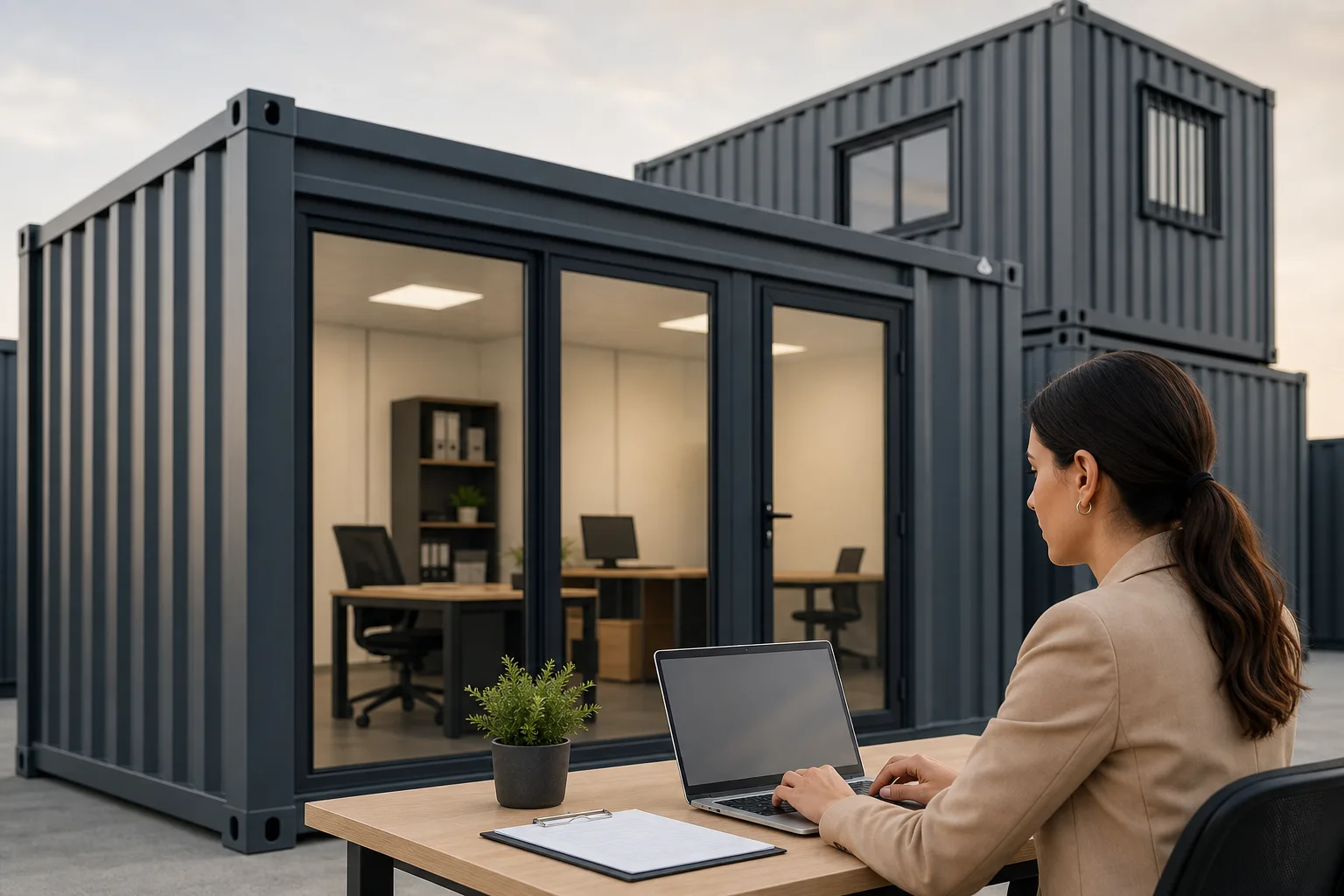
This license lets you rent out portable container units used as temporary accommodation or offices. The units themselves are moveable, modular structures. They go up quickly, they can be relocated, and they are removed when the project ends. That is the core of the business.
The most common use cases are:
- Construction site camps for workers and site management teams
- Temporary offices on infrastructure and civil engineering projects
- Labour accommodation for remote or out-of-city project sites
- Event infrastructure where short-term covered space is needed
The license covers the rental activity only. It does not cover permanent structures, real estate brokerage, or the sale of containers as goods. If you want to sell containers as a product rather than rent them, that is a separate activity and needs a separate license code. Make sure you are applying for the correct one before you submit anything.
On the mainland, this activity falls under the DET's commercial license framework. At Meydan Free Zone, you can find it on the Business Activities List alongside over 2,500 other permitted activities. Confirm the exact code with your chosen authority before you proceed, because activity codes vary slightly between jurisdictions and a mismatch at the application stage causes delays.
Who Your Clients Will Be

The demand for rental container units in Dubai is driven almost entirely by construction and infrastructure activity. Your main clients will be:
- Main contractors and sub-contractors on large construction projects
- Infrastructure and civil engineering project operators
- Oil, gas, and utilities companies running remote site operations
- Event management companies needing temporary covered space
- Government and semi-government project developers
Government and semi-government projects are a real revenue source in this sector. Dubai's construction pipeline is large and sustained. But nobody here buys on a phone call. Large clients run formal tender processes, they want you on their approved vendor list first, and they sign long contracts once they trust you. Getting onto those vendor lists takes time, so plan for a longer sales cycle in the early months.
The commercial model works well once you are established. Construction projects run for years. A client who rents 20 units for a two-year site deployment is worth a lot more than a one-off transaction. Repeat contracts and long-term site deployments are where the margin sits. Focus your early business development on clients with multi-year project pipelines, not short events or one-off requirements.
Mainland vs Free Zone: Which Setup Works for You
This is the biggest choice you will make when setting up. The right answer depends on who your clients are, not on which option looks cheaper at first glance.
| Factor | Mainland (DET) | Free Zone (Meydan Free Zone) |
|---|---|---|
| Client access | Open UAE market, including government contracts | Mainly private-sector and international clients |
| Foreign ownership | 100% in most commercial activities | 100% |
| Office requirement | Physical office required | Flexi-desk options available |
| Visa allocation | Tied to physical office size | Packages available from Meydan Free Zone |
| Government contracts | Direct access | Needs a local commercial agent or mainland entity |
| Setup cost | Generally higher due to office requirement | Lower entry cost with flexi-desk |
A mainland license from DET lets you work directly with UAE government bodies and bid on public tenders without restriction. If government and semi-government projects are your target, mainland is the right route. Work without the right setup and you risk losing contract eligibility before you even start.
A free zone setup through Meydan Free Zone suits operators who are focused on private-sector construction clients, international project developers, or businesses where the owner wants to manage setup remotely. You can complete a remote business setup through Meydan Free Zone without needing to be in Dubai for the process.
One practical point for container rental businesses: your containers are physical assets. They sit on sites across Dubai and the wider UAE. The license jurisdiction affects your legal contracting position, not the physical location of your assets. You can operate assets across the UAE from a free zone entity, but check the specific contract terms your target clients need before you commit to a structure.
Free Business Setup Cost Calculator
Calculate NowStep-by-Step Setup Guide
- Step 1, book your trade name: Use the DET e-Services portal for a mainland company, or the Meydan Free Zone portal for a free zone one. You can also check your company name availability before you submit. Names must not duplicate existing registered businesses and must comply with UAE naming rules.
- Step 2, confirm your activity code: Make sure the code for renting accommodation or office containers is approved in your chosen jurisdiction before you go further. A mismatch here causes delays and sometimes requires a full resubmission.
- Step 3, submit your setup documents and get initial approval: For a mainland application, this goes through DET. For a free zone application, Meydan Free Zone handles the process. Documents typically include passport copies, a completed application form, and a business plan summary if requested.
- Step 4, secure your business address: Mainland companies need a physical office. Free zone companies can use a flexi-desk. Your address must be confirmed before the license is issued. Meydan Free Zone includes address options in its setup packages.
- Step 5, pay license fees and collect your trade license: Fees vary by jurisdiction and package. Use the Cost Calculator to get a clear figure before you commit. Once fees are paid and documents are approved, your license is issued.
- Step 6, apply for visas: Your visa allocation depends on your license type and office arrangement. Meydan Free Zone's mResidency service covers the residency process if you need support with this.
- Step 7, register for VAT with the Federal Tax Authority once turnover meets the threshold: The mandatory VAT registration threshold is AED 375,000 in annual turnover. Voluntary registration is possible from AED 187,500. Check the current rules directly with the Federal Tax Authority before you start trading.
Compliance and What You Need in Place
Getting the license is the start, not the finish. Container rental businesses in Dubai have several ongoing compliance duties that you need to understand before you deploy a single unit.
Dubai Municipality habitability standards
Container units used as accommodation must meet Dubai Municipality standards for habitability and safety. This covers ventilation, sanitation, structural integrity, and fire safety. Units that do not meet these standards cannot legally be used for accommodation. Get your units inspected and certified before you put them on a site.
MOHRE labour welfare requirements
Labour accommodation containers are subject to welfare requirements set by the Ministry of Human Resources and Emiratisation (MOHRE). These cover space per worker, sanitation facilities, and general living conditions. If your clients are using your units to house workers, both you and your client share responsibility for making sure the units comply. Check the current MOHRE guidelines at MOHRE before you sign any accommodation rental contracts.
VAT on rental income
Rental income from container units is subject to 5% VAT once your turnover crosses the mandatory registration threshold. You need to register with the Federal Tax Authority, issue VAT-compliant invoices, file regular returns, and keep proper records. Breaking the rules here leads to penalties. Get this set up correctly from the start. Meydan Free Zone's mAccounting service can help with VAT registration and ongoing compliance if you need support.
Annual license renewal
Your trade license must be renewed every year. Keep your business address documentation current and make sure any changes to your activity or structure are reflected in your license. Letting a license lapse puts all your contracts at risk.
Fleet insurance
Your container fleet is a physical asset with real value. Insure it properly. Standard commercial property insurance covers the units themselves. If you are placing units on third-party sites, check whether your contracts require you to carry public liability insurance as well. Most large construction clients will ask for this before they sign a rental agreement.
Contract documentation
Use written rental agreements for every deployment. Your contracts should cover rental period, unit specifications, delivery and collection terms, liability for damage, and compliance duties. Verbal agreements do not hold up when disputes arise on a large construction site.
Market Opportunity
Dubai's construction sector continues to grow. Major infrastructure programmes, Expo legacy projects, and ongoing residential and commercial development all generate sustained demand for temporary site accommodation and office space. Container rental sits directly in the path of that demand.
The model has real advantages over permanent construction. Units can be deployed in days, relocated between sites, and returned when no longer needed. For project developers managing tight timelines and variable site populations, that flexibility has clear value. You are not competing with permanent real estate. You are solving a logistics problem that permanent real estate cannot solve.
International project developers entering the UAE market often look for local container rental suppliers who understand site requirements, municipality compliance, and MOHRE welfare standards. That local knowledge is a real competitive advantage. Build it early and it becomes a barrier that protects your position once you are established.
Conclusion
Renting accommodation or office containers in Dubai is a workable business with steady demand from construction and infrastructure clients. But it needs the right license, the right jurisdiction, and a clear understanding of compliance duties before you deploy a single unit. Get the structure right at the start and the operational side is manageable. Get it wrong and you face contract voids, regulatory fines, and damage to your name before you have built any real revenue.
Speak to the Meydan Free Zone team to confirm your activity code, compare setup costs, and get your license application moving.
Ready to Launch Your Business in Dubai?
Let's Connect