
Table of Contents
Frequently Asked Questions
What is activity code 7710.98 and what does it authorise in Dubai
Activity code 7710.98 is the Dubai Department of Economy and Tourism (DED) classification for Sewage & Drainage Vehicles Rental. It authorises businesses to rent out sewage tankers, vacuum trucks, jetting vehicles, and drainage maintenance equipment to third-party clients.
The licence sits within the commercial vehicle rental category and is distinct from waste collection or sewage treatment activities, which require separate environmental permits. Operators under this code do not need to handle waste directly — the business model is fleet rental only.
Who are the typical customers for a Sewage and Drainage Vehicles Rental business in Dubai
The target market is almost entirely business-to-business (B2B). Primary customers include construction firms, facility management companies, municipality sub-contractors, and industrial site operators across Dubai and the wider UAE.
Because municipal and government infrastructure contracts are common in this sector, choosing a mainland DED licence is generally recommended, as free zone licences typically restrict direct government and municipality contract work.
Is 100% foreign ownership allowed for this licence on the Dubai mainland
Yes. Under the UAE Commercial Companies Law (2021), 100% foreign ownership is permitted on the Dubai mainland for this activity. There is no requirement for a local Emirati partner or sponsor for most commercial structures.
Eligible legal structures include a Sole Establishment, a Limited Liability Company (LLC), or a Branch of a foreign company. Each structure has different implications for liability and governance, so choosing the right one depends on your operational and investment profile.
What are the key compliance requirements beyond the DED trade licence
Several regulatory layers apply beyond the core trade licence. Vehicles used in sewage and drainage operations may require additional approvals from Dubai Municipality's Environment Health & Safety section, covering road-worthiness and environmental standards.
All commercial heavy vehicles must be registered through the Roads and Transport Authority (RTA) commercial vehicle division. On the tax side, VAT registration is mandatory once annual turnover exceeds AED 375,000, and Corporate Tax at 9% applies to taxable profits above AED 375,000 from June 2023 onwards.
Labour compliance falls under MOHRE jurisdiction, with Emiratisation quotas applicable at scale and all employment contracts required to be registered through the Wages Protection System.
What is the typical timeline and minimum share capital required to set up this licence
The typical setup timeline for a mainland DED licence is 5–10 working days, making it a relatively fast process compared to more heavily regulated sectors. The process is described as structured and predictable when the correct steps are followed in sequence.
There is no fixed minimum share capital requirement for most legal structures under this activity. However, it is advisable to factor in fleet acquisition costs, insurance, RTA registration fees, and working capital when planning your initial investment.
Does VAT apply to sewage and drainage vehicle rental income in the UAE
Yes. Rental income from sewage and drainage vehicles is treated as a taxable supply under UAE VAT law, subject to the standard rate of 5% VAT. Registration with the Federal Tax Authority (FTA) becomes mandatory once annual turnover exceeds AED 375,000.
Businesses should account for VAT registration, invoicing compliance, and periodic filing obligations from the outset. Consulting the Federal Tax Authority directly is recommended for up-to-date registration and filing requirements.
What is the step-by-step process for obtaining the licence on the Dubai mainland
The setup process follows a clear sequence. First, choose your jurisdiction — mainland (DED) provides the broadest operational reach across Dubai and the UAE. Next, reserve your trade name via the DED online portal, ensuring it complies with naming conventions and does not conflict with existing registrations.
You then define your legal structure — Sole Establishment, LLC, or Branch of a foreign company are the primary options. Subsequent steps involve submitting required documents, obtaining initial approvals, and completing vehicle and fleet registrations with the RTA before commencing operations.
How does this licence differ from a waste collection or sewage treatment licence
Activity code 7710.98 covers only the rental of vehicles and equipment — the licence holder provides the fleet on hire but does not operate waste collection routes or run sewage treatment facilities. Those activities fall under separate classifications with their own environmental permits and regulatory requirements.
This distinction is commercially significant: the rental model means the operator generates contractual, recurring revenue without the direct operational and environmental liability associated with waste handling. It positions the business as an equipment provider rather than a waste management operator.
Apply for a Sewage & Drainage Vehicles Rental License in Dubai
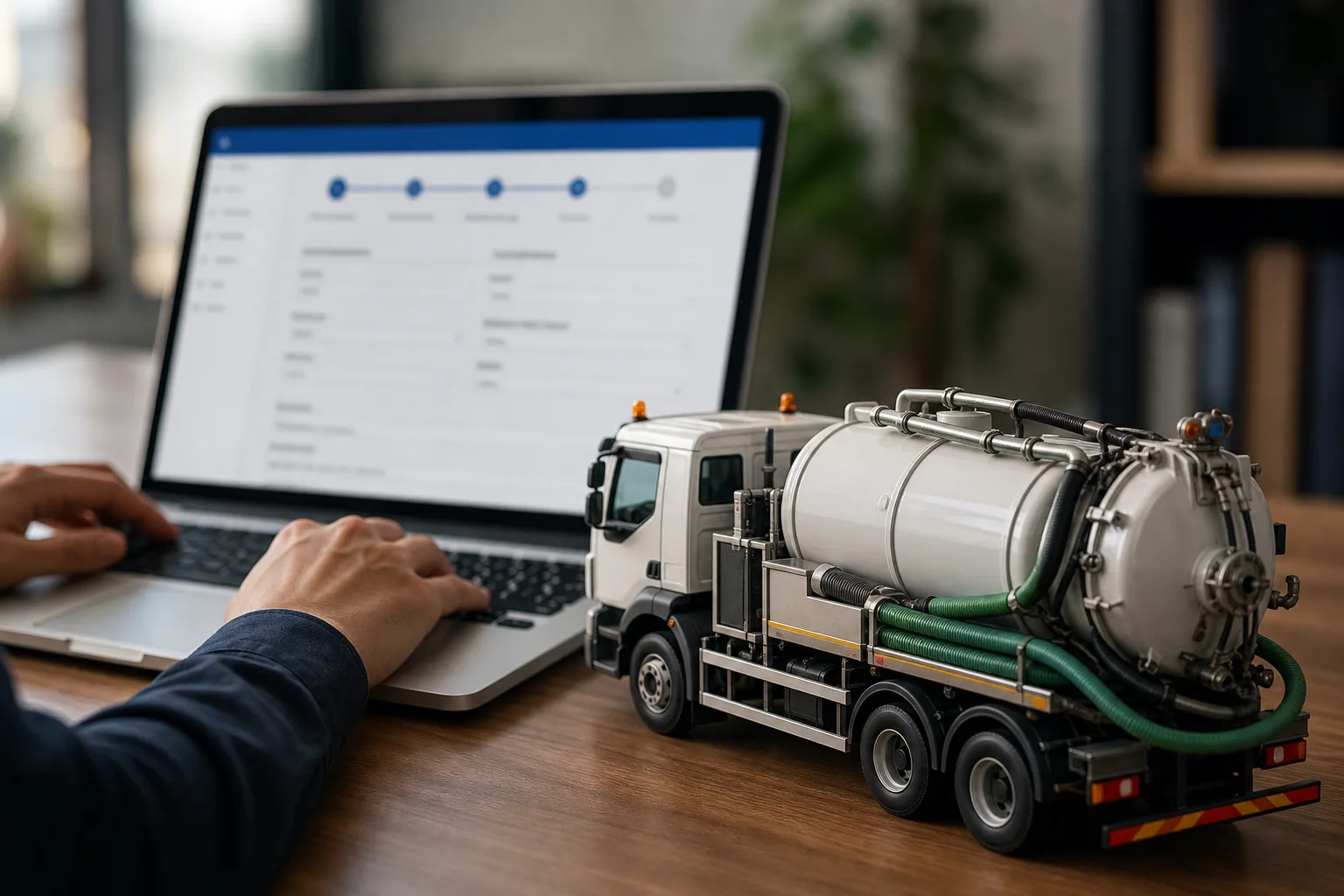
Dubai keeps building, and everything it builds needs drains cleared and tanks emptied. Activity code 7710.98 lets you rent out the vehicles that do that work: sewage tankers, vacuum trucks, jetting vehicles and drainage maintenance kit. You supply the fleet. Somebody else does the dirty part.
That split is the whole appeal of the license. This guide covers what it allows, who hires from you, whether to set up on the mainland or in a free zone, the steps to get licensed, and what it costs to put a fleet on the road.
Key Stats at a Glance

What This License Covers
Code 7710.98 lets you rent sewage tankers, vacuum trucks, jetting vehicles and drainage maintenance kit to other operators, to municipalities and to contractors. It sits in the commercial vehicle rental family.
It is not a waste collection license and it is not a sewage treatment license. Those are separate codes with their own environmental permits. Under 7710.98 you never touch the waste. Your vehicles go out on hire, the client runs them, and you invoice.
That split matters commercially. You earn contract income without the operational and environmental liability that comes with handling waste yourself. You are a kit supplier, not a waste operator.
Who Your Clients Will Be
This is a business-to-business trade almost entirely. Your customers are:
- Construction firms
- Facility management companies
- Municipality sub-contractors
- Industrial site operators across Dubai and the wider UAE
Because so much of this work traces back to municipal and government infrastructure contracts, where you set up your license shapes who you can serve. That is the next question to settle.
Mainland or Free Zone
For a fleet business serving infrastructure, construction and municipal clients, mainland is the practical default. It lets you contract with government bodies, municipalities and clients right across the UAE without an extra layer in between.
A free zone license limits direct mainland work unless you add a mainland branch or a distributor agreement, and that cost rarely pays for itself when your income depends on local government contracts. A Meydan Free Zone setup still makes sense if your fleet serves private clients, or if you are holding assets rather than chasing tenders. Let your clients decide it, not the price.
[blockCTACostCalculator]
Step by Step Setup Guide
- Step 1, pick your jurisdiction: Mainland gives the widest reach across Dubai and the UAE. Free zone is leaner but limits direct government and municipality work.
- Step 2, book your trade name: Apply through the DET online portal or a registered setup service. The name must not clash with an existing registration and must follow DET naming rules.
- Step 3, choose your legal structure: Sole Establishment, LLC or branch of a foreign company. All three allow 100% foreign ownership on the mainland under the 2021 law.
- Step 4, apply for initial approval: Send passport copies, your activity details and the approved trade name. Initial approval usually lands within 1 to 3 working days.
- Step 5, sort a business address: A mainland license needs an office or flexi-desk backed by a registered Ejari tenancy contract or equivalent paperwork.
- Step 6, get external approvals where needed: Depending on fleet size and what you plan to do, Dubai Municipality may need to sign off before the license is issued.
- Step 7, pay the fees and collect your license: Fees vary by legal structure, office type and how many activities you register. The license runs for one year.
- Step 8, register the fleet with the RTA: Every rental vehicle must be commercially registered and fully insured under the company before it goes out on hire.
Compliance and What You Need in Place
Vehicle approvals
Sewage and drainage vehicles may need sign-off from the Environment Health and Safety section at Dubai Municipality, covering road-worthiness and environmental standards. Check this before you buy, not after.
RTA registration
Every commercial heavy vehicle working in Dubai must be registered and permitted through the Roads and Transport Authority. Fleet registration runs through their commercial vehicle division.
VAT
Rental income is a taxable supply, standard-rated at 5%. Register with the Federal Tax Authority once turnover passes AED 375,000 a year, and set up invoicing and filing properly from the start.
Corporate Tax
Corporate Tax at 9% applies to taxable profits above AED 375,000, from June 2023 onwards. Build it into your numbers on day one rather than finding it at year end.
Staff
MOHRE rules cover your workforce. Every employment contract goes through the Wages Protection System, and Emiratisation quotas apply once you reach the relevant headcount.
Renewal
Renew every year. Miss it and you get fines, and you can drop off government tender eligibility lists. For an operator living on public sector contracts, that second part costs far more than the fine.
Market Opportunity
UAE infrastructure spending has stayed high, and urban utility services keep expanding alongside population and construction growth, according to Invest in Dubai. Every new district needs its drains serviced from the day it opens, and that work does not stop.
Demand here is contract-driven, which makes it behave differently from retail. Clients sign for months at a time because the work is scheduled rather than impulsive, and that shields your income from the swings a consumer business has to ride out. It is also a quiet corner of the market. Specialist utility fleet rental has fewer players than general plant hire, and the barrier to entry is capital rather than cleverness.
Conclusion
This is a simple commercial license with real demand behind it, especially if you are aiming at construction, facility management and municipal sub-contractor work. Setup is predictable, full foreign ownership is allowed, and the regulatory load is workable once vehicle approvals and VAT are sorted.
The fleet is where your money goes. A new tanker or vacuum truck runs AED 150,000 to AED 400,000, and second-hand units bring that down a lot. Everything else, the license, the office, the approvals, is a known cost you can budget for.
Decide your jurisdiction first, because it decides your client list. Then go and buy the trucks.
[blockCTAContact]