
Table of Contents
Frequently Asked Questions
What does activity code 7420.02 cover for a film processing business in Dubai
Activity code 7420.02 sits within ISIC Division 74 — Other Professional, Scientific and Technical Activities. It covers the technical laboratory side of photography, including developing photographic film, printing, enlarging, slide and transparency processing, darkroom services, and specialist photographic reproduction.
Adjacent services such as photo scanning, digital restoration, archival printing, and negative digitisation also fall within the commercial scope of this activity. It is important to note that 7420.02 covers lab and processing functions only — photography studios and image capture operate under the separate code 7420.01.
Who regulates film processing businesses in Dubai and which authority issues the licence
On the mainland, the primary regulatory body is the Dubai Department of Economy and Tourism (DET), which issues the commercial licence and classifies the business activity. For free zone setups, authorities vary by zone — Meydan Free Zone is one commonly used option for this activity.
The Dubai Film and TV Commission is also a relevant authority, particularly for businesses serving the city's film and media production ecosystem. Depending on the nature of services offered, additional approvals from sector-specific bodies may be required.
Can a foreign national own 100% of a film processing business on the Dubai mainland
Yes. Following the 2021 amendment to the UAE Commercial Companies Law, 100% foreign ownership is permitted for mainland professional and technical activities, which includes film processing under code 7420.02. This removed the historic requirement for a local Emirati sponsor or partner for most nationalities.
Founders should confirm their specific nationality and activity classification with the DET at the time of application, as certain restricted activities may still carry ownership conditions. For most film processing and lab service setups, however, full foreign ownership on the mainland is now straightforward.
What are the main differences between a mainland and free zone licence for a film processing lab
A mainland licence issued by the DET provides unrestricted access to clients across the UAE, including government entities, retail walk-in clients, and corporate accounts, with no intermediary required. It suits businesses that need a broad local client base or wish to operate a public-facing lab.
A free zone licence — such as through Meydan Free Zone — typically offers faster incorporation, lower initial capital requirements, and a more streamlined setup process. It is well-suited to B2B-focused or export-oriented operations. The key trade-off is that free zone entities serving mainland clients directly may need a local distributor arrangement or a mainland branch, adding cost and administrative complexity.
Does VAT apply to film processing services in Dubai and what is the registration threshold
Yes, standard UAE VAT at 5% applies to film processing services. Businesses must register for VAT with the Federal Tax Authority (FTA) once annual turnover reaches or exceeds AED 375,000. Voluntary registration is available below that threshold.
Once registered, the business must charge VAT on taxable supplies, file regular VAT returns, and maintain compliant records. Founders should factor VAT obligations into pricing structures and accounting systems from the outset, particularly when serving commercial clients who will expect tax invoices.
Who are the typical commercial clients for a film processing business in Dubai
Commercial demand for film processing services in Dubai comes from several distinct client segments. Advertising agencies, media production houses, wedding photographers, and fashion photographers are consistent sources of volume work, particularly for analogue film development, scanning, and archival printing.
Film production companies working within Dubai's growing production ecosystem — supported by the Dubai Film and TV Commission — also generate demand for specialist lab services. Additionally, the analogue photography revival community represents a growing retail and prosumer segment, with enthusiasts seeking quality development and scanning services that are increasingly scarce globally.
What adjacent services can a film processing lab legally offer under this activity classification
Under activity code 7420.02, a film processing lab can legitimately offer a range of downstream and complementary services beyond basic film development. These include photo scanning, negative digitisation, digital restoration, archival printing, and photographic enlargement.
Founders looking to broaden their service offering should confirm with the DET or their chosen free zone that additional activities are either covered under 7420.02 or added as secondary licence activities. Bundling services such as print fulfilment or digital file delivery is common practice and generally falls within the lab's commercial scope without requiring a separate licence category.
What market conditions make film processing a viable business in Dubai right now
Dubai's creative economy is expanding, with the UAE creative and media sector growing steadily and the Dubai Culture and Arts Authority actively supporting visual arts and photography industries. This creates a supportive institutional environment for specialist imaging businesses.
Demand is driven by a combination of professional sectors — advertising, wedding photography, and film production — and a global analogue photography revival that has increased consumer demand for film development services. The relative scarcity of quality film labs in the region means that a well-positioned operation in Dubai can serve both local clients and processing work from across the Gulf, making the addressable market larger than the immediate city alone.
Film Processing Business Setup in Dubai
Analogue film came back. Photographers who shoot it need somewhere to develop it, and good labs have become scarce almost everywhere.
Activity code 7420.02 licenses that work in Dubai. It is the lab side of photography rather than the shooting side, and it is a physical operation with chemicals, ventilation and waste rules attached. This guide covers the scope, the premises constraints, and what the setup actually involves.
Key Stats at a Glance
| Activity code | 7420.02 |
|---|---|
| Activity name | Film Processing |
| ISIC division | 74, other professional, scientific and technical activities |
| What it is not | Image capture, which is photography studios under code 7420.01 |
| Premises | Commercial or industrial unit with ventilation and chemical handling compliance, not a flexi-desk |
| Ownership | 100% foreign ownership on the mainland since the 2021 Commercial Companies Law amendment |
| Time to license | Typically 5 to 10 working days after complete submission |
| Relevant authority | Dubai Film and TV Commission for the production ecosystem |
| VAT | Standard 5%, registration above AED 375,000 – Federal Tax Authority |

What This License Covers
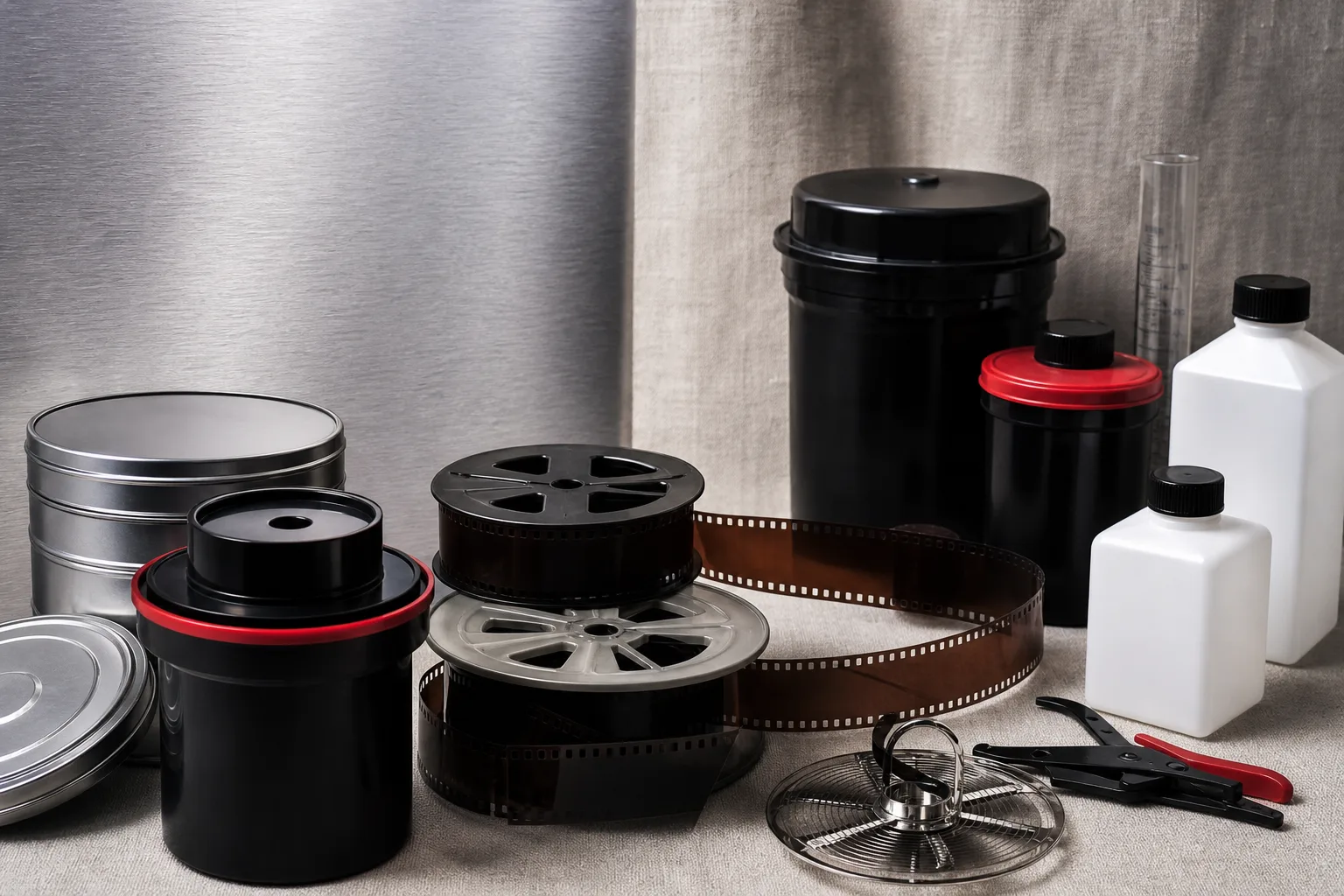
Code 7420.02 sits in ISIC Division 74 and covers the technical processing side of photography:
- Developing photographic film
- Printing and enlarging
- Slide and transparency processing
- Darkroom services
- Specialist photographic reproduction
Adjacent services you can bundle
Photo scanning, negative digitisation, digital restoration and archival printing all fall within the commercial scope of a processing lab. Confirm with DET or your free zone that they sit under 7420.02 or add them as secondary activities, but bundling print fulfilment and digital file delivery is common practice and generally does not need a separate license category.
The distinction that matters
This is the lab function, not image capture. Photography studios operate under 7420.01. Film processing is the downstream, post-shoot service, and that difference matters both when you apply and when you describe the business to a regulator.
Who Your Clients Will Be
- Advertising agencies
- Media production houses
- Wedding and fashion photographers
- Film production companies working in Dubai's production ecosystem
- The analogue photography revival community
That last group is a retail and prosumer segment rather than a commercial one, and it is growing. It behaves differently from the agency work: smaller jobs, more of them, and customers who care a great deal about quality because they chose the slow medium deliberately.
Mainland or Free Zone
| Factor | Mainland (DET) | Free Zone (Meydan Free Zone) |
|---|---|---|
| Client access | Unrestricted across the UAE, including government, retail walk-ins and corporate accounts | Best for B2B and export-oriented processing |
| Serving mainland clients | Direct, with no intermediary | May need a local distributor arrangement or a mainland branch |
| Ownership | 100% for most nationalities since 2021 | 100% yours |
| Setup | Standard mainland process | Faster, with lower initial capital |
| Premises | Ejari-registered commercial or industrial unit | Still needs a compliant physical lab unit |
A mainland license from the Department of Economy and Tourism gives unrestricted access to clients across the UAE, so you can invoice government entities, walk-in retail customers and corporate accounts without an intermediary. That suits a public-facing lab.
A free zone license offers faster setup, lower initial capital and a simpler process, which suits a founder targeting B2B clients or export-oriented processing. Serving mainland clients directly may then need a distributor arrangement or a mainland branch.
One constraint applies either way
Physical lab operations need a commercial or industrial unit with adequate ventilation and chemical handling compliance. This is not a home-based or flexi-desk activity, whichever jurisdiction you choose, so factor the premises cost in from the start.
[blockCTACostCalculator]
Step by Step Setup Guide
- Step 1, book your trade name: Through the DET portal or your free zone platform, and confirm 7420.02 is listed and approved in that jurisdiction before going further.
- Step 2, get initial approval: Secure any no-objection needed from relevant authorities. For media-adjacent work, Dubai Culture and Arts Authority may be consulted, particularly if your services extend into archival or arts reproduction.
- Step 3, choose your legal structure: Sole establishment, LLC, or a free zone company, based on ownership, liability and investor structure. An LLC is standard for a mainland operation with several shareholders.
- Step 4, secure compliant premises: Your tenancy must be Ejari-registered for a mainland license, and the unit must meet Dubai Municipality standards for chemical storage, ventilation and waste handling. Confirm all of that with the landlord before you sign anything.
- Step 5, finalise your license and notarise the MOA: Mainland LLCs need the Memorandum of Association notarised. License issue usually takes 5 to 10 working days once documents are complete.
- Step 6, register for VAT: If projected turnover passes AED 375,000. Film processing services carry standard 5% VAT.
- Step 7, sort visas and onboarding: Visa quotas link to your premises size, with contracts, Wages Protection System payroll and labour cards handled through MOHRE.
Compliance and What You Need in Place
Chemicals are the real regulatory story
Developers, fixers and stop baths need careful handling and disposal, and chemical waste must comply with Dubai Municipality environmental rules. Falling short brings fines and can suspend operations. Build disposal protocols into the setup rather than adding them later, because retrofitting a lab is far more expensive than specifying it correctly.
Imports
Photographic chemicals and processing equipment go through customs clearance overseen by the Ports, Customs and Free Zone Corporation, and certain compounds may need extra import permits depending on how they are classed. Check before you order.
Staff safety
Anyone working in a darkroom or handling chemical solutions should get formal health and safety induction. Ministry of Health and Prevention guidance on hazardous substance handling in commercial settings applies.
Banking
Banks want your trade license, Ejari-registered tenancy and shareholder documents at minimum, and account opening typically takes 2 to 4 weeks. Allow for that before committing to client deadlines.
Market Opportunity
Two forces are working in the same direction here, which is unusual for a niche this specific.
Dubai's creative economy
This is the first. Advertising, media production and photography are all expanding, the Dubai Film and TV Commission actively supports the production ecosystem, and Dubai Culture and Arts Authority backs the visual arts. That produces steady professional demand for lab services from clients who need reliability more than they need a low price.
The analogue revival
This is the second. It is a real commercial trend among professional photographers and creatives worldwide, and it has increased demand for development and scanning at exactly the moment when quality labs have become scarce globally.
Why scarcity helps you
That scarcity is the commercial point. Few operators are set up to do this well, which means a lab that establishes quality and reliability early holds real pricing power. It also widens the market beyond the city, since processing work can travel: a well-run Dubai lab can serve clients across the Gulf, not only those who can walk through the door.
Conclusion
Film processing under code 7420.02 is a technically specific, low-competition category with real demand from Dubai's photography, media and creative communities.
Both mainland and free zone routes work, depending on whether you want walk-in retail and government access or a leaner B2B and export operation.
The regulatory load is simple for a lab-based service, with one condition. Premises compliance and chemical handling have to be right from the outset, because those are the parts you cannot fix cheaply once the lab is built.
[blockCTAContact]