
Table of Contents
Frequently Asked Questions
What is activity code 8010.96 and what does it authorise
Activity code 8010.96 — General Security Guard Services is the classification used by Dubai's Department of Economy and Tourism (DET) to licence businesses that provide uniformed, unarmed security guard personnel to third-party clients.
The licence covers manned guarding across commercial properties, residential complexes, retail outlets, events, and construction sites. It does not extend to armed security, cash-in-transit operations, or cybersecurity services — each of those requires a separate activity code and its own regulatory pathway.
Which authorities regulate the General Security Guard Services licence in Dubai
Two authorities must both approve your business before you can legally operate. The Dubai Department of Economy and Tourism (DED) issues the trade licence, while the Security Industry Regulatory Agency (SIRA), operating under Dubai Police, issues the mandatory security company permit.
Employment matters — including Emiratisation quotas, employment contracts, and the Wage Protection System — are governed by the Ministry of Human Resources and Emiratisation (MOHRE). Non-compliance with MOHRE rules can result in financial penalties and licence suspension.
Is SIRA approval really required before the trade licence is issued
Yes. SIRA approval is a pre-condition for licence activation — DED will not issue the final trade licence without a valid SIRA company permit already in place. This makes SIRA the critical first regulatory milestone in your setup sequence.
The SIRA application requires company formation documents, an Ejari-registered office lease, background checks on the owner and operations manager, and training certifications for any guards being registered. Planning for this step early prevents costly delays.
What are SIRA guard cards and who is responsible for them
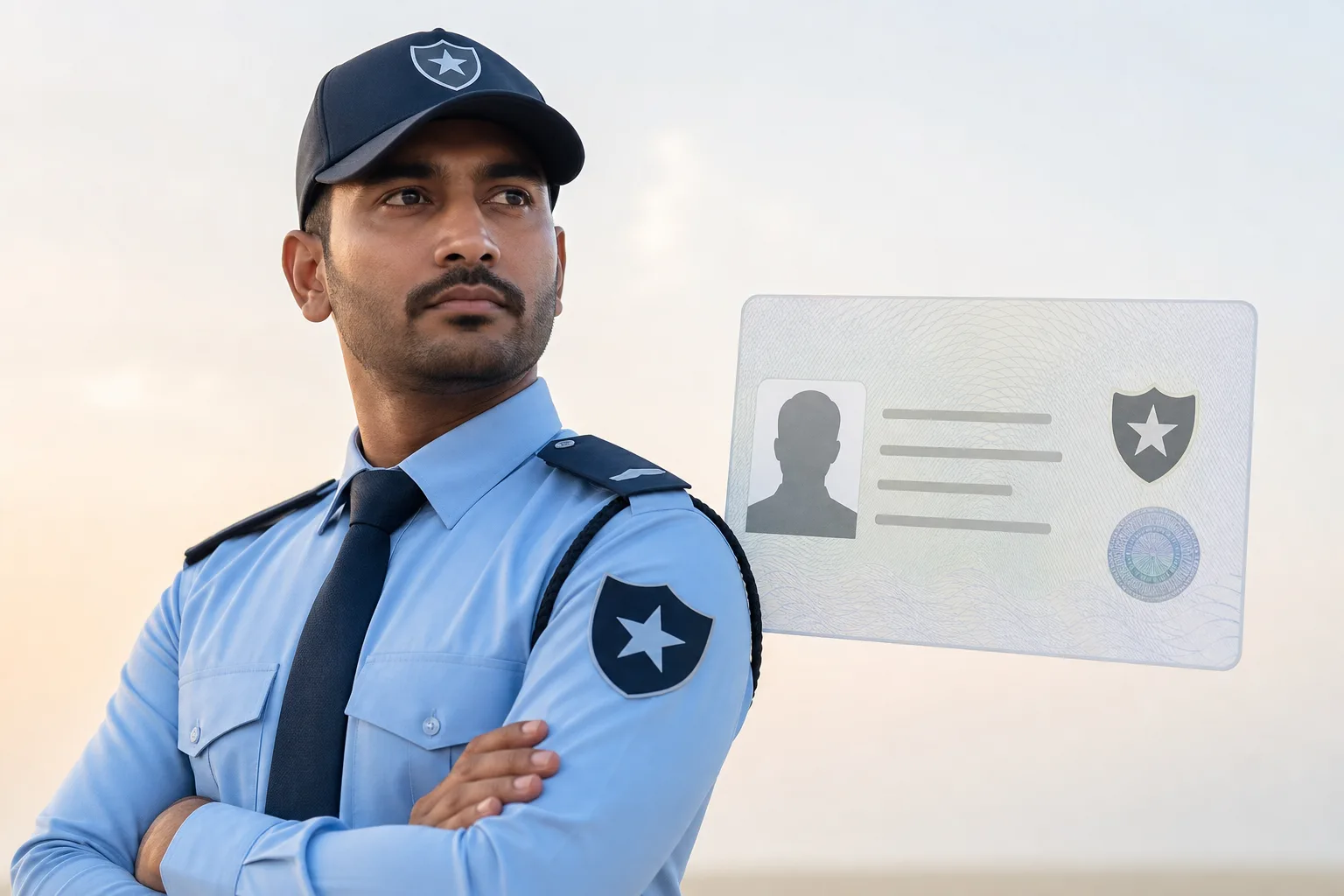
SIRA guard cards are individual permits that every deployed security personnel must hold before they can legally work on client sites in Dubai. The cards are issued by SIRA and confirm that each guard meets the agency's training and background requirements.
The licensed company is responsible for ensuring all deployed staff hold valid, current guard cards at all times. A lapsed card — whether for a single guard or company-wide — can expose the business to immediate operational suspension and client contract breaches.
Can a foreign national own 100% of a security guard services company in Dubai
Yes. 100% foreign ownership is permitted for this activity, either through a free zone such as Meydan Free Zone or on the mainland under the current UAE Commercial Companies Law, which removed the historic requirement for a local Emirati sponsor in most commercial activities.
However, if you intend to serve clients directly on Dubai soil under standard contracts, a mainland DED licence is typically required. A free zone company may need to establish a mainland branch to carry out on-site guarding work legally.
What Emiratisation obligations apply to security guard services companies
Emiratisation (nationalisation) quotas apply to companies holding this licence under MOHRE guidelines. This means a defined proportion of your workforce must be UAE nationals, and the ratio is subject to periodic review and enforcement by MOHRE.
Non-compliance carries financial penalties and can result in the suspension of your ability to hire additional staff or renew your licence. Building Emiratisation targets into your staffing model and payroll from the outset is strongly advisable rather than addressing it reactively.
When does VAT registration become mandatory for a security guard services business in Dubai
Once your annual revenue exceeds AED 375,000, VAT registration with the Federal Tax Authority (FTA) becomes mandatory. This threshold is relatively low given the contract-driven, recurring revenue model typical of manned guarding businesses.
It is important to build VAT compliance into your financial model from the start — including invoicing systems, record-keeping, and quarterly filing obligations — rather than retrofitting these processes after you have already crossed the threshold and begun trading with clients.
What is the typical client base and market outlook for this licence activity
The primary clients for activity 8010.96 include real estate developers, facility management firms, hospitality groups, shopping centres, and event organisers. Contracts tend to be ongoing and structured, which makes revenue relatively predictable compared with project-based businesses once client relationships are established.
The broader UAE private security market is projected to grow steadily through 2028, according to IMARC Group, driven by activity in the construction, hospitality, and events sectors. This makes the licence commercially attractive for investors with the operational capacity to meet SIRA's compliance requirements.
General Security Guard Services License in Dubai
Every tower, mall and construction site in Dubai has guards on it, and every one of those guards holds an individual permit from Dubai Police. The company employing them holds a second permit on top of its trade license.
Activity code 8010.96 covers that business. The sequence is what catches people out: without SIRA approval already in hand, the trade license does not issue at all. This guide covers the scope, both regulators, and what running it actually demands.
Key Stats at a Glance

What This License Covers
Code 8010.96 authorises the supply of uniformed, unarmed security guard personnel to third-party clients. It applies to manned guarding across:
- Commercial properties
- Residential complexes
- Retail outlets
- Events
- Construction sites
What sits outside it
Armed security, cash-in-transit operations and cybersecurity each carry a separate activity code and their own regulatory pathway. If your model touches any of those, you need further licenses rather than a broader reading of this one.
Who Your Clients Will Be
- Real estate developers
- Facility management firms
- Hospitality groups
- Shopping centres
- Event organisers
Demand is consistent and contract-driven, which makes revenue relatively predictable once client relationships are established. Guarding contracts tend to run on rather than complete, so the business builds a base rather than starting each year from zero.
The Two Approvals
The trade license
Issued by the Department of Economy and Tourism.
The SIRA company permit
Issued by the Security Industry Regulatory Agency, which operates under Dubai Police. Both are needed before you can legally deploy guards or sign client contracts.
Why the order matters
SIRA approval is a pre-condition for license activation. The final trade license will not be issued without a valid SIRA company permit already in place, which makes SIRA the first real milestone rather than a step you handle afterwards.
The SIRA application needs company formation documents, an Ejari-registered office lease, background checks on the owner and the operations manager, and training certifications for any guards being registered. Planning for it early is what prevents an expensive stall.
Renewals
SIRA permits renew annually. A lapsed permit exposes the business to immediate operational suspension, so tracking renewal dates is a core administrative function rather than a diary note.
Guard Cards
Every deployed guard must hold a valid individual SIRA card confirming they meet the agency's training and background standards. The licensed company is responsible for making sure all deployed staff hold current cards at all times.
A lapsed card, whether for one guard or across the company, can trigger immediate operational suspension and put you in breach of client contracts. In a business where staff turnover is normal, this is the compliance task most likely to catch an operator who has not built a system for it.
Mainland or Free Zone
Full foreign ownership is available either way, which removes the structural complication this sector used to carry.
The practical question is deployment. If your contracts involve guards physically stationed at client sites across Dubai, a mainland license is typically what you need, and a free zone company may have to establish a mainland branch to do that work legally. Confirm whether a branch or a no-objection certificate applies before committing to a free zone structure, because this is a business defined by being physically present on someone else's property.
[blockCTACostCalculator]
Step by Step Setup Guide
- Step 1, choose your jurisdiction: Mainland is typically needed for serving clients directly on Dubai soil under standard contracts.
- Step 2, book your trade name and submit: Through the DET portal.
- Step 3, secure a physical office: An Ejari-registered lease is compulsory for mainland applications.
- Step 4, submit the SIRA permit application in parallel: Include the manager's Emirates ID, any applicable No Objection Certificate, and guard training records. Running SIRA and DET concurrently is the main way to compress the timeline.
- Step 5, get initial approval, pay and collect your license.
- Step 6, register with MOHRE, activate the Wage Protection System and enrol guards for their cards.
- Step 7, register for VAT if projected annual revenue passes AED 375,000.
Compliance and What You Need in Place
Emiratisation
Nationalisation quotas apply under MOHRE guidelines, meaning a defined proportion of your workforce must be UAE nationals, with the ratio subject to periodic review and enforcement. Falling short brings financial penalties and can suspend your ability to hire or renew. Build the targets into your staffing model and payroll from the start rather than reacting to them, because in a headcount business the thresholds arrive quickly.
Employment
MOHRE governs contracts and administers the Wage Protection System. Falling short carries penalties and can lead to license suspension.
VAT
Registration becomes compulsory once annual revenue passes AED 375,000. That threshold is low relative to the recurring contract revenue typical of manned guarding, so build invoicing, record keeping and filing into the financial model at setup rather than retrofitting them.
Recurring costs
Annual SIRA permit renewal, individual guard card renewals, MOHRE duties and public liability insurance are all repeating line items. Price them into client contracts from the first quote.
Market Opportunity
IMARC Group projects the UAE private security market to grow steadily through 2028, driven by construction, hospitality and events. All three are sectors where guarding is a condition of operating rather than a discretionary purchase, which is what makes the demand dependable.
The commercial shape is attractive for anyone who can handle the compliance load. Contracts are ongoing and structured, revenue recurs, and the client base spans developers, facility managers, retail and events, so a quiet period in one sector rarely empties the order book.
The barrier is operational rather than financial. Year-one costs of AED 15,000 to AED 30,000 are modest, but SIRA compliance, guard card management and Emiratisation are continuous duties that need systems behind them. That is precisely why the field does not fill up with casual entrants, and why operators who build the compliance infrastructure properly hold their positions.
Conclusion
A general security guard services license in Dubai is commercially workable but operationally demanding.
SIRA compliance, MOHRE duties and guard card management are ongoing responsibilities rather than one-time steps. The businesses that scale here treat compliance infrastructure as a core operating function from day one.
Get the jurisdiction and structure right before you incorporate, because the decisions made at setup directly affect your ability to win and service contracts.
[blockCTAContact]