
Table of Contents
Frequently Asked Questions
What is activity code 3314.05 and what does it cover
Activity code 3314.05 refers to the Repair and Maintenance of Primary and Storage Batteries. It is the official classification under which a battery repair and maintenance business operates in Dubai.
The scope is intentionally broad, covering diagnostic testing, cell replacement, capacity restoration, reconditioning, and preventive maintenance. Battery types included span lead-acid, lithium-ion, nickel-based, industrial UPS, and telecoms backup systems.
A licence issued under this code also permits related trading of components such as replacement cells, terminals, and electrolyte, adding a parts resale revenue stream without requiring a separate trading licence.
Why is Dubai a good market for a battery repair and maintenance business
Dubai is experiencing demand growth across several converging sectors. EV adoption is rising sharply, supported by the Roads and Transport Authority's clean transport infrastructure investment and fleet electrification targets. Solar energy storage, industrial UPS systems, and telecoms backup infrastructure all generate recurring servicing requirements.
According to IMARC Group, the Middle East battery market is on a sustained growth trajectory through 2030, driven by renewable energy projects and EV penetration.
Importantly, the sector remains largely unorganised despite this structural demand, meaning an operator entering now faces limited organised competition while benefiting from a growing end-user base.
Who are the target customers for a battery repair business in Dubai
Target customers fall into two clear segments. The B2C side includes EV owners, motorcycle operators, and marine leisure users who typically require one-off repairs or diagnostic services.
The more commercially valuable segment is B2B, covering fleet operators, solar energy installers, data centres, construction firms, and telecoms infrastructure providers. These clients generally require scheduled maintenance rather than ad hoc repairs.
Maintenance contracts with corporate clients offer predictable, recurring revenue. A single agreement with a logistics fleet or data centre can anchor monthly income, making a contract-first sales strategy the more defensible business model from the outset.
What are the main revenue streams for a battery repair and maintenance business
The business operates on two primary revenue lines: per-job repair fees for diagnostic testing, cell replacement, and capacity restoration, and recurring maintenance agreements with corporate or fleet clients.
A third margin layer comes from parts resale — replacement cells, terminals, and electrolyte — which adds revenue without significant inventory complexity at launch.
Structuring the business around maintenance contracts from the outset provides a stable income base, while retail walk-in and ad hoc repair jobs supplement it. This model is scalable by adding technicians and service contracts without restructuring the legal entity.
Can a foreign national own 100% of a battery repair business in Dubai
Yes. 100% foreign ownership is available through free zone incorporation in Dubai. This means a foreign entrepreneur does not need a local Emirati partner or sponsor to establish and fully own the business.
Incorporating through a free zone also provides access to zero corporate tax on qualifying income under the UAE's current tax framework, making it a cost-efficient structure for an early-stage operation.
Operating costs within a free zone structure are transparent and manageable, and the entity can scale — by adding technicians and contracts — without fundamental legal restructuring.
What is the VAT registration threshold for a battery repair business in the UAE
The VAT registration threshold in the UAE is AED 375,000 in annual turnover, as set by the Federal Tax Authority. Businesses that exceed this threshold are required to register for VAT.
For an early-stage battery repair operation, this threshold provides a practical window to establish revenue before taking on VAT compliance obligations. Once turnover approaches or exceeds this figure, registration and ongoing filing become mandatory.
Businesses operating under a free zone structure should confirm their specific VAT obligations with a qualified UAE tax adviser, as the treatment of certain free zone activities may vary.
What equipment and capital investment is needed to start a battery repair workshop
Capital requirements for a battery repair and maintenance business are modest relative to most manufacturing or trading businesses. The primary costs are workshop equipment, diagnostic tools, and safety infrastructure for handling hazardous materials such as lead-acid and lithium-ion batteries.
There is no requirement for large inventory holdings at launch, as parts can be sourced on demand for most repair jobs. This keeps initial working capital needs manageable.
Safety infrastructure is a non-negotiable cost given the hazardous nature of battery chemicals and gases. Proper ventilation, fire suppression, and personal protective equipment must be factored into the setup budget from day one.
Does a battery repair business in Dubai require any special regulatory approvals beyond a standard licence
Activity 3314.05 falls under the repair and maintenance classification, and a free zone licence covers both service delivery and related trading of components. According to the article, no special financial services or healthcare approvals are required for this activity.
However, operators should account for compliance requirements related to the handling and disposal of hazardous materials, including battery acids and lithium compounds, which may involve environmental or municipal authority guidelines in Dubai.
It is advisable to confirm the precise licence conditions and any workshop-specific requirements with the relevant free zone authority before commencing operations, as conditions can vary between zones.
How to Start a Battery Repair and Maintenance Business in Dubai
Every electric vehicle, solar array, data centre and telecoms mast in Dubai runs on batteries, and every one of those batteries degrades. Somebody has to test them, recondition them and replace the cells. Right now, not many people are doing it properly.
That is the opening. The demand is structural and growing, the trade is still largely unorganised, and the capital you need to start is modest. This guide covers what activity code 3314.05 lets you do, who pays for it, and how to set up through Meydan Free Zone.
Key Stats at a Glance
What This License Covers

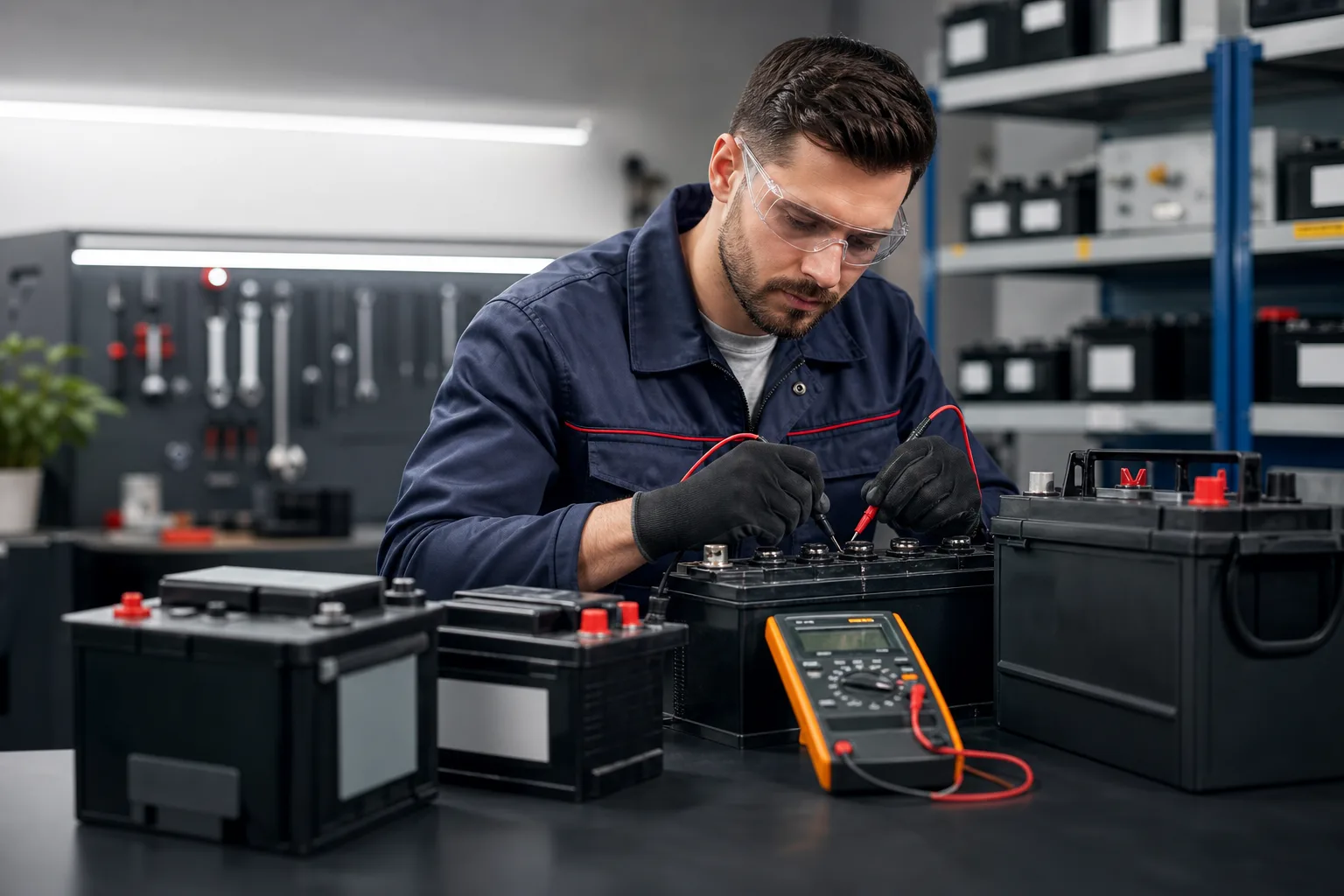
Activity code 3314.05 is broad enough to run a full workshop. Core services are diagnostic testing, cell replacement, capacity restoration, reconditioning and preventive maintenance contracts. The battery types you can work on run from lead-acid through lithium-ion and nickel-based cells to industrial UPS and telecoms backup systems.
The license also lets you trade the related components. Replacement cells, terminals and electrolyte can be sold under the same license, which gives you a parts margin without applying for a separate trading license. That is a useful piece of scope, because parts are where a repair job quietly becomes profitable.
Who Your Clients Will Be
Consumers
EV owners, motorcycle riders and marine leisure users. They come to you once, usually when something has already failed, and they pay per job. Useful cash flow, but you cannot forecast it.
Fleets and infrastructure
This is where the business actually lives. Fleet operators, solar installers, data centres, construction firms and telecoms providers all need scheduled maintenance rather than emergency repairs. One agreement with a logistics fleet or a data centre can cover your monthly fixed costs on its own.
Sell contracts first and let the walk-in work top it up. A workshop built on retail repairs is at the mercy of whatever comes through the door. A workshop built on maintenance agreements knows what next month looks like, and it is a far more defensible position when a competitor eventually arrives.
Mainland or Free Zone
A free zone license covers both the service delivery and the related parts trading, which is most of what this business does. No special financial services or healthcare approvals apply here. What does apply, whichever route you take, is the hazardous materials side, and that follows the workshop rather than the license.
[blockCTACostCalculator]
Step by Step Setup Guide
- Step 1, pick your code and book your name: Select 3314.05 and check your proposed trade name is free. It must not clash with an existing registered entity.
- Step 2, choose your license package: Meydan Free Zone offers flexi-desk and physical office options. This is a workshop business, so settle the premises arrangement at the outset rather than after the license lands.
- Step 3, send in your documents: Passport copy, completed application form, and a business plan if your chosen activity scope calls for one. Processing is quick compared with mainland timelines.
- Step 4, collect your license and staff up: Open a corporate bank account and apply for employment visas for your technicians. Your visa allocation is tied to your license package and office space.
Remote setup is supported, so you can complete the process without being in the UAE.
Compliance and What You Need in Place
Hazardous materials
Battery acid and lithium cells are classed as hazardous under UAE standards. You must meet the applicable waste disposal and workplace safety rules. This is normal for any workshop handling these materials, and it is not an unusual burden, but it does mean proper procedures and staff training from the first day rather than the first inspection.
Safety kit
Ventilation, fire suppression and personal protective equipment are non-negotiable costs given what you are handling. Put them in the setup budget at the start. Retrofitting a workshop after a near miss costs more than building it right.
What you actually need to buy
Capital needs here are modest next to most manufacturing or trading businesses. The main costs are workshop equipment, diagnostic tools and that safety infrastructure. You do not need to carry large inventory at launch, because parts can be sourced on demand for most jobs, which keeps your working capital light in the months when you are still filling the order book.
VAT
Register with the Federal Tax Authority once annual turnover passes AED 375,000. Free zone operators should check their specific position with a UAE tax adviser, because treatment of some free zone activities varies.
Staff
Technician contracts, WPS payroll and standard labour protections all fall under MOHRE. Get the payroll set up properly before you hire your second technician, not after.
Market Opportunity
The demand comes from several directions at once. EV adoption is climbing, supported by RTA investment in clean transport infrastructure and fleet electrification targets. Solar energy storage, industrial UPS systems and telecoms backup infrastructure each generate their own recurring servicing need, and none of those needs go away. IMARC Group has the Middle East battery market on a sustained growth path through 2030, driven by renewable energy projects and EV take-up.
Dubai adds volume from its logistics, construction, marine and telecoms sectors, all of which run equipment that depends on batteries staying healthy. The part worth noticing is that this sector remains largely unorganised despite all of that. Structural demand plus thin organised competition is an unusual combination, and it does not last forever. An operator who moves now and builds a contract book gets a position that is hard to attack later.
Conclusion
Battery repair and maintenance is a sound, low-competition niche in Dubai. Activity 3314.05 gives you a broad service scope with parts trading included, the entry cost is light because you do not need to carry inventory, and free zone setup gives you full ownership and a clean regulatory position.
Two things decide how well it goes. Get the safety and hazardous materials handling right from day one, and sell maintenance contracts before you sell repairs. Everything else is execution.
Talk to the Meydan Free Zone team to confirm your activity scope, get a cost estimate and start your application.
[blockCTAContact]