
Table of Contents
Frequently Asked Questions
What does activity code 7110.04 cover in Dubai
Activity code 7110.04 covers geophysical, geologic, and seismic surveying services under ISIC Division 71, which encompasses technical and scientific surveying applied to earth sciences. It is classified as a professional or technical services licence, meaning the business must deliver specialised scientific outputs rather than trade goods or general consultancy.
Permitted services include seismic reflection and refraction surveys, gravity, magnetic, and electrical geophysical methods, geological mapping, borehole logging, data processing, subsurface hazard assessment, and geotechnical investigation support. Primary clients typically include energy companies, government infrastructure bodies, mining operators, and large-scale construction developers.
Who is the geophysical and seismic surveying licence in Dubai designed for
The licence is designed for firms with qualified technical personnel delivering measurable scientific outputs to sophisticated B2B clients. The business model is typically project-based contracting tied to upstream oil and gas exploration, civil engineering programmes, or environmental assessment work.
Typical clients include energy companies such as ADNOC, government infrastructure bodies like DEWA and RTA-linked entities, mining operators, environmental consultancies, and construction developers operating across the GCC and wider region. It is not suited to general trading or non-technical consultancy businesses.
Should a geophysical surveying company set up on the mainland or in a free zone in Dubai
The choice between mainland and free zone is the most consequential decision in the setup process and depends primarily on your target client base. A mainland licence issued through Dubai Economy and Tourism (DET) allows direct contracts with UAE government entities and federal oil and gas bodies. If your clients include ADNOC, DEWA, or RTA-linked projects, mainland presence is effectively a requirement, as federal and emirate-level tenders routinely specify onshore-registered entities.
Free zone options such as Meydan Free Zone suit firms primarily serving international clients or operating as regional headquarters with offshore project delivery. Free zones offer 100% foreign ownership, zero corporate tax on qualifying income, and faster, simpler professional licence issuance. Some operators establish both structures — a free zone entity for international work and a mainland branch for government-facing contracts.
How long does it take to set up a geophysical surveying licence in Dubai
Setup timelines vary by jurisdiction. A free zone licence can typically be established within 2–4 weeks, benefiting from streamlined processes and fewer regulatory touchpoints. A mainland licence through Dubai Economy and Tourism generally takes 4–8 weeks due to additional regulatory alignment steps.
Timelines can be affected by the completeness of submitted documentation, the need for sector-specific approvals from bodies such as the Ministry of Energy and Infrastructure, and whether additional upstream regulatory alignment is required for work within UAE territory.
What are the ownership and share capital requirements for this licence
Following the UAE's 2021 ownership reforms, 100% foreign ownership is permitted for geophysical and seismic surveying businesses on both the mainland and in free zones. This removed the historical requirement for a UAE national partner or sponsor for many professional and technical service activities.
Minimum share capital requirements vary by jurisdiction. Most free zones, including Meydan Free Zone, impose no mandatory minimum share capital for professional licence categories. Mainland requirements should be confirmed with Dubai Economy and Tourism at the time of application, as they can vary by activity and legal structure.
Which regulatory bodies oversee geophysical and seismic surveying activities in Dubai
Several regulatory bodies are relevant depending on the nature and location of your work. Dubai Economy and Tourism (DET) oversees mainland commercial and professional licences. The Ministry of Energy and Infrastructure handles energy-sector approvals and upstream regulatory alignment at the federal level.
For upstream work conducted within UAE territory, the UAE Petroleum and Geoscience regulatory framework applies. Free zone operators are additionally governed by their respective free zone authority — for example, Meydan Free Zone for entities established there. Firms should assess which combination of approvals applies to their specific project scope and client base.
Why is Dubai a commercially attractive base for geophysical surveying operations
Dubai's position as a regional hub for energy, infrastructure, and construction creates consistent demand for subsurface data services across the GCC and beyond. Upstream oil and gas exploration, large-scale civil works, and environmental assessment programmes generate a project-rich environment for technical surveying firms.
Beyond market access, Dubai offers structural advantages including 100% foreign ownership, potential tax efficiency through free zone structures, a well-developed professional services ecosystem, and proximity to major regional clients in the energy and infrastructure sectors. These factors make it a commercially sound base for firms delivering services across the wider Middle East region.
What specific surveying methods and services are permitted under this licence
The licence permits a broad range of subsurface investigation and earth science services. On the geophysical side, permitted methods include seismic reflection and refraction surveys, gravity surveys, magnetic surveys, and electrical geophysical methods. These are used across oil and gas exploration, mining, and civil engineering applications.
Geological services covered include geological mapping, borehole logging, subsurface hazard assessment for construction and infrastructure projects, and geotechnical investigation support. The licence also covers the full data lifecycle — acquisition, processing, modelling, and technical reporting — making it suitable for firms delivering end-to-end subsurface intelligence to clients rather than only fieldwork.
Geophysical, Geologic and Seismic Surveying License in Dubai
Dubai sits at the centre of one of the world's most active energy and infrastructure corridors. Geophysical, geologic, and seismic surveying underpins almost every major project in the region, from oil and gas exploration to large-scale construction and environmental assessment. If you have the technical capability, the demand is real and the client base is well-funded.
This guide covers what the license covers, who your clients will be, how to choose the right jurisdiction, and the exact steps to get set up and trading.
Key Stats at a Glance
| Activity | Geophysical, Geologic and Seismic Surveying |
|---|---|
| Licensing authority (mainland) | Dubai Department of Economy and Tourism (DET) |
| Free zone option | Meydan Free Zone |
| Foreign ownership (mainland) | 100% permitted under UAE Commercial Companies Law reforms – Invest in Dubai |
| Foreign ownership (free zone) | 100% |
| Typical setup timeline | 5 to 10 working days for a free zone license; mainland can take longer depending on approvals |
| VAT registration threshold | AED 375,000 annual turnover – Federal Tax Authority (FTA) |
| Middle East geophysical services market | Growing steadily, driven by energy exploration and infrastructure investment – Mordor Intelligence |
What This License Covers

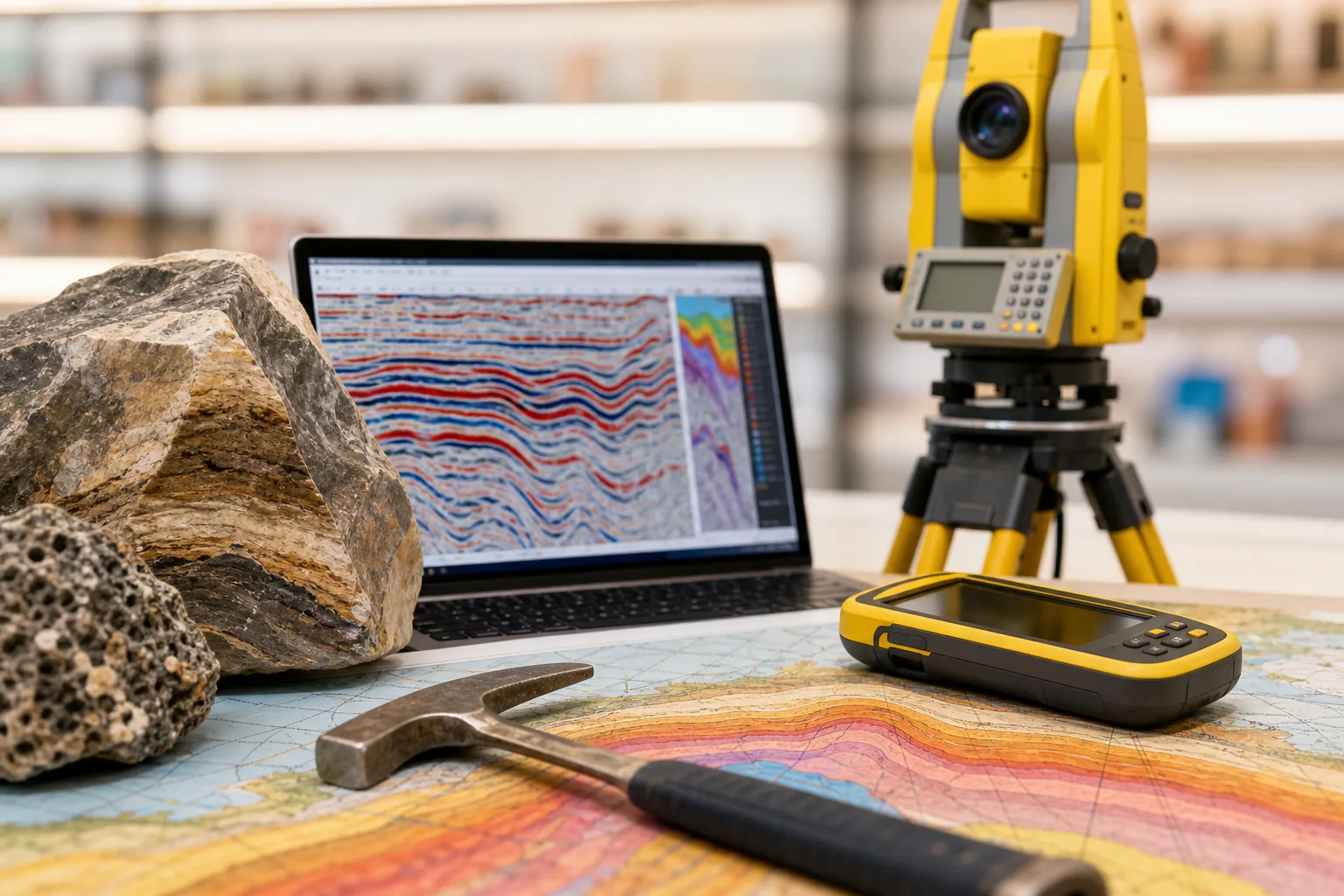
A geophysical, geologic, and seismic surveying license lets you carry out subsurface investigations and earth science studies for commercial and industrial clients. The scope is broad, and that is one of the reasons the activity code attracts serious operators.
Permitted activities
Under this license, you can carry out:
- Subsurface mapping and geological modelling
- Seismic data acquisition and interpretation
- Site investigation and ground condition assessments
- Geophysical surveys for construction, infrastructure, and environmental purposes
- Geological surveys in support of oil, gas, and mineral exploration
Industries served
The license covers work across several sectors. Oil and gas is the most obvious, but construction, infrastructure, and environmental consulting are equally active. Real estate developers in Dubai need site investigations before they build. Government bodies need ground surveys before they lay roads, tunnels, or utilities. Energy companies need seismic data before they drill.
What is excluded
The license does not automatically cover offshore survey work. That needs separate approvals, typically from the relevant maritime authority. Work on government or protected land also needs specific access permits before you can mobilise. If your projects involve radioactive or hazardous survey equipment, you will need extra clearances from the relevant UAE regulatory bodies. Check these requirements before you commit to a project scope.
Activity code and jurisdiction mapping
The DET maps this activity under its technical and scientific services codes. Meydan Free Zone carries equivalent activity codes that cover the same scope. Before you apply, confirm the exact code with the jurisdiction you choose. The wording matters when clients ask to see your license during vendor pre-qualification. You can browse the full Meydan Free Zone business activities list to check which codes are available.
Who Your Clients Will Be
The client base for geophysical and seismic surveying in Dubai is concentrated and high-value. These are not small buyers, and they do not buy on a phone call.
Primary clients
- National and international energy companies operating in the UAE and wider Gulf
- EPC (engineering, procurement, and construction) contractors on major infrastructure projects
- Government and semi-government bodies including roads, utilities, and municipal authorities
- Real estate developers carrying out pre-construction site investigations
- Environmental consultancies that sub-contract specialist survey work
How procurement works
Every serious client here runs a formal process. They want you on their approved vendor list before a tender opens. They will ask for your license, your professional credentials, your insurance, and your track record. Contract cycles are long. The upside is that once you are in, the relationship tends to hold.
Government vs private clients
Government and semi-government clients need you to hold a mainland license. They will not contract with a free zone entity for direct project work. Private sector clients and international operators are less restrictive. A free zone license works well for that segment. This distinction is the most important factor when you are deciding which jurisdiction to set up in.
Mainland vs Free Zone: Which Setup Works for You
Both routes give you 100% foreign ownership. The difference is in who you can work with and how you operate day to day.
| Factor | Mainland (DET) | Free Zone (Meydan Free Zone) |
|---|---|---|
| Client access | Full UAE market, including government contracts | Mainly private sector and international clients |
| Office requirement | Physical office required | Flexi-desk options available |
| Setup speed | Longer, depends on approvals | 5 to 10 working days typical |
| Foreign ownership | 100% permitted | 100% |
| VAT obligations | Same threshold applies | Same threshold applies |
| Corporate tax | 9% on taxable profits above AED 375,000 | 9% on taxable profits above AED 375,000 |
Mainland via DET
A mainland license from the DET lets you work directly with UAE government bodies and bid on public tenders. You will need a physical office address. The approval process takes longer because some technical activities need sign-off from additional government departments. If your target clients include Roads and Transport Authority projects, municipal authorities, or state energy entities, mainland is the only route that works.
Meydan Free Zone
Meydan Free Zone gives you 100% foreign ownership, a faster setup process, and flexible desk arrangements. It suits operators who are winning work from private developers, international energy companies, or EPC contractors who do not require a mainland entity. You can also set up your company remotely through remote business setup if you are not yet based in the UAE. The cost structure is more predictable from day one.
The decision
Let your client list make this decision, not the setup cost. If your first three target clients are government bodies, go mainland. If they are private developers or international energy firms, Meydan Free Zone is the faster and more workable route. Some operators eventually hold both, running the free zone entity for international work and adding a mainland branch once the business is established.
Free Business Setup Cost Calculator
Calculate NowHow to Set Up: Step-by-Step
- Step 1, book your trade name: Use the DET e-Services portal for a mainland company, or the Meydan Free Zone portal for a free zone one. The name must not conflict with existing registered businesses. You can check your company name availability before you apply.
- Step 2, confirm your activity code: Make sure the code covers the specific survey activities you plan to carry out. The wording on your license is what clients and procurement teams will check. Do not assume a general technical services code is enough if your work is specifically geophysical or seismic.
- Step 3, submit your setup documents and get initial approval: This includes passport copies, business plan (if required), and any professional qualification documents. For mainland, some technical activities need approval from a secondary authority before the DET issues the license.
- Step 4, secure your office or flexi-desk space: Mainland requires a physical office with a tenancy contract registered with Ejari. Meydan Free Zone offers flexi-desk arrangements that satisfy the address requirement without a full office lease. Complete visa applications for yourself and any staff at this stage.
- Step 5, get your trade license issued: Once the license is in hand, register for VAT with the Federal Tax Authority if your projected or actual turnover meets the AED 375,000 threshold. Corporate tax registration is also required. Both apply equally to mainland and free zone entities.
Compliance and What You Need in Place
Professional qualifications
Clients in the energy and infrastructure sectors will ask for evidence of professional competence before they put you on a vendor list. Licensed geophysicists and geologists with internationally recognised credentials carry more weight than a company with the right license but no verifiable expertise. Check whether your specific qualifications need to be attested or recognised by a UAE professional body before you start bidding.
Equipment import and customs
Specialist survey kit, seismic sensors, ground-penetrating radar units, and similar equipment are subject to import duties when brought into the UAE. Some equipment may need customs pre-clearance or specific import permits depending on the technology involved. Factor this into your project costings from the start. Temporary import arrangements are available for equipment brought in for a specific project and then re-exported.
Data handling and confidentiality
Energy sector clients are strict about data. Seismic data, subsurface models, and geological reports are commercially sensitive. Most contracts will include detailed confidentiality clauses and data ownership provisions. Make sure your internal data handling processes can meet those contractual duties before you sign. This is not just a legal formality. It is a real commercial risk if you get it wrong.
Annual license renewal
Your trade license needs to be renewed every year. Missing the renewal window creates problems with visa renewals, bank accounts, and active contracts. Set a reminder well before the expiry date. Meydan Free Zone sends renewal notices, but the duty to act is yours.
VAT and corporate tax filing
Once you cross the AED 375,000 VAT threshold, you must register with the Federal Tax Authority and file quarterly returns. Corporate tax at 9% applies to taxable profits above AED 375,000. Both mainland and free zone entities are subject to the same rules. Accounting services in Dubai through mAccounting can help you stay on top of both obligations without building an in-house finance function from day one.
Staff and MOHRE duties
If you hire employees, you need to register with the Ministry of Human Resources and Emiratisation. Employment contracts must follow UAE Labour Law. Emiratisation targets apply to mainland companies above a certain headcount. Free zone entities have separate rules. Check the current requirements with the relevant authority before you hire.
Market Opportunity
The Middle East geophysical services market is growing. Energy exploration remains active across the Gulf, and the UAE's own infrastructure investment pipeline is substantial. Dubai's ongoing construction programme, combined with Abu Dhabi's energy sector activity, creates steady demand for subsurface investigation services.
Beyond oil and gas, the construction sector is a growing source of work. Developers and contractors need geotechnical and geophysical surveys before breaking ground on towers, tunnels, and transport links. Environmental assessment is also expanding as regulatory requirements around site investigation tighten.
The barriers to entry are real. Clients want credentials, track records, and proper equipment. That makes the market harder to enter but more defensible once you are established. A well-run surveying business with the right license and the right team can build long-term client relationships that generate repeat work without constant business development effort.
Conclusion
A geophysical, geologic, and seismic surveying license in Dubai gives you access to a deep, well-funded client base across energy, construction, and infrastructure. The right jurisdiction depends on whether your work is for government bodies or private and international clients. Mainland gives you full UAE market access. Meydan Free Zone gives you speed, flexibility, and a simpler setup process for international and private sector work.
Get the activity code right from the start, make sure your professional credentials are in order, and choose your jurisdiction based on your actual client list. Everything else follows from those three decisions. Speak to the Meydan Free Zone team to confirm the right activity code for your services and get a clear cost estimate before you commit.
Ready to Launch Your Business in Dubai?
Let's ConnectCompliance
THIRD-PARTY APPROVAL
This activity requires pre-approval from the DM (Dubai Municipality) before a business license can be issued by Meydan Free Zone.