
Table of Contents
Frequently Asked Questions
What is a floating mini store in Dubai and what can it sell
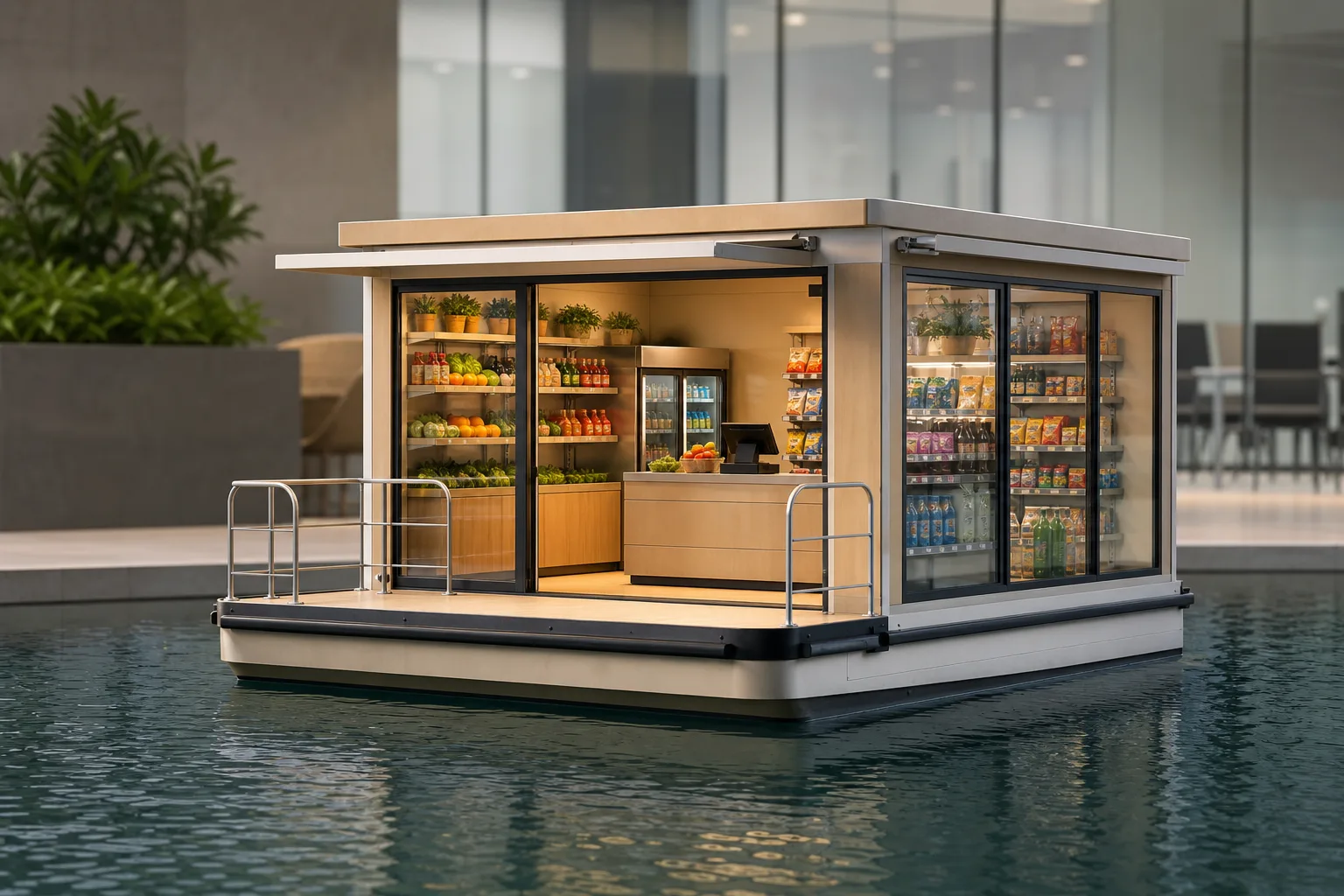
A floating mini store is a retail operation run from a vessel, pontoon, or mobile waterborne platform rather than a fixed shopfront. It operates under activity code 4711.99, which covers general retail of mixed goods in non-specialised stores applied to a mobile or waterborne format.
Permitted products typically include convenience items, snacks, beverages, tourist goods, and daily essentials. The customer base is location-driven — marina visitors, waterfront tourists, canal-side residents, and event attendees — making positioning and mobility central to the business model.
Which licence do I need to open a floating mini store in Dubai
The core requirement is a trade licence covering retail activity under code 4711.99. This can be registered through Meydan Free Zone, which handles the commercial licensing component and typically completes licence issuance within 3–5 working days.
It is important to note that the trade licence alone does not authorise waterway operations. Additional permits from separate authorities are required depending on where and how the store operates, so the Meydan licence is the starting point rather than the complete regulatory picture.
What permits are needed to operate on Dubai's waterways
Operating on Dubai's canals, creek, or coastal waters requires permits from the Roads and Transport Authority (RTA), which governs waterway usage, vessel registration, and marine activity approvals. This is separate from the trade licence and must be obtained independently.
If the operation is near port zones or marine terminals, the Ports, Customs and Free Zone Corporation (PCFC) holds jurisdiction and must also be engaged. Operators should map their intended locations carefully before applying, as the relevant authority depends on the specific waterway or zone.
Are there food and beverage compliance requirements for floating stores
Yes. If the product range includes any food, beverages, or consumables, compliance obligations extend beyond the trade licence. The Dubai Health Authority (DHA) and the Ministry of Health and Prevention both have jurisdiction over food safety and health standards for retail operations selling consumables.
Operators should factor in the time and cost of obtaining food-related approvals before launching, as these sit with different authorities from those handling the trade licence or waterway permits. Selling consumables without the appropriate clearances carries regulatory risk.
What are the best locations for a floating mini store in Dubai
Dubai's major waterfront developments represent the strongest operating corridors. Dubai Creek Harbour, Dubai Marina, and Palm Jumeirah collectively draw millions of visitors annually and generate consistent, predictable footfall that a well-positioned floating store can serve directly.
Beyond permanent locations, Dubai's event calendar — festivals, sporting events, and public holidays — creates short-burst, high-density footfall at specific waterfront sites. The ability to reposition and capture event-driven demand is one of the core commercial advantages of the floating format over fixed retail.
When is the peak trading season for a floating mini store in Dubai
The primary peak season runs from October through April, aligning with cooler weather and the bulk of international arrivals. Dubai welcomed over 17 million international overnight visitors in 2023, and spending is concentrated during this period across waterfront and tourist zones.
This seasonal pattern makes revenue planning relatively straightforward for operators who understand the cycle. Event-driven demand supplements the seasonal baseline, creating additional high-revenue windows throughout the year at specific waterfront locations.
Does a floating mini store in Dubai need to register for VAT
VAT registration with the Federal Tax Authority (FTA) is mandatory once taxable turnover exceeds AED 375,000 annually. The standard UAE VAT rate applies to most retail goods, though certain categories may be zero-rated or exempt depending on the product type.
Operators should monitor turnover from the outset and register before the threshold is breached rather than after. Failure to register on time carries penalties under UAE tax law. For businesses selling consumables or tourist goods at high-footfall locations, the threshold can be reached faster than expected during peak season.
What are the main commercial advantages of a floating mini store over a fixed retail unit
The floating format eliminates two of the largest fixed costs in traditional retail: long-term lease commitments and shopfit expenditure. Overhead is structurally lower, which improves margins during slower periods and reduces financial exposure if a location underperforms.
Operational flexibility is the other key advantage. A floating store can reposition to follow footfall — moving between marinas, waterfront events, and residential canal zones as demand shifts. This mobility allows operators to respond to Dubai's seasonal and event-driven demand patterns in ways a fixed shopfront cannot, concentrating revenue at peak moments and locations.
How to Open a Floating Mini Store in Dubai
A floating mini store is a small retail unit that trades from a vessel, pontoon or floating platform instead of a shopfront. It is not a floating restaurant and not a boat tour. It is a till on the water, parked where the people are.
The format works in Dubai because the marina and waterfront infrastructure is dense, footfall is high, and visitors spend. This guide covers what activity code 4711.99 allows, the permits that sit on top of your trade license, and the order to do things in.
Key Stats at a Glance

What This License Covers
Activity code 4711.99 covers general retail of mixed goods in a non-specialised store, applied here to a mobile or waterborne unit. Packaged food, drinks, souvenirs and beach accessories all sit inside it.
Two boundaries matter. Fresh or prepared food pulls you into a heavier food safety process, while sealed packaged goods clear easily. And a floating restaurant is a different business, with a kitchen inspection behind it. Match your activity code to what you actually sell.
The bigger point is that the trade license is the starting line. It creates your company and permits retail. It does not let you put anything on the water. That comes from a separate authority.
Who Your Clients Will Be
Your customer base is decided by where you park, which is exactly why the format works.
Marina and waterfront visitors
Dubai Marina, JBR, Palm Jumeirah and Dubai Creek Harbour pull predictable footfall from tourists and residents. This is your baseline trade.
Event crowds
Festivals, sporting fixtures and public holidays create short bursts of demand at specific waterfront sites. Being able to move and meet it is the advantage a fixed shop cannot copy.
Resorts, hotels and event organisers
Supplying venues rather than the public is a different business with steadier revenue. An exclusive supply contract with a beach club or resort is the most predictable of the three models, and it pairs neatly with a free zone license.
Mainland or Free Zone
This is the biggest choice you will make when setting up. Let your operating model decide it, not the cost.
Mainland
A license from the Department of Economy and Tourism lets you sell straight to the public on Dubai's waterways and at public venues, with the venue operator's permission. For a store selling to individual customers, that is the fit.
Free zone
A license from Meydan Free Zone suits a supply model: resorts, hotels and event organisers rather than walk-up customers. It also suits founders running the company remotely while testing the concept.
Either way
Waterway permits come from the Roads and Transport Authority and attach to the vessel and operator, not to your license jurisdiction.
[blockCTACostCalculator]
Step by Step Setup Guide
- Step 1, book your trade name: Use the Meydan Free Zone portal for a free zone company or the DET portal for a mainland one.
- Step 2, confirm your activity code: Check that 4711.99 covers the goods you plan to stock and the waterborne format. Getting this wrong delays every approval that follows.
- Step 3, get initial license approval: Do this before you buy or lease a vessel. It costs less than the full license and confirms your activity is approved.
- Step 4, register the vessel with the RTA: Submit vessel details, safety papers and your intended operating area. If you have not bought yet, ask the authority what it looks for so you know what to shop for.
- Step 5, apply for the Dubai Municipality food permit: Start this alongside the RTA process if you sell consumables. Inspection bookings take time, and both approvals must be in hand before launch.
- Step 6, secure your location agreement: Approach marina operators, beach clubs or resorts with your initial approval in hand. Venues want a licensed operator before signing a berth agreement.
- Step 7, collect your license, insure and staff up: With approvals complete the license is issued. Keep a copy on board, confirm insurance, and start crew visas early. Anyone handling food needs a Dubai Municipality food handler certificate.
Run these in parallel where you can. Each authority has its own queue.
Compliance and What You Need in Place
Vessel registration and waterway access
This is the critical path item. The Roads and Transport Authority registers the vessel and issues the permit to trade on Dubai's waterways, and the vessel must meet its safety standards first. If you lease rather than buy, confirm the vessel is registered for commercial use or can be. Work in or near port zones also brings in the Ports, Customs and Free Zone Corporation.
Food safety
Any consumables, sealed snacks and bottled drinks included, need a Dubai Municipality food safety permit. The inspection covers storage and serving areas on the vessel. Fresh or prepared food triggers a deeper process, so allow more time if anything needs temperature control.
Location agreement
You need written permission from whoever controls the water space: the marina, the beach club or the resort. Each sets its own terms, fees and revenue share. Agree all of it in writing before committing to a vessel or stock.
Insurance
Third-party cover for the vessel and public liability cover for customers who step aboard. Most marinas and venues ask to see the policy before granting a berth, so have it before you trade.
VAT
Register with the Federal Tax Authority once taxable turnover passes AED 375,000 a year. At a high-footfall site in peak season that line arrives faster than you expect, so watch it and register before you cross rather than after.
Market Opportunity
Dubai took more than 17 million international overnight visitors in 2023, and much of that traffic moves through waterfront areas. Dubai Marina, JBR, Palm Jumeirah and Dubai Creek Harbour draw millions between them, giving a well-placed store a steady base without paying for a mall unit.
Trade concentrates between October and April, when the weather turns and international arrivals peak. That makes revenue planning simple: you know when your good months are. Events fill in the gaps, creating short high-density windows at specific sites through the rest of the year.
The commercial case rests on what you avoid: no long lease and no shopfit, the two largest fixed costs in normal retail. Overhead stays low in the quiet months, and a location that disappoints does not trap you. You move. That mobility is the whole point of trading from the water.
Conclusion
A floating mini store suits Dubai well. The infrastructure is there, the footfall is there, and the cost base is lighter than a shopfront. What makes it harder than it looks is that it sits across several regulators at once: trade licensing, maritime permits, food safety and the venue itself.
Operators who get it right confirm the activity code first, start the approval stack early, and treat the vessel permit as the item everything else waits on. The ones who underestimate that end up owning a vessel they cannot legally trade from.
[blockCTAContact]