
Table of Contents
Frequently Asked Questions
What business activity code covers a hair removal centre in Dubai
Activity code 9602.97 covers personal care services in Dubai, with hair removal recognised as a defined commercial activity under this classification. This code applies whether you are operating a dedicated laser clinic, an IPL studio, or a broader beauty centre where hair removal is a core service.
It is important to note that the activity code governs your trade licence, but it runs in parallel with health authority registration — particularly if you plan to offer laser or IPL treatments, which require separate oversight from the Dubai Health Authority (DHA).
Does a hair removal centre in Dubai need DHA approval
Yes, if your centre offers laser or IPL-based hair removal, it falls under the regulatory oversight of the Dubai Health Authority (DHA). These procedures are classified as medical aesthetic treatments under DHA guidelines, meaning the facility must be registered as a healthcare establishment rather than a standard beauty salon.
Threading and waxing services sit within standard beauty licensing and do not trigger the same DHA requirements. However, any clinic combining both service types should plan for the healthcare establishment registration track from the outset, as it affects facility classification, fit-out standards, and staffing requirements.
DHA inspection of the premises is required before the facility can begin operating laser or IPL services, so build this timeline into your pre-launch planning.
What qualifications do staff need to perform laser or IPL hair removal in Dubai
Practitioners performing laser and IPL hair removal in Dubai must hold a valid DHA practitioner licence. The DHA requires documented qualifications, professional experience, and in some cases a supervised practice period before a licence is granted.
Front-of-house and administrative staff are not subject to the same clinical licensing requirements. However, anyone operating laser or IPL devices in a clinical capacity must meet the DHA's standards without exception — this is described in the article as non-negotiable.
Factor in the time required to verify and process staff licences when planning your operational launch date, as delays in practitioner licensing will directly affect when you can begin offering treatments.
What is the difference between cosmetic-grade and medical-grade hair removal under Dubai regulations
Dubai's regulatory framework draws a clear distinction between the two. Threading and waxing are considered cosmetic-grade personal care services and fall under standard beauty licensing, without requiring DHA healthcare establishment registration.
Laser and IPL treatments, by contrast, are classified as medical aesthetic procedures under DHA guidelines. Facilities offering these services must register as healthcare establishments, meet specific fit-out standards, use approved equipment, and employ DHA-licensed practitioners.
This distinction has significant practical consequences — it determines your facility classification, the inspections you are subject to, your staffing structure, and the regulatory track you must follow before opening.
What equipment standards apply to laser and IPL devices used in Dubai hair removal centres
Devices used for laser and IPL hair removal treatments must meet regulatory specifications set by the Dubai Health Authority, and the facility is subject to a DHA inspection to verify compliance before it can operate.
Certain device classifications may also fall under the remit of the Ministry of Health and Prevention (MOHAP) for import and registration purposes. This means equipment procurement and registration is not simply a commercial decision — it has a regulatory dimension that needs to be addressed early in the setup process.
Operators should confirm device compliance and initiate any MOHAP registration requirements well in advance of the planned opening date to avoid delays.
How large is the hair removal market in Dubai and the wider UAE
The UAE beauty and personal care market is projected to grow at a CAGR of approximately 6–8% through 2028, according to IMARC Group. Dubai accounts for the largest share of UAE aesthetics spend, driven by its concentration of high-net-worth residents and medical tourism activity.
Laser hair removal is among the most frequently requested aesthetic procedures in the region. Clients typically complete 6–8 sessions per treatment cycle, creating a recurring revenue model for operators. Average per-session spend ranges from AED 200 to AED 800 depending on the body area treated and the clinic's market positioning.
Mordor Intelligence places the broader GCC hair removal devices and services market on a strong upward trajectory through 2030, with the premium laser and IPL segment outpacing the wider market as consumers shift toward longer-lasting solutions.
What types of competitors operate in Dubai's hair removal sector
The competitive landscape in Dubai spans several distinct formats. These include standalone laser clinics, medical spas, hotel-based beauty centres, and traditional salons offering threading and waxing alongside other personal care services.
The premium segment — anchored around laser and IPL treatments — continues to outpace the broader market as consumer preference shifts toward longer-lasting hair removal solutions. This creates both an opportunity and a competitive challenge for new entrants, who must differentiate on service quality, technology, or pricing to capture market share.
Why should the DHA registration process run in parallel with trade licence setup rather than after it
The article explicitly advises planning the DHA facility registration process to run in parallel with your trade licence setup — not sequentially after it. This is because both tracks have their own timelines, documentation requirements, and inspection stages, and a delay in one directly affects your overall operational launch date.
New entrants commonly underestimate this complexity by treating the business as a straightforward beauty operation. Because laser and IPL services require healthcare establishment registration, facility fit-out approval, equipment compliance checks, and practitioner licensing, waiting until the trade licence is secured before starting the DHA process can add months to your timeline.
Running both tracks simultaneously — with a clear understanding of each stage's requirements — is the most efficient path to opening on schedule.
How to Open a Hair Removal Centre in Dubai
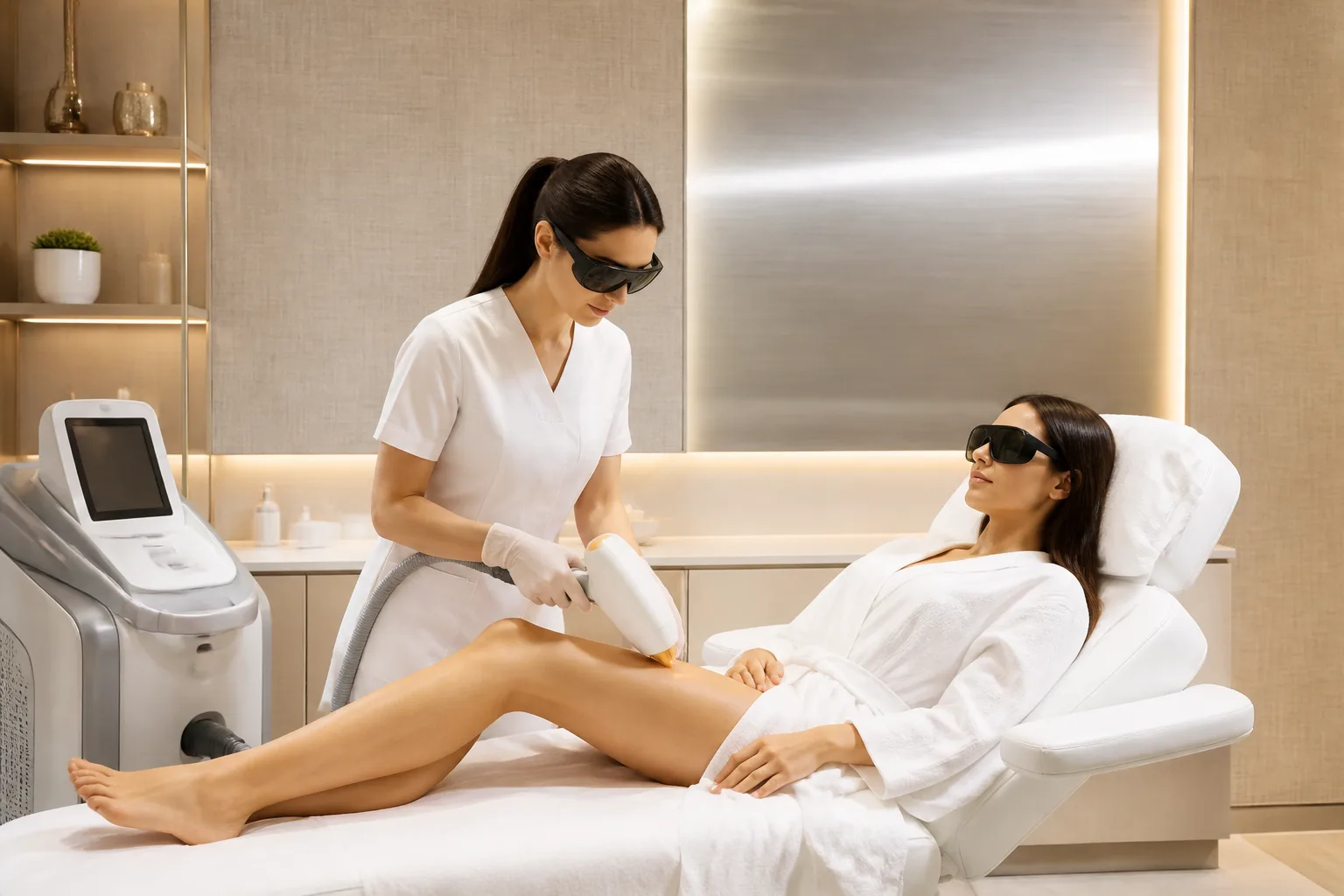
Dubai's aesthetics sector keeps growing on the back of high incomes, an appearance-conscious population and demand that does not dip with the seasons. A hair removal centre is a solid business here, whether you run a laser clinic, an IPL studio or a beauty centre with hair removal at its core.
The catch is that this is not one regulatory track but two. Your trade license under activity code 9602.97 is one. Health authority approval is the other, and it starts the moment lasers enter the picture.
Key Stats at a Glance

What This License Covers
Activity code 9602.97 covers personal care services, and hair removal is a defined commercial activity within it. The code governs your trade license. It does not, on its own, let you switch on a laser.
The line that decides everything
Threading and waxing are cosmetic-grade services under standard beauty licensing. Laser and IPL are medical aesthetic procedures under Dubai Health Authority guidelines, which means the premises registers as a healthcare establishment rather than a salon. That one distinction sets your facility category, your fit-out standards, your staffing structure and which inspections you face.
If you plan to offer both, build for the healthcare track from the start. Retrofitting a salon into a healthcare establishment costs far more.
Who Your Clients Will Be
Residents on a treatment cycle
Laser hair removal runs to 6 to 8 sessions per cycle, so a client who books once is booked for months. At AED 200 to AED 800 a session, that is real customer value from a single conversion.
Premium and high-net-worth clients
Dubai takes the largest share of UAE aesthetics spending, helped by its concentration of high-net-worth residents. This end of the market buys on technology and results, not price.
Medical and short-stay visitors
Medical tourism traffic and hotel guests buy aesthetic treatment while they are here. A hotel concession or referral arrangement is the usual way to reach them.
You will be competing with standalone laser clinics, medical spas, hotel beauty centres and traditional salons offering threading and waxing alongside everything else. The premium laser and IPL segment is growing faster than the wider market as clients move towards longer-lasting results.
Mainland or Free Zone
This is the biggest choice you will make when setting up, though it matters less here than founders expect, because health approval applies either way.
Mainland
A license from the Department of Economy and Tourism gives you unrestricted access to walk-in clients anywhere in Dubai. For a treatment centre on a high street or in a mall, this is the usual route.
Free zone
A Meydan Free Zone license gives you full ownership, no local sponsor, and a faster, cheaper setup. For a physical centre serving walk-in clients you will pair it with a commercial lease and DHA facility approval, so talk through the structure before you commit.
[blockCTACostCalculator]
Step by Step Setup Guide
- Step 1, book your trade name: Confirm the name is available and follows UAE naming conventions, and check that activity code 9602.97 covers your planned services.
- Step 2, submit your setup papers: Passport copies, proof of address, and your share structure. A single-shareholder FZE and a multi-shareholder FZC are both available.
- Step 3, collect your license and establishment card: Once papers are approved and fees paid, both are issued together.
- Step 4, start DHA facility registration: Begin while the rest is in motion, not after. Fit-out standards, equipment checks and premises inspection all sit on this track.
- Step 5, apply for investor and staff visas: Your allocation depends on your license package. Investor visas process first, employee visas follow.
- Step 6, license your practitioners: Every laser and IPL operator needs a DHA practitioner license before treating anyone. Front-of-house staff do not.
- Step 7, open a corporate bank account: Your license and shareholder papers are what the bank asks for.
Costs vary with your visa package, whether you take a flexi-desk or a dedicated unit, and how wide your activity scope runs.
Compliance and What You Need in Place
Healthcare establishment registration
Any centre offering laser or IPL registers with the Dubai Health Authority as a healthcare establishment. Premises are inspected before you can run those services, so this is on the critical path.
Practitioner licensing
Laser and IPL practitioners must hold a valid DHA practitioner license. The authority wants documented qualifications, evidence of professional experience, and in some cases a period of supervised practice before granting one. This is not negotiable, and the timeline for it directly sets your opening date.
Equipment
Devices must meet DHA specifications, and the facility inspection checks them. Some categories also fall under Ministry of Health and Prevention rules for import and registration, so buying equipment is a regulatory decision as much as a commercial one.
Run both tracks together
The most common mistake is treating this as a beauty business and leaving health approval until the license is done. Facility registration, fit-out approval, equipment clearance and practitioner licensing each have their own queue. Run them alongside the license process.
Market Opportunity
IMARC Group puts UAE beauty and personal care growth at roughly 6% to 8% a year through 2028, and Dubai takes the largest share of national aesthetics spending. Mordor Intelligence has the wider GCC hair removal devices and services market climbing through 2030, with premium laser and IPL outpacing the rest as buyers move away from repeat waxing towards longer-lasting results.
What makes the model work is the treatment cycle. Clients complete 6 to 8 sessions at AED 200 to AED 800 each, so revenue is booked in advance rather than won one visit at a time. Packages and memberships tighten that further, smoothing cash flow and holding clients through the full course.
Three levers raise the return cheaply. Add adjacent services: skin treatments, brow shaping, waxing and aftercare skincare. Choose location deliberately, because mall units buy footfall at high rent while standalone units in residential areas or near hotels protect margin. And keep part-time specialists alongside full-time staff, because capacity is limited by how many licensed technicians are on the floor.
Conclusion
A hair removal centre in Dubai has attractive economics: high-value clients, revenue booked across a course of sessions, and a premium segment growing faster than the market around it.
What separates a smooth opening from a delayed one is sequencing. Get the company in place through Meydan Free Zone, then move immediately on facility approval, practitioner licensing and equipment registration. Founders who leave the health authority track until last routinely lose months they did not budget for.
[blockCTAContact]