Table of Contents
Frequently Asked Questions
What is activity code 4662.01 and what does it cover
Activity code 4662.01 refers to the Wholesale of Ferrous and Non-Ferrous Metal Ores, a licensed commercial activity in Dubai. It covers the bulk trade of raw materials including iron ore, copper ore, bauxite (aluminium ore), zinc, and manganese.
This activity is designed for businesses that procure metal ores from mining exporters and resell them to industrial buyers such as steel manufacturers, smelters, and construction material processors. It does not require the business to be a producer or miner — the wholesale and re-export model is the primary commercial structure.
Why is Dubai considered a strategic hub for metal ores wholesale
Dubai occupies a central position on global shipping corridors connecting Asia, Africa, and Europe. This geographic advantage makes it a natural re-export and transit hub for bulk commodities, including metal ores, rather than a producing nation.
Jebel Ali Port, operated by DP World, handles over 14 million TEUs per year and provides access to more than 150 shipping routes. Combined with the UAE's consistently high non-oil re-export volumes — exceeding AED 300 billion annually — Dubai offers the logistics infrastructure that commodity traders depend on for efficient cargo movement.
Regional demand from GCC construction, manufacturing, and national diversification programmes further supports sustained appetite for ferrous and non-ferrous raw material supply chains.
What are the main sources and target markets for a metal ores wholesale business based in Dubai
Metal ores are typically procured in bulk from mining exporters in countries such as Australia, Brazil, South Africa, and Central Asia. These regions are major producers of iron ore, bauxite, copper, and other ferrous and non-ferrous materials.
Target customers are primarily located across the GCC, South Asia, and East Africa and include steel manufacturers, smelters, industrial fabricators, construction material processors, and commodity brokers sourcing raw materials for onward distribution. Dubai's position as a midpoint on Africa-Asia trade corridors makes it especially well suited to serving these markets efficiently.
What are the advantages of setting up a metal ores wholesale business in Meydan Free Zone
Meydan Free Zone offers several commercial advantages that are particularly relevant for wholesale commodity operations. These include 100% foreign ownership, full profit repatriation, and zero corporate tax on qualifying income — a significant benefit for margin-sensitive bulk trade businesses.
Meydan is located within Dubai, giving businesses proximity to Jebel Ali Port and the emirate's broader logistics and freight forwarding infrastructure. This supports efficient cargo coordination, which is central to the wholesale ore distribution model.
The free zone licensing process is also designed to be straightforward, making it accessible for international entrepreneurs and commodity traders looking to establish a UAE base without unnecessary administrative complexity.
Is there a corporate tax obligation for metal ores wholesale businesses in Dubai
The UAE applies a 0% corporate tax rate for qualifying free zone entities, as confirmed by the Federal Tax Authority. Businesses licensed through Meydan Free Zone and operating within the qualifying income framework can benefit from this rate on eligible activities.
It is important to ensure that the business structure and income streams meet the conditions set out under the UAE Corporate Tax Law. Businesses should seek professional tax advice to confirm qualifying status, particularly if they conduct any mainland-facing transactions.
When is VAT registration required for a metal ores wholesale operation
VAT registration with the Federal Tax Authority is mandatory once a business's taxable turnover exceeds AED 375,000. For wholesale operations dealing in bulk commodity volumes, this threshold is typically reached quickly after commencing trade.
Standard VAT obligations apply once registered, including filing returns and maintaining compliant invoicing and records. Businesses operating in free zones should also be aware of how VAT rules interact with designated zone status, as this can affect how transactions are treated for VAT purposes.
Are there any sector-specific permits required beyond the trade licence for activity 4662.01
For activity code 4662.01 — Wholesale of Ferrous and Non-Ferrous Metal Ores — no additional sector-level permit is required beyond the trade licence itself. The activity does not fall under a restricted or specially regulated commodity category that demands a separate ministry-level approval.
However, at the shipment level, commodity-specific import permits or certificates of origin may be required depending on the ore type and country of origin. This is standard practice in international bulk commodity trade and is managed through Dubai Customs and the Ports, Customs and Free Zone Corporation (PCFC) as part of normal import and export procedures.
What employment compliance obligations apply if the business hires staff
If a metal ores wholesale business registered in Dubai hires employees, it must comply with the requirements of the Ministry of Human Resources and Emiratisation (MOHRE). This includes issuing compliant employment contracts and registering for the Wages Protection System (WPS), which governs payroll processing and ensures timely salary payments.
Emiratisation obligations also apply at defined headcount thresholds, requiring businesses above certain sizes to employ a proportion of UAE national staff. The specific thresholds and quotas depend on the size and sector classification of the business, so operators should confirm current requirements with MOHRE or a licensed business setup adviser.
How to Start a Metal Ores Wholesale Business in Dubai
The UAE does not mine anything much, and that turns out not to matter. Iron ore from Australia, bauxite from Brazil, copper from Central Asia: it all passes through Dubai on its way to a smelter somewhere else. The money is in moving it, not digging it.
This guide covers what activity code 4662.01 lets you trade, where the ore comes from and who buys it, what you owe customs and the tax authority, and how to get licensed through Meydan Free Zone. It is a clean activity with very little regulatory drag on top of the license itself.
Key Stats at a Glance
| Activity code | 4662.01, Wholesale of Ferrous and Non-Ferrous Metal Ores |
|---|---|
| What it covers | Bulk trade of iron ore, copper ore, bauxite, zinc, manganese and related raw materials |
| Who it is for | Traders rather than producers – you do not need to mine anything |
| Sector permit needed | None beyond the trade license |
| Re-export scale | UAE non-oil re-exports exceed AED 300 billion a year – Invest in Dubai |
| Port capacity | Jebel Ali handles over 14 million TEUs a year across more than 150 shipping routes – DP World |
| Customs | Shipment-level import permits and certificates of origin via Dubai Customs and PCFC |
| Corporate tax | 0% for qualifying free zone entities – Federal Tax Authority |
| VAT threshold | AED 375,000 taxable turnover a year |
| Foreign ownership | 100% in Meydan Free Zone, with full profit repatriation |
What This License Covers

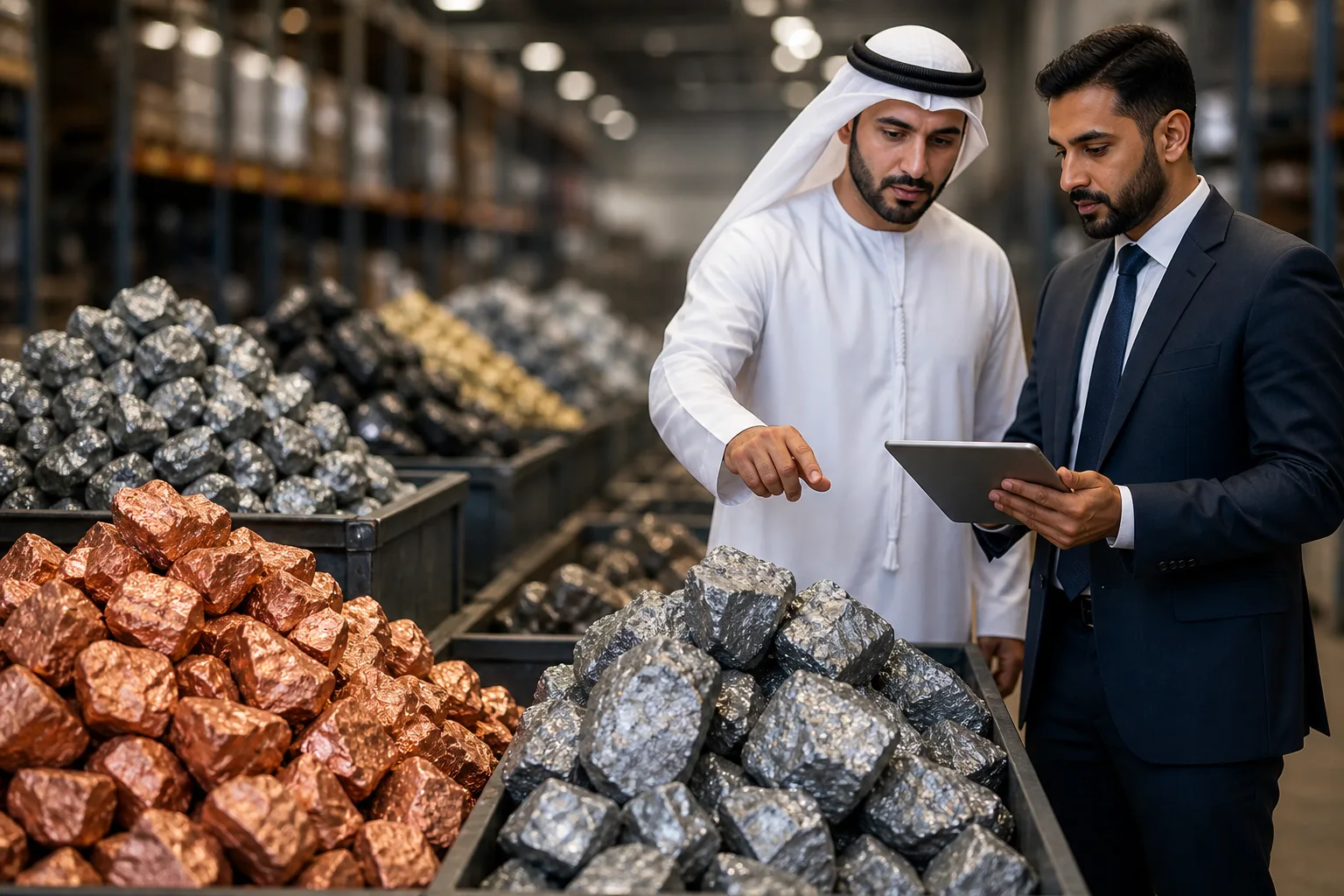
Activity code 4662.01, wholesale of ferrous and non-ferrous metal ores, covers the bulk trade of iron ore, copper ore, aluminium ore in the form of bauxite, zinc, manganese and related raw materials.
The useful thing to understand is what the code does not ask of you. You are not expected to be a producer or a miner. The wholesale and re-export model is the standard commercial structure here, and it fits how the UAE actually works: goods land at the ports, pass through the free zones, and leave again for industrial buyers elsewhere.
Who Your Clients Will Be
You buy from one side of the world and sell to the other. Ores are typically sourced in bulk from mining exporters in Australia, Brazil, South Africa and Central Asia, and the buyers sit across the GCC, South Asia and East Africa.
- Steel manufacturers
- Smelters
- Construction material processors
- Industrial fabricators
- Commodity brokers buying to redistribute onward
Margins in this trade come from three things: volume, logistics efficiency, and the strength of your supplier relationships. There is no clever product differentiation to hide behind. You either get the tonnage at the right price and move it without waste, or you do not.
Several structural factors keep the demand steady. UAE infrastructure spending, megaprojects included, holds up demand for steel and aluminium inputs. GCC manufacturing is expanding under national diversification agendas, which deepens the appetite for raw material supply. And Africa-Asia trade corridors keep growing in both volume and complexity, with Dubai sitting in the middle of them.
Mainland or Free Zone
| Factor | Mainland (DET) | Free Zone (Meydan Free Zone) |
|---|---|---|
| Who you sell to | Open UAE market | Mainly import, wholesale and re-export |
| Foreign ownership | Set by DET rules for the activity | 100% yours, full profit repatriation |
| Corporate tax | Standard framework | 0% on qualifying income |
| Warehouse space | Arranged separately | Not needed – flexi-desk and virtual office suit a trading operation |
| Setup route | Apply through DET | Apply online, remote setup possible |
Let your buyers decide it, not the price. For a business built on goods arriving and leaving again, the free zone route is the obvious one: full ownership, profits out without restriction, and no need to lease warehouse space you will never use because the cargo is handled by freight forwarders and the port. Proximity to Jebel Ali and the wider logistics network is what actually matters day to day.
[blockCTACostCalculator]
Step by Step Setup Guide
- Step 1, pick your activity code and book your trade name: Select 4662.01 and check your preferred name is available before you commit to any branding.
- Step 2, choose your license package: Flexi-desk and virtual office options suit trading operations that do not need physical warehouse space inside the free zone.
- Step 3, send in your setup documents: Passport copies, shareholder details and a brief business summary.
- Step 4, get your license and open a bank account: Once issued, open a corporate account and apply for an investor visa if you need residency.
License issuance usually takes three to five working days, and the whole setup can be handled remotely without travelling to Dubai.
Compliance and What You Need in Place
No sector permit
Beyond the trade license itself, activity 4662.01 needs no extra sector-level permit. Metal ores are not in a restricted or specially regulated commodity category that calls for separate ministry approval, which makes this a simpler activity to license than most commodity trades.
Customs at shipment level
Imports and exports fall under Dubai Customs and the Ports, Customs and Free Zone Corporation. Depending on the ore type and country of origin, individual shipments may need commodity-specific import permits or certificates of origin. This is normal practice in bulk commodity trade and does not create an unusual burden, but it does have to be handled per consignment rather than once at setup.
VAT and corporate tax
Register for VAT with the Federal Tax Authority once taxable turnover passes AED 375,000. In a wholesale operation moving bulk volumes you will cross that quickly. Qualifying free zone entities pay 0% corporate tax on qualifying income, so take advice on your structure early, particularly if any of your transactions face the mainland. Free zone operators should also understand how designated zone status changes the VAT treatment of a transaction.
Staff
If you hire, Ministry of Human Resources and Emiratisation rules apply: compliant employment contracts, Wage Protection System registration for payroll, and Emiratisation duties once headcount reaches the relevant level.
Market Opportunity
Dubai's advantage in this trade is geographic and it is difficult to compete with. The emirate sits on the shipping corridors linking Asia, Africa and Europe, which makes it a natural transit point for bulk commodities rather than a place that produces them. Jebel Ali, operated by DP World, handles over 14 million TEUs a year and connects to more than 150 shipping routes, so the cargo movement side of the business is already solved before you start.
The volumes behind that are real. UAE non-oil re-exports exceed AED 300 billion a year, and the emirate is consistently ranked among the top global re-export economies. Regional demand from GCC construction, manufacturing and national diversification programmes keeps the appetite for ferrous and non-ferrous inputs steady rather than seasonal. For a trader, that combination of infrastructure and demand is the whole reason to base here instead of closer to either the mine or the mill.
Conclusion
Metal ores wholesale is a clean, capital-efficient way into one of the world's busiest commodity corridors. You are not building anything or holding a permit that can be revoked. You are matching supply to demand and moving tonnage through a port that was designed for exactly that.
Meydan Free Zone gives you full foreign ownership, 0% corporate tax on qualifying income and a license inside a week without needing warehouse space. Three things decide how well this goes: supplier relationships that hold when prices move, shipment paperwork prepared per consignment rather than improvised, and a VAT position settled before the volumes arrive.
[blockCTAContact]
References
- Invest in Dubai
- DP World
- Federal Tax Authority
- Ports, Customs and Free Zone Corporation
- Ministry of Human Resources and Emiratisation (MOHRE)