
Table of Contents
Frequently Asked Questions
What does activity code 4773.12 — Pearls and Precious Stones Trading — actually permit a business to do
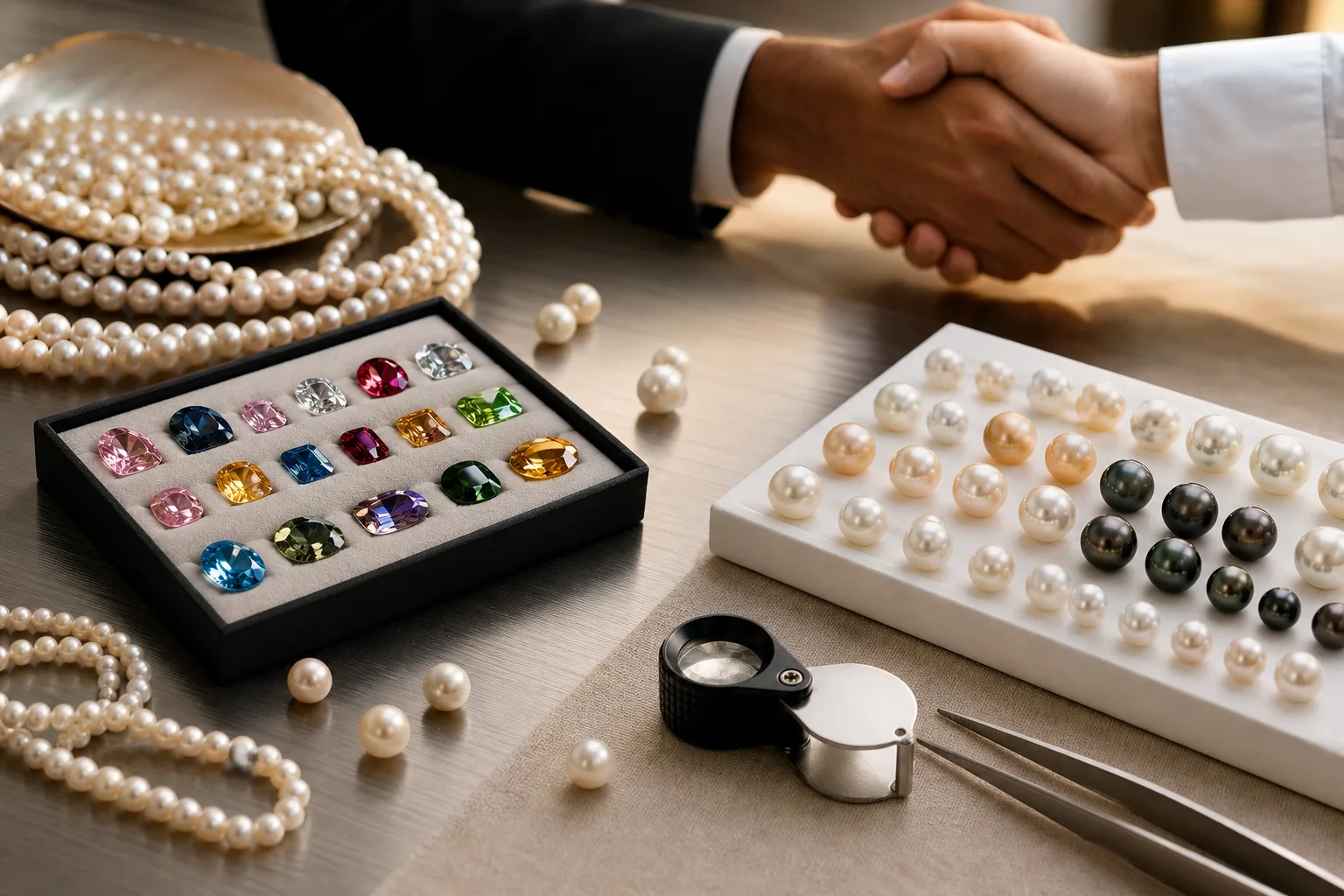
Activity code 4773.12 covers the retail and wholesale buying and selling of natural and cultured pearls, diamonds, rubies, emeralds, sapphires, and other precious and semi-precious stones. It permits sourcing, grading assessment, reselling, and re-exporting stones in their existing form.
It is important to understand what the licence does not cover. Cutting, polishing, and manufacturing — processes that physically transform raw material into finished gems or jewellery — fall under separate activity codes and require different facilities and regulatory approvals. This licence is strictly for trading: acquiring stones and moving them through commercial channels to the next buyer.
Who are the typical customers for a pearls and precious stones trading business in Dubai
The customer base for a business operating under this licence is predominantly trade-focused rather than consumer-facing. Typical buyers include jewellery manufacturers sourcing certified stones for production, retail jewellers purchasing wholesale inventory, and private collectors acquiring investment-grade gems.
Institutional buyers, auction houses, and export traders routing stones to international markets are also common customers. The B2B wholesale model dominates this space, and most free zone operators focus on supplying trade buyers rather than end consumers — an approach that aligns well with the operational structure a free zone licence supports.
Why is Dubai considered a strategic hub for pearls and precious stones trading
Dubai's role in the global gem trade is structural rather than incidental. Pearl trading defined the pre-oil Gulf economy, and that heritage has evolved into a sophisticated modern market connecting suppliers in Africa, India, and South America with buyers across Europe and Asia.
The emirate functions as a primary transit and re-export node for rough and polished diamonds, coloured gemstones, and cultured pearls. Indian cutting centres, African mining operations, and European luxury buyers all route transactions through UAE-registered entities. The UAE is also among the world's top five diamond trading centres by volume, according to the Invest in Dubai platform.
What AML obligations apply to precious stones dealers in the UAE
The UAE Ministry of Economy classifies precious stones dealers as Designated Non-Financial Businesses and Professions (DNFBPs). This classification triggers mandatory anti-money laundering (AML) and counter-terrorism financing (CTF) obligations that must be in place before trading begins — not retrofitted after the fact.
Specific requirements include customer due diligence, transaction monitoring, and registration on the goAML platform. Full details of these obligations are published by the UAE Ministry of Economy. Founders should treat compliance infrastructure as a foundational business requirement, not an administrative afterthought.
What is the Kimberley Process and does it apply to businesses trading in Dubai
The Kimberley Process Certification Scheme (KPCS) is an international framework designed to prevent the trade of conflict diamonds — rough diamonds used to finance armed conflict against governments. Any business importing or exporting rough diamonds must comply with its requirements.
Because the UAE participates in the Kimberley Process, UAE-registered entities dealing in rough diamonds are subject to its certification and documentation standards. Compliance is not optional; it is a legal prerequisite for cross-border rough diamond transactions and a key due diligence expectation from international trade partners.
Why is Meydan Free Zone recommended for setting up a pearls and precious stones trading business
Meydan Free Zone offers a trading licence structure that is well-suited to high-value commodity businesses such as pearls and precious stones trading. It supports full remote setup, meaning founders do not need to be physically present in Dubai throughout the incorporation process.
The free zone also offers competitive costs and a compliance framework aligned to UAE federal requirements, including those relevant to DNFBP-classified businesses. Like other UAE free zones, it permits 100% foreign ownership and zero personal income tax, making it an operationally and financially efficient base for international gem trading operations.
What are the key trade corridors that flow through Dubai in the gems and precious stones sector
Dubai sits at the intersection of several major global gem supply chains. Indian cutting centres, African mining operations, and South American suppliers all route significant volumes of rough and polished stones through UAE-registered entities on their way to end markets.
On the demand side, European luxury buyers and Asian markets are primary destinations for stones transiting through Dubai. This positioning makes the UAE a genuine re-export hub rather than simply a local market, and it is a core reason why free zone trading licences in this sector can support genuinely international commercial models from day one.
What is the broader market outlook for the precious stones and gems sector
The global precious stones and gems market is projected to grow steadily through 2030, driven primarily by rising demand from Asia and the Middle East, according to Mordor Intelligence. This growth trajectory supports the case for establishing trading infrastructure in a hub like Dubai that already serves both supply and demand sides of those corridors.
Dubai reinforces its position as a live B2B marketplace by hosting major international gem and jewellery trade events annually, giving UAE-registered businesses direct access to global buyers and sellers in a concentrated, relationship-driven environment. UAE jewellery and precious metal exports also consistently rank among the country's top non-oil export categories, reflecting the sector's established commercial depth.
How to Start a Pearls and Precious Stones Trading Business in Dubai
Pearl diving built the Gulf economy before oil did, and Dubai never quite let go of the trade. What was once a fleet of dhows is now a re-export hub where rough diamonds from Africa, cut stones from India and emeralds from Colombia all pass through on their way to a buyer somewhere else.
This guide covers what activity code 4773.12 lets you trade, who buys from you, the compliance you must have in place before you start rather than after, and how to get licensed through Meydan Free Zone. The rules here are strict, and that is the point.
Key Stats at a Glance
| Activity code | 4773.12, Pearls and Precious Stones Trading |
|---|---|
| What it covers | Retail and wholesale buying and selling of pearls, diamonds, rubies, emeralds, sapphires and other precious and semi-precious stones |
| What it does not cover | Cutting, polishing and manufacturing, which need separate codes and different facilities |
| Compliance status | Designated Non-Financial Business and Profession under Ministry of Economy rules |
| Rough diamonds | Kimberley Process certificates confirming stones are conflict-free |
| Diamond ranking | The UAE is among the world's top five diamond trading centres by volume – Invest in Dubai |
| Export standing | Jewellery and precious metals rank among the UAE's top non-oil export categories |
| Market outlook | Global precious stones and gems market set to grow steadily through 2030 on Asian and Middle Eastern demand – Mordor Intelligence |
| VAT | Investment-grade diamonds and certain precious metals zero-rated, other stones at 5% – Federal Tax Authority |
| Setup timeline | Three to seven working days, fully remote |
What This License Covers

Activity code 4773.12 covers buying and selling natural and cultured pearls, diamonds, rubies, emeralds, sapphires and other precious and semi-precious stones, at retail or wholesale. It permits sourcing, grading assessment, reselling and re-exporting stones in the form you received them.
The scope stops at the point where you change the stone. Cutting, polishing and manufacturing all turn raw material into something else, and they sit under separate codes with different facilities and approvals behind them. This is a trading license: you acquire stones and move them along to the next buyer.
Who Your Clients Will Be
Almost everyone you sell to is in the trade themselves.
- Jewellery manufacturers sourcing certified stones for production
- Retail jewellers buying wholesale inventory
- Private collectors after investment-grade gems
- Institutional buyers and auction houses
- Export traders routing stones into international markets
The B2B wholesale model dominates, and most free zone operators supply trade buyers rather than end consumers, which fits how a free zone license works anyway. Your supplier relationships are the real asset here rather than your customer list, and the sourcing markets are well established: India, and Surat in particular, for cut diamonds; sub-Saharan Africa for rough diamonds and coloured stones; Sri Lanka and Burma for sapphires and rubies; Colombia for emeralds. Buyers in all of them expect GIA, IGI or equivalent laboratory certification on anything significant, so build that into how you buy from the first parcel.
Be honest with yourself about working capital. Stones are illiquid until a buyer is confirmed, payment terms in wholesale gem trading are tight, and margins vary sharply by stone and grade. Coloured gemstones generally carry wider margins than commercial-grade diamonds, where pricing is far more commoditised.
Mainland or Free Zone
| Factor | Mainland (DET) | Free Zone (Meydan Free Zone) |
|---|---|---|
| Who you sell to | Open UAE market, retail consumers included | B2B wholesale, export and trade buyers |
| Selling retail to UAE consumers at scale | Covered by the license | Needs a distribution arrangement |
| Foreign ownership | Set by DET rules for the activity | 100% yours, no local sponsor |
| AML and Kimberley Process | Apply | Apply |
| Setup route | Apply through DET | Fully remote, license in three to seven working days |
Let your buyers decide it, not the price. A free zone trading license suits the B2B wholesale model directly, and supplying manufacturers, exporters and trade buyers works cleanly inside that framework. Selling to UAE mainland retail consumers at any scale is a different proposition and calls for a distribution arrangement on top.
[blockCTACostCalculator]
Step by Step Setup Guide
- Step 1, confirm your activity and license category: Select 4773.12 under the trading license category and confirm the full scope of permitted operations with the Meydan Free Zone team before you submit.
- Step 2, choose your company structure: A Free Zone Limited Liability Company is the standard choice. It separates liability and is recognised for banking and customs purposes.
- Step 3, book your company name: Names must follow UAE conventions, so nothing offensive and no reference to political or religious institutions without approval.
- Step 4, send in your setup documents: Passport copies, proof of address and the completed application form. No local sponsor is needed.
- Step 5, take your trade license: Issuance is fully remote, so you do not need to be in Dubai to complete it.
- Step 6, open a corporate bank account: High-value commodity traders face serious KYC. Have your source of funds, business plan, supplier and customer profiles and AML policy documents ready before you apply.
- Step 7, apply for visas: Allocation is tied to your office package, covering shareholder and employee visas.
From completed application to active license, the usual timeline is three to seven working days.
Compliance and What You Need in Place
Anti-money laundering
The Ministry of Economy classifies precious stones dealers as Designated Non-Financial Businesses and Professions, which brings mandatory anti-money laundering and counter-terrorism financing duties. That means customer due diligence, transaction monitoring and goAML registration. Build this before you trade rather than bolting it on afterwards, because the first thing a serious counterparty asks for is your compliance framework.
Kimberley Process
Any business importing or exporting rough diamonds must comply with the Kimberley Process Certification Scheme, which requires government-issued certificates confirming the stones are conflict-free. This is a condition of cross-border rough diamond trade, not a preference, and international partners will treat it as basic due diligence.
Customs documentation
Cross-border stone movements need accurate customs declarations and supporting paperwork under the Ports, Customs and Free Zone Corporation framework. Every shipment should carry proper certificates of origin, valuation documents and, where they apply, gemological laboratory reports.
VAT and corporate tax
Investment-grade diamonds and certain precious metals qualify for zero-rating under UAE VAT rules, while other precious stones carry the standard 5%. Check the treatment of your specific product lines with the Federal Tax Authority guidance before you invoice anything. Free zone entities meeting the qualifying conditions pay 0% corporate tax on qualifying income, and there is no personal income tax in the UAE.
Market Opportunity
Dubai's role here is structural rather than accidental. The emirate sits between suppliers in Africa, India and South America and buyers across Europe and Asia, and it functions as a primary transit and re-export node for rough and polished diamonds, coloured gemstones and cultured pearls. The UAE ranks among the world's top five diamond trading centres by volume, and jewellery and precious metals sit among its largest non-oil export categories. The logistics, banking, customs and free zone frameworks were all built for exactly this kind of trade.
The demand side is holding up. Mordor Intelligence expects the global precious stones and gems market to grow steadily through 2030, driven mainly by Asia and the Middle East, both of which Dubai already serves. The city also hosts major international gem and jewellery trade events every year, which turns it into a live B2B marketplace rather than just a transit point. Trade shows matter more in this business than in most: Dubai Jewellery Week and international fairs such as the Hong Kong Jewellery and Gem Fair are primary lead-generation channels. Budget for them early, because stand costs and logistics are real, but the buyer access is direct.
Conclusion
Pearls and precious stones trading is a serious, well-regulated business with real global demand and a customer base that values reliability over price.
Meydan Free Zone gives you a fully remote route to a compliant license with full ownership and 0% corporate tax on qualifying income. Three things decide how well it goes: an AML framework in place before your first transaction, Kimberley Process documentation handled properly on every rough diamond shipment, and enough working capital to hold stock while you find the buyer.
[blockCTAContact]
References
- Invest in Dubai
- Mordor Intelligence
- Ministry of Economy
- Ports, Customs and Free Zone Corporation
- Federal Tax Authority