
Table of Contents
Frequently Asked Questions
What is activity code 4321.94 and what does it cover
Activity code 4321.94 refers to Security Equipment Installation & Maintenance, a licensed business activity in Dubai that sits at the intersection of construction, technology, and compliance.
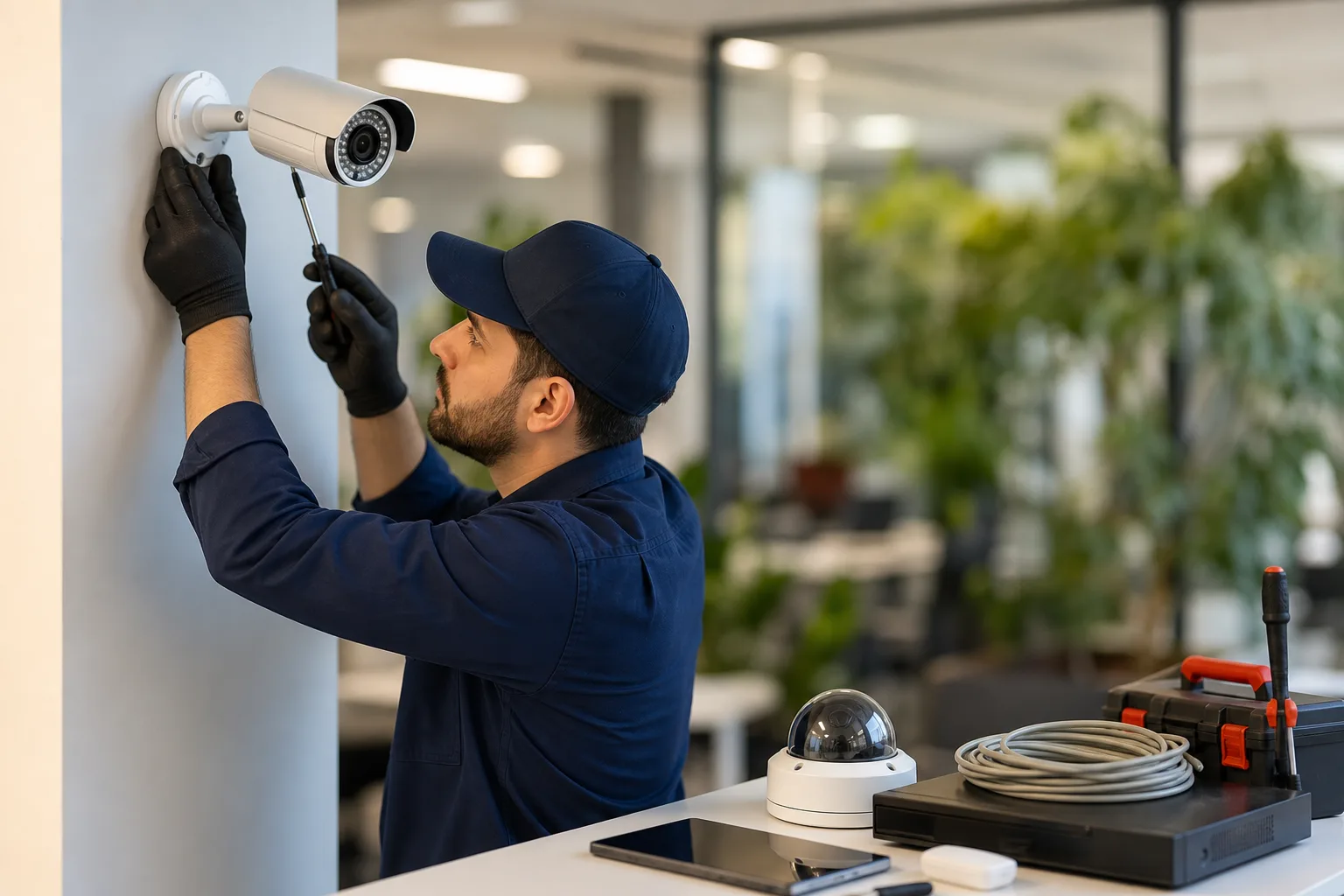
Under this activity, a business can design, install, commission, and maintain the full range of electronic security and fire detection systems. This includes CCTV and video surveillance, intrusion detection and alarm systems, access control and biometric entry, intercom and visitor management, and fire alarm systems integrated with Civil Defence-approved suppression infrastructure.
The activity covers work across commercial, residential, and government assets, making it one of the more durable service categories in the UAE's project economy.
Is Dubai Police approval required to install security systems commercially
Yes. Dubai Police approval is mandatory for any company installing security systems on commercial premises in Dubai. The Dubai Police Electronic Security Department oversees the licensing of security system providers.
Without this approval, you cannot legally execute commercial contracts. It is essential to factor the application timeline into your business launch plan to avoid delays in taking on paid work.
What role does Dubai Civil Defence play in security equipment installation
Dubai Civil Defence compliance applies to any work involving fire alarm systems or suppression integration. Civil Defence sets the technical standards that installations must meet.
Completed works require a formal inspection and sign-off from Dubai Civil Defence before a building can receive its occupancy certificate. This makes Civil Defence approval a critical milestone in any project timeline, particularly for new builds and fit-outs.
What are the two main revenue streams for a security installation business in Dubai
The commercial model for activity 4321.94 divides into two distinct revenue streams. The first is project-based work — covering new builds, fit-outs, and system upgrades — which generates upfront contract revenue.
The second is maintenance contracts with service-level agreements, providing recurring monthly or quarterly income from the same client base. According to the article, maintenance contracts are where margin stability comes from, making them a strategically important part of the business model.
Who are the primary target customers for a security equipment installation business in Dubai
This is fundamentally a B2B business with institutional client relationships and written contracts. Primary customers include real estate developers and main contractors, hospitality groups managing hotels and serviced apartments, and retail chains requiring multi-site standardisation.
Government and semi-government facilities are also a significant customer segment, as are SME office tenants with compliance obligations. Repeat work in this sector follows directly from reliable service delivery, making client retention a core business priority.
What is driving demand for security equipment installation in Dubai
Several converging factors are sustaining commercial demand. Dubai's ongoing construction boom, smart city ambitions, and zero tolerance for security lapses all contribute. The UAE physical security market is on a firm growth trajectory, with the Middle East security systems market expanding due to large-scale infrastructure investment and smart building mandates.
Specific demand drivers include Expo 2020's legacy infrastructure, ongoing giga-projects, and a hospitality sector adding thousands of keys annually. Additionally, government mandates for CCTV and access control in commercial premises continue to expand the scope of mandatory compliance, creating a steady pipeline of required installations.
What are the VAT obligations for a security installation business in the UAE
VAT obligations apply once your taxable turnover crosses the mandatory registration threshold set by the Federal Tax Authority (FTA). Security installation contracts are treated as standard-rated supplies under UAE VAT law.
It is important to review your VAT position with the FTA and register before you exceed the threshold, not after. Failing to register on time can result in penalties, so monitoring turnover against the threshold should be part of your ongoing financial management from the outset.
What employment compliance requirements apply when hiring staff for a security installation business in Dubai
Employment compliance falls under MOHRE (Ministry of Human Resources and Emiratisation) regulations, which apply to any staff you hire. This includes adherence to standard UAE labour law requirements covering contracts, working conditions, and end-of-service entitlements.
Businesses that scale to qualifying headcount levels are also subject to Emiratisation targets, which require a defined proportion of the workforce to be UAE nationals. It is advisable to factor these obligations into your hiring and cost planning from an early stage, particularly if you anticipate growing your team quickly to meet project demand.
How to Start a Security Equipment Installation Business in Dubai
Every new tower, hotel and warehouse in Dubai needs cameras, card readers and fire alarms before anyone can move in. Somebody has to design the system, fit it, commission it and keep it working. Activity code 4321.94 is the license for that work, and it sits where construction, technology and compliance meet.
This guide covers what the code allows, who signs the contracts, the Dubai Police and Civil Defence approvals you cannot skip, and how to set up your license through Meydan Free Zone. The approvals are the part that catches people out, so plan for them early.
Key Stats at a Glance
What This License Covers

Activity code 4321.94, Security Equipment Installation and Maintenance, covers the full job rather than one slice of it: design, installation, commissioning and ongoing maintenance.
The systems in scope are CCTV and video surveillance, intrusion detection and alarms, access control and biometric entry, intercom and visitor management, and fire alarm systems tied into Civil Defence-approved suppression. You can work across commercial, residential and government assets, which is what makes this one of the more durable service categories in the UAE project economy.
Who Your Clients Will Be
This is a business-to-business trade. The relationships are institutional, the contracts are written, and repeat work comes from delivering reliably rather than from marketing.
- Real estate developers and main contractors
- Hospitality groups running hotels and serviced apartments
- Retail chains that need the same system across many sites
- Government and semi-government facilities
- SME office tenants with compliance duties
The money splits cleanly into two streams. Project work covers new builds, fit-outs and system upgrades, and it pays upfront against the contract. Maintenance contracts with service-level agreements pay monthly or quarterly from the same clients you already installed for. The second stream is where margin stability comes from, so treat every install as the start of a maintenance relationship rather than the end of a job.
Mainland or Free Zone
A free zone license covers B2B work. For direct mainland project execution you may need to bring in a mainland-registered entity or appoint a local service agent, depending on how the contract is written. Confirm the scope of the work you intend to take on with the Meydan Free Zone team before you pick your structure. Let your clients decide it, not the price.
[blockCTACostCalculator]
Step by Step Setup Guide
- Step 1, pick your activity: Confirm code 4321.94 is on the Meydan Free Zone approved list and matches the scope of work you plan to sell.
- Step 2, choose your legal structure: Most applicants go with an FZ-LLC, available with one shareholder or several. It caps your liability and keeps the company fully yours.
- Step 3, book your trade name: Submit three options in order of preference. Names must follow UAE naming conventions, so no offensive terms and no references to government bodies.
- Step 4, send in your application documents: Passport copies for all shareholders and the designated manager, a UAE visa page copy if you live here, proof of residential address, an NOC from a current UAE employer where relevant, and a brief description of your activity. That last one matters for regulated approvals such as Dubai Police registration.
- Step 5, take your license: Once approved, the trade license is issued and your visa allocation is confirmed against your package.
- Step 6, process visas and Emirates ID: Investor visa, entry permit, medical fitness test and Emirates ID follow a set sequence, usually finishing within a few weeks.
The whole application can be done remotely. You do not need to be in Dubai to get the license.
Compliance and What You Need in Place
Dubai Police approval
Any company installing security systems on commercial premises in Dubai needs approval from the Dubai Police Electronic Security Department. This is not optional and there is no way round it. Without it you cannot legally take on commercial contracts, so build the application timeline into your launch plan rather than discovering it when a client asks for your credentials.
Civil Defence
Dubai Civil Defence sets the technical standards for anything involving fire alarms or suppression integration. Completed work has to be inspected and signed off before the building gets its occupancy certificate. That puts you on the critical path of the whole project, which is good for your standing when you deliver and very bad when you do not.
VAT
Installation contracts are standard-rated supplies. Register with the Federal Tax Authority before you cross the mandatory threshold, not after. Late registration carries penalties, so track your turnover against the line as part of normal monthly bookkeeping.
Staff
MOHRE rules cover everyone you hire, including contracts, working conditions and end-of-service entitlements. Emiratisation targets apply once you scale to qualifying headcount. This activity needs technicians on the payroll, so plan the cost of both from the start.
Technicians and certification
Nothing here works without people who can commission a system properly and hand over documentation a Civil Defence inspector will accept. Budget for trained installers and keep their certifications current. It is what gets you onto developer approved vendor lists and what keeps you there.
Market Opportunity
Dubai's construction pipeline, smart city ambitions and low tolerance for security lapses all point the same way. IMARC Group expects the UAE security systems market to sustain high single-digit annual growth through 2030, driven by large-scale infrastructure investment, smart building mandates and government-led urban development.
The specific drivers are easy to see. Expo 2020 left behind infrastructure that still needs servicing, giga-projects are ongoing, and the hospitality sector adds thousands of keys a year, each of which needs cameras, access control and fire detection. Dubai ranks among the top smart city destinations globally, which keeps pulling demand toward integrated systems rather than standalone boxes.
Regulation adds a floor under all of it. Government mandates for CCTV and access control in commercial premises keep widening in scope, so a growing share of this work is not discretionary spending that gets cut in a slow quarter. It is compliance, and compliance gets paid.
Conclusion
Security systems installation is a solid, regulation-backed activity in Dubai with strong project pipelines across real estate, hospitality and government. The maintenance side gives you income that survives between projects, which is what separates the firms that last from the ones that chase one build after another.
Get your Dubai Police approval moving early, keep your Civil Defence work clean, and convert every install into a service agreement. Meydan Free Zone gives you full foreign ownership and a remote setup route, so the licensing side is the easy part.
[blockCTAContact]