
Table of Contents
Frequently Asked Questions
What is activity code 8129.02 and what services does it cover
Activity code 8129.02 is the UAE business activity classification for specialised building cleaning services. It is a technically defined licence, not a general cleaning permit.
The scope explicitly includes window cleaning, chimney cleaning, and cleaning of fireplaces, stoves, furnaces, incinerators, boilers, ventilation ducts, and exhaust units. This means operators licensed under 8129.02 can legally offer the full range of high-rise and mechanical system cleaning services that facility managers and building owners require.
Why is demand for specialised building cleaning growing in Dubai
Demand is driven by two structural forces: Dubai's expanding commercial real estate pipeline and increasing regulatory compliance obligations. Hundreds of active high-rise and mixed-use projects sustain long-term post-construction and operational cleaning contracts.
Critically, indoor air quality and HVAC hygiene standards are being more actively enforced, converting duct and ventilation cleaning from an optional service into a contractually and regulatorily required one. The UAE facilities management market is projected to grow at a CAGR of over 7% through 2028, according to IMARC Group, underpinning the sector's long-term outlook.
Who are the typical customers for a specialised building cleaning business in Dubai
The customer base is predominantly B2B, spanning several sectors. Core clients include commercial landlords and property management companies requiring scheduled exterior and duct cleaning, and facility management firms that subcontract specialist tasks they cannot perform in-house.
Other significant buyers include hospitality groups — hotels, serviced apartments, and F&B operators — with kitchen exhaust and ventilation compliance obligations, industrial operators managing boilers, incinerators, and furnace systems, and residential tower operators and owners' associations.
What does the revenue model look like for this type of business
The model typically combines two streams: recurring service contracts and project-based work. Recurring contracts — such as monthly or quarterly duct inspections and annual boiler cleans — provide cash flow stability and predictable income.
Project-based work, including post-construction cleans and reactive callouts, tends to offer higher margins. Operators who build a strong recurring contract base while selectively taking on project work can achieve both revenue consistency and profitability. Differentiation comes through technical capability such as rope access certification and HVAC-qualified technicians.
What are the key regulatory bodies that affect operations in Dubai
Several authorities govern how a specialised cleaning business must operate. Dubai Municipality sets standards for cleaning chemical usage, waste disposal, and on-site worker safety. Operators using chemical agents for boiler descaling or duct sanitisation must ensure products are approved and that handlers are properly trained.
The Dubai Health Authority (DHA) publishes occupational health guidelines relevant to workers handling industrial cleaning agents and operating in confined spaces. The Ministry of Human Resources and Emiratisation (MOHRE) governs labour contracts and staffing requirements for the workforce.
What technical certifications or capabilities are important for this business
Technical capability is a primary differentiator in this sector. For high-rise window cleaning, rope access certification is essential — it is both a safety requirement and a commercial credential that larger clients will demand before awarding contracts.
For duct and ventilation work, having HVAC-certified technicians on staff adds credibility and may be required to satisfy certain compliance contracts. The ability to produce documented compliance reporting — records that facility managers can present to regulators — is increasingly a commercial requirement rather than a nice-to-have.
Why is Meydan Free Zone mentioned as a setup option for activity code 8129.02
Meydan Free Zone is highlighted as a specific pathway to licence activity code 8129.02 in Dubai. Free zones in the UAE offer streamlined company formation processes, and Meydan is one of the zones that accommodates this specialised cleaning activity classification.
Setting up through a free zone can provide advantages including 100% foreign ownership, simplified incorporation procedures, and a defined regulatory framework. Entrepreneurs should verify current free zone rules and activity permissions directly, as these can be updated by the relevant authorities.
What makes specialised building cleaning different from general janitorial or cleaning services
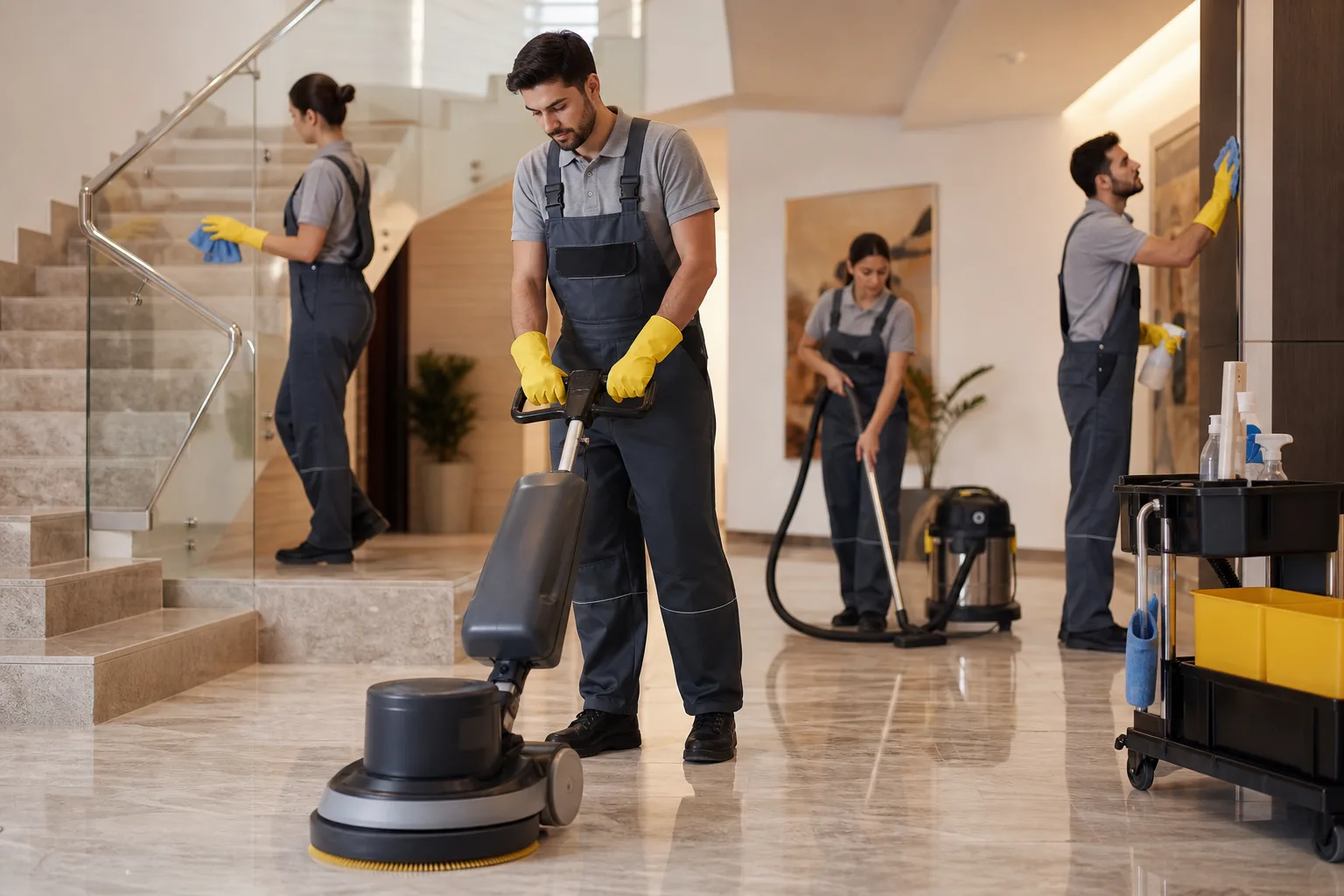
The distinction is both technical and regulatory. General janitorial work covers routine interior cleaning — floors, surfaces, common areas. Specialised building cleaning under activity code 8129.02 involves work at height, mechanical systems, and industrial equipment such as boilers, furnaces, incinerators, and HVAC ductwork.
These services carry compliance implications: improper duct cleaning can breach indoor air quality standards, and poorly maintained boilers or exhaust systems can create safety and liability issues for building owners. This compliance dimension means clients are often obligated to procure these services, creating more predictable and defensible demand than discretionary cleaning spend.
How to Start a Specialized Building Cleaning Business in Dubai
Somebody has to clean the outside of a 60-storey tower, scrub out a hotel kitchen's extract ducts, and descale an industrial boiler. None of that is janitorial work. It is technical, it happens at height or inside machinery, and increasingly the building owner is obliged to have it done rather than choosing to.
This guide covers what activity code 8129.02 lets you do, who buys the work, how to set up your license through Meydan Free Zone, and the safety and staffing rules that come with sending people up ropes and into confined spaces. Compliance is the demand driver here, which makes the income steadier than most service trades.
Key Stats at a Glance
What This License Covers

Activity 8129.02 is defined as specialised cleaning activities for buildings. The scope is spelled out: window cleaning, chimney cleaning, and the cleaning of fireplaces, stoves, furnaces, incinerators, boilers, ventilation ducts and exhaust units.
This is a technical license, not a general cleaning permit. Janitorial work covers floors and common areas. This code covers work at height, mechanical systems and industrial plant, and the difference is regulatory as much as technical. Poor duct cleaning can breach indoor air quality standards, and a badly maintained boiler or exhaust system creates safety and liability problems for the building owner. That is why clients are often obliged to buy these services rather than choosing to, which makes the demand far more defensible than discretionary cleaning spend.
Who Your Clients Will Be
The buyer list is almost entirely business-to-business, and most of them need you back on a cycle.
- Commercial landlords and property management companies needing scheduled exterior and duct cleaning
- Facility management firms subcontracting the specialist tasks they cannot do in-house
- Hospitality groups, meaning hotels, serviced apartments and F&B operators, with kitchen exhaust and ventilation duties
- Industrial operators running boilers, incinerators and furnace systems
- Residential tower operators and owners' associations
Money comes in two shapes. Recurring contracts, such as quarterly duct inspections and annual boiler cleans, give you cash flow you can plan around. Project work, such as post-construction cleans and callouts, pays better per job but arrives unpredictably. Build a recurring base and take project work on top.
What separates operators here is technical capability. Rope access certification is what lets you bid for high-rise window work, and it is both a safety need and a credential larger clients check before awarding anything. HVAC-certified technicians do the same for duct work. Documented compliance reporting, meaning records a facility manager can hand to a regulator, is now closer to a commercial condition than a nice extra.
Mainland or Free Zone
A free zone license lets you run B2B contracts across Dubai and the wider UAE, which is the standard structure for service businesses selling to commercial clients. Meydan Free Zone permits full foreign ownership and asks for no paid-up capital. A mainland license from the Department of Economy and Tourism is worth weighing if your model depends on selling into the open local market. Let your clients decide it, not the price.
[blockCTACostCalculator]
Step by Step Setup Guide
- Step 1, pick your activity and trade name: Confirm code 8129.02 is listed on your application. Choose a name that reflects the technical side of what you do, and check it against UAE naming conventions.
- Step 2, send in your application and documents: Passport copies for shareholders and directors, a completed application form and your chosen license package. Notarised documents and complex pre-approvals are not usually needed for a service activity like this.
- Step 3, take your license, then sort banking and visas: Once the license is issued, open a corporate bank account. Then apply for investor and employee visas through the free zone. For a field-based business your visa allocation decides how many technicians you can sponsor directly, so check it against your hiring plan before you commit.
The whole process can be completed remotely if you are not yet in the UAE.
Compliance and What You Need in Place
Dubai Municipality
The Municipality sets standards for cleaning chemical use, waste disposal and on-site worker safety. If you use chemical agents for boiler descaling or duct sanitisation, the products have to be approved and the people handling them have to be trained. Both parts get checked.
Worker health
The Dubai Health Authority publishes occupational health guidance covering workers who handle industrial cleaning agents and who work in confined spaces. Duct and boiler work involves both. Read it before you write your method statements, not after an incident.
Staffing
MOHRE governs labour contracts, visa quotas and worker welfare. A cleaning business with field staff must keep Wage Protection System compliance current and provide proper accommodation and insurance. This is a bigger part of running the business than the cleaning itself, and clients do ask about it.
Insurance
Public liability and employer liability cover are essential for high-rise and industrial work. Most commercial clients will want proof of cover before they award a contract, so treat it as a cost of entry rather than an optional extra.
VAT
Cleaning services carry VAT at 5%. Registration with the Federal Tax Authority becomes mandatory once annual turnover passes AED 375,000, which contract volumes in this trade reach quickly.
Market Opportunity
Dubai's skyline is operating commercial inventory rather than decoration. Towers, hotels, hospitals, industrial sites and residential complexes all generate recurring demand for cleaning that goes well past janitorial work, and the construction pipeline includes hundreds of active high-rise and mixed-use projects, each of which needs post-construction and then operational cleaning.
IMARC Group projects the UAE facilities management market to grow above 7% a year through 2028, driven by commercial property expansion and compliance pressure. The hospitality and tourism sector, a major buyer of specialist cleaning, keeps expanding on the back of government investment targets set out by Invest in Dubai.
The structural driver is compliance rather than preference. Enforcement of indoor air quality and HVAC hygiene standards has turned duct and ventilation cleaning from an optional service into a contractually and regulatorily needed one. Facility managers and building owners are increasingly obliged to keep ventilation systems, exhaust units and building exteriors clean, and that obligation is what makes your revenue recur.
Conclusion
Specialised building cleaning is a grounded, regulation-backed trade with durable demand across Dubai's built environment. A growing commercial property stock, tightening standards and a B2B client base that values documented delivery all point the same way.
Get rope access and HVAC certification in place, insure properly, and build your compliance reporting so a facility manager can pass it straight to a regulator. Those three things are what win contracts here, and Meydan Free Zone gives you full ownership and a short setup to build them on.
[blockCTAContact]