
Table of Contents
Frequently Asked Questions
What licence do I need to start a vehicle upholstery business in Dubai
You need a trade licence under activity code 4520.93, which covers vehicle upholstery services including seat re-trimming, door panel restoration, headliner replacement, and full custom interior builds. This is classified as a trade activity, not a professional service, which affects both the licence type and the operational requirements attached to it.
You can obtain this licence through the Dubai Department of Economy and Tourism (DED) for a mainland setup, or through a free zone authority such as Meydan Free Zone for a free zone structure. Each route has different ownership, cost, and operational implications worth evaluating before you apply.
What is the difference between a mainland DED licence and a free zone licence for this business
A mainland DED licence allows you to operate a physical workshop anywhere in Dubai and serve customers directly across the emirate without restriction. It is the more straightforward option if you plan to run a customer-facing workshop from day one.
A free zone licence, such as through Meydan Free Zone, offers advantages including 100% foreign ownership, faster setup timelines, and lower initial costs. However, if your workshop premises are located outside the free zone boundary, you will need a separate arrangement or a local service agent to conduct mainland operations legally.
The right choice depends on your ownership structure, budget, and whether you intend to serve mainland clients directly from a physical workshop.
Who are the main customer segments for a vehicle upholstery business in Dubai
The market broadly divides into four customer categories. Private car owners seek repairs or cosmetic upgrades. Luxury and supercar owners commission bespoke interior builds using premium materials, commanding significantly higher margins. Car rental fleets require periodic interior restoration, offering volume work with repeat contracts. Dealerships need pre-sale refurbishment to prepare vehicles for resale.
Each segment carries different pricing logic and sales cycles. Fleet contracts in particular introduce recurring revenue with predictable scheduling, which can stabilise cash flow compared to relying solely on walk-in private clients.
Do I need to register for VAT when running a vehicle upholstery business in Dubai
UAE VAT at 5% applies to both upholstery services and the materials used, and is administered by the Federal Tax Authority (FTA). VAT registration becomes mandatory once your taxable turnover exceeds the statutory threshold set by the FTA.
If you are importing leather, fabric, foam, or trim components regularly, VAT and customs implications apply to those purchases as well. It is important to factor customs clearance costs and lead times into your pricing model from the outset to protect your margins.
What workshop requirements apply to a vehicle upholstery business in Dubai
Any physical workshop will require municipality approval and must meet basic safety and fit-out standards before you can begin operations. These requirements are separate from your trade licence and form part of the operational compliance process.
The specific standards relate to the premises layout, ventilation, fire safety, and general fit-out. Engaging a business setup consultant familiar with Dubai's municipality requirements can help you avoid delays during this stage.
What are the employment and labour compliance obligations when hiring technicians
All employment contracts and visa sponsorships for technicians fall under the Ministry of Human Resources and Emiratisation (MOHRE). Labour compliance, including Wage Protection System (WPS) salary processing, applies from the moment you make your first hire.
You will need to ensure contracts are properly registered, salaries are paid through WPS on time, and any visa-related obligations are met. Non-compliance with MOHRE regulations can result in fines or restrictions on your ability to hire additional staff.
What does the vehicle upholstery market in Dubai look like in terms of size and demand
Dubai has over 1.5 million registered vehicles according to Roads and Transport Authority (RTA) data, with registrations continuing to grow year on year. The UAE consistently ranks among the highest globally for per-capita vehicle ownership, which creates persistent aftermarket demand for upholstery repair, restoration, and custom interior work.
The UAE automotive aftermarket is projected to grow steadily through the mid-2020s, driven by an ageing vehicle fleet and rising customisation demand, according to IMARC Group. Global upholstery market data from Statista also points to consistent annual growth underpinned by premiumisation trends — a dynamic that is particularly relevant in Dubai's luxury car culture.
What business models are available for a vehicle upholstery operation in Dubai
The standard model is a workshop-based operation with job pricing quoted per vehicle or per panel. This suits both private clients and dealership refurbishment work. Fleet contracts introduce a recurring revenue stream with predictable scheduling, which can significantly improve business stability.
A mobile service option is also viable for minor repairs such as small tears or localised damage, though it requires a separate operational setup including a suitably equipped vehicle. Each model has different capital requirements, so most operators begin with a fixed workshop and add mobile capability once the core business is established.
How to Start a Vehicle Upholstery Business in Dubai
Dubai runs on cars. The UAE is among the highest countries in the world for vehicles per person, and a lot of those cars are worth spending money on. Seats wear, headliners sag, rental fleets get tired, and someone has to put the interiors right.
This guide covers what activity code 4520.93 lets you do, which customers pay best, the workshop and staffing rules you have to meet, and how to set up your license through Meydan Free Zone. The barriers here are low. The thing that catches people out is the workshop, because that sits outside your trade license and has its own approvals.
Key Stats at a Glance
What This License Covers

Activity code 4520.93 covers vehicle upholstery work in the broad sense. In practice that means seat re-trimming, door panel restoration, headliner replacement, full custom interior builds and fleet refurbishment programmes.
It sits inside the vehicle maintenance and repair category and counts as a trade activity rather than a professional service. That matters, because it shapes both the license type you take and what you have to put in place to operate.
Who Your Clients Will Be
Your customers split four ways, and each one pays differently:
- Private car owners wanting a repair or a cosmetic upgrade. Steady work, modest tickets.
- Luxury and supercar owners commissioning bespoke interiors in premium materials. Far better margins.
- Car rental fleets needing interiors restored on a cycle. Volume, and repeat contracts.
- Dealerships preparing used stock for sale. Predictable and regular.
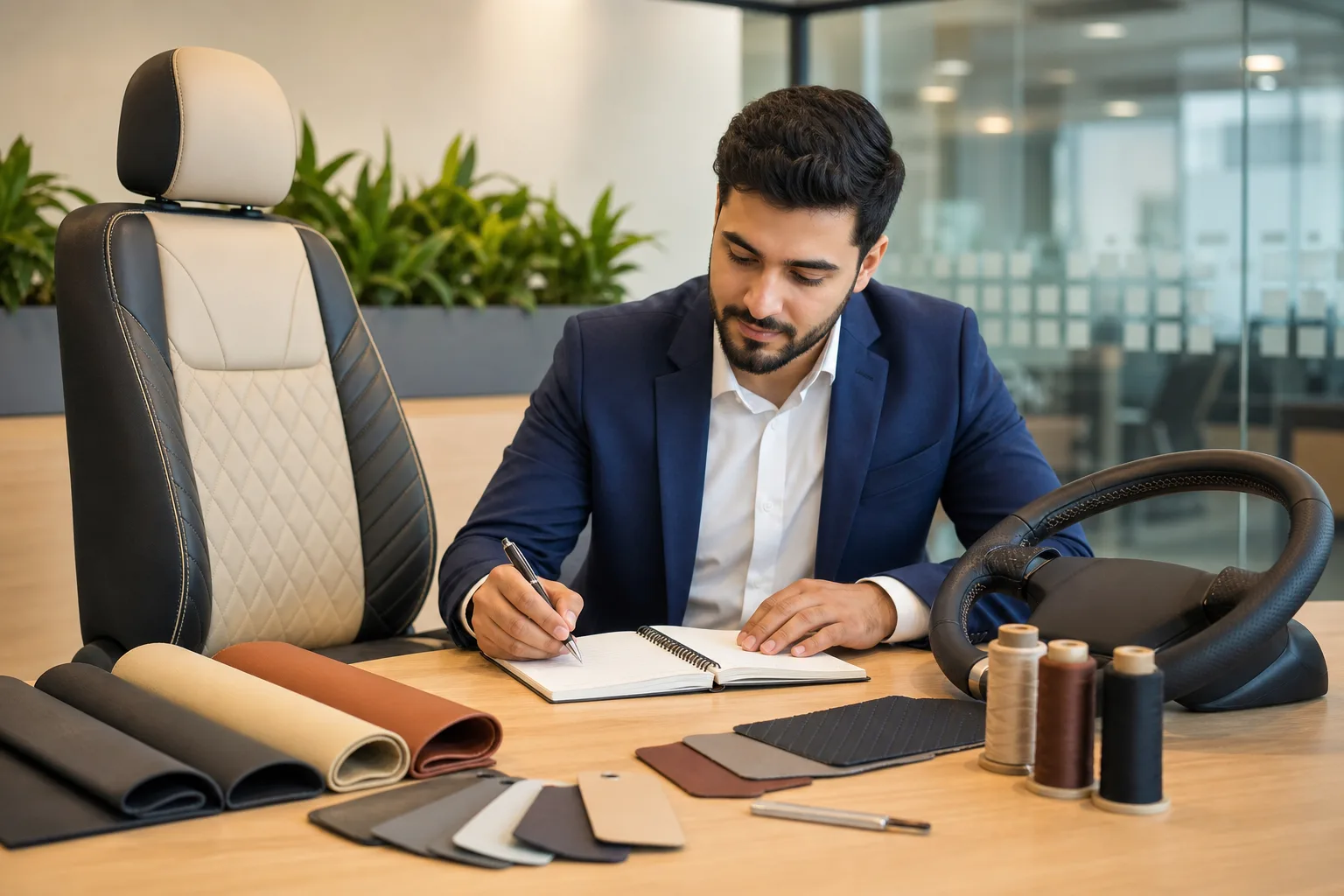
Most operators price by the job, quoted per vehicle or per panel. Fleet contracts change the shape of the business, because they bring recurring money on a schedule you can plan around rather than waiting for the phone to ring. A mobile service works for small tears and localised damage, but it needs its own kit and a properly fitted vehicle, so most people start with a fixed workshop and add mobile work once the core business stands up.
One more thing worth planning early. Your leather, fabric, foam and trim will mostly come in from abroad, which brings VAT and customs into your costs. Build clearance charges and lead times into your prices from the start, not after your first late delivery.
Mainland or Free Zone
A mainland license from the Department of Economy and Tourism is the simpler route if you want a customer-facing workshop open across the emirate from day one. A free zone license gives you full ownership, a faster start and a lower bill, but a workshop outside the free zone boundary needs its own arrangement. Let your buyers decide it, not the price.
[blockCTACostCalculator]
Step by Step Setup Guide
- Step 1, confirm your activity scope: Check that the services you intend to sell all sit inside code 4520.93 on the Meydan Free Zone activity list.
- Step 2, pick your legal structure: A Free Zone Sole Establishment suits one founder. A Free Zone LLC works when there are several shareholders. Both give you 100% ownership.
- Step 3, book your trade name: Send your preferred name for approval. It must follow UAE naming rules, so no offensive terms and no references to political or religious bodies.
- Step 4, send in your documents and pay: Passport copies, a short business plan if one is asked for, and the initial license fees. The process is mostly digital.
- Step 5, collect your license and apply for visas: Licenses usually issue within a few working days once your papers are in order. Each visa needs Emirates ID registration and a medical.
- Step 6, open a bank account and sort your workspace: Banks want a UAE trade license and Emirates ID, and onboarding takes two to four weeks. Meydan Free Zone offers flexi-desk and office options, but an active workshop is leased separately with municipality sign-off.
Compliance and What You Need in Place
Workshop approval
Any physical workshop needs municipality approval before you open the doors. The checks cover premises layout, ventilation, fire safety and general fit-out. This is separate from your trade license, so treat it as its own project with its own timeline. A setup consultant who knows the municipality rules will save you weeks.
VAT and materials
UAE VAT of 5% applies to your services and to the materials you use. Registration is compulsory once taxable turnover passes AED 375,000 a year. Below that you can register voluntarily, which is often worth it when your clients are VAT-registered companies and want proper tax invoices.
Staff
Every technician contract and visa sponsorship falls under Ministry of Human Resources and Emiratisation rules. Contracts must be registered properly and salaries paid through the Wage Protection System on time, from your first hire onwards. Breaking those rules brings fines and can block you from hiring more people.
Market Opportunity
The base is the fleet. Dubai has over 1.5 million registered vehicles and registrations keep climbing, while the UAE sits among the highest countries anywhere for vehicles per person. That produces constant aftermarket demand for repair, restoration and custom interior work.
The trend behind it is favourable too. The UAE automotive aftermarket is set to grow steadily through the mid-2020s, helped by an ageing vehicle fleet and rising appetite for customisation. Globally, automotive upholstery keeps growing year on year as buyers trade up to better materials, and Dubai's luxury car culture makes that shift sharper here than in most places.
Two tiers carry the profit. Luxury and supercar work pays for craftsmanship and premium materials. Fleet work from rental companies, corporate transport and logistics operators pays in volume and comes back on a cycle. A business that serves both has a floor under its revenue and a ceiling worth chasing.
Conclusion
Vehicle upholstery in Dubai is a practical trade that scales, sitting on high vehicle ownership and an active luxury and fleet market. The licensing path is simple enough if you set the structure up correctly at the start.
The workshop is the part to plan hardest. Get your municipality approval moving early, decide whether your customers sit inside or outside the free zone, and land one fleet contract before you take on premises. That gives you a base of income while you build the higher-margin custom side.
[blockCTAContact]