
Table of Contents
Frequently Asked Questions
What does ISIC activity code 5222 cover in Dubai
ISIC activity code 5222 covers service activities incidental to water transportation — meaning the operational support layer that sits alongside vessel movement rather than the vessels themselves.
Specific services under this code include pilotage, vessel berthing assistance, navigational support, vessel traffic management, maritime salvage operations, and the operation of lighthouses, buoys, and other navigational aids.
The key distinction is that businesses operating under this code hold service contracts rather than operating fleets. The model is B2B, with clients typically being port operators, shipping lines, and logistics firms.
Who are the typical customers for a 5222-licensed water transport support business
The primary customer base for a business licensed under activity code 5222 is made up of other commercial and industrial operators, not consumers. This is a firmly B2B sector.
Key customer categories include:
- Shipping lines requiring port-side support
- Port operators outsourcing specialist functions
- Offshore energy firms managing vessel logistics
- Yacht and leisure marine operators needing navigational or emergency response services
The concentration of maritime activity across Jebel Ali, Port Rashid, and Dubai Maritime City means this customer base is geographically dense and commercially accessible.
How large is Dubai's maritime sector and why does it matter for this business
Dubai's maritime sector is one of the most significant in the world. Jebel Ali Port alone handles over 14 million TEUs annually, making it the largest port in the Middle East and among the top ten globally, according to DP World.
The UAE's non-oil GDP has exceeded AED 1.3 trillion in recent years, with the maritime sector playing a central role in that figure. The Ports, Customs and Free Zone Corporation oversees one of the most active port clusters in the world.
Critically, demand for water transport support services is structural rather than trend-driven — it is tied to trade infrastructure and port expansion, meaning it does not fluctuate with consumer sentiment in the way retail or hospitality sectors do.
What revenue models are common for water transport support businesses
Businesses operating under activity code 5222 typically structure their revenue around one of three commercial models, each suited to different service scopes and client relationships.
- Retainer agreements with port operators or shipping lines for ongoing, recurring support services
- Per-call contracts for specific engagements such as salvage operations or emergency berthing assistance
- Emergency response arrangements where the business is on standby for time-critical maritime incidents
The retainer model tends to provide the most predictable cash flow, while per-call and emergency contracts can command premium pricing due to their specialist and time-sensitive nature.
Which regulatory authorities govern water transport support businesses in Dubai
Regulatory oversight in Dubai is divided between two principal authorities, and understanding the distinction is essential before finalising your business model.
The Ports, Customs and Free Zone Corporation (PCFC) governs port-side operations across Jebel Ali, Port Rashid, and related inland container depots. Businesses providing services within these port environments will primarily engage with PCFC.
The Roads and Transport Authority (RTA) has jurisdiction over maritime activity within Dubai's internal waterways. If your service scope extends to canal, creek, or inland waterway operations, RTA oversight will apply.
Engaging with the correct authority from the outset avoids compliance complications and ensures your licence accurately reflects your operational scope.
How can a water transport support business be licensed through Meydan Free Zone
Meydan Free Zone is identified as a licensing pathway for businesses seeking to operate under activity code 5222 in Dubai. Free zone licensing offers several structural advantages for this type of business, including 100% foreign ownership, streamlined incorporation processes, and access to Dubai's broader trade and logistics ecosystem.
The activity code 5222 — Service Activities Incidental to Water Transportation — is a recognised classification within the UAE's commercial licensing framework, and Meydan Free Zone accommodates it as part of its business activity list.
Prospective operators should confirm the specific service activities they intend to provide, as the scope of the licence should align precisely with the services being contracted to clients such as port operators and shipping lines.
What makes Dubai's geography commercially advantageous for water transport support services
Dubai's maritime infrastructure is unusually concentrated for a city of its size. Jebel Ali, Port Rashid, and Dubai Maritime City are all located within a compact geography, which means that demand for pilotage, berthing, navigational support, and salvage services is dense and accessible from a single operational base.
This contrasts with markets where port activity is spread across large coastal regions, requiring businesses to maintain multiple operational hubs to serve the same volume of clients.
Additionally, Dubai's position as a transshipment hub connecting Asia, Africa, and Europe — reinforced by bilateral Comprehensive Economic Partnership Agreements — means vessel call volumes are structurally supported by long-term trade policy, not just short-term market conditions.
What is the difference between operating under code 5222 and actually running a shipping or vessel operation
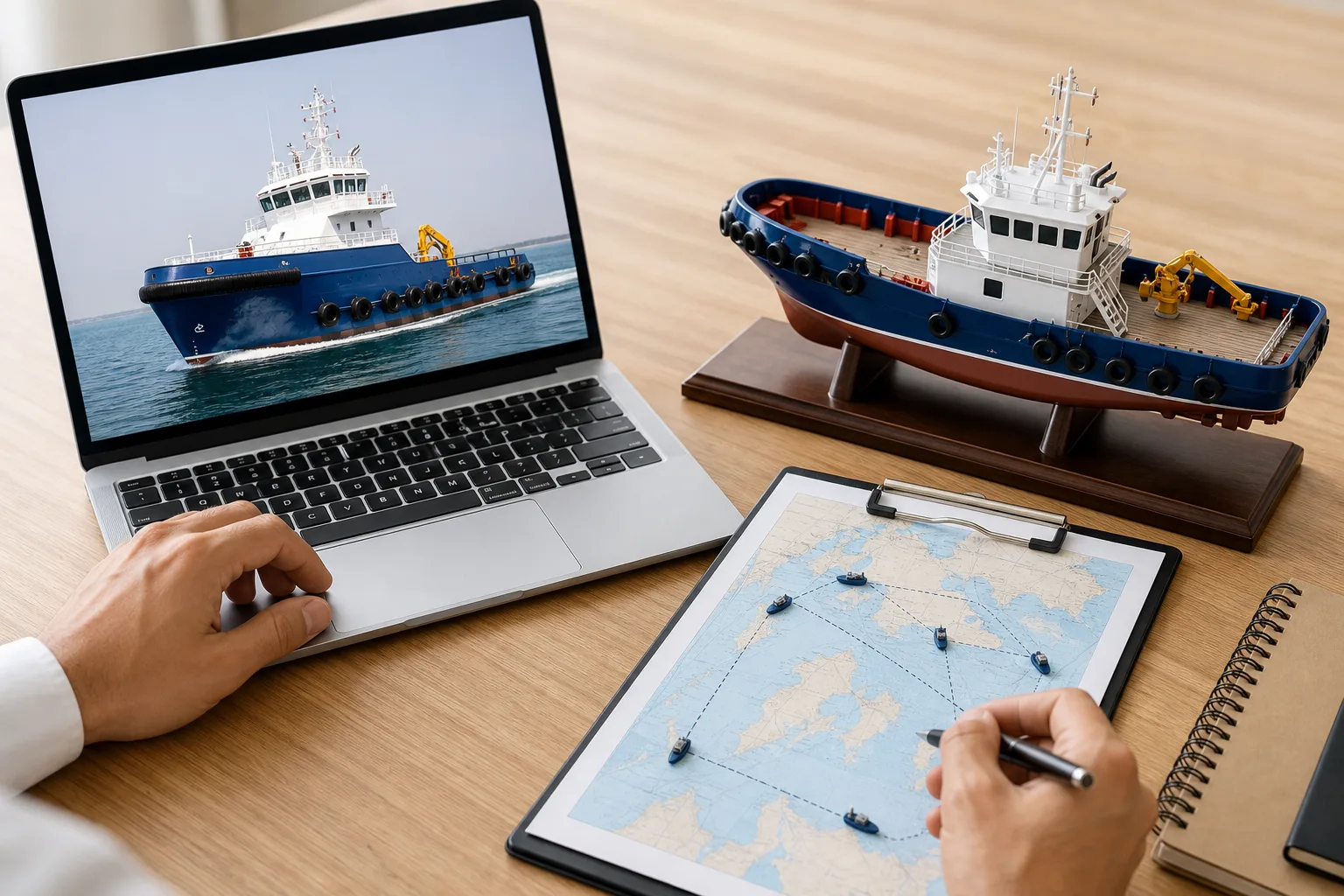
The distinction is fundamental to understanding what this business category is and is not. Activity code 5222 covers support services — the enabling layer that makes vessel movement safe and efficient — rather than the movement of vessels itself.
A business operating under this code does not own or operate cargo ships, tankers, or passenger ferries. Instead, it provides services to those who do: pilotage guidance, berthing coordination, navigational aid management, traffic management, and salvage response.
This means the capital requirements, liability profile, and operational structure of a 5222 business are materially different from those of a shipping line or vessel operator. The business model is service-contract-based, with clients retaining the vessel assets and the 5222 operator providing the specialist expertise around them.
How to Start a Water Transport Support Business in Dubai
Dubai is one of the world's big shipping hubs. Jebel Ali alone handles over 14 million containers a year, and every one of those vessel movements needs support work around it.
That demand does not rise and fall with consumer moods. It is tied to trade infrastructure and port growth, which is a much steadier thing to build a business on.
This guide covers activity code 5222, Service Activities Incidental to Water Transportation. You will learn what it lets you do, who buys from you, and how to get licensed with Meydan Free Zone.
Key Stats at a Glance
| What to know | The detail |
|---|---|
| Port scale | Jebel Ali handles over 14 million TEUs a year, making it the largest port in the Middle East and one of the top ten worldwide. Source: DP World. |
| Economic weight | The maritime sector is a major part of a UAE non-oil GDP that has passed AED 1.3 trillion in recent years. See Invest in Dubai. |
| The port cluster | The Ports, Customs and Free Zone Corporation oversees Jebel Ali, Port Rashid and several inland container depots, one of the busiest clusters anywhere. |
| Trade growth | UAE trade volumes keep rising under bilateral Comprehensive Economic Partnership Agreements signed across Asia, Europe and Africa. |
What Activity Code 5222 Covers

This code covers the support work that sits alongside vessel movement. It does not cover the vessels.
What you do. Pilotage. Helping vessels berth. Navigational support. Vessel traffic management. Salvage. Running lighthouses, buoys and other navigational aids.
What you do not do. You do not own or run cargo ships, tankers or ferries. You provide services to the people who do.
What that means commercially. You hold service contracts, not a fleet. Your capital needs, your liability and your whole structure look completely different from a shipping line. Your clients keep the vessels; you bring the expertise around them.
Who Your Customers Are
This is a business to business sector, with no consumer side at all.
Shipping lines. They need support at the port side.
Port operators. They outsource specialist jobs rather than staff them.
Offshore energy firms. They manage vessel logistics and need help doing it.
Yacht and leisure operators. They need navigational support and emergency response.
Dubai packs Jebel Ali, Port Rashid and Dubai Maritime City into a small area. That means your customers are dense and reachable from one base, unlike markets where port activity is spread along hundreds of miles of coast.
How You Make Money
Retainers. Ongoing agreements with port operators or shipping lines. This is the most predictable cash.
Per call contracts. One off jobs like salvage or emergency berthing help.
Emergency response. A standing fee to be on call, plus a charge when you are activated.
New entrants usually find their margin in going deep rather than wide. Competing with established operators on volume is hard. Competing on technical depth, whether that is particular vessel types, particular port zones, or specialist salvage skill, is far more defensible.
The barriers to entry are real: you need operational credibility, equipment and approvals before anyone signs with you. Those same barriers keep competition down and protect your margin once you are in.
[blockCTACostCalculator]
Who Regulates This
| Body | What it covers | When it matters to you |
|---|---|---|
| Ports, Customs and Free Zone Corporation (PCFC) | Port side operations across Jebel Ali, Port Rashid and the inland container depots. | If you work inside these port environments, which most operators do. |
| Roads and Transport Authority (RTA) | Maritime activity on Dubai's internal waterways. | If your work extends to the canal, the creek or other inland water. |
Work out which one covers your services before you finalise anything. Getting this right at the start keeps your license matched to what you actually do and saves you compliance trouble later.
How to Set Up with Meydan Free Zone, Step by Step
A Meydan Free Zone license suits this work. You keep 100% ownership, qualifying income carries no corporate tax under current UAE rules, and you do not need a local sponsor.
- Step 1, reserve your trade name: Check your proposed company name meets UAE naming rules and is available.
- Step 2, confirm your activity: Make sure code 5222 is listed and scoped to match the services you plan to sell.
- Step 3, file your papers: Passport copies for all shareholders and directors, a summary business plan covering your service scope and target clients, and an NOC if you already hold a UAE residence visa.
- Step 4, get your license: Once your documents are reviewed and fees are paid, the license is issued.
- Step 5, register with the regulator: For port side work, register separately with PCFC. If you operate on Dubai's inland waterways, RTA permits may apply too. These are standard steps, not obstacles.
On visas. Your allowance is tied to your license package and the establishment card issued with it. How many you get depends on the package and workspace you choose.
On workspace. Virtual office options keep your overhead low while giving you a registered address and full legal standing. A dedicated desk or private office matters once you need to host clients, house staff, or meet a specific requirement tied to your approvals.
mResidency handles the visa side for you and your team. mAccounting keeps your books straight. mCore, mAssist and mPlus cover the wider support once you are trading.
Conclusion
Water transport support is specialised work tied to infrastructure, and the demand behind it is durable. Dubai's trade volumes, port expansion and position as a transshipment hub mean the need for code 5222 services is structural rather than cyclical.
A Meydan Free Zone license is a clean, low cost way in, with full ownership and simple compliance. The rules are settled, the customers are easy to identify, and the revenue models are proven.
Use the cost calculator to model your costs, then talk to the Meydan Free Zone team to confirm you are eligible and start your application.
[blockCTAContact]
References
- DP World
- Invest in Dubai
- Ports, Customs and Free Zone Corporation (PCFC)
- Roads and Transport Authority (RTA)