
Table of Contents
Frequently Asked Questions
What does activity code 8020.02 cover for locking device businesses in Dubai
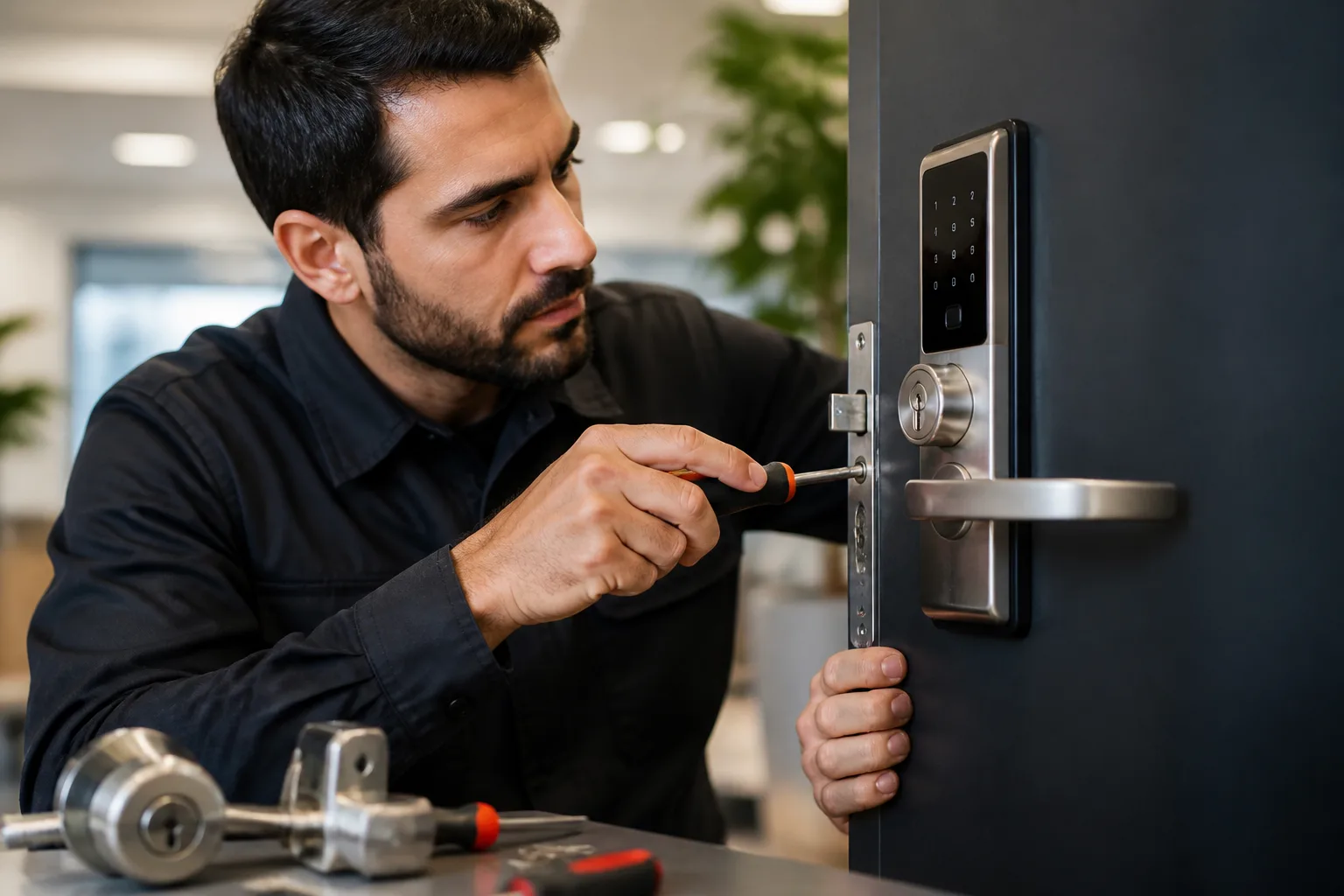
Activity code 8020.02 covers the full spectrum of installing, repairing, rebuilding, and adjusting mechanical or electronic locking devices. This includes traditional locksmithing work such as deadbolts, padlocks, master key systems, and safe mechanisms, as well as modern electronic access control installation including keypads, biometric locks, and smart access panels.
Any business whose services touch these product categories — whether serving residential, commercial, hospitality, or government clients — falls under this licence category in Dubai.
Who are the typical clients for a licensed locking device business in Dubai
Target customers for activity code 8020.02 businesses include property developers, facility management firms, hotels, retail chains, residential building operators, and government facilities. These clients typically engage service providers on repeat contracts rather than one-off jobs, which creates a relatively stable revenue model once a business is established.
Dubai's ongoing construction boom and smart building rollout mean demand is closely tied to real estate activity, which continues to expand in line with national development priorities.
Can a foreign national own 100% of a locking device licence business on the Dubai mainland
Yes. 100% foreign ownership is now permitted on the Dubai mainland for most commercial activities, including this licence category, following reforms to the UAE Commercial Companies Law. This removes a significant historical barrier that previously required international operators to partner with a local sponsor.
This applies to mainland licences issued through the Dubai Department of Economy and Tourism (DED), making the mainland a more accessible option for international operators than it once was.
What is the difference between setting up on the Dubai mainland versus a free zone for this licence
A mainland licence via the DED is required if you intend to work directly on-site across Dubai properties. It provides unrestricted access to government tenders and direct B2B contracts, which is critical for operators targeting large-scale facility management or hospitality clients.
Meydan Free Zone offers lower setup costs, 100% foreign ownership, and no local sponsor requirement — making it a practical entry point for testing the market or running a leaner operation. However, free zone licence holders working on mainland sites must either engage a mainland service agent or hold a dual licence, and that additional cost should be factored in from the outset.
What are the steps involved in obtaining this licence in Dubai
The process begins with trade name reservation via the DED eServices portal or Meydan Free Zone, ensuring the name does not conflict with security authority naming conventions. This is followed by an initial approval stage where the activity is reviewed against security trade classifications.
Some security-related activities require clearance from Dubai Police or SIRA (Security Industry Regulatory Agency), which should be confirmed at the initial approval stage. Physical premises are mandatory for mainland licences, while a flexi-desk arrangement may be acceptable for free zone holding structures. External approvals from the relevant municipality are also required, particularly where electronic or network components are involved.
Is VAT registration required for a locking device services business in Dubai
VAT registration is required once a business reaches the AED 375,000 annual turnover threshold, as set by the Federal Tax Authority. Businesses operating below this threshold are not obligated to register, though voluntary registration is permitted.
Given that this licence category typically serves repeat-contract commercial clients such as hotels, developers, and facility managers, many operators are likely to cross this threshold relatively quickly once established.
Are there staffing requirements for obtaining this licence
Yes. Technically qualified personnel are mandatory for activity code 8020.02. This reflects the security-sensitive nature of the work, which involves both mechanical and electronic locking systems used in residential, commercial, and government properties.
Operators should account for staff qualification requirements early in the setup process, as this can affect both the licence approval timeline and ongoing compliance during the annual renewal cycle.
How often does this licence need to be renewed and what jurisdiction issues should operators watch for
The licence renewal cycle is annual, regardless of whether the business is set up on the mainland or in a free zone such as Meydan. Operators should build renewal costs and compliance checks into their annual business planning.
A key jurisdictional issue to watch is the on-site work restriction for free zone licence holders. If a free zone-licensed business carries out work directly on mainland Dubai sites without a mainland service agent or dual licence, it risks operating outside its permitted scope. Clarifying this structure before commencing operations avoids compliance problems later.
Installing Repairing Rebuilding and Adjusting Mechanical or Electronic Locking Devices License in Dubai
Locks used to be metal. Now half of them are keypads, card readers and biometric panels wired into a building's network, and somebody has to fit, service and rebuild all of it. Activity code 8020.02 covers both the old trade and the new one.
This guide covers what the license permits, who buys the work, the security clearances that may apply, and the jurisdiction choice that decides where your technicians can actually work.
Key Stats at a Glance

What This License Covers
Code 8020.02 spans traditional locksmithing and modern electronic access control. If your business touches any of the following, this is your category:
- Deadbolts, padlocks and master key systems
- Safe mechanisms
- Electronic keypads
- Biometric locks
- Smart access panels
The work itself is installing, repairing, rebuilding and adjusting. It covers the whole life of the hardware rather than just fitting it once.
Who Your Clients Will Be
- Property developers
- Facility management firms
- Hotels
- Retail chains
- Residential building operators
- Government facilities
The important thing about that list is how these clients buy. They sign repeat contracts rather than calling you for one job, because a building with hundreds of doors needs somebody permanently on hand. That makes income far more predictable than a call-out trade would suggest, once you are established.
Mainland or Free Zone
This is the biggest choice you will make when setting up. Let your clients decide it, not the price.
Be honest with yourself about the on-site question, because it is the one that catches people. A free zone license is cheaper, but if your technicians will be standing in a Dubai building fitting locks, you need the mainland arrangement in place. Working on mainland sites without a service agent or dual license puts you outside your permitted scope. Cost that in from the start rather than discovering it after your first contract.
[blockCTACostCalculator]
Step-by-Step Setup Guide
- Step 1, book your trade name: Submit through the DET portal or Meydan Free Zone. The name must not clash with security authority naming conventions or an existing registered entity.
- Step 2, get initial approval: The authority reviews your activity against security trade classifications. Some security-related activities need clearance from Dubai Police or SIRA, the Security Industry Regulatory Agency, so establish whether that applies to you at this stage rather than later.
- Step 3, sort your premises: Physical premises are mandatory for a mainland license. A flexi-desk works for a free zone holding structure where field work is subcontracted.
- Step 4, handle external approvals: Coordinate with the relevant municipality. Where your systems are electronic or networked, such as smart locks and cloud-connected access panels, check your obligations with the Telecommunications and Digital Government Regulatory Authority (TDRA).
- Step 5, submit your documents: Passport copies, visa status documents, a No Objection Certificate where applicable, an Ejari tenancy contract for mainland, and technical qualification certificates for key personnel. Unverified qualifications are the most common cause of delay here.
- Step 6, get your license and visa quota: Licenses are usually issued within three to seven working days after approval. Visa allocation is tied to office size, so work out your headcount before you sign a lease.
- Step 7, register for VAT: Mandatory once annual turnover passes AED 375,000.
Compliance and What You Need in Place
Qualified technicians
Your technical staff must hold verifiable qualifications. Putting unqualified people on site exposes the license holder to regulatory penalties, and in the UAE security services framework this is not a grey area. Plan for it early, because it affects both your approval timeline and every annual renewal.
Security clearances
Confirm at initial approval whether Dubai Police or SIRA clearance applies to your specific scope. It is much easier to establish this before you are licensed than to retrofit it around live contracts.
Staff and payroll
The Ministry of Human Resources and Emiratisation (MOHRE) governs employment contracts, Emiratisation quotas under the Nafis programme, and Wages Protection System payroll compliance. Falling out of WPS compliance triggers license suspension, so treat payroll as a licensing matter rather than an accounting one.
Insurance
Professional indemnity and public liability cover are strongly advisable given the nature of on-site security hardware work.
Data
If your scope includes networked or cloud-connected locking systems, UAE Personal Data Protection Law obligations may apply to the data those systems handle.
Renewal
Annual, in both jurisdictions. A lapsed license brings fines and can disrupt live contracts, so set reminders well ahead of expiry.
Market Opportunity
Demand here tracks construction and smart building rollout, and both are moving in the same direction. IMARC Group notes that demand for security hardware installation is closely tied to real estate activity, and Dubai's property sector keeps expanding.
The shift from mechanical to electronic is the more interesting opportunity. Every building moving to card access or biometrics needs someone who understands both the hardware and the network behind it, and that is a narrower skill set than traditional locksmithing. Firms that can do both compete against a much smaller field.
Regulation helps too. Because the trade is properly licensed and staff qualifications are checked, a compliant operator is not competing against an unlicensed one on price.
Conclusion
Activity 8020.02 is a solid, clearly regulated trade license suited to technically qualified operators serving property, hospitality and facilities management clients.
Mainland gives you the widest market access and the right to work on site. Meydan Free Zone gives you a cheaper entry point with room to scale, provided you structure the on-site question properly. Get that decision right on day one and the rest of the compliance is straightforward.
Use the cost calculator to estimate your setup costs, or speak to the Meydan Free Zone team to confirm the right jurisdiction and activity structure.
[blockCTAContact]