
Table of Contents
Frequently Asked Questions
What does the Parties & Events Filming Licence (activity code 7420.96) cover
Activity code 7420.96 covers commercial video production at private and corporate events. This includes weddings, birthday parties, corporate events, product launches, brand activations, and private gatherings where footage is commissioned by and delivered to the event organiser or host.
The licence also covers post-production editing and delivery of event footage, so a full-service offering from shoot to final cut is within scope. It is classified under photographic and filming activities within the ISIC framework.
It does not cover news gathering, broadcast journalism, or commercial advertising shoots — those activities require separate activity codes and distinct regulatory approvals.
Which authority regulates event filming permits in Dubai
The Dubai Film and TV Commission is the primary body governing filming permits across Dubai's locations. Most per-event and per-venue permit applications are submitted through this authority.
The Dubai Culture and Arts Authority also plays a role in overseeing compliance for culturally sensitive or public-facing events, adding an additional layer of regulatory consideration for certain types of productions.
Beyond these bodies, hotels, shopping malls, and private estates typically require a separate venue-level filming consent in addition to the official permit — this is standard practice and not negotiable, as venues carry their own liability considerations.
Is a filming permit required for every event, even private ones
Yes. Filming in both public and private venues in Dubai requires prior permit approval from the Dubai Film and TV Commission. The trade licence alone does not grant the right to film at a specific location.
Permits are required on a per-event or per-venue basis, meaning each new engagement requires its own approval. Additionally, a No Objection Certificate (NOC) from venue operators is routinely required before filming begins on-site.
Failing to secure the correct permits exposes operators to fines and future permit refusals, so building permit applications into your project workflow from the outset is essential.
Can a foreign national own 100% of an events filming business in Dubai
Yes. 100% foreign ownership is permitted both across UAE free zones and on the mainland following post-2021 reforms. The previous requirement for a local agent or sponsor for most commercial activities, including filming services, has been removed for mainland setups.
Free zones such as Meydan have always offered full foreign ownership and continue to be a practical option for creative and media businesses, particularly for founders establishing the business remotely before relocating.
What is the difference between a mainland and free zone licence for this activity
A mainland licence issued through the Dubai Department of Economy and Tourism allows unrestricted client work across all of Dubai with no geographic limitations on where you can operate or take on clients.
A free zone licence — with Meydan being a practical option for creative businesses — offers faster incorporation timelines, 100% foreign ownership, and straightforward flexi-desk arrangements. It is particularly well-suited if most client delivery is digital or if you are setting up remotely.
The key trade-off is operational flexibility: mainland licences provide broader access to the Dubai market, while free zone licences offer a simpler and often quicker setup process.
What professional qualifications are needed to hold this licence
No specific professional qualification is mandated to hold the Parties & Events Filming licence (activity code 7420.96). The licence is accessible to founders without formal accreditation in videography or film production.
However, while qualifications are not a regulatory requirement, obtaining a No Objection Certificate (NOC) from venue operators before filming on-site is routinely required as a practical condition of operating at most locations.
When does VAT registration become mandatory for an events filming business in Dubai
VAT registration becomes mandatory once your business's annual revenue exceeds AED 375,000. This threshold applies to filming businesses operating under this licence just as it does to other commercial activities in the UAE.
Given that wedding videography in Dubai typically ranges from AED 8,000 to AED 40,000+ per engagement, businesses taking on a moderate volume of work can reach this threshold relatively quickly and should plan for VAT compliance from an early stage.
How large is the commercial opportunity for event filming in Dubai
The commercial opportunity is substantial. Dubai hosted over 400 MICE events in 2023 according to the Dubai Statistics Center, each generating demand for professional filming services. The UAE events and entertainment market is projected to grow steadily through 2028 according to Mordor Intelligence.
Wedding videography alone commands fees of AED 8,000 to AED 40,000+ per engagement, and corporate events, brand activations, and product launches represent additional consistent revenue streams for licensed operators.
Operating with the correct licence and permit structure positions businesses to access this demand without the risk of fines or permit refusals that unlicensed operators face.
Parties & Events Filming License in Dubai
Dubai's events industry is a proper business, not a sideline. Weddings, corporate launches, brand activations, and private parties all need filming, and they need it done well.
Work without the right license and you risk fines and refused permits. This guide covers what activity code 7420.96 allows, who regulates it, how to set up legally, and what the money looks like.
Key Stats at a Glance
What This License Covers

Code 7420.96 sits under photographic and filming activities in the ISIC framework. It covers commercial video work at private and corporate events, commissioned by a client and delivered to the organiser or host.
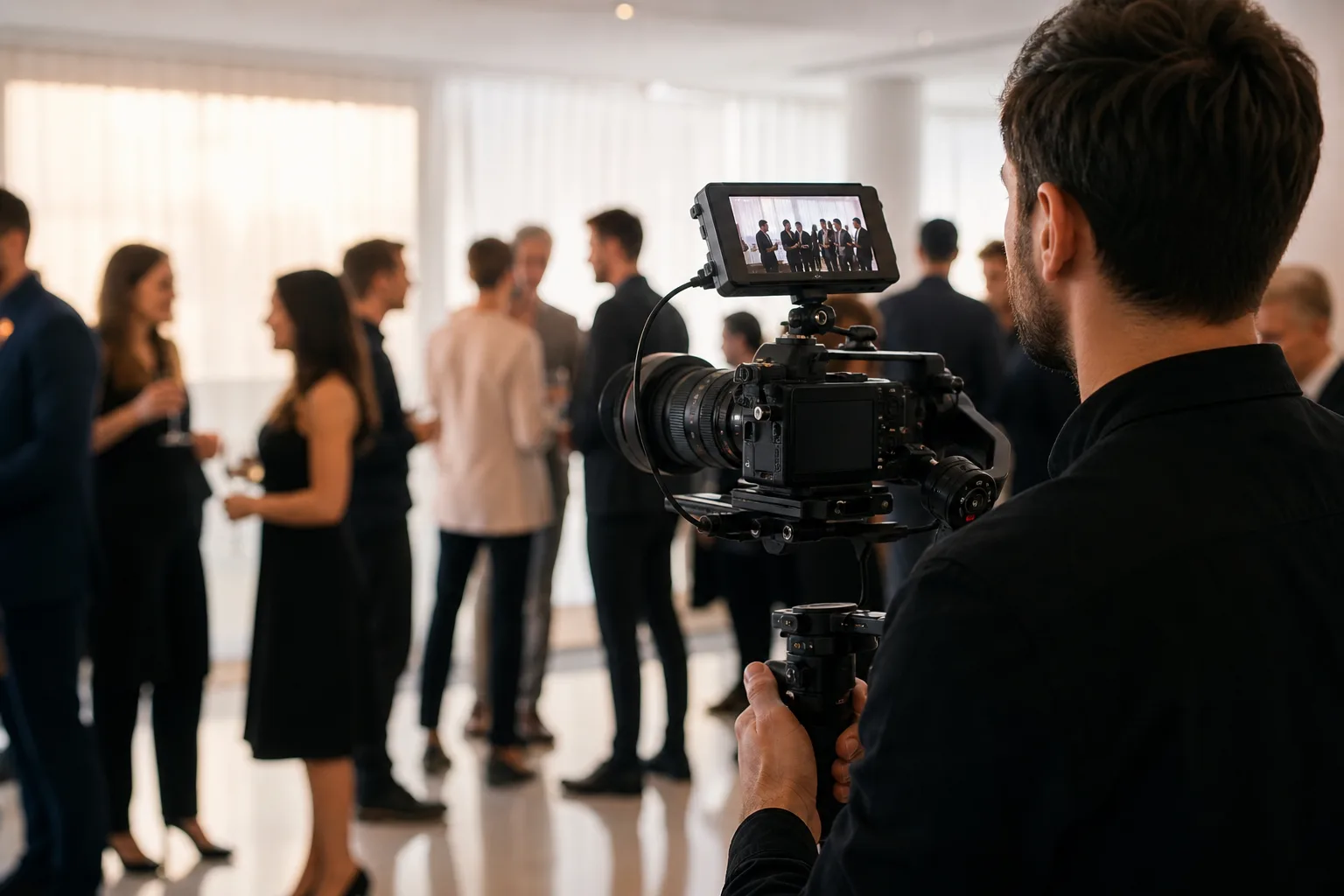
That means weddings, birthday parties, corporate events, product launches, brand activations, and private gatherings. It also covers post-production editing and delivery, so you can offer everything from the shoot to the final cut under one license.
What it does not cover is news gathering, broadcast journalism, and commercial advertising shoots. Those have their own codes and their own approvals. If your work spans several formats, list each activity code on your license.
If your work leans towards factual storytelling rather than social occasions, look at a documentary filming business in Dubai instead. That carries a different permit scope and different location clearances.
Who Your Clients Will Be
Two very different groups.
Private clients book you for weddings and family occasions. The money is good and the work is emotional, so reliability matters more than price.
Corporate and MICE clients book you for product launches, annual general meetings, and conference coverage. Those contracts repeat, book further ahead, and give you a much steadier forward view.
No specific professional qualification is required to hold this license, so the door is open. What venues will ask for is a No Objection Certificate before you film on site.
Mainland vs Free Zone
A mainland license from the Department of Economy and Tourism lets you work for clients anywhere in Dubai with no geographic limits. The 2021 reforms removed the local agent requirement for most commercial activities, filming included, so this route is now open to foreign founders.
A free zone setup, with Meydan Free Zone a practical option for creative and media businesses, gives you a faster incorporation, 100% ownership, and a simple flexi-desk. It suits you if most delivery is digital or you are setting up remotely before you move.
The trade-off is reach against speed. Mainland gives you broader access. A free zone gives you a quicker, cheaper start.
[blockCTACostCalculator]
Step-by-Step Setup Guide
- Step 1, choose your jurisdiction: Mainland or free zone. The deciding factor is where your clients are and how your contracts will work.
- Step 2, book your trade name and apply: Select activity code 7420.96 at this stage and check your name does not clash with an existing registration.
- Step 3, secure an address: A registered address is mandatory either way. A flexi-desk satisfies it at lower cost.
- Step 4, submit your documents: Passport copies, current visa status, an NOC if you work elsewhere, and a Memorandum of Association if you are setting up a company rather than a sole establishment.
- Step 5, pay the fees and collect your license: Free zone usually takes 3 to 7 working days. Mainland takes 5 to 10, depending on approvals.
- Step 6, apply for your residence visa: The license lets you apply if you do not already hold one. Emirates ID registration and a medical test are part of it.
- Step 7, open a corporate bank account: Banks want an active trade license, a tenancy or flexi-desk contract, and a business plan summary. Allow two to four weeks.
Compliance and What You Need in Place
Filming permits
The trade license lets you trade. It does not let you film anywhere. You need a permit from the Dubai Film and TV Commission for each event or each venue. Build the application into your project workflow, because it costs money and takes time.
Venue consent
Hotels, malls, and private estates usually want their own filming consent on top of the official permit. That is standard and not negotiable, because the venue carries its own liability.
Culturally sensitive events
The Dubai Culture and Arts Authority oversees compliance for culturally sensitive or public-facing events. Check where your job sits before you quote for it.
Drones
Drone footage needs a separate GCAA permit. Do not assume your filming permit covers it.
Renewals and VAT
Renew the trade license every year. Register for VAT once annual revenue passes AED 375,000, and do it as you approach the line rather than after crossing it.
Market Opportunity
Dubai's wedding market supports hundreds of high-budget productions a year. Fees run from AED 8,000 to AED 40,000 and above for premium multi-camera work, and the ceiling rises with luxury venues and international clients.
The corporate side gives you a different shape of income. Longer cycles, repeat contracts, and bookings you can see months ahead. Dubai's continued push on inbound tourism and events, which you can track through Visit Dubai, means that pipeline is not drying up.
Short-form social content has widened the job considerably. Clients who once bought a single long video now want reels and highlight cuts for Instagram and LinkedIn as well. That upsell sits inside the same license and the same shoot day, which is close to free margin.
How to stand out
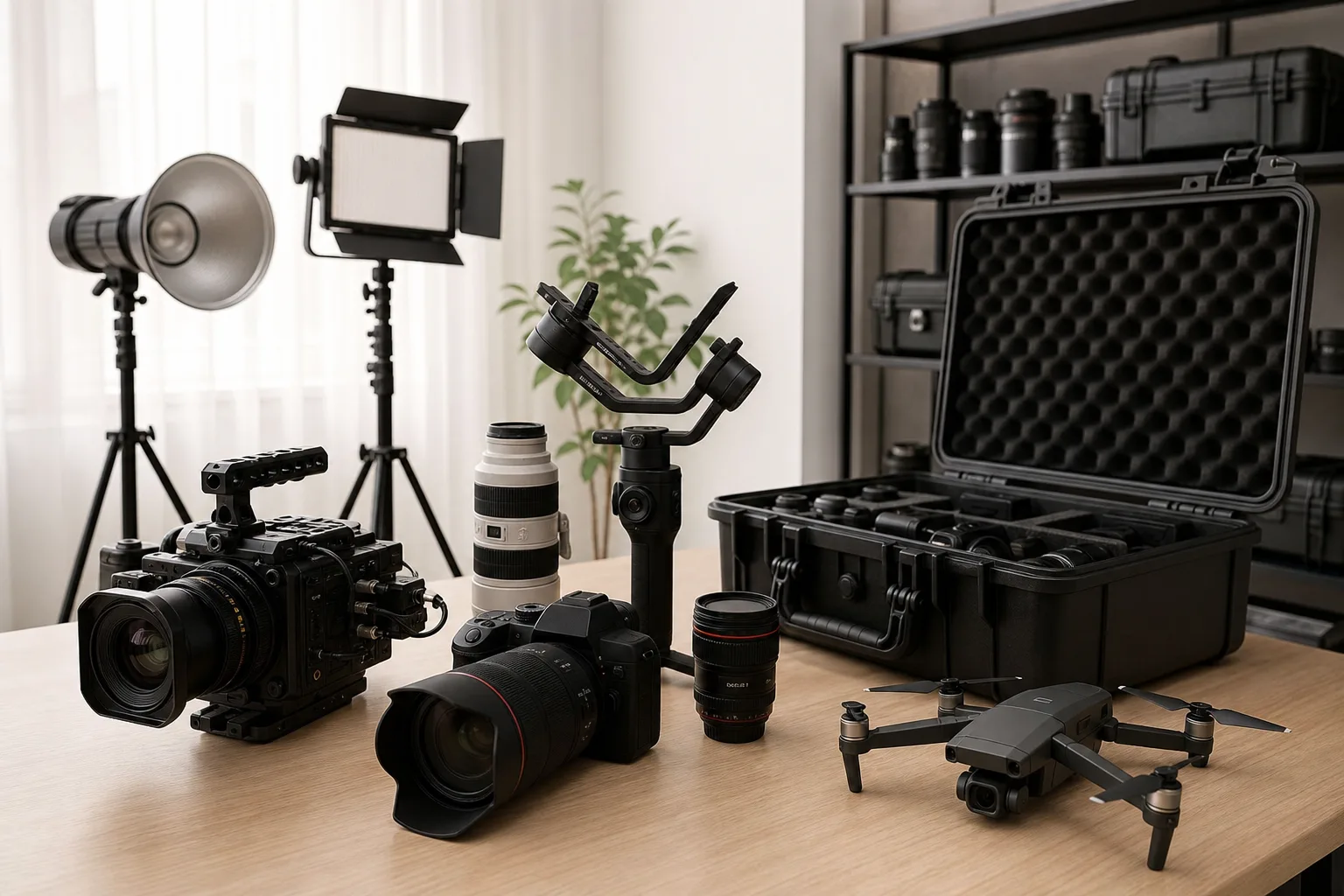
Same-day edits, drone work, and multi-camera setups all command higher rates. The kit pays for itself quickly in a market where clients will pay for speed and reliability.
Picking a niche helps more than competing on price. Arabic-language production, luxury weddings, or corporate brand film all reduce direct price competition and keep clients longer. Generalists compete on cost. Specialists compete on fit.
Conclusion
The Parties and Events Filming license is a simple activity wrapped in a real permit regime. The trade license is your foundation, per-event permits are your daily reality, and the demand behind both is genuine and growing across private and corporate work.
The rules are manageable once you know them. The Dubai Film and TV Commission permit process is the main variable, so build it into how you quote and schedule clients.
Use the cost calculator to estimate your license fees, or talk to a Meydan Free Zone adviser about which jurisdiction fits your client base.
[blockCTAContact]
%20Business%20in%20Dubai%20with%20Meydan%20Free%20Zone.webp)