
Table of Contents
Frequently Asked Questions
What does activity code 7730.94 cover in Dubai
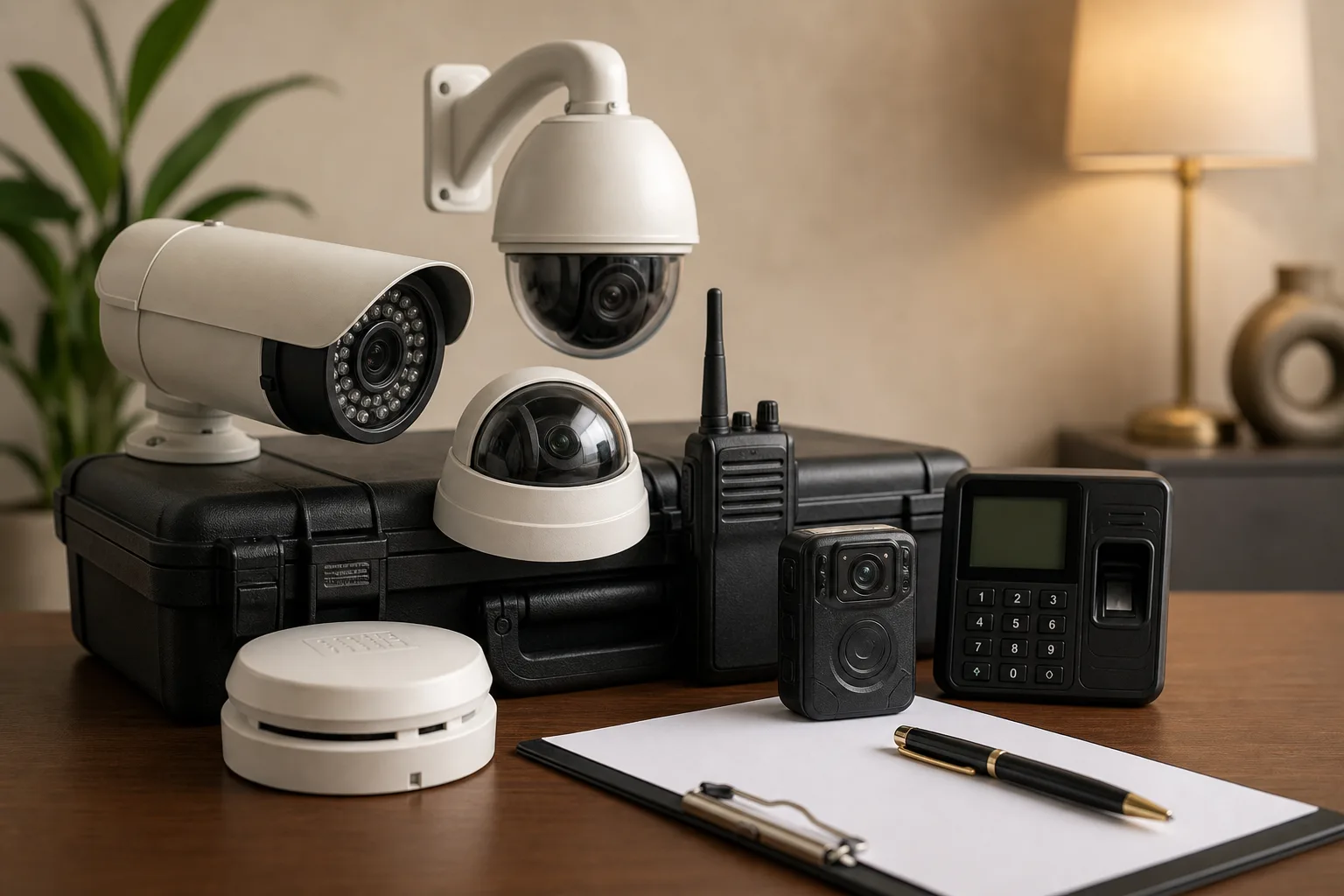
Activity code 7730.94 covers the rental and leasing of security equipment, including CCTV systems, access control hardware, alarm systems, perimeter detection devices, and related surveillance tools. It falls under the broader DED classification of rental and leasing of other machinery and equipment.
It is important to note that this license does not cover installation as a primary service or security manpower provision. Those activities each require separate licenses and regulatory approvals before you can commence them.
Who needs a Security Equipment Rental license in Dubai
Any business that rents or leases security hardware — rather than selling it outright or providing guarding services — needs this license. Typical operators serve construction sites requiring temporary perimeter surveillance, events companies needing short-term access control, hospitality operators, logistics hubs, and temporary facilities across Dubai.
The model is fundamentally asset-based, generating revenue through short- and medium-term rental contracts. If your operation moves into managed services or guarding, additional regulatory approvals will be required.
Which authority issues the Security Equipment Rental license in Dubai
For mainland operations, the license is issued by the Dubai Department of Economy and Tourism (DET), with applications processed through the DED e-Services portal. If you choose a free zone structure, the relevant free zone authority — such as Meydan Free Zone — issues the license instead.
Security-related activities carry an additional regulatory layer. Depending on equipment type and end-use, approvals from Dubai Police or the Security Industry Regulatory Agency (SIRA) may also be required, particularly where equipment is deployed in sensitive locations.
Is 100% foreign ownership allowed for a Security Equipment Rental business in Dubai
Yes. Under the UAE Commercial Companies Law amendments of 2021, 100% foreign ownership is permitted for this activity on the mainland. This removed the previous requirement for a local Emirati sponsor in most commercial categories.
Free zone structures such as Meydan Free Zone also permit full foreign ownership and offer a simplified incorporation process, which can be attractive for asset-light rental models targeting clients across Dubai.
Do I need SIRA or Dubai Police approval alongside the DED license
Potentially yes. Security-related equipment rental carries an additional regulatory layer beyond the standard DED commercial license. Approval from Dubai Police or the Security Industry Regulatory Agency (SIRA) may be required depending on the type of equipment you rent and where it is deployed.
This requirement is particularly relevant where equipment is integrated into broader security systems or used in sensitive locations. You should scope this requirement early in your planning, as it directly affects both your setup timeline and your operational boundaries.
What are the VAT and staffing obligations for a mainland Security Equipment Rental business
VAT registration becomes mandatory once your taxable turnover exceeds AED 375,000, as administered by the Federal Tax Authority. You should monitor turnover thresholds from the outset and register before breaching this limit to avoid penalties.
Mainland operators are also subject to Ministry of Human Resources and Emiratisation (MOHRE) staffing requirements, including Emiratisation quotas where applicable. Free zone operators are generally exempt from these mainland staffing rules, which is one structural advantage of a free zone setup.
What are the main steps to set up a Security Equipment Rental license in Dubai
The process begins with choosing your jurisdiction — mainland DED provides broader UAE market access, while a free zone offers faster setup, full foreign ownership, and lower initial costs. Next, you reserve a trade name through the DED portal or your chosen free zone authority.
Subsequent steps include submitting your application with required documents, obtaining any additional security-sector approvals from SIRA or Dubai Police, securing your business premises, and completing final license issuance. Timelines vary by jurisdiction, but the sequence is consistent across both mainland and free zone routes.
What is the difference between setting up on the mainland versus a free zone for this activity
A mainland DED license allows you to operate anywhere in the UAE and contract directly with clients across all sectors without restriction. It is the preferred structure if you need unrestricted on-site access across Dubai and the wider UAE.
A free zone license — such as through Meydan Free Zone — removes the local sponsor requirement, permits 100% foreign ownership, and typically involves a faster and lower-cost incorporation process. However, client contracts for on-site mainland operations may require additional approvals. For asset-light rental models, the free zone structure is described as a structurally clean option worth evaluating carefully.
Security Equipment Rental License in Dubai
A building site needs cameras for eight months, not forever. An events company needs access control gates for a weekend. Neither of them wants to buy the kit. Activity code 7730.94 lets you own it and hire it out to them.
This guide covers what the license allows, who rents from you, the approvals that can apply, and the steps to get set up. The activity is simple to run. The one item to scope early is whether your equipment triggers a security-sector approval.
Key Stats at a Glance
| Activity code | 7730.94 |
|---|---|
| What it covers | Rental and leasing of CCTV systems, access control hardware, alarm systems, perimeter detection devices and related surveillance kit |
| Sits under | Rental and leasing of other machinery and equipment on the DET activity list |
| Not included | Installation as a main service, and security manpower supply |
| Possible extra approvals | Dubai Police or the Security Industry Regulatory Agency (SIRA), depending on kit type and where it is used |
| Ownership | 100% foreign ownership under the 2021 Commercial Companies Law amendments – Ministry of Economy and Tourism, Establishing companies |
| Market outlook | UAE security services market set to grow steadily through 2028 – Mordor Intelligence |
| Smart city ranking | Dubai ranks among the global top 10 for smart city infrastructure investment – Digital Dubai |
| VAT | Register above AED 375,000 turnover – Federal Tax Authority |
| Foreign ownership | 100% in Meydan Free Zone |

What This License Covers
Code 7730.94 lets you rent and lease security equipment: CCTV systems, access control hardware, alarm systems, perimeter detection devices and related surveillance kit. It sits within the broader rental and leasing of other machinery and equipment category on the DET activity list.
Two things sit outside it. Installation as a main service is a separate license. So is supplying security manpower. Rent out the kit and you are inside your scope. Start fitting it as a service or putting guards on site and you are not, and each of those calls for its own approvals before you begin.
The model is asset-based. Revenue comes from short and medium-term rental contracts rather than product sales, which keeps things capital-efficient once you have built the fleet.
Who Your Clients Will Be
Construction sites needing temporary perimeter surveillance. Events companies needing short-term access control. Hospitality operators, logistics hubs and temporary facilities across Dubai's project landscape.
What ties them together is that their need has an end date. A site finishes, an event closes, a temporary facility comes down. Buying kit for a fixed-term need makes no sense, which is precisely why they come to you.
That gives the business a natural rhythm. Contracts turn over, equipment comes back, and the same units go out again to the next job. Keeping the fleet busy is what makes the numbers work, so track where every unit is and how long it sits idle between hires.
Mainland or Free Zone
| Factor | Mainland (DET) | Free Zone (Meydan Free Zone) |
|---|---|---|
| Market reach | Operate anywhere in the UAE, contract directly with any sector | On-site mainland contracts may call for extra approvals |
| Foreign ownership | 100% under the 2021 amendments | 100% yours, no local sponsor |
| Office | Physical tenancy registered on Ejari | Flexi-desk accepted |
| Annual license fee | AED 10,000 to AED 20,000 | From AED 5,750 onwards |
| MOHRE staffing rules | Apply, including Emiratisation quotas where relevant | Generally outside mainland staffing rules |
| SIRA or Dubai Police approval | May apply by kit type | May apply by kit type |
A mainland license from the Department of Economy and Tourism lets you work anywhere in the UAE and sign directly with clients in any sector. That is the route if you need unrestricted on-site access.
Meydan Free Zone removes the local sponsor question entirely, gives you the company outright, and starts lower on cost with a flexi-desk. For an asset-light rental model serving clients across Dubai, that is a clean structure. The trade-off is that on-site mainland contracts may call for extra approvals.
Note the point about capital. There is no set minimum for this activity, but banks and corporate clients will want to see a credible asset inventory before they extend credit or sign a rental agreement. Plan how you will buy the fleet before you incorporate, not after.
[blockCTACostCalculator]
Step-by-Step Setup Guide
- Step 1, pick your jurisdiction: Mainland DET for wider UAE reach, or Meydan Free Zone for a faster start, full ownership and lower entry cost.
- Step 2, book your trade name: Check what is available through the DET portal or the Meydan Free Zone portal. Names using the word security may call for extra sign-off.
- Step 3, apply for initial approval: Include code 7730.94. If Dubai Police or SIRA approval applies to your kit category, start that process at the same time rather than waiting for the trade license to land.
- Step 4, take an office: Mainland means a physical tenancy registered on Ejari. Meydan Free Zone accepts a flexi-desk, which keeps the entry cost down.
- Step 5, pay the fees and collect your license: Mainland usually runs five to ten working days after approval, assuming your documents are complete.
- Step 6, open a corporate bank account: Banks want a valid trade license, the tenancy contract and full shareholder papers. Allow four to eight weeks for the account to go live.
- Step 7, register with MOHRE and the Federal Tax Authority: MOHRE registration comes before you hire anyone. FTA registration is triggered as your taxable turnover approaches AED 375,000.
Compliance and What You Need in Place
Security sector approvals
This is the item people miss. Depending on what you rent and where it ends up, Dubai Police or SIRA approval may apply on top of the standard commercial license. It matters most where kit is deployed in sensitive locations or wired into a wider security system. Scope it during planning, because it affects both your timeline and the boundaries of what you can offer.
Staying inside your scope
Renting is your activity. Move into installation as a service or into supplying guards and you need separate licenses first. Clients will ask you to do both, so decide in advance how you will answer.
Staff
Mainland operators fall under Ministry of Human Resources and Emiratisation staffing rules, including Emiratisation quotas where they apply. Free zone operators generally sit outside those mainland rules, which is one structural advantage of that route.
Renewal
The license renews annually. Miss the window and you face financial penalties, and Emirates ID and visa renewals for shareholders and staff can freeze with it. That cascades through an operating business quickly, so set a reminder well ahead.
VAT
Registration is compulsory once taxable turnover passes AED 375,000. With rental contracts building month on month, most operators reach that line sooner than they plan for.
Market Opportunity
The UAE security services market is set to grow steadily through 2028, and the drivers behind it are the ones that generate rental demand rather than purchase demand.
Dubai ranks among the global top 10 for smart city infrastructure investment. Mega-events keep coming. The construction pipeline keeps producing sites that need perimeter surveillance for a fixed period and nothing after that.
That is the shape of the opportunity. Clients want flexible, contract-based security rather than permanent installations, because their own needs are temporary. One caution on the economics: how busy your fleet stays decides whether this business makes money, because kit sitting in a warehouse earns nothing and still loses value. Match fleet size to contracted demand rather than buying ahead of it. Invest in Dubai publishes official cost guidance worth reading before you commit.
Conclusion
Security Equipment Rental is a workable, asset-driven license aimed at Dubai's construction, events and facilities management sectors. The fundamentals are sound: sustained infrastructure investment, a growing events calendar and steady demand for temporary security rather than permanent kit.
Jurisdiction is your first decision. Mainland reach is wider, while free zone setup is faster and structurally simpler for foreign founders.
The SIRA and Dubai Police question is the one to settle early. Leaving it until after the license is issued creates delays you did not need to have. Speak to a Meydan Free Zone adviser to confirm the right structure before you commit.
[blockCTAContact]