
Table of Contents
Frequently Asked Questions
What does UAE activity code 7721.96 cover
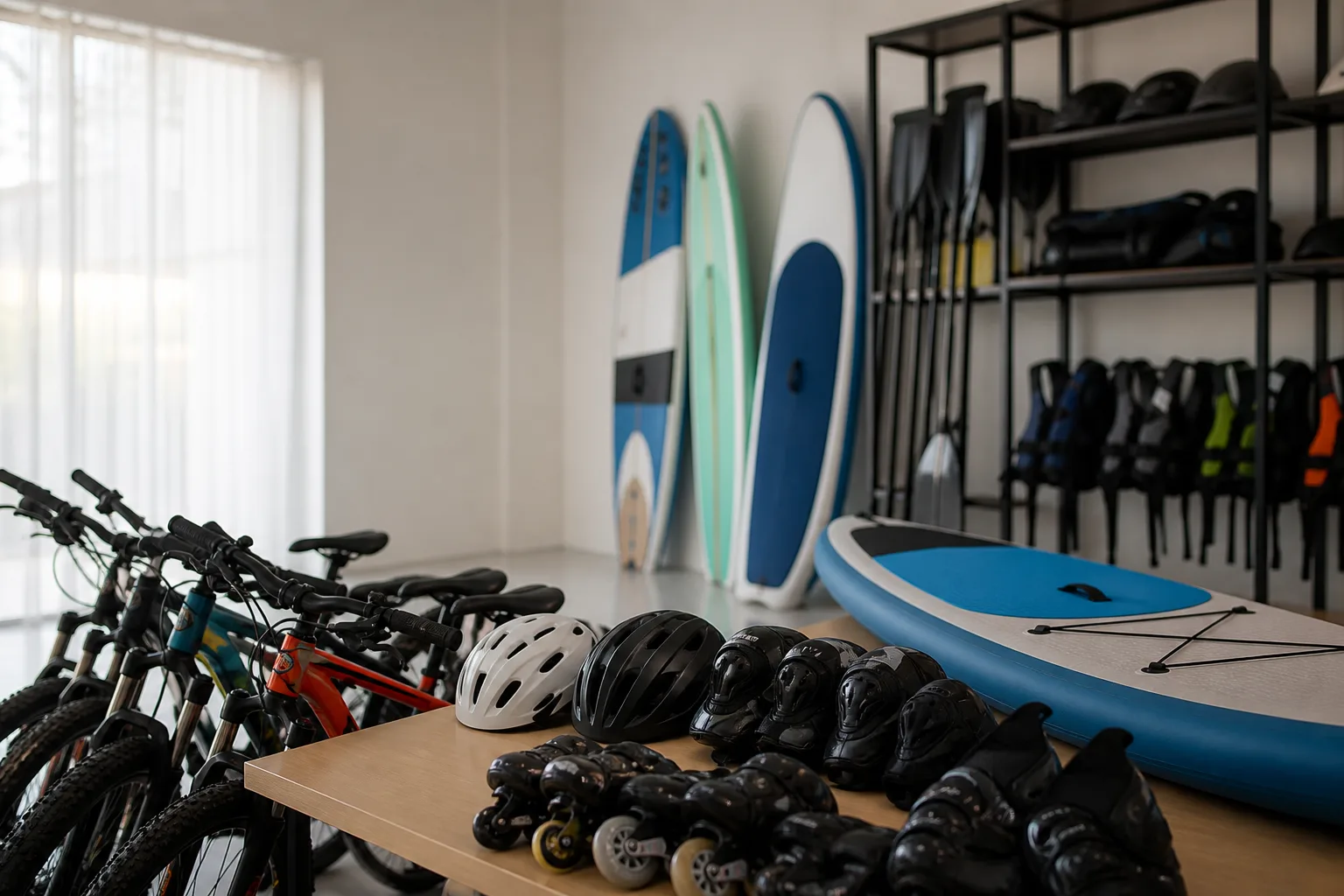
Activity code 7721.96 covers the rental of leisure and sport equipment. This includes items such as bicycles, kayaks, paddleboards, skis, diving gear, and camping equipment.
The code sits within the broader equipment rental and leasing classification and is recognised across both mainland and free zone jurisdictions in the UAE, making it accessible regardless of which licensing route you choose.
Should I choose a mainland or free zone licence for a sport equipment rental business in the UAE
The right choice depends on your operating model. A mainland licence issued via the Dubai Department of Economy and Tourism (DED) is the practical option if you want a physical presence — a beachfront kiosk, branded counter, or walk-in hire point — because it allows direct trading with the public.
A free zone licence suits delivery-based or B2B rental models, such as supplying hotels or event organisers, where lower overheads and administrative simplicity matter more than street-level access.
Both routes now permit 100% foreign ownership under current UAE commercial law, so the distinction is operational rather than structural.
What are the main steps to set up a leisure and sport equipment rental licence in the UAE
The setup process is linear and should be followed in sequence to avoid delays from incomplete applications or skipped approvals.
- Step 1: Choose your jurisdiction and confirm activity code 7721.96 is listed under that authority.
- Step 2: Reserve your trade name via the DED e-services portal before committing to branding or domain registration.
- Step 3: Submit incorporation documents, including passport copies, a completed application form, and a No Objection Certificate (NOC) if you are already employed or have an existing licence.
Who are the typical customers for a sport equipment rental business in the UAE
The customer base is broad and spans multiple segments. Tourists represent a significant share — Dubai alone welcomed 17.15 million international visitors in 2023, many of whom seek outdoor and water-based activities.
Beyond tourists, demand also comes from UAE residents, hotels, event organisers, and corporate wellness programmes. Revenue models can therefore range from daily hire and weekly packages to hotel concierge tie-ups and seasonal contracts with property developers or resort operators.
Which locations in Dubai generate the strongest demand for equipment rental operators
Dubai's sport and outdoor activity infrastructure creates natural demand clusters, particularly during the cooler months. Key high-footfall locations include Kite Beach, La Mer, Jumeirah Beach, and Hatta.
The city's events calendar — including marathons, triathlons, and water sports competitions — also creates seasonal demand spikes that a well-positioned operator can plan around and capitalise on.
Does a mainland sport equipment rental operator need any approvals beyond the DED licence
Yes. Mainland operators may need additional approvals depending on where their equipment is deployed and what activities it supports.
Relevant authorities include the Dubai Sports Council and the relevant municipality. Founders should confirm which approvals apply to their specific locations and equipment types before launching operations to avoid compliance issues.
Is Meydan Free Zone a suitable option for setting up a sport equipment rental business
Meydan Free Zone is specifically mentioned as a viable jurisdiction for activity code 7721.96. It offers competitive pricing, fast incorporation, and remote setup capability, which is particularly useful for founders who are structuring the business before relocating to the UAE.
It is best suited to online booking, B2B hotel supply, or event rental models rather than businesses requiring a physical beachfront or public-facing presence, which would be better served by a mainland licence.
What broader market factors support growth in the UAE sport equipment rental sector
Several structural factors underpin commercial opportunity in this space. The UAE benefits from a booming tourism sector, a year-round outdoor activity culture, and a growing expat population — all of which drive consistent demand for rental equipment.
At a policy level, the Dubai Sports Council runs long-term infrastructure development programmes, and the UAE General Authority of Sports actively supports commercial sport ventures. Globally, the sports equipment rental market is on an upward growth trajectory according to Mordor Intelligence sector analysis.
Setting Up a Leisure & Sport Equipment Rental Business in Dubai
A tourist on Kite Beach wants a paddleboard for two hours, not for life. A resident wants a bike for the weekend. Neither of them is going to buy the kit, fly it home or store it. Activity code 7721.96 lets you own it and hire it out.
This guide covers what the license allows, who rents from you, how mainland and free zone compare, and the steps to get set up. The activity is one of the simpler ones to license. Where it gets interesting is permits for public spaces and planning around the summer.
Key Stats at a Glance
| Activity code | 7721.96 |
|---|---|
| What it covers | Rental of leisure and sport equipment: bicycles, kayaks, paddleboards, skis, diving gear and camping kit |
| Sits under | The wider equipment rental and leasing category, recognised on the mainland and in free zones |
| Dubai visitors, 2023 | 17.15 million international visitors – Visit Dubai |
| Infrastructure backing | Long-term development programmes run by the Dubai Sports Council |
| Policy support | UAE General Authority of Sports supports commercial sport ventures |
| Market outlook | Sports equipment rental on an upward growth path – Mordor Intelligence |
| Ownership | 100% foreign ownership on both routes under current UAE commercial law |
| VAT | Register above AED 375,000 annual turnover – Federal Tax Authority |
| Foreign ownership | 100% in Meydan Free Zone |

What This License Covers
Code 7721.96 covers renting out leisure and sport equipment: bicycles, kayaks, paddleboards, skis, diving gear, camping kit and similar items.
It sits inside the wider equipment rental and leasing category and is recognised on the mainland and in free zones alike, so the code itself does not limit which route you take.
The scope is wide enough to let you build a mixed fleet. That matters more than it sounds, because a business running only water sports kit stops earning when the wind drops, while one carrying bikes and camping gear as well has somewhere else to send the money.
Who Your Clients Will Be
Tourists, residents, hotels, event organisers and corporate wellness programmes. Dubai alone welcomed 17.15 million international visitors in 2023, and a large share of them come for outdoor and water-based activity.
You can price for all of them at once. Daily hire and weekly packages suit individuals. Hotel concierge tie-ups give you a steady referral channel without a shopfront. Seasonal contracts with property developers or resort operators are the largest tickets and the most predictable.
Location does a lot of the selling. Kite Beach, La Mer, Jumeirah Beach and Hatta all draw consistent footfall through the cooler months, and the events calendar adds spikes on top. Marathons, triathlons and water sports competitions all bring people who need kit for a weekend, and an operator who plans around those dates captures demand that walk-in trade alone would miss.
Mainland or Free Zone
| Factor | Mainland (DET) | Free Zone (Meydan Free Zone) |
|---|---|---|
| Trading with the public | Direct, including kiosks and walk-in hire points | Better suited to delivery-based and B2B models |
| Equipment at beach or park sites | Permitted, subject to location approvals | Not the natural fit |
| Foreign ownership | 100% under current UAE commercial law | 100% yours |
| Overheads | Higher, driven by premises | Lower, with flexi-desk options |
| Setup speed | Typically one to two weeks for approvals | Approvals can come through within days, with remote setup available |
A mainland license from the Department of Economy and Tourism lets you trade directly with the public and place equipment at beach or park locations. If you want a kiosk, a branded counter or a walk-in hire point, that is the route.
Meydan Free Zone suits a delivery-based or B2B model, where you supply hotels and event organisers rather than serving people off the street. Lower overheads and simpler administration matter more than street-level access in that model, and remote setup is useful if you are structuring the business before you move to the UAE.
Both routes now allow 100% foreign ownership, so the difference is operational rather than structural. Think about staffing and visa numbers early too, because they affect which route gives better unit economics at the headcount you are planning for.
[blockCTACostCalculator]
Step by Step Setup Guide
- Step 1, choose your jurisdiction: Confirm code 7721.96 is listed under your chosen authority. Meydan Free Zone and DET mainland both accommodate it.
- Step 2, book your trade name: Check availability through the DET e-Services portal before you commit to branding or register a domain.
- Step 3, submit your setup documents: Passport copies, a completed application form, and an NOC if you already hold a UAE residency visa sponsored by another entity.
- Step 4, secure a physical address or flexi-desk: A registered address applies across every jurisdiction before a license is issued.
- Step 5, get initial approval, pay the fees and collect your license: Free zone approvals can come through within days. Mainland usually takes one to two weeks.
- Step 6, open a corporate bank account: Allow four to eight weeks. A clear business plan and financial projections speed this up.
- Step 7, register for VAT: Compulsory with the Federal Tax Authority once annual turnover is likely to pass AED 375,000.
- Step 8, apply for staff visas: Through MOHRE if you are hiring. Visa quotas tie to your office space allocation, so settle this before you sign a lease.
Compliance and What You Need in Place
Permits for public spaces
This is the item most operators underestimate. Equipment placed on beaches, in parks or along cycling tracks may call for permits from the Roads and Transport Authority or the relevant municipality, depending on the activity and the site. Do not assume your trade license alone covers putting kit in a public area.
Insurance
Liability cover is commercially essential rather than optional. Damaged equipment, third-party injury and theft are all real risks in a rental business. Price insurance into your model at the start, not once a claim arrives.
Inventory and maintenance
A kayak or bicycle sitting in a workshop earns nothing. Replacement cycles and maintenance downtime feed straight into your daily hire rate, so work them out before you publish prices rather than after.
Seasonality
Demand peaks between October and April. The summer months need a deliberate plan: indoor venue partnerships, corporate event rentals or school programme supply can hold revenue up when beach footfall drops away.
Staff
Hiring outdoor-facing staff calls for attention to MOHRE job classifications, and some roles may need specific safety or fitness certifications depending on what equipment they handle.
Market Opportunity
The demand here is structural rather than fashionable. 17.15 million international visitors came to Dubai in 2023, and a large share of them are looking for something to do outdoors.
Residents add a second layer. Lifestyle spending among UAE residents keeps growing, and the outdoor activity culture runs year-round rather than for one season.
Government investment underpins both. The Dubai Sports Council runs long-term sport infrastructure programmes, the UAE General Authority of Sports actively supports commercial sport ventures, and the global sports equipment rental market is on an upward path. Three different forces pointing the same way is a reasonable basis for a business.
Conclusion
A leisure and sport equipment rental business under code 7721.96 is a workable, low-complexity operation in the UAE, as long as you pick the right jurisdiction, secure the correct approvals for wherever your kit ends up, and build your replacement cycle into your pricing from day one.
The demand side is not in question. Tourism volumes, resident lifestyle spending and government investment in sport infrastructure all point in the same direction.
The execution variables are the ones to plan for: jurisdiction, location permits, insurance and a summer strategy. All four are workable with the right groundwork. Speak to the Meydan Free Zone team to compare mainland and free zone costs for this activity.
[blockCTAContact]