
Table of Contents
Topic Summary
Understand Exactly What License 4773.f2 Covers
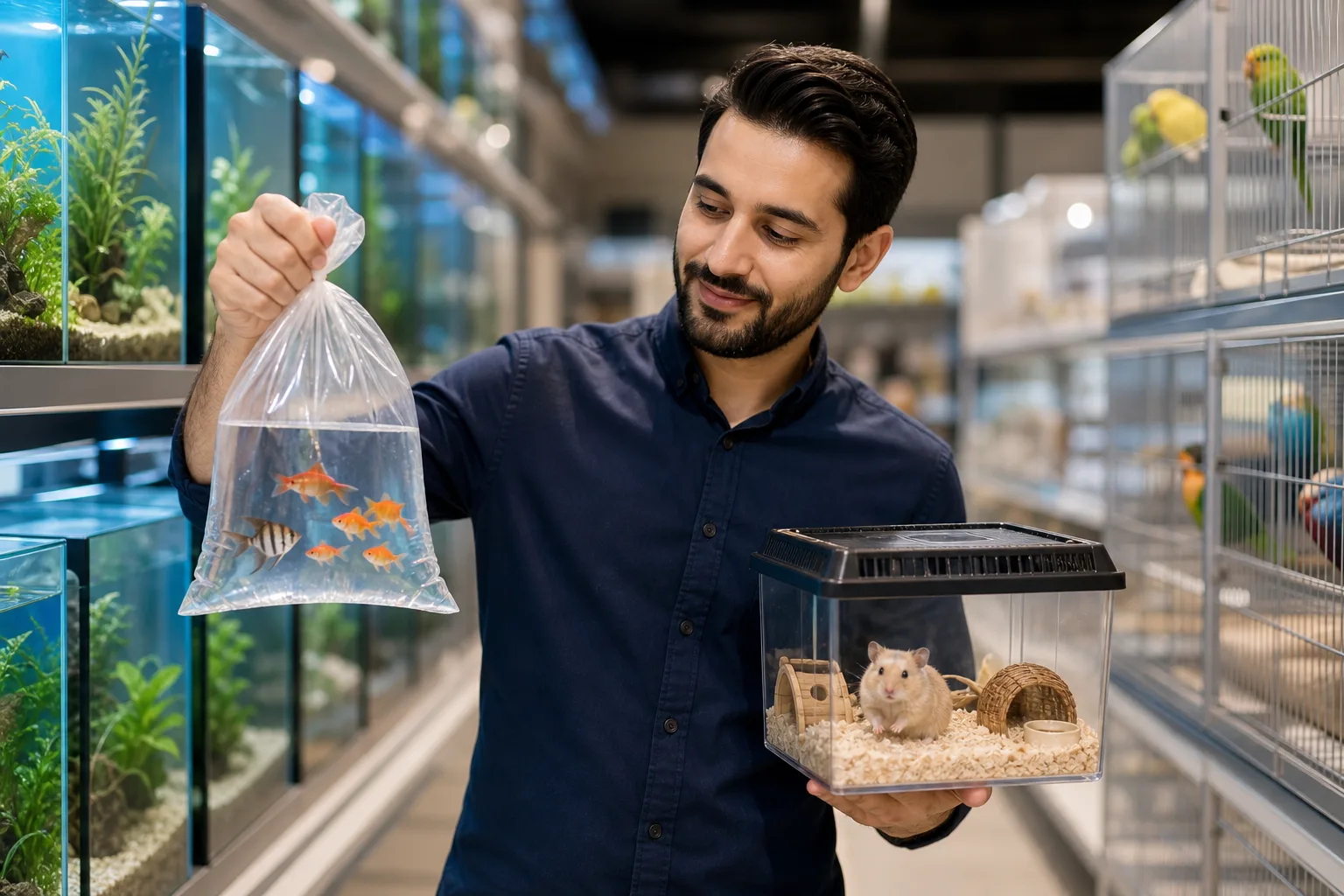
Activity code 4773.f2 permits the retail sale of live aquatic animals, ornamental fish, aquatic invertebrates, and other permitted live animals sold as pets or for decorative use. The word 'permitted' is critical — the trade license alone does not resolve live animal import approvals, which require separate authority sign-off.
Tap Into a Rapidly Growing Global Market
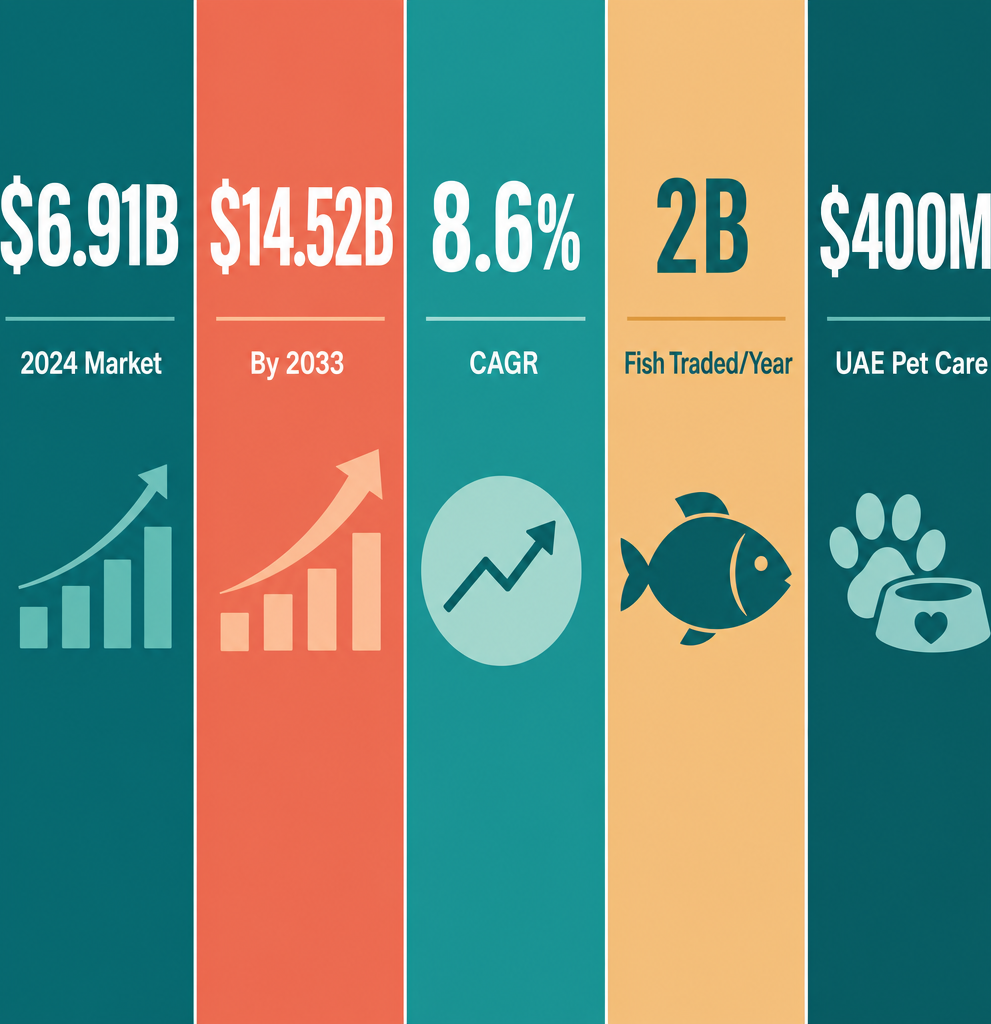
The global ornamental fish market was valued at USD 6.91 billion in 2024 and is projected to reach USD 14.52 billion by 2033 at an 8.6% CAGR. Roughly two billion live ornamental fish cross borders every year, with tropical freshwater fish commanding a 52.1% market share.
Know Your Three Core Customer Groups
Your buyers fall into hobbyists and aquascapers seeking quality livestock, hospitality and commercial interior clients installing decorative aquariums, and trade buyers like pet shops and educational institutions purchasing at wholesale volume. Each group requires a different sales and sourcing approach.
Choose Between Mainland and Free Zone Setup
A mainland DET license suits a specialist retail shop where customers browse tanks in person, while Meydan Free Zone is better suited to import, wholesale, and online models with 100% foreign ownership and fully digital remote setup. Both routes still require separate live animal import approvals regardless of which you choose.
Leverage Dubai's Booming Pet Care Economy
The UAE pet care market sits between USD 360 million and USD 400 million in 2024 and is projected to surpass USD 2 billion, driven by a 30% post-pandemic rise in pet ownership among urban millennials and expatriate communities. Dubai's growing pet-friendly infrastructure — including animals welcomed in hotels and public parks — has further expanded commercial aquarium demand.
Bundle Aquascaping Services for Higher Margins
Wholesale and trade clients buying at volume also represent an opportunity to bundle aquascaping equipment and design services alongside livestock supply. This approach turns a single product sale into a recurring service relationship, particularly with hospitality and commercial interior clients.
How to Start an Aquatic and Live Animals Trading Business in Dubai with Meydan Free Zone
Around two billion live ornamental fish move across borders every year. Some end up in a hobbyist's tank, some in a hotel lobby, some in a restaurant feature wall. Dubai buys plenty of all three. Activity code 4773.f2 is the license for selling them.
This guide covers what the license allows, who buys from you, how mainland and free zone compare, and the steps to get set up. One point deserves flagging early: live animal import carries approval conditions the trade license alone does not settle.
Key Stats at a Glance
| Activity code | 4773.f2 |
|---|---|
| Sits under | ISIC class 4773, retail sale of other new goods in specialised stores |
| What it covers | Retail sale of live aquatic animals, ornamental fish, aquatic invertebrates and other permitted live animals sold as pets or for decorative purposes |
| Global market, 2024 | Ornamental fish valued at USD 6.91 billion – Market Data Forecast |
| Global market, 2033 | Projected USD 14.52 billion at 8.6% CAGR – Market Data Forecast |
| Trade volume | Roughly 2 billion live ornamental fish traded worldwide each year – Fortune Business Insights |
| Leading segment | Tropical freshwater fish at 52.1% share; marine fish advancing at 7.8% CAGR |
| UAE pet care market, 2024 | USD 360 million to USD 400 million, projected to pass USD 2 billion – Sapience |
| UAE pet ownership | Up 30% post-pandemic among urban millennials and expatriate communities – Futurism |
| Foreign ownership | 100% in Meydan Free Zone |
What This License Covers
Code 4773.f2 sits inside ISIC class 4773, which covers retail sale of new goods across specialised product categories, including flowers, plants, seeds, fertilisers, pet animals and pet food.
Within that class, sub-code 4773.f2 is designated specifically for Aquatic and Live Animals Trading: the retail sale of live aquatic animals, ornamental fish, aquatic invertebrates and other permitted live animals, sold as pets or for decorative use.
Under it you can source and sell those products to end customers through a specialised commercial channel. The word permitted is doing quiet work in that definition, and it is the reason the approvals question below matters more here than in a normal trading activity.
Who Your Clients Will Be
Three groups, and they want quite different things.
Hobbyists and aquascapers are the retail base. Aquascaping has grown into a precision hobby among affluent urban consumers, and those buyers pay for quality livestock rather than the cheapest fish available. Hospitality and commercial interiors are the second group. Hotels, restaurants and offices increasingly install decorative aquariums, and they buy through interior designers and fit-out contractors rather than walking into a shop. Dubai's pet-friendly infrastructure, with animals now welcomed in hotels, restaurants and public parks, has widened that market further.
The third group is trade: pet shops, zoo facilities, educational institutions and hospitality venues buying wholesale. Serving them means importing and distributing at volume rather than selling one tank at a time, and it is where the aquascaping and equipment side can be bundled in profitably.
Mainland or Free Zone
| Factor | Mainland (DET) | Free Zone (Meydan Free Zone) |
|---|---|---|
| Retail to the public | Direct, including a shopfront | Better suited to import, wholesale and online models |
| Foreign ownership | Set by DET rules for the activity | 100% yours |
| Premises | Retail unit with tenancy registered on Ejari | Flexi-desk for the admin side, plus separate holding facilities |
| Live animal approvals | Apply either way; confirm with the authority before you import | Apply either way; confirm with the authority before you import |
| Setup | Through DET | Fully digital, with remote setup available |
If your model is a specialist shop with tanks people walk past, a mainland license from the Department of Economy and Tourism is the practical route. Retail to the public is what it is built for.
Meydan Free Zone suits an import and wholesale operation, or an online business supplying hobbyists, interior designers and commercial aquarium clients. Full foreign ownership and a digital setup make it a quick start for a distribution-led model.
Either way, holding facilities matter more than office space. Live stock needs water systems, quarantine capacity and someone competent looking after it daily, and that does not change with jurisdiction. Plan the facility first and let the license follow it.
[blockCTACostCalculator]
Step by Step Setup Guide
- Step 1, confirm your activity scope: Check that code 4773.f2 is approved under your chosen authority, and confirm exactly which species categories it covers for your intended range.
- Step 2, settle the live animal approvals question: Confirm in writing with the licensing authority which import permits and species approvals apply before you commit to suppliers. Do this first, not last.
- Step 3, choose your jurisdiction: Mainland through DET for a retail shopfront, or Meydan Free Zone for import, wholesale and online models. ]
- Step 4, book your trade name: Check availability through the DET portal or the Meydan Free Zone portal, and make sure it follows UAE naming conventions.
- Step 5, submit your setup documents: Passport copies for every shareholder and director, a business plan summary, and an NOC if you hold a UAE residence visa under another sponsor.
- Step 6, prepare your holding facility: Water systems, filtration, quarantine capacity and trained staff need to be in place before your first shipment lands, not after.
- Step 7, collect your license, open a bank account and register for VAT: Register with the Federal Tax Authority once taxable turnover passes AED 375,000.
Compliance and What You Need in Place
Import and species approvals
Live animals are not ordinary cargo. Import permits and species approvals apply on top of the trade license, and some species carry restrictions or need documentation under international conventions. Confirm exactly what applies to your intended range with the licensing authority and the relevant federal body before you place a first order, because getting this wrong at the border is expensive and the stock does not survive the delay.
Livestock welfare
Your holding facility is a compliance item as much as a commercial one. Water quality, quarantine and stocking density all affect mortality, and mortality is your largest hidden cost in this trade. A poorly run facility loses money quietly for months before anyone traces the cause.
Supplier chain
Ornamental fish sourcing runs through a small number of export hubs, and quality varies enormously between suppliers. Build relationships with a few reliable ones rather than buying on price, because a shipment that arrives sick costs you the stock and the customer.
VAT
Register with the Federal Tax Authority once annual taxable turnover passes AED 375,000.
Renewal and records
Annual license renewal applies. Keep clean records of what you imported, from whom and under what permit, since that paperwork is what protects you if a consignment is queried.
Market Opportunity
The global picture is strong. The ornamental fish market was valued at USD 6.91 billion in 2024 and is projected to reach USD 14.52 billion by 2033 at 8.6% CAGR, with roughly two billion live ornamental fish traded worldwide each year.
Several things are pushing it. The documented psychological benefits of aquarium-keeping, the rise of aquascaping as a precision hobby, growing commercial adoption of decorative aquariums in hotels, restaurants and offices, and aquarium technology that makes maintenance easier than it used to be. Tropical freshwater fish dominate at 52.1% share, while marine fish is the faster-growing segment at 7.8% CAGR on demand for premium exotic reef species.
The UAE side is equally encouraging. The pet care market was estimated at USD 360 million to USD 400 million in 2024, with projections suggesting it could pass USD 2 billion as ownership and premiumisation continue. Pet ownership rose 30% post-pandemic among urban millennials and expatriate communities, and Euromonitor International identifies fish among the pet categories set for continued population growth in the UAE.
Conclusion
Aquatic and live animals trading under code 4773.f2 sits at the meeting point of a growing global market and a UAE consumer base with rising disposable income and a real appetite for premium pet products.
The licensing itself is workable. Meydan Free Zone offers full foreign ownership and a quick digital setup for an import or wholesale model, while a mainland license suits a retail shopfront.
What deserves proper attention before you commit is the approvals question on live animal import and the standard of your holding facility. Both decide whether the business works in practice. Speak to the Meydan Free Zone team to confirm your activity scope and the approvals that apply to your intended species range.
[blockCTAContact]
Compliance
THIRD-PARTY APPROVAL
This activity requires pre-approval from the Ministry of Climate Change and Environment (MoCCAE) / Dubai Municipality (DM) before a business license can be issued by Meydan Free Zone.
ANTI-MONEY LAUNDERING COMPLIANCE
This business activity is exempt from AML compliance requirements.