
Table of Contents
Frequently Asked Questions
What is activity code 9103 and what types of businesses does it cover in Dubai
Activity code 9103 covers Botanical and Zoological Gardens and Nature Reserves Activities. It is a recognised recreational and cultural services category within Dubai's business licensing framework.
Businesses licensed under this code can operate or manage botanical gardens, zoos, aquariums, nature reserves, and wildlife sanctuaries. It is distinct from theme parks or sports facilities and sits within the broader experience economy sector.
Can a foreign national own 100% of a botanical or zoological gardens business in Dubai
Yes. Registering through Meydan Free Zone allows 100% foreign ownership with no requirement for a local sponsor or UAE national partner.
This makes the free zone route particularly attractive for international investors and operators looking to enter Dubai's nature-based attractions sector without relinquishing equity to a local partner.
What are the main revenue streams available to a 9103-licensed business
Revenue for a 9103-licensed business extends well beyond admission fees. Viable income streams include guided tours, educational programmes, conservation partnerships, food and beverage, retail, and event hire.
There is also a significant B2B revenue opportunity through corporate events, research institution contracts, and government conservation concessions, alongside the B2C visitor base of tourists, families, school groups, and eco-tourism travellers.
How does the hybrid free zone and mainland business structure work for physical garden or reserve operations
A common approach is to use a Meydan Free Zone entity to handle commercial operations, licensing, and intellectual property, while physical site operations — land, enclosures, and live animal collections — are managed through a separate mainland entity or a government concession agreement.
This structure keeps the free zone entity administratively lean and efficient, while allowing physical operations to scale separately as the project develops. It is well suited to consultancy, management, content, and IP-focused activities within the sector.
Which regulatory bodies oversee botanical and zoological gardens businesses in Dubai
Activity 9103 falls within recreational and cultural services, and oversight can involve several authorities depending on the scope of operations. These include Dubai Municipality and the Dubai Culture and Arts Authority, as well as relevant environmental bodies.
Operators managing live animal collections face additional requirements, including compliance with UAE obligations under CITES (Convention on International Trade in Endangered Species) and approvals from the Ministry of Climate Change and Environment for the import or keeping of regulated species.
What is the market opportunity for nature-based attractions in Dubai
Dubai recorded over 17 million international visitors in 2023, according to the Department of Economy and Tourism, generating sustained year-round demand for diverse leisure experiences.
Despite this visitor volume, nature-based experiences remain comparatively underdeveloped relative to Dubai's broader tourism infrastructure. The global zoo and botanical garden sector is on a steady growth trajectory driven by rising eco-tourism interest and conservation awareness, and UAE Vision 2031 reinforces both public and private investment in non-urban leisure assets.
What are the corporate tax and VAT thresholds relevant to this type of business in Dubai
Businesses operating in Dubai should be aware that VAT registration is required once turnover reaches AED 375,000. A 9% corporate tax applies on net profits above AED 375,000, in line with the UAE's corporate tax framework introduced in recent years.
For early-stage or smaller operations generating revenue below these thresholds, the tax burden remains minimal, making Dubai an attractive environment for new entrants to the nature-based attractions sector.
How quickly can a Meydan Free Zone licence be set up for activity code 9103
For straightforward applications, a Meydan Free Zone licence can be set up in a matter of days. The free zone is known for its efficient onboarding process relative to other licensing jurisdictions in the UAE.
The speed of setup makes it practical for operators to establish their commercial and IP entity quickly, even if the physical site operations require longer lead times due to land-use arrangements, government approvals, or construction. Early licence registration also allows the business to begin contracting, fundraising, and partnership activities while physical infrastructure is developed.
How to Open a Botanical and Zoological Gardens Business in Dubai
Dubai's appetite for nature-based attractions is real. The city actively funds and licenses botanical and zoological gardens as part of its broader tourism and urban development strategy. If you are considering this sector, the commercial case is solid and the regulatory path exists. What matters is sequencing your approvals correctly and choosing a setup structure that matches how you will actually operate.
This guide covers the license you need, how to pick your setup structure, what regulators will expect from you, and how to get trading. It assumes you already understand the basics of UAE business setup and want the specifics for this activity.
| Activity | Botanical and Zoological Gardens |
|---|---|
| Primary regulator | Dubai Department of Economy and Tourism (DET) |
| Secondary regulators | Dubai Municipality, Environment Agency – Abu Dhabi (for federal matters), Ministry of Climate Change and Environment |
| Foreign ownership | 100% permitted – Foreign Ownership rules apply on both mainland and free zone tracks |
| CITES obligation | Federal – applies to any protected species, regardless of jurisdiction |
| Relevant authority for cultural or heritage component | Dubai Culture and Arts Authority |
What This License Covers and Who Regulates It
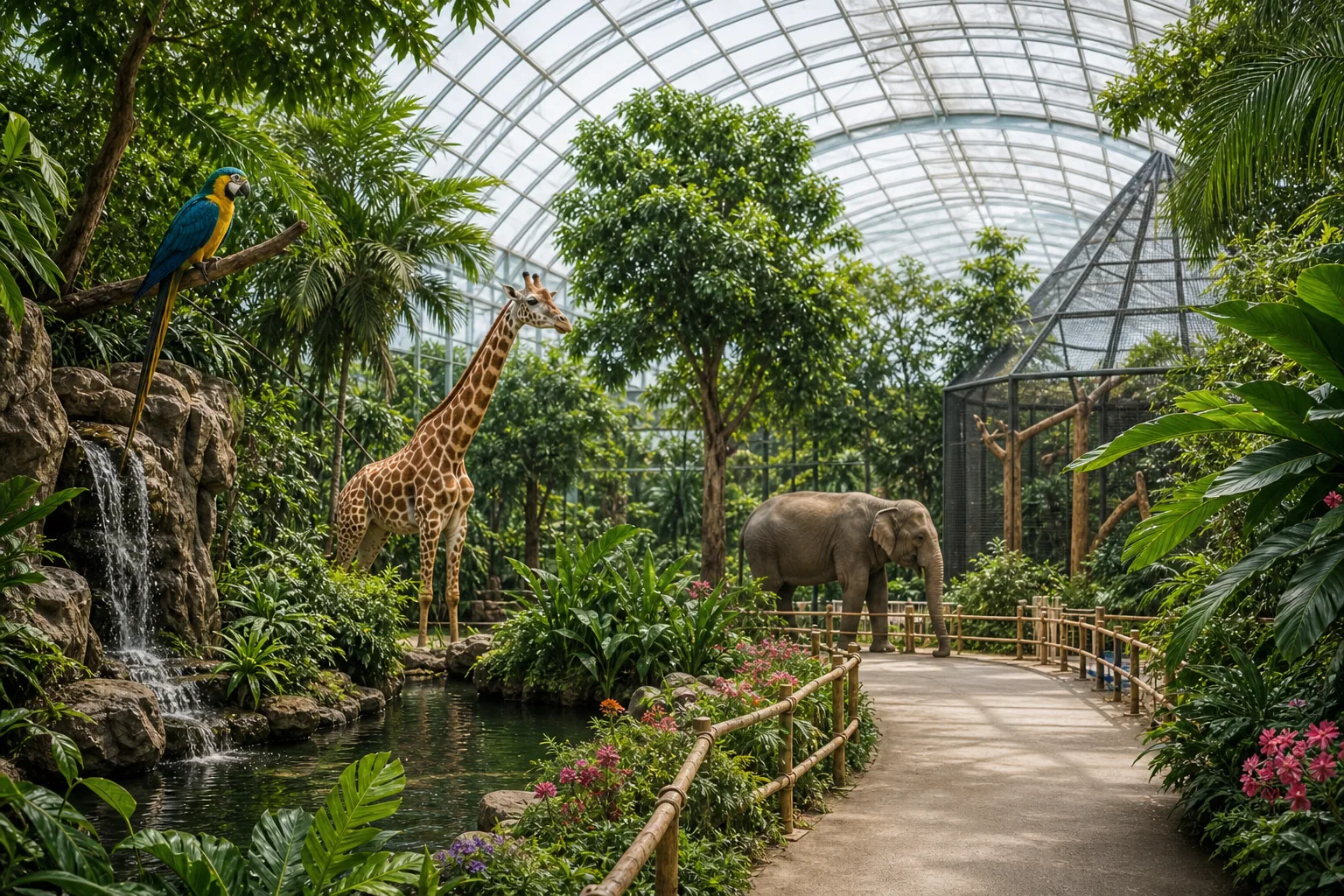
Under Dubai's commercial activity codes, botanical and zoological gardens covers the operation of sites that display living plants, animals, or both to the public. This includes botanical gardens, zoos, aquariums, safari parks, and combined nature parks. If your site has an education or heritage component, the Dubai Culture and Arts Authority may also need to be in the loop.
DET issues the commercial license. That is the starting point. But DET is not the only body you deal with. Two other regulators matter a great deal in practice.
Dubai Municipality sets the rules on animal enclosures, plant houses, building standards, and environmental conditions on site. They inspect after you open, not just at setup. Do not treat their requirements as a one-off box to tick.
Ministry of Climate Change and Environment controls what plant species and animals can enter the UAE. This is a federal function. You need their clearance before you order stock or bring animals into the country.
CITES compliance is a federal obligation for any protected species. This is not optional and it is not jurisdiction-specific. Whether you set up on the mainland or in a free zone, if you hold or display any species listed under the Convention on International Trade in Endangered Species, you need the correct permits. Build this into your planning timeline from day one, because CITES approvals take time.
If your site will run public education programmes, school visits, or heritage displays, check with the Dubai Culture and Arts Authority early. They do not always need to formally approve the project, but they are worth engaging if your concept has a cultural dimension.
Mainland vs Meydan Free Zone: Choosing Your Setup Structure

This is the biggest choice you will make when setting up. Let your operating model decide it, not the cost.
| Factor | Mainland (DET) | Free Zone (Meydan Free Zone) |
|---|---|---|
| Client and contract access | Direct access to UAE government contracts and public land leases | Best suited to management entities, holding companies, or consultancy arms |
| Foreign ownership | 100% permitted for most commercial activities | 100% permitted |
| Physical site | Land lease or usufruct agreement with Dubai Municipality or master developer | Free zone license; physical site outside the zone needs a separate land agreement |
| Local sponsor | No longer needed for most commercial activities – confirm your specific code | Not required |
| Setup speed | Longer due to multiple external approvals | Faster for the company formation step; external approvals still apply |
A mainland license from DET makes sense if you are pitching to a government body, bidding for a public land concession, or working directly with a municipality on a public-facing park. Government and semi-government landowners in Dubai mostly want to deal with mainland-licensed operators when it comes to long-term site agreements.
A Meydan Free Zone setup works well if you are structuring a holding company, a management entity, or a consultancy arm that sits above the operating entity. Some developers set up the management and IP functions in a free zone and hold the operating license separately on the mainland. This is a workable structure, but get legal advice before you split it that way.
One point worth stressing: a botanical or zoological garden needs real land. Your license structure must match your lease or land-use agreement. A free zone license alone does not give you the right to operate a public-facing site on mainland Dubai land. Make sure your land agreement and your license are aligned before you spend money on either.
On ownership, 100% foreign ownership is available on both tracks under current UAE law. Local sponsor or service agent arrangements no longer apply for most commercial activities. That said, confirm your specific activity code before you assume this. Some codes still carry conditions. You can check the Meydan Free Zone business activities list to see what is available and under what terms.
Free Business Setup Cost Calculator
Calculate NowStep-by-Step Setup Guide
The setup process for this activity involves more external approvals than most. Work through these in order. Trying to skip ahead typically adds time, not saves it.
- Step 1, book your trade name: Use the DET e-Services portal for a mainland company, or the Meydan Free Zone portal for a free zone one. You can check your company name availability before you submit.
- Step 2, confirm your activity code: Make sure the code is approved in your chosen jurisdiction before you go further. This sounds obvious, but codes that are available on the mainland are not always available in a free zone, and vice versa.
- Step 3, get initial approval: DET or Meydan Free Zone will issue an initial approval. This is not your trading license. It is the document you need to start the external approval process.
- Step 4, secure your site: Get your land lease or usufruct agreement in place with the relevant authority. This could be Dubai Municipality, a master developer, or the free zone itself. You will need this document for most of the approvals that follow.
- Step 5, apply for No Objection Certificates: You need NOCs from Dubai Municipality covering environmental conditions and building standards, from the Ministry of Climate Change and Environment for any animal holdings, and CITES permits for any listed species. Start these in parallel where you can, as each takes time.
- Step 6, submit your operational plans: Animal enclosures, plant houses, visitor areas, and veterinary facilities all need to be reviewed and approved by the relevant authority before you build or fit out. Get your plans signed off before you start construction.
- Step 7, get your trade license issued: Once your external approvals are in place, your trade license is issued by DET or Meydan Free Zone.
- Step 8, register with MOHRE: Once licensed, register with the Ministry of Human Resources and Emiratisation to process staff visas and meet your Emiratisation duties. This applies to mainland companies. Free zone companies register through the free zone authority.
Compliance and What You Need in Place Before You Open
Getting your license issued is not the same as being ready to open. Several compliance requirements kick in at the operational stage, and regulators do come back to check.
Animal welfare standards Dubai Municipality sets detailed rules on enclosure sizes, veterinary care, feeding regimes, and record-keeping for any site holding live animals. These are not one-off conditions. Inspections happen after you open. Keep your records clean and your enclosures up to standard at all times.
Plant and seed imports The Ministry of Climate Change and Environment controls what species can enter the UAE. Get clearance before you order stock. Bringing in plants or seeds without the correct phytosanitary certificates will result in seizure at the border and delays that can set your opening back by months.
Qualified staff The approving authority will typically need to see that you have qualified zoologists, horticulturalists, and licensed veterinary staff in place before they sign off on your operating permit. This is not just good practice. It is a condition. Budget for these roles from the start, and factor in the time needed to get staff visas processed. You can get support with visa services in Dubai through mResidency.
Public safety Civil Defence needs to approve your visitor areas, emergency exit plans, and crowd management procedures. For a site with large numbers of visitors, this can be a detailed process. Get your Civil Defence approval before you start marketing an opening date.
Insurance Public liability cover is standard for any visitor-facing operation. Some authorities need it as a condition of the operating permit. Check what level of cover is needed before you buy a policy, as minimum thresholds vary by site type and visitor capacity.
Corporate tax and VAT UAE corporate tax applies at 9% on taxable profits above AED 375,000. If your annual revenue exceeds AED 375,000, you must register for VAT. Both obligations apply from the point you start trading. Get VAT registration support in place early so you are not scrambling to catch up after your first trading period.
Market Opportunity and Revenue Model
Dubai's tourism numbers are strong and rising. The government has made consistent investment in green infrastructure, nature-based attractions, and public parks as part of its urban development agenda. That creates a real commercial case for well-run botanical and zoological operations, provided you structure the business correctly from the start.
Revenue streams to plan for Entry fees and memberships are the core. Beyond that, corporate events, educational programmes for schools, food and beverage concessions, and retail can each add meaningful revenue. The most successful operations in this sector treat F&B and events as genuine business lines, not afterthoughts.
Management contracts Many operators in this space do not own the site. They work under a management contract with a government or semi-government landowner who holds the land and the infrastructure. The operator brings the expertise, the brand, and the day-to-day management. This model reduces capital exposure and can be easier to finance, but it does require a strong track record to win the contract in the first place.
ESG and sustainability Dubai's green economy agenda is not just policy language. It affects how projects get financed and how quickly they move through the approval process. An operation with clear sustainability credentials, conservation programmes, and measurable environmental outcomes will find it easier to get backing from government partners and private funders alike. Build this into your concept from the start, not as a layer added later.
According to IMARC Group, the global zoological parks and botanical gardens market continues to grow, driven by rising urban tourism and increased public interest in conservation and environmental education. Dubai's position as a regional tourism hub puts it well inside that growth curve.
Conclusion
Opening a botanical or zoological gardens business in Dubai is operationally complex. The regulatory path is clear, but only if you sequence your approvals correctly and match your license structure to how you will actually operate. Get your land agreement, your activity code, and your external approvals aligned before you commit to a site or a construction timeline.
The commercial opportunity is real. Dubai is investing in this sector, visitor numbers support the revenue model, and the government actively wants quality operators in the space. The founders who succeed here are the ones who treat the compliance process as part of the business, not an obstacle to it.
Speak to the Meydan Free Zone team to confirm your activity code and get a cost estimate before you commit to a site or structure. You can also use the business cost calculator to get a quick read on setup costs, or explore a Dubai Trade License from AED 12,500 if you are at the early planning stage.
Ready to Launch Your Business in Dubai?
Let's Connect