
Table of Contents
Topic Summary
UAE's Trade Position Powers Your Business
The UAE sits at the crossroads of Asia, Africa, and Europe, making it an ideal hub for wholesaling precision instruments. Buyers across the GCC, East Africa, and South Asia are all reachable from a single UAE base with existing logistics infrastructure.
Know Exactly What Your License Covers
A measuring instruments wholesale license lets you buy, stock, and sell in bulk to other businesses — covering flow meters, calibration tools, survey instruments, lab devices, and industrial sensors. Retail sales, repairs, and manufacturing all require separate activity codes and must not be mixed in.
Your Clients Are All B2B Buyers
Precision instruments are never impulse purchases — your customers are construction firms, oil and gas companies, laboratories, hospitals, and regional distributors who require documentation and compliance standards before accepting delivery. Understanding their procurement processes is essential to winning and keeping accounts.
Re-Export Is a Major Revenue Opportunity
Many buyers in East Africa and South Asia prefer sourcing through Dubai because of its logistics infrastructure and financing options. Positioning your wholesale business as a regional re-export hub can significantly expand your addressable market beyond the UAE itself.
100% Foreign Ownership Is Available
Setting up through Meydan Free Zone allows full foreign ownership of your wholesale trading company, removing the need for a local Emirati partner. This gives international entrepreneurs complete control over their business from day one.
Get Your Activity Code Right From the Start
The activity code you select at registration determines what you can legally trade, how goods are classified at the border, and what customs documentation applies. Choosing the wrong code creates costly corrections later, so verify against the official Business Activities List before applying.
Plan for VAT Registration Early
Once your annual turnover reaches AED 375,000, registration with the Federal Tax Authority becomes mandatory. Building VAT compliance into your processes from the outset avoids penalties and keeps your documentation clean for B2B clients who require proper tax invoices.
How to Start a Measuring Instruments and Equipment Wholesale Business in Dubai with Meydan Free Zone
The UAE sits at the centre of trade routes connecting Asia, Africa, and Europe. That makes it one of the most practical bases in the world for wholesaling precision measuring instruments and industrial equipment. Buyers across the GCC, East Africa, and South Asia are reachable from a single UAE base, and the infrastructure to move goods is already there.
This guide covers what the activity covers, who buys from you, how to choose the right setup, and what steps to take to get your license through Meydan Free Zone.
Key Stats at a Glance
| Activity | Measuring instruments and equipment wholesale |
|---|---|
| License category | Trading |
| Foreign ownership | 100% available through Meydan Free Zone – Foreign Ownership details |
| UAE trade position | Major re-export and distribution hub for precision instruments serving the GCC, Africa, and South Asia |
| Global market size | The global measuring instruments market is on a strong growth trajectory, driven by industrial expansion and quality-control demand – IMARC Group |
| VAT threshold | Mandatory registration with the Federal Tax Authority once annual turnover hits AED 375,000 – Federal Tax Authority (FTA) |
| Customs oversight | Import and re-export documentation handled through UAE Customs under Ports, Customs and Free Zone Corporation (PCFC) |
What This License Covers

A measuring instruments and equipment wholesale license lets you buy, stock, and sell instruments in bulk to other businesses. You are not selling to end consumers, and you are not repairing or manufacturing anything. You are a distributor in the supply chain.
The scope is broad. It covers:
- Flow meters and pressure gauges used in oil, gas, and utilities
- Calibration tools and reference instruments for labs and quality-control departments
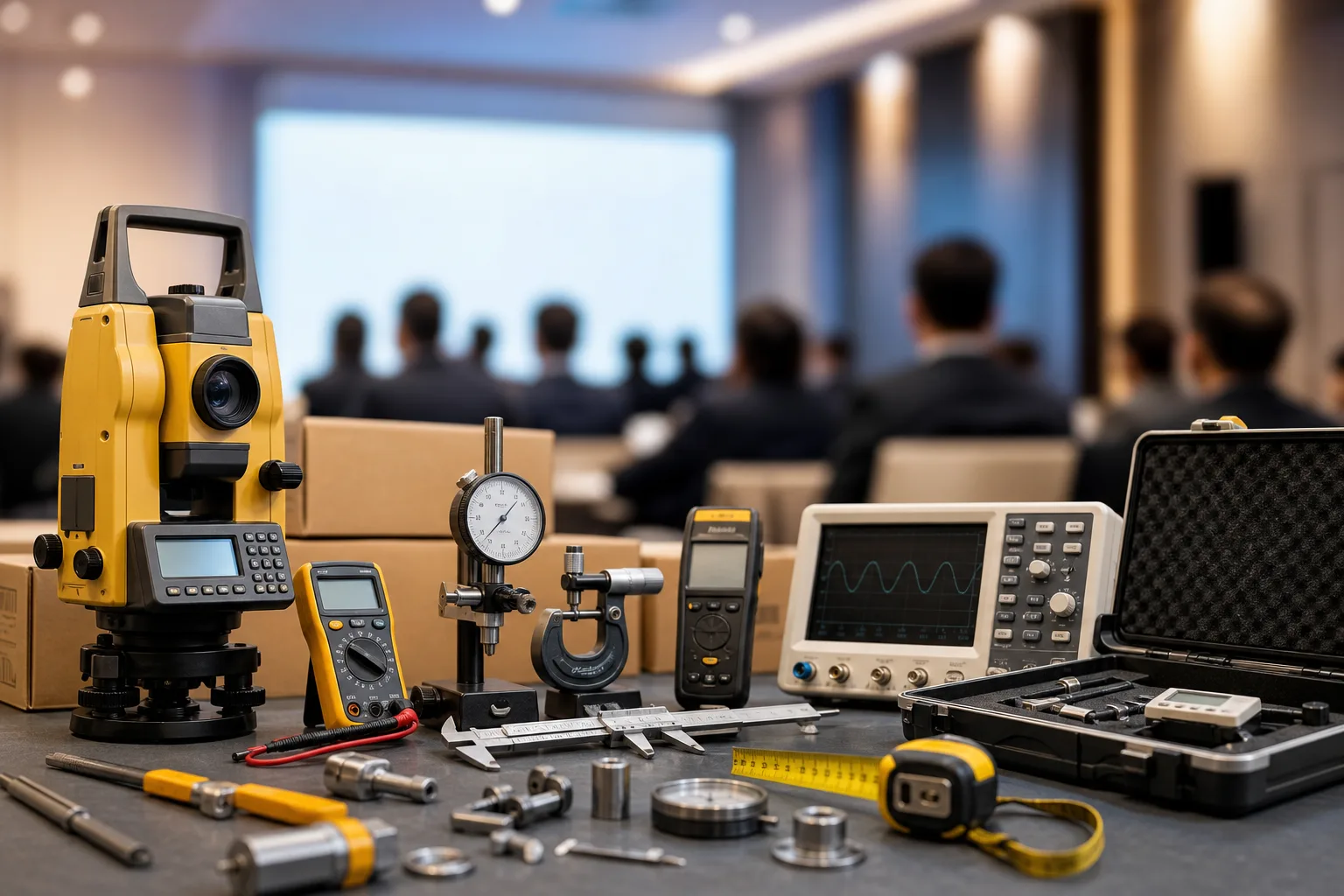
- Survey instruments including levels, theodolites, and distance-measuring devices
- Scientific and laboratory measurement devices for research and healthcare
- Industrial sensors and monitoring equipment used in manufacturing and construction
- Commercial measuring tools for trade and logistics applications
What the license does not cover is equally important to understand. Retail sales to individual consumers, repair and maintenance services, and the manufacture of instruments all need separate activity codes. If you plan to offer calibration or servicing alongside wholesale, you need to add those activities to your license from the start. Check the full Business Activities List to confirm which codes apply to your product range.
The activity code maps to the UAE's trade classification system for wholesale of professional, scientific, and technical instruments. When you apply, the code you select determines what you can legally trade, what customs documentation you use, and how your goods are classified at the border. Getting this right at setup saves a lot of correction later.
Who Your Clients Will Be
This is a B2B-only business. Nobody buys precision instruments on impulse. Your buyers run procurement processes, they want documentation, and they often need instruments that meet specific standards before they will accept delivery.
The main buyer groups are:
- Construction and engineering firms that need survey and structural measurement tools on active project sites across the UAE and wider GCC
- Oil, gas, and utilities companies that buy flow meters, pressure instruments, and monitoring equipment in volume, often on long-term supply agreements
- Laboratories, hospitals, and research institutions that need scientific measurement devices with traceable calibration certificates and compliance documentation
- Traders and regional distributors who source from you in the UAE and re-export across Africa, South Asia, and the broader Middle East
- Industrial manufacturers that need quality-control instruments as part of their production processes
The re-export segment is particularly strong from the UAE. Many buyers in East Africa and South Asia prefer to source through Dubai because of the logistics infrastructure, the financing options, and the availability of multiple brands under one roof. If your product range is wide and your pricing is competitive, you can serve both local end-users and regional re-exporters from the same operation.
Mainland vs Meydan Free Zone: Which Setup Works for You
This is the biggest choice you will make when setting up. Let your clients and your trading model decide it, not the license price.
| Factor | Mainland (DET) | Free Zone (Meydan Free Zone) |
|---|---|---|
| Foreign ownership | 100% in most trading activities | 100% |
| UAE market access | Direct – sell to any UAE buyer | Needs a local distributor or dual-license to sell directly on the mainland |
| Government tenders | Eligible to bid directly | Not directly eligible without a mainland entity |
| Re-export and international trade | Workable but more admin | Well suited – free zone status simplifies customs |
| Setup speed | Longer process through DET | Faster – Meydan Free Zone handles most steps |
| Office requirement | Physical office required | Flexi-desk options available |
| Currency restrictions | None | None |
A mainland license from DET lets you work directly with UAE government bodies and sell to any local corporate buyer without needing an intermediary. If your main market is UAE-based end-users, particularly in regulated sectors like utilities or healthcare, mainland is worth the extra setup steps.
A Meydan Free Zone license works well if your model is wholesale-to-export, if your buyers are regional distributors, or if you want to get trading quickly with lower overhead. You get full ownership, no currency restrictions, and a simpler setup process. If you later need to sell directly on the UAE mainland, you can add a mainland entity or work through a registered local distributor.
Most wholesale operations focused on re-export and regional distribution run well from a free zone. If you are not sure which applies to you, use the Cost Calculator to compare options before you commit.
Free Business Setup Cost Calculator
Calculate NowHow to Set Up Your Wholesale Business with Meydan Free Zone
The setup process is straightforward when you have your documents ready and your activity code confirmed. Here is how it runs:
- Step 1, book your trade name: Use the Meydan Free Zone portal to check availability and book your preferred name. The name must reflect your activity and meet UAE naming rules. You can check your company name availability before you apply.
- Step 2, pick your activity code: Confirm the wholesale measuring instruments code is approved in your chosen jurisdiction before you go further. If you plan to add calibration or servicing, include those codes now.
- Step 3, choose your license package: Meydan Free Zone offers a Dubai Trade License from AED 12,500. For lean startups, mCore covers the essentials. For larger operations needing more support, mPlus bundles additional services.
- Step 4, submit your documents: Typically you need passport copies for all shareholders and directors, a completed application form, and a brief summary of your business activity. Meydan Free Zone guides you through what is needed for your specific structure.
- Step 5, get your license: Once documents are approved and payment is made, your license is issued. You can then open a corporate bank account, apply for visas, and start trading.
If you are setting up from outside the UAE, Meydan Free Zone supports remote business setup so you do not need to be in the country to complete the process.
Compliance and What You Need in Place
Getting the license is step one. Running a compliant wholesale operation means a few more things need to be in order before you start.
VAT registration
Once your annual turnover hits AED 375,000, you must register with the Federal Tax Authority. If you are importing and re-exporting at volume, you may reach that threshold quickly. Register early rather than scrambling later. Meydan Free Zone's mAccounting service includes VAT registration support if you need help with the process.
Customs and import documentation
All goods entering the UAE need proper import documentation. For a free zone operation, your goods move through a designated customs point and are held in a bonded or free zone warehouse. Re-exports need separate documentation. Register with UAE Customs under PCFC and make sure your freight forwarder understands the product classifications you are working with.
Product conformity requirements
Instruments sold into regulated sectors, particularly healthcare, utilities, and food production, may need to meet specific conformity standards or carry recognised calibration certificates. Check the requirements for each sector before you agree a supply contract. Selling non-conforming instruments into a regulated environment puts both the contract and your name at risk.
Corporate tax
The UAE introduced a corporate tax of 9% on taxable income above AED 375,000. Free zone businesses can qualify for a 0% rate on qualifying income, but the conditions are specific. Get proper advice before you assume you qualify. Meydan Free Zone's mAccounting team offers corporate tax services in Dubai to help you stay on the right side of the rules.
Staff visas and workspace
Your license determines how many visas you can apply for. Meydan Free Zone offers flexi-desk arrangements that satisfy the office requirement for a free zone license. If you need visas for employees or dependants, the mResidency service handles the full process including medical tests and Emirates ID applications.
Business banking
Opening a corporate account in the UAE takes longer than most founders expect. Having your license, trade activity, and compliance documents in order before you approach a bank speeds things up. Meydan Free Zone's mCore service includes business banking support to help you navigate the process.
Market Opportunity
Demand for measuring instruments in the region is tied to several durable trends. Infrastructure spending across the GCC remains high. Saudi Arabia's Vision 2030 programme is driving large-scale construction and industrial projects that need precision instruments at every stage. The UAE's own industrial strategy is pushing manufacturing and quality standards upward. Healthcare expansion across the region is increasing demand for laboratory and diagnostic measurement devices.
Re-export is the other side of the opportunity. Dubai's port and logistics infrastructure, combined with its free zone framework, makes it a natural consolidation point for buyers in markets that lack direct supplier relationships with European or Asian manufacturers. If you can hold stock in the UAE and ship quickly, you have a real advantage over suppliers quoting six-week lead times from origin.
The market rewards reliability, documentation quality, and product knowledge. Buyers in oil and gas, utilities, and healthcare do not switch suppliers for small price differences. Once you are on an approved vendor list and have a track record of on-time delivery with correct documentation, that relationship tends to hold.
Conclusion
Wholesaling measuring instruments from the UAE is a workable, low-overhead business when structured correctly. The demand is real, the trade infrastructure is there, and the free zone framework gives you full ownership and a fast path to market.
Meydan Free Zone gives you full ownership, a fast setup process, and a base that lets you reach buyers across the region and beyond. The key is getting the activity code right, understanding which setup, mainland or free zone, matches your trading model, and having your compliance basics in place before you start taking orders.
Speak to the Meydan Free Zone team to confirm the right activity code for your product range and get a cost estimate before you commit.
Ready to Launch Your Business in Dubai?
Let's ConnectReferences
- IMARC Group – Measuring Instruments Market Research
- Federal Tax Authority (FTA), UAE
- Ports, Customs and Free Zone Corporation (PCFC)
- Invest in Dubai