Table of Contents
Topic Summary
Choose the Right Jurisdiction for Your Trade
Meydan Free Zone suits traders whose buyers are mostly overseas, offering 100% foreign ownership and no customs duty within the zone. A mainland DET license is better if you plan to sell directly to UAE-based buyers, though it requires a physical office.
Understand Exactly What the License Covers
A textiles and fabrics waste trading license lets you source, sort, bale, and resell offcuts, post-consumer fabric, and industrial textile scrap. It does not cover processing activities like shredding, washing, or re-spinning fibre, which require a different activity code.
Know Your Target Buyers Before You Set Up
The main buyers of textile waste are recyclers, fibre producers, rag traders, and industrial end-users, most of whom are based in Turkey, India, Pakistan, and Bangladesh. Identifying your buyer base first helps you choose the right jurisdiction and trade structure.
Keep Overheads Low with a Flexi-Desk Option
Meydan Free Zone allows trading businesses to operate from a flexi-desk rather than a dedicated office, significantly reducing fixed costs. A warehouse is only required if you physically hold stock within the UAE.
Plan for VAT Registration from the Start
If your taxable turnover reaches AED 375,000, you are required to register for VAT with the Federal Tax Authority. Building this threshold into your financial planning early avoids compliance issues as the business scales.
Leverage Dubai's Re-Export Infrastructure
Dubai sits on trade routes connecting textile waste producers to recyclers in Asia and Europe, making it a natural hub for import, re-export, and transshipment. Free zone operators benefit most from this position, as that is where the margin and cost advantage are strongest.
Start with a Realistic Budget and Timeline
A Dubai trade license through Meydan Free Zone starts from AED 12,500, with setup typically taking a few days to a few weeks depending on document readiness. Having your documents prepared in advance is the single biggest factor in speeding up the process.
How to Start a Textiles and Fabrics Waste Trading Business in Dubai with Meydan Free Zone
Textile waste is one of the fastest-growing traded commodities in the Gulf. Regional manufacturing growth and tightening global recycling mandates are pushing more material into the secondary market, and Dubai sits right in the middle of the trade routes that connect producers to recyclers.
This guide covers what the activity involves, how to set up correctly in the UAE, and why Meydan Free Zone is a workable base for this trade. If you already know the business and just need the setup mechanics, read on.
Key Stats at a Glance
| License type | Trading license – Textiles and Fabrics Waste |
|---|---|
| Foreign ownership | 100% – no local sponsor needed |
| Jurisdiction | Meydan Free Zone, Dubai |
| Office requirement | Flexi-desk available; warehouse needed if you hold physical stock |
| Typical setup timeline | A few days to a few weeks depending on document readiness |
| VAT registration threshold | AED 375,000 taxable turnover – Federal Tax Authority (FTA) |
| Market context | Global textile recycling is a growing sector; the UAE's re-export infrastructure makes it a natural hub for sourcing and redistributing textile scrap to recyclers in Asia and Europe – Mordor Intelligence |
| Starting license cost | Dubai Trade License from AED 12,500 |
What This License Covers

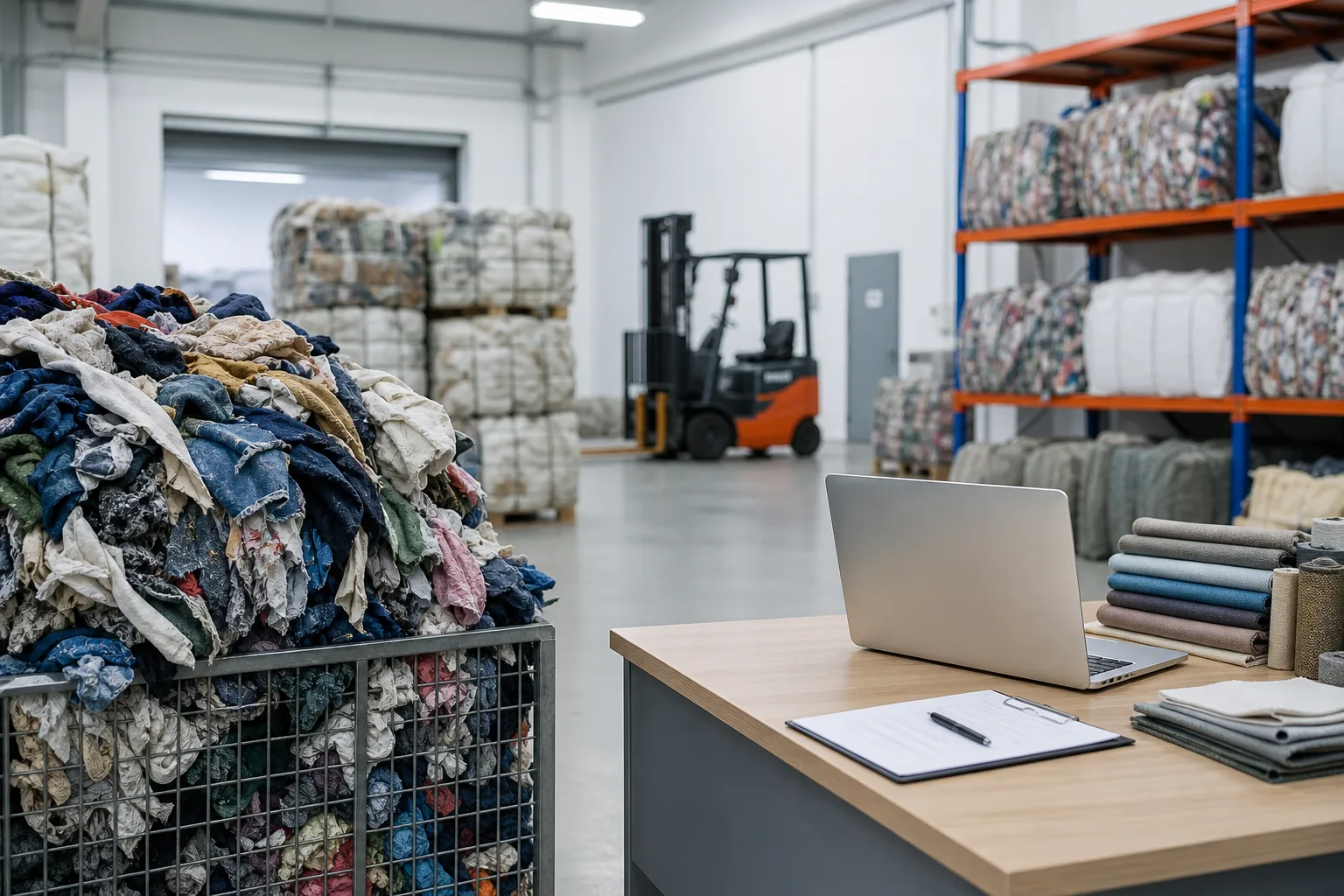
A textiles and fabrics waste trading license lets you source, sort, bale, and resell offcuts, post-consumer fabric, and industrial textile scrap. You are buying and selling material, not transforming it.
That distinction matters. This license does not cover processing, dyeing, or manufacturing. If you plan to shred, wash, or re-spin fibre, you need a different activity code. Trading means you take ownership of the material, move it, and sell it on. Nothing more.
Permitted trade flows
Under this license you can import textile waste into the UAE, export it to overseas buyers, re-export goods that entered through a UAE port, and sell wholesale to buyers inside the UAE. Most free zone operators in this space focus on import and re-export, because that is where the margin sits and where the free zone structure gives you the biggest cost advantage.
Who buys this material
Your buyers fall into a few clear groups:
- Recyclers who convert textile scrap into recycled fibre or insulation material
- Fibre producers in South Asia who use baled cotton and polyester waste as raw input
- Rag traders who sort and redistribute to industrial cleaning and wiping markets
- Industrial end-users who buy specific grades of fabric waste for technical applications
Most of these buyers are in Turkey, India, Pakistan, and Bangladesh. Dubai's position between the source markets and the end-user markets is what makes this trade work here.
Check the full Meydan Free Zone business activities list to confirm the exact activity code for your setup before you proceed.
Mainland vs Meydan Free Zone
This is the biggest choice you will make when setting up. Let your buyers decide it, not the setup cost.
| Factor | Mainland (DET) | Free Zone (Meydan Free Zone) |
|---|---|---|
| Foreign ownership | 100% permitted for trading activities | 100% permitted |
| UAE domestic sales | Direct access to UAE buyers | Requires a local distributor or customs clearance agent |
| Office requirement | Physical office required | Flexi-desk available for trading; warehouse needed for stock |
| Customs duty | Applies on imports at point of entry | No duty within the free zone; duty applies on mainland entry |
| Best suited to | Traders selling mainly to UAE-based buyers | International re-export and transshipment trade |
A mainland license from the Dubai Department of Economy and Tourism (DET) lets you work directly with UAE buyers, including government entities and local manufacturers. You need a physical office, and customs duties apply when you bring goods into the country.
A Meydan Free Zone license gives you full foreign ownership, no customs duty within the free zone, and a flexi-desk option that keeps overheads low. It suits traders whose buyers are mostly overseas. If your model is to bring baled textile scrap into Dubai and ship it straight to a recycler in Karachi or Istanbul, the free zone structure is the right fit.
Moving goods between the free zone and the UAE mainland
If you do sell to mainland UAE buyers, goods must clear UAE customs at the point of entry to the mainland. You will need a customs broker and the right HS codes. The Ports, Customs and Free Zone Corporation (PCFC) oversees this process for goods moving through Dubai's port network.
If you are not sure where your buyers will be, start with the free zone. You can always add a mainland presence later.
Free Business Setup Cost Calculator
Calculate NowStep-by-Step Setup Guide
- Step 1, book your trade name: Use the Meydan Free Zone portal to search for and book your company name. You can check your company name availability before you start the application.
- Step 2, select your activity code: Confirm the textiles and fabrics waste trading code is approved for your chosen jurisdiction before you go further. If you plan to handle multiple waste categories, check whether you need more than one activity on the license.
- Step 3, choose your legal structure: An FZE (Free Zone Establishment) suits a sole shareholder. An FZC (Free Zone Company) works for two or more shareholders. Both give you full foreign ownership.
- Step 4, pick your office package: If you are trading on paper and moving goods directly between ports, a flexi-desk is enough. If you plan to hold physical stock in Dubai, you need a licensed warehouse unit. Do not underestimate this step. A flexi-desk address does not give you the right to store goods on site.
- Step 5, submit your documents: Passport copies for all shareholders and directors, a business plan summary if required, and any supporting documents Meydan Free Zone asks for. Get initial approval, then pay the license fee.
- Step 6, receive your license and establishment card: Once issued, these are your trading credentials. You need both to open a bank account and to sign contracts.
- Step 7, open a UAE corporate bank account: This takes longer than the license. Banks will want to understand your trade flows, your counterparties, and your source of funds. Prepare a clear explanation of the business model before you walk in. Business banking support is available through mCore if you need help navigating this step.
- Step 8, register for VAT if required: Once your taxable turnover hits the FTA threshold, registration is mandatory. Do this before you start trading at scale, not after.
If you want to set up without travelling to Dubai, Meydan Free Zone supports remote business setup for most applications.
Compliance and What You Need in Place
VAT registration
Register for VAT with the Federal Tax Authority once your taxable turnover hits AED 375,000. Export transactions may qualify for zero-rating, which matters for a business built on re-export. Get advice from a UAE-based accountant before you file your first return. VAT registration support is available through mAccounting if you need it.
Customs documentation
Every shipment of textile waste needs the correct HS code. Common codes cover cotton waste, synthetic fibre waste, and mixed textile scrap, and they are not interchangeable. You also need certificates of origin and, for sea freight through Dubai, PCFC port clearance. Get a freight forwarder who knows this commodity. Errors on customs documents cause delays and can trigger inspections.
Storage and handling
If you hold physical stock in the UAE at any point, you need a licensed warehouse. A flexi-desk address alone does not cover this. When you pick your office package in step four of the setup process, be honest about your operating model. If the plan is to bring containers in, sort them, and re-export, you need the right space from day one.
Annual renewal and trade compliance
Your Meydan Free Zone license needs renewing each year. Keep your trade activity aligned with what is on the license. If you expand into a new category, add the activity before you start trading it, not after.
Environmental permits
Trading textile waste does not require a special environmental permit in the UAE, unlike processing or disposal activities. That said, verify this with Meydan Free Zone before you start, because the rules can change and the specific nature of the material you handle may affect what is required.
Corporate tax
The UAE corporate tax rate applies to businesses earning above the relevant threshold. Make sure your accounts are in order from the start. Corporate tax services in Dubai through mAccounting can help you stay on the right side of the rules without building a full in-house finance function.
Market Opportunity
Global textile waste volumes are rising. Fast fashion cycles, growing middle-class consumption in Asia, and tightening landfill restrictions in Europe are all pushing more material into the secondary market. Traders who can source, sort, and move material efficiently are in demand.
Dubai is well placed to serve this market. DP World operates Jebel Ali, one of the largest container ports in the world, and it handles the kind of bulk commodity flows that textile waste trading depends on. Baled scrap coming from North Africa, East Africa, or South Asia can be consolidated, repackaged, and shipped onward to recyclers in Turkey, India, or Pakistan without ever leaving the port zone.
The buyers at the end of this chain are real and active. Recycled fibre producers in South Asia run on this material. Turkish recyclers, who supply European brands with recycled content, source heavily from Gulf traders. The demand is not speculative. It is driven by brand sustainability commitments and, increasingly, by regulation.
The UAE's own sustainability agenda adds a further layer of support. The country has set circular economy targets that include reducing textile and industrial waste going to landfill. That creates regulatory tailwinds for traders who are part of the solution, even if the direct commercial opportunity is in the international trade rather than the domestic market.
For a founder looking to build a lean trading operation with real global reach, this is a workable model. The margins depend on your sourcing relationships and your ability to move material quickly. Dubai gives you the infrastructure to do that.
Conclusion
Textiles and fabrics waste trading is a real, workable business in the UAE. The trade flows are established, the buyers are active, and Dubai's port infrastructure gives you direct access to the markets that matter. Meydan Free Zone gives international founders a clean, low-overhead way to set it up, with full foreign ownership and no customs duty on goods moving through the free zone.
The setup itself is straightforward if you get the details right from the start: the correct activity code, the right office package for your operating model, and your customs and VAT obligations in place before you start trading at volume.
Speak to the Meydan Free Zone team to confirm your activity code, get a cost breakdown, and move from decision to licensed in a matter of weeks. Use the business cost calculator to get an initial figure before you make the call.
Ready to Launch Your Business in Dubai?
Let's ConnectReferences
- Federal Tax Authority (FTA)
- Ports, Customs and Free Zone Corporation (PCFC)
- DP World
- Mordor Intelligence
- Invest in Dubai