
Table of Contents
Frequently Asked Questions
What does activity code 8020.03 cover in Dubai
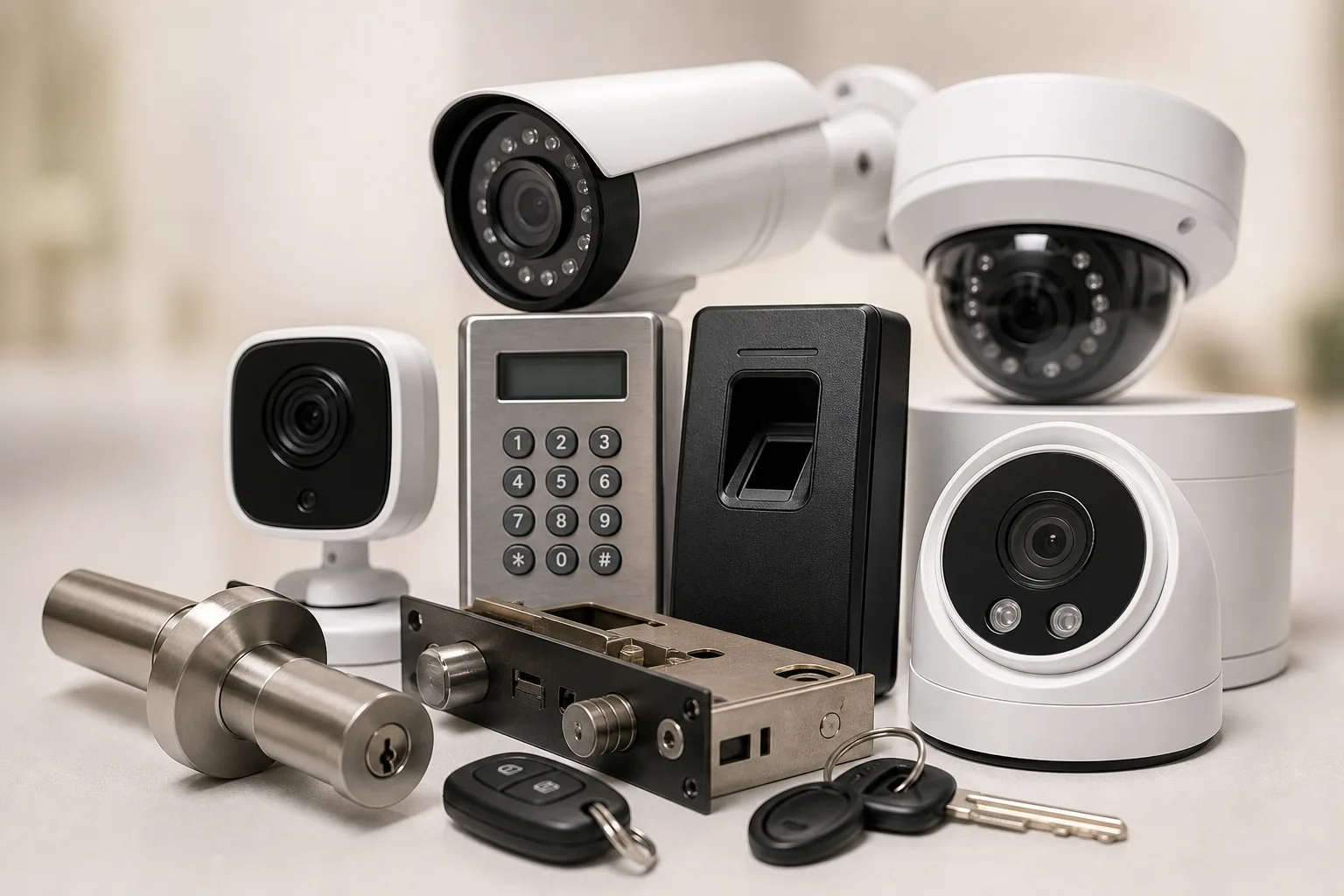
Activity code 8020.03 permits the retail and wholesale sale of security systems, mechanical and electronic locking devices, safes, and security vaults. Product categories include CCTV hardware, access control panels, biometric locks, smart locks, and physical vault units.
A key advantage is that a single licence covers this broad product range, so traders do not need separate licences for each product line. The activity can also be combined with installation and monitoring service codes to build a more integrated business model with recurring service revenue.
Can a foreign national own 100% of a security systems trading business in Dubai
Yes. Amendments to the UAE Commercial Companies Law (2021) permit 100% foreign ownership across most commercial activities, including security systems trading. This applies to both mainland and free zone structures.
For mainland companies registered through the Dubai Department of Economy and Tourism (DET), a local service agent arrangement may still apply in certain ownership structures, so it is worth confirming your specific setup with a business registration adviser. Free zone options such as Meydan Free Zone offer 100% foreign ownership as a standard feature.
What are the two main licence setup routes for this business in Dubai
The two primary routes are Mainland (via the Dubai Department of Economy and Tourism) and Free Zone (with Meydan Free Zone being a strong option for foreign founders).
The mainland route involves trade name reservation, selecting activity code 8020.03, notarising a Memorandum of Association, and completing incorporation through DED eServices. The free zone route through Meydan Free Zone offers remote incorporation, no mandatory physical office at entry level, and zero paid-up capital requirement — making it well suited to import-distribution models looking to minimise fixed overhead at launch.
Does VAT apply to security equipment sales in Dubai
Yes. VAT at 5% applies to the sale of security equipment in the UAE, as confirmed by the Federal Tax Authority. Businesses that meet the mandatory registration threshold must register for VAT and charge it on qualifying sales.
Operators should factor VAT compliance into their accounting setup from day one, including correct invoicing, filing obligations, and input tax recovery on business purchases. Engaging a UAE-registered accountant or tax adviser early is recommended.
Who are the main commercial customers for security systems and locking devices in Dubai
The customer base spans both B2B and B2C segments. On the commercial side, high-volume buyers include property developers, hotels, banks, data centres, and logistics firms. These sectors procure on contract cycles and can generate significant order value across locking systems, access panels, and vault installations in a single project.
On the residential side, demand is growing among high-income homeowners and building management companies, particularly within Dubai's expatriate-heavy premium developments, where smart locks and integrated home security are increasingly standard.
What is driving market growth for security systems in Dubai and the wider UAE
Several structural factors sustain demand. Dubai's ongoing construction pipeline, Expo legacy infrastructure, and smart city development programmes create consistent procurement cycles for security hardware. These purchases are typically built into construction specifications and compliance requirements rather than being discretionary.
According to IMARC Group, the regional security systems market is on a firm growth trajectory through 2028. The Invest in Dubai platform also identifies technology and safety infrastructure as priority sectors, reinforcing the commercial case for entering this market.
What documents are typically required to set up this type of business in Dubai
Core documentation requirements include passport copies, Emirates ID (if the applicant is UAE-resident), and trade name reservation confirmation. For mainland incorporation, a notarised Memorandum of Association is also required.
Additional documents may be requested depending on the chosen jurisdiction and ownership structure. Free zone applications such as those through Meydan Free Zone tend to have streamlined requirements and support remote submission, which reduces the need for in-person attendance during setup.
Can a security systems trading licence be combined with installation or monitoring services
Yes. Activity code 8020.03 can be combined with installation and monitoring service codes to create a more integrated business model. This allows operators to move beyond pure product distribution into service contracts and recurring revenue streams.
Offering installation and after-sales support is particularly relevant when targeting commercial clients such as hotels, banks, and logistics firms, who typically value a single supplier capable of handling both product supply and ongoing service obligations. This structure can also improve customer retention and average contract value.
Start a Security Systems and Locking Devices Sales Business in Dubai
A single hotel fit-out can absorb hundreds of locks, a full access control system and a set of safes. A bank branch rollout does the same. None of that hardware is a discretionary purchase, because it is written into the construction specification before anyone breaks ground.
This guide covers what activity code 8020.03 lets you sell, who buys it in volume, how to license it, and the one product approval that catches importers out.
Key Stats at a Glance
| Activity code | 8020.03 |
|---|---|
| What it covers | Retail and wholesale sale of security systems, mechanical and electronic locking devices, safes and security vaults |
| Product categories | CCTV hardware, access control panels, biometric locks, smart locks and physical vault units |
| Combinable with | Installation and monitoring service codes, for recurring service revenue |
| Market outlook | UAE security services and systems set to grow steadily through 2028 – IMARC Group |
| Safety ranking | Dubai ranks among the top 10 safest cities globally, which drives premium access control and vault demand |
| Foreign ownership | 100% under the 2021 UAE Commercial Companies Law amendments – Ministry of Economy and Tourism, Establishing companies |
| VAT | 5% on security equipment sales, registration at AED 375,000 – Federal Tax Authority |
| Product approvals | Wireless and electronic surveillance products may need TDRA type approval |

What This License Covers
Activity 8020.03 permits the retail and wholesale sale of security systems, mechanical and electronic locking devices, safes and security vaults. The scope is broad and practical.
Product categories run to CCTV hardware, access control panels, biometric locks, smart locks and physical vault units.
One license carries all of them, so a trader can shift stock mix as the market moves without registering a new activity each time.
The code can also be combined with installation and monitoring service codes.
That is worth doing if you want to move past pure distribution into service contracts, because commercial clients such as hotels, banks and logistics firms would rather buy product and ongoing support from one supplier than manage two.
Who Your Clients Will Be
The buyer list splits into two very different halves:
- Property developers and main contractors specifying at fit-out stage
- Hotels, banks and data centres
- Logistics firms securing warehouses and yards
- High-income homeowners and building management companies
Commercial buyers are where the volume sits.
A single hotel fit-out or bank branch rollout can generate serious order value across locking systems, access panels and vault installations, and these sectors procure on contract cycles, which rewards a supplier who can show range, reliability and after-sales support.
Residential demand is the growth end.
Dubai's expatriate population, concentrated in premium developments, is adopting smart locks and integrated home security as standard rather than as an upgrade, and building management companies buy across whole towers rather than unit by unit.
Mainland or Free Zone
| Factor | Mainland (DET) | Free Zone (Meydan Free Zone) |
|---|---|---|
| UAE market access | Unrestricted, including government tenders | Needs a distributor for direct mainland retail |
| Foreign ownership | 100% for most activities | 100% permitted |
| Remote setup | Limited | Available |
| Paid-up capital | Varies by activity | None asked for |
| Best suited to | B2B sales, tenders and a physical showroom | Import-distribution, e-commerce and a lean launch |
The 2021 Commercial Companies Law amendments permit 100% foreign ownership across most commercial activities, so ownership is no longer the deciding factor.
What decides it is whether you want a showroom and government tender access, or an import-distribution model with minimal fixed overhead.
Meydan Free Zone supports remote setup with no paid-up capital, which suits the second. Let your clients decide it, not the price.
[blockCTACostCalculator]
Step by Step Setup Guide
- Step 1, pick your jurisdiction: Mainland through DET for showroom and tender access, or Meydan Free Zone for an import-distribution launch.
- Step 2, book your trade name: And select activity code 8020.03 at the same time.
- Step 3, prepare your documents: Passport copies, Emirates ID if you are UAE-resident, trade name approval and a short business activity summary. Mainland also needs a notarised Memorandum of Association.
- Step 4, check TDRA product approvals: Wireless-enabled and electronic surveillance products may need type approval. Confirm this before you commit to sourcing, because it can reshape your product list.
- Step 5, take the license and sort customs: For import and export, work with a licensed customs broker under the Ports, Customs and Free Zone Corporation framework.
- Step 6, register for VAT and staff: With the Federal Tax Authority once annual turnover passes AED 375,000, and with MOHRE if you are hiring.
Compliance and What You Need in Place
TDRA type approval
This is the one that catches importers. Electronic surveillance and wireless-enabled locking devices fall under TDRA oversight, and imported products must carry the required type approvals before you list or sell them in the UAE.
Verify certification status before a bulk purchase, not after the container lands.
VAT
Registration and quarterly filing become mandatory once you cross AED 375,000.
Security equipment is standard-rated at 5%. Keep records clean from day one, because the Federal Tax Authority expects accurate input and output reconciliation on every cycle.
Customs and duty
Import duties on security hardware vary by HS code.
A licensed customs broker operating under the PCFC framework will confirm applicable rates and documentation before your first shipment, which is cheaper than finding out at the port.
Staff
Hiring UAE-based staff brings Emiratisation duties under the Nafis framework and visa processing through MOHRE.
Renewals
Annual license and trade name renewals are not negotiable. A lapse affects your ability to bid on government and semi-government contracts, which is exactly the work you least want to lose.
Market Opportunity
Dubai's real estate pipeline, Expo legacy infrastructure and smart city development sustain consistent procurement cycles for security hardware.
These purchases are built into construction specifications, fit-out budgets and compliance conditions, which means they do not disappear when a developer trims a marketing budget.
Banking, hospitality and logistics are the high-volume buyers, and they procure on contract cycles rather than ad hoc. That favours a supplier who can prove range and after-sales support over one competing purely on unit price.
According to IMARC Group, the regional security systems market is on a firm growth path through 2028, and the Invest in Dubai platform lists technology and safety infrastructure as priority sectors.
The commercial argument for entering now rather than later rests on those procurement cycles: once you are specified into a developer's standard fit-out, you tend to stay there.
Conclusion
Activity 8020.03 is a well-defined trading license with real demand across Dubai's construction, hospitality, banking and residential sectors.
Setup is short, particularly through a free zone, and the regulatory load is light once VAT and import compliance are in place.
The two things that decide how it goes are your product approvals and your service layer.
Get TDRA type approval sorted before you buy stock, and add installation and monitoring codes if you want revenue that renews rather than revenue that ships.
The second decision is what turns a distributor into a supplier clients stay with.
[blockCTAContact]
References
- IMARC Group
- Ministry of Economy and Tourism, Establishing companies
- Federal Tax Authority
- Invest in Dubai
- Dubai Department of Economy and Tourism
- Ports, Customs and Free Zone Corporation
- Telecommunications and Digital Government Regulatory Authority (TDRA)
- Ministry of Human Resources and Emiratisation (MOHRE)