
Table of Contents
Frequently Asked Questions
What is activity code 7500.05 in Dubai and what does it cover
Activity code 7500.05 is the official Dubai classification for Animal Ambulance Activities. It sits within ISIC Division 75, which covers Veterinary Activities broadly.
The activity specifically covers mobile emergency response for animals — including on-site triage, emergency animal transport, and coordinated handover to licensed veterinary facilities. It is distinct from general pet transport, grooming, or static clinic operations.
Which government bodies regulate an animal ambulance business in Dubai
Three main authorities are involved. The Dubai Department of Economy and Tourism (DED) issues the trade licence for mainland operations under activity code 7500.05.
Dubai Municipality's Veterinary Services section acts as a co-regulator, overseeing animal welfare compliance, vehicle standards, and personnel qualifications. A No Objection Certificate (NOC) from them is required before you can operate.
The Roads and Transport Authority (RTA) handles commercial vehicle registration and road-use permits for the specialised ambulance units. This is a separate process from the DED licence and must be completed independently.
Can an animal ambulance business be set up in a Dubai free zone
Currently, no free zone in Dubai lists activity code 7500.05 as a standard offering. This means the practical and compliant route is a mainland DED licence.
Attempting to operate this activity through a free zone without explicit approval creates legal and regulatory risk. Always verify directly with a specific free zone authority if circumstances change, but the mainland route is the default recommendation.
What types of vehicles are required and how are they registered
Vehicles used for animal ambulance work are classified as specialised transport under Dubai regulations. They must meet standards set by Dubai Municipality for animal welfare during transport.
Registration and road-use permits for these units are processed through the RTA, separately from your DED trade licence. Treating vehicle compliance as an afterthought is a common mistake — non-compliant vehicles create both legal liability and operational disruption.
What staff qualifications are needed to operate an animal ambulance service
Dubai Municipality sets the qualification bar for personnel handling animals in an emergency context. Staff will typically need veterinary technician credentials or equivalent recognised training.
Because requirements can be updated, it is strongly advised to confirm exact qualification standards directly with Dubai Municipality before recruiting or onboarding staff. MOHRE compliance is also required when hiring veterinary or paravet personnel.
What are the key steps to obtaining a licence for this activity
The process begins with reserving a trade name through DED and confirming activity code 7500.05 is attached. The name must not conflict with existing registrations and should clearly reflect the emergency animal care nature of the business.
Next, you must secure a physical mainland business address backed by a valid Ejari-registered tenancy agreement or an approved business centre contract — a virtual address is not accepted for this activity type.
Following that, you submit your licence application to DED, obtain the Dubai Municipality Veterinary Services NOC, and complete RTA vehicle registration for your ambulance units before commencing operations.
Who are the typical clients for an animal ambulance service in Dubai
The client base is broad and spans several distinct segments. Private pet owners represent the most frequent source of emergency calls, particularly as pet ownership in Dubai continues to rise.
Beyond individual owners, key institutional clients include animal rescue shelters, equestrian facilities, zoological parks, and corporate entities managing animal facilities. Each segment carries different contract structures, service-level expectations, and response requirements, so operators typically develop tailored agreements for institutional accounts.
Does VAT apply to an animal ambulance business in Dubai and when must you register
Yes, standard UAE VAT at 5% applies to animal ambulance services. There is no exemption for this activity under current UAE VAT legislation.
VAT registration with the Federal Tax Authority (FTA) becomes mandatory once your annual taxable turnover exceeds AED 375,000. Businesses approaching that threshold should factor registration timelines and compliance costs into their financial planning from the outset.
Start an Animal Ambulance Service in Dubai
Pet ownership in Dubai keeps rising, and with it the need for emergency care that a fixed clinic cannot give. When an animal is hurt at home, at a stable or in a shelter, someone has to reach it, treat it on the spot and get it to a vet.
Activity code 7500.05 covers exactly that work. This guide covers who licenses it, which approvals sit on top, what the vehicles and the staff have to meet, and how the money works. The path is clear. It simply has several authorities in it.
Key Stats at a Glance

What This License Covers
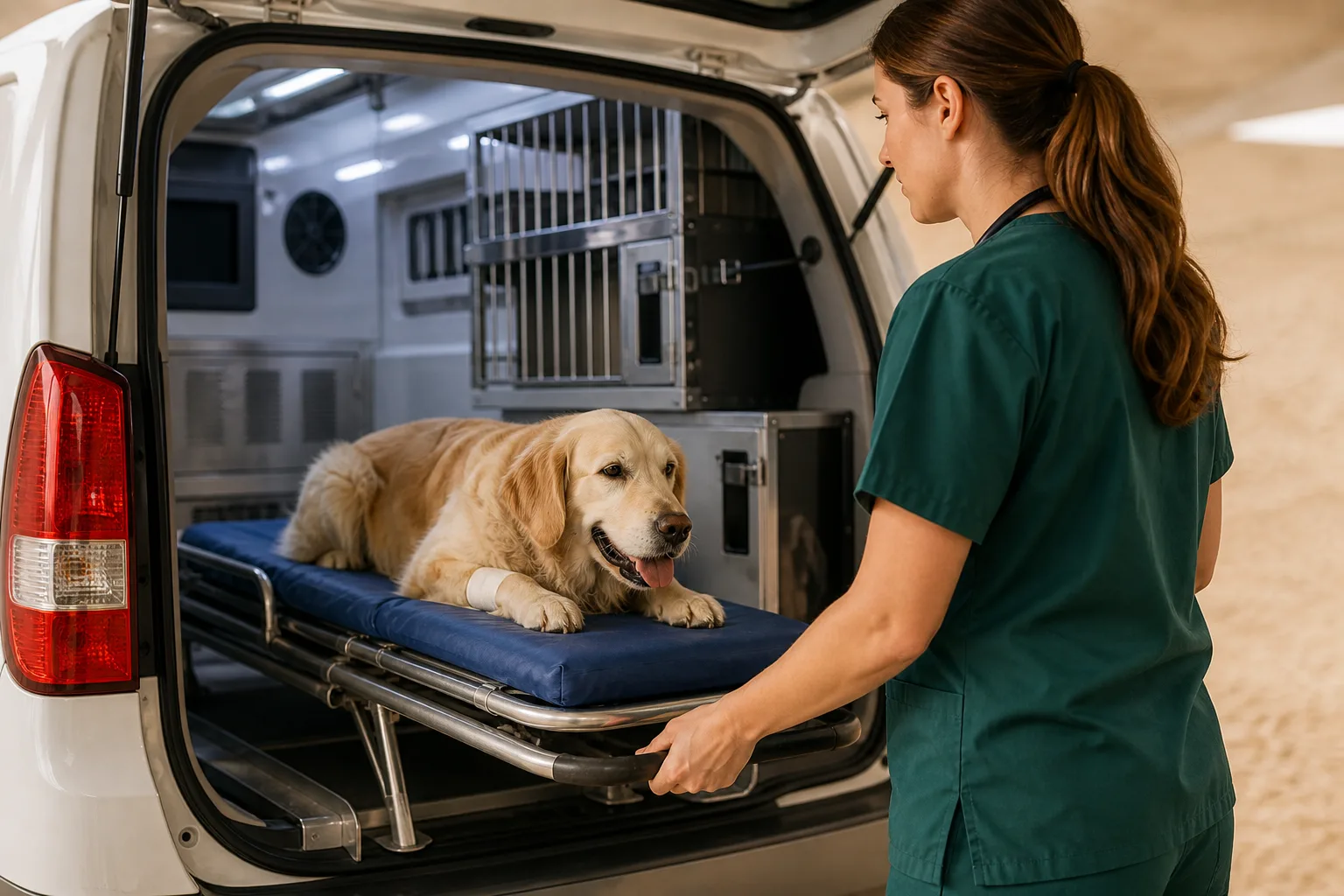
Activity 7500.05 sits in ISIC Division 75, Veterinary Activities, and it covers mobile emergency response for animals. This is not a clinic. You reach the animal, treat it where it is, and move it safely to a licensed veterinary facility.
The core work is emergency animal transport, on-site first response, and coordinating handover with a clinic. That is what separates it from pet transport or grooming: trained people, properly fitted vehicles and set protocols behind every call.
Who Your Clients Will Be
- Private pet owners, who generate the most calls
- Animal rescue shelters
- Equestrian facilities
- Zoological parks
- Companies that run animal facilities
Money comes three ways. Annual subscription plans for pet owners give you income you can predict. Per-call fees cover anyone not on a plan. Contracts with shelters, equestrian centres and zoological facilities bring volume and stability.
Institutional clients each want their own terms and their own response times, so expect to write tailored agreements rather than one standard price list. That is normal in this trade and it works in your favour once you have a few signed.
Mainland or Free Zone
For this activity the mainland route through the Department of Economy and Tourism is the practical one, because no free zone lists code 7500.05 as a standard offering at present. Running it through a free zone without written approval creates legal risk you do not want sitting on a vehicle fleet.
Activity lists do change, so check with Meydan Free Zone before you rule anything out. Whichever way it goes, Dubai Municipality and the RTA still have to be satisfied, and those two set the real workload.
[blockCTACostCalculator]
Step by Step Setup Guide
- Step 1, book your trade name and confirm the code: Check the name is free with DET. It must not clash with an existing registration, and it should say plainly what the business does.
- Step 2, secure a physical address: DET wants a mainland address backed by a registered tenancy agreement or an approved business centre contract. A virtual address will not do for this activity.
- Step 3, send in your first DET application: Activity details, ownership structure and supporting papers. Initial approval is your green light to chase the external approvals.
- Step 4, apply for Dubai Municipality veterinary services approval: Vehicle inspection papers, your operating protocols and evidence your people are qualified. Gaps here cause most of the delays, so prepare this package properly.
- Step 5, register your vehicles with the RTA: Submit them for inspection under the commercial or specialised transport category. The fit-out has to satisfy RTA road standards and Dubai Municipality animal welfare standards at the same time.
- Step 6, finalise the license, open a bank account and register for VAT: VAT registration with the Federal Tax Authority is a must once turnover is set to pass AED 375,000 a year.
- Step 7, hire qualified staff and process visas: Contracts and visas go through MOHRE. Check credentials against Dubai Municipality standards before anyone starts.
From trade name to operational license, allow four to eight weeks, assuming your paperwork is complete and nothing has to go back for a second look.
Compliance and What You Need in Place
DET license
The Department of Economy and Tourism issues the trade license for mainland operations and registers code 7500.05 under its veterinary activities.
Dubai Municipality
Veterinary Services sits alongside DET as co-regulator. It covers animal welfare, vehicle standards for animal transport, and staff qualifications. Its No Objection Certificate comes before you operate.
RTA vehicle registration
Animal ambulances count as specialised transport. Registration and road-use permits go through the Roads and Transport Authority, separately from your license. A non-compliant vehicle is both a legal problem and an operating one, so do not leave this to the end.
Staff qualifications
Dubai Municipality sets the bar. Expect veterinary technician credentials or equivalent recognised training for anyone handling animals in an emergency. Standards get updated, so check with Dubai Municipality before you recruit.
Insurance
Your cover has to include commercial vehicle use and professional indemnity for animal handling. UAE brokers can write it, but read the terms closely, because animal handling claims get complicated.
VAT
Standard 5% VAT applies and there is no exemption for this activity. Register with the Federal Tax Authority once taxable turnover passes AED 375,000 a year, and build the compliance cost into your plan from the start.
Fleet and Clinic Partners
Two vehicles at launch is sensible: one working, one spare. Fit-out is expensive and it has to be budgeted before you apply, not after. Turning a standard van into a compliant unit means medical-grade restraints, climate control and basic triage kit.
Handover partnerships with licensed veterinary clinics are just as important. Without a receiving facility agreed in advance, your emergency response is only half a service. Set those relationships up before you start marketing.
Market Opportunity
Pet ownership in Dubai is rising sharply, and the UAE pet care market keeps growing at a mid-single-digit yearly rate, tracked by IMARC Group. Demand comes from more than households: shelters, stables, zoological parks and corporate animal facilities all need a number to call at two in the morning.
The useful part is that the framework already exists. DET licenses the activity, Dubai Municipality sets welfare and staff standards, and the RTA registers the vehicles. Nothing has to be invented. Subscription plans on top of that mean you can build recurring income rather than living call to call.
Conclusion
Animal Ambulance Activities under code 7500.05 is a well-defined, workable license with a clear path through DET, Dubai Municipality and the RTA. The market is real and the framework is already built. Execution comes down to compliant vehicles, qualified staff, and the approvals taken in the right order.
Three things decide how smoothly this goes: the Dubai Municipality certificate, RTA vehicle registration, and clinic partners lined up before you open. Sort those and the rest is routine.
[blockCTAContact]