

Table of Contents
Frequently Asked Questions
1. What are financial instruments quotation services?
Quotation services provide accurate and timely pricing information across equities, bonds, derivatives, currencies, and commodities to support trade finance, portfolio management, treasury operations, and investment decisions.
2. Who uses financial instruments quotation services in the UAE?
Institutional investors, family offices, corporate treasury teams, hedge fund clients, advisory firms, wealth managers, and trade finance teams requiring pricing data across listed and OTC instruments.
3. What UAE capital markets supply quotation data?
UAE capital markets infrastructure spans Abu Dhabi Securities Exchange (ADX), Dubai Financial Market (DFM), and NASDAQ Dubai, alongside active OTC trading in fixed income, currencies, and commodities.
4. What instruments are typically quoted?
Equities, sukuk and conventional bonds, derivatives, foreign exchange, commodities, Sharia-compliant instruments, and integrated multi-asset portfolios across UAE and global markets.
5. Do quotation services require regulatory approval?
A: Financial instruments quotation services under this activity code do not require third-party approval. Providers supply pricing data without performing regulated trading or execution activities.
Topic Summary
No Third-Party Approval Required
Unlike most financial services licenses in the UAE, activity code 6619.91 requires no regulatory approval from a financial authority. This is because you supply pricing data rather than trading, executing, or managing money on behalf of clients.
Covers a Wide Range of Financial Instruments
The license permits you to provide quotation services across equities, bonds, sukuk, derivatives, foreign exchange, and commodities. Sharia-compliant instruments and integrated multi-asset portfolios are also included, making the scope broad enough to serve diverse client types.
Three Distinct Client Models to Target
You can serve institutional investors and family offices needing equity and sukuk pricing, corporate treasury teams requiring FX and derivatives data, or wealth managers wanting consolidated multi-asset reporting. Each model operates on a different delivery format but shares the same core need for reliable, auditable prices.
Subscription Revenue Makes the Business Sticky
Clients buy reliability, not novelty, so contracts are structured as subscriptions that renew as long as data quality holds. A price that arrives late or cannot be verified at audit is commercially worthless, which means quality delivery directly drives retention.
Mainland vs. Free Zone Is a Commercial Decision
Because no regulator step exists for this activity, choosing between DET mainland and a free zone like Meydan comes down to business strategy rather than compliance requirements. Meydan offers 100% foreign ownership, zero corporate tax on qualifying income, and a fully digital remote setup process.
UAE Market Scale Creates Real Demand
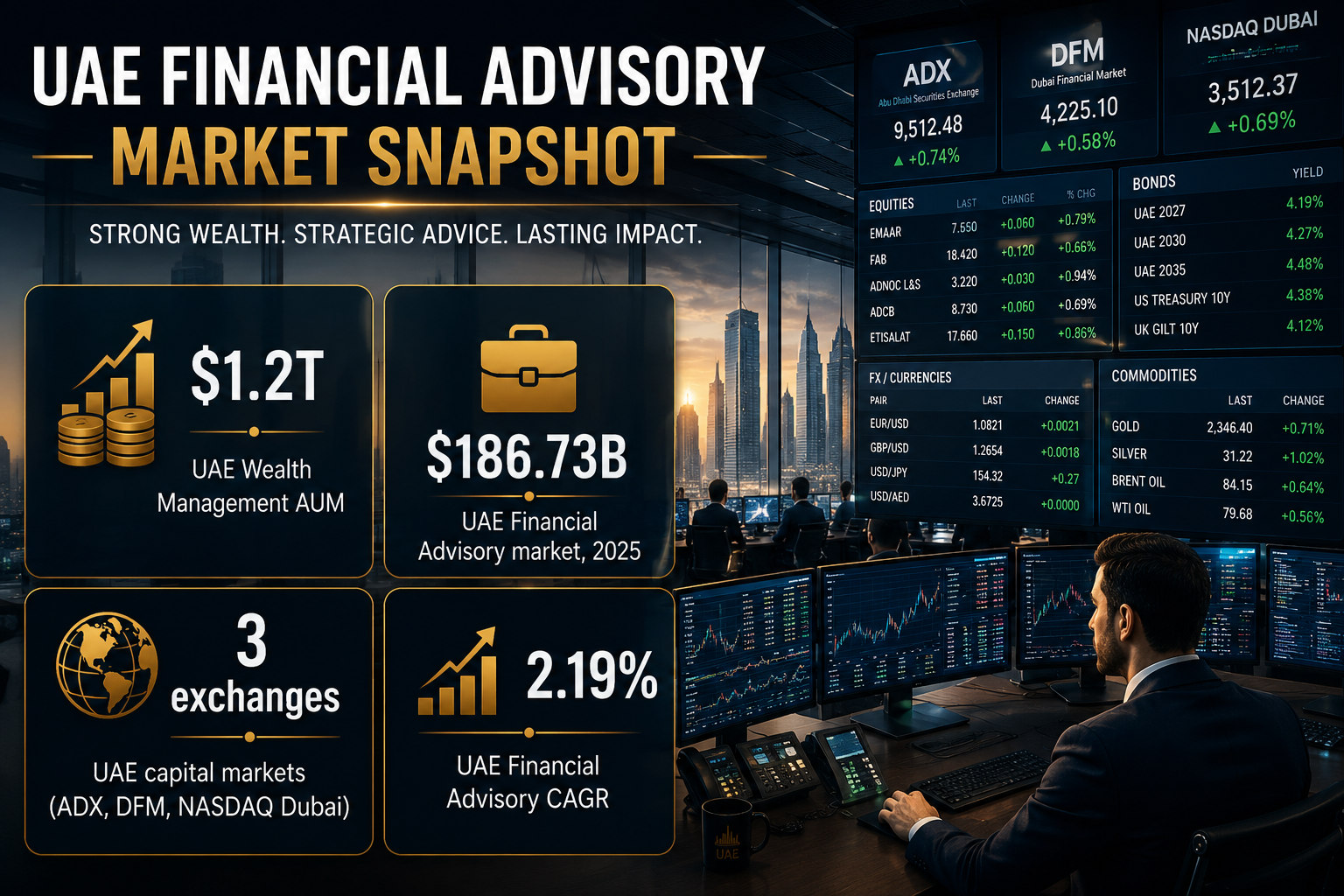
The UAE's exchanges carry hundreds of billions in combined market capitalisation, and wealth management AUM sits at USD 1.2 trillion. The advisory market alone is valued at USD 186.73 billion in 2025 and is projected to reach USD 213.10 billion by 2030, all of which generates continuous demand for accurate pricing data.
AML Exemption Reduces Compliance Overhead
Financial Instruments Quotation Services under code 6619.91 is exempt from anti-money laundering compliance duties. This further reduces the operational and administrative burden compared to licensed financial activities that require ongoing AML reporting and monitoring frameworks.
How to Start a Financial Instruments Quotation Services Business in Dubai
A treasury team hedging currency, a family office reporting on a multi-currency portfolio, an advisory firm valuing a sukuk position: all of them need a price they can rely on, at a moment they can point to. Somebody has to supply it.
Activity code 6619.91 covers that work. This guide covers what the license permits, who pays for pricing data, how the business model works, and why this sits outside the regulated end of financial services. There is no third-party approval, which makes it one of the easier financial licenses to get.
Key Stats at a Glance
What This License Covers
Under code 6619.91 you are licensed to provide quotation services for financial instruments: accurate and timely pricing information used to support trade finance evaluation, portfolio management, treasury operations and investment decisions.
- Equities, listed on UAE exchanges and globally
- Conventional bonds and sukuk
- Derivatives
- Foreign exchange
- Commodities
- Sharia-compliant instruments and integrated multi-asset portfolios
The boundary that matters is the one between data and dealing. You supply prices. You do not trade, execute or manage money, which is exactly why no regulatory approval attaches to this code. It also excludes insurance broking and fund management.
Who Your Clients Will Be
Three provider models sit inside this one code, and each sells to a different desk.
- Equity, bond and Sharia-compliant quotations: institutional investors, advisory firms and family offices needing coverage across UAE exchanges and global markets, including sukuk pricing for Islamic finance clients
- Derivatives, FX and commodities pricing: corporate treasury teams making hedging decisions, hedge fund clients, and energy and metals trading firms, with real-time or end-of-day delivery
- Integrated multi-asset platforms: family offices, advisory firms and wealth managers wanting consolidated pricing and reporting across listed and unlisted instruments, often in several currencies
What all of them are buying is reliability rather than novelty. A price that arrives late, or that nobody can stand behind at audit, is worse than no price at all. That is the whole basis of the client relationship, and it is why these contracts run on subscription and renew.
Mainland or Free Zone
With no regulator step in the way, the jurisdiction choice here is commercial rather than procedural. That is unusual for a financial activity and it shortens your route to trading considerably.
Meydan Free Zone gives you full foreign ownership, no corporate tax on qualifying income and a licensing process that runs entirely online. For a data business whose product is delivered electronically, that covers what you need. Let your clients decide it, not the price.
[blockCTACostCalculator]
Step by Step Setup Guide
- Step 1, confirm your activity code: 6619.91 covers supplying pricing data. If your plan involves recommending instruments or executing trades, you need a different activity and a regulator approval with it.
- Step 2, settle your data sourcing before you sell anything: Vendor partnerships and exchange feeds are the foundation of the product, and licensing terms on redistribution decide what you may resell.
- Step 3, pick your niche: Equities and bonds, derivatives and FX, commodities, Sharia-compliant instruments, or a consolidated multi-asset platform. Each needs different feeds and different expertise.
- Step 4, book your trade name: Use the free company name check to confirm availability.
- Step 5, send in your setup documents: Passport copies for every shareholder and director, plus a No Objection Certificate if another employer sponsors your UAE visa.
- Step 6, collect your license: No third-party approval applies, so the process is quick by financial-sector standards.
- Step 7, build your delivery infrastructure: Real-time and end-of-day delivery, plus reporting. mAccounting covers your own compliance and bookkeeping.
Compliance and What You Need in Place
Data, not dealing
Keep clear separation from regulated trading and execution. Supplying a price is unregulated. Recommending an instrument or executing an order is not, and drifting across that line changes which license you need. It is the single most important boundary in this business.
Vendor and exchange licensing
Your inputs come from data vendor partnerships and exchange feeds, and those agreements govern what you can redistribute, to whom, and at what latency. Read the redistribution terms before you promise a client anything, because breaching a feed agreement is a commercial problem rather than a regulatory one and it ends contracts fast.
Accuracy as an operating duty
Clients use your prices for valuations, hedging decisions and reporting. Build checking and reconciliation into your process from the start, and keep records of what you published and when. That audit trail is what protects you in a dispute.
Fund management is out
The management of investment funds falls under fund management activities and is excluded here, as are the activities of insurance agents and brokers.
Anti-money laundering
This activity is exempt from AML compliance duties, which follows from the fact that you are selling information rather than moving money.
Market Opportunity
The demand here is a by-product of market infrastructure. UAE capital markets span the Abu Dhabi Securities Exchange, the Dubai Financial Market and NASDAQ Dubai, with combined market capitalisation in the hundreds of billions of dollars, alongside active over-the-counter trading in fixed income, currencies and commodities. Every one of those venues generates a need for pricing data.
The client concentration is the other half. ResearchAndMarkets puts UAE wealth management AUM at USD 1.2 trillion, and Statista projects the advisory market rising from USD 186.73 billion in 2025 to USD 213.10 billion by 2030. Family offices, advisory firms and treasury teams all sit inside those numbers, and all of them need prices.
Sukuk and Sharia-compliant instruments are worth singling out. Pricing them well takes specific expertise that general vendors do not always carry, and Islamic finance advisory firms here need it. That is a defensible niche for a smaller provider rather than a race against global data houses on breadth.
Conclusion
Financial instruments quotation services under code 6619.91 is the unregulated end of financial services: no third-party approval, no AML duties, and a subscription model serving clients who need pricing data every working day. Meydan Free Zone adds full ownership and a digital setup.
Three things decide how smoothly this goes: data sourcing and redistribution rights settled before you sell, a niche rather than a broad feed, and a hard line between supplying prices and dealing in instruments. Sort those and the rest is routine.
[blockCTAContact]