
Table of Contents
Frequently Asked Questions
Is there a full Italian curriculum school in new UAE?
A small number of schools offer full Italian-track programs aligned with Italy's Ministry of Education standards, mostly for younger grades. Availability changes yearly, so verify directly with schools rather than relying on outdated lists.
What is the KHDA rating system for new UAE schools?
KHDA inspects private schools annually and rates them from Outstanding to Weak, publishing reports parents can search online. Ratings cover curriculum quality, safeguarding, and fee caps.
How much does private school tuition cost in new UAE for expatriate families?
Tuition varies widely by curriculum and rating, but Italian parents should expect additional costs of 15 to 25 percent above published fees for uniforms, transport, and activities.
When should Italian parents so it needs the school enrollment process?
Register interest at least 12 months ahead, since popular waitlists open early and certain grades like Reception and Year 7 fill fastest. Registering with multiple schools simultaneously is standard practice.
Do new UAE schools accept mid-year transfers from Italy?
Yes, though how they handle mid-year transfers varies by curriculum. Ask specifically how a teenager nearing exams would be placed versus a younger child adapting quickly.
What documents are required to enroll a child in a new UAE school?
Schools typically require academic transcripts, immunization records meeting Dubai Health Authority standards, and passport and residency visa copies to confirm eligibility.
Can children maintain Italian language skills while attending an English-medium school?
Yes. Weekend Italian community schools operate across new UAE, and the Italian Consulate lists approved supplementary programs alongside home reading routines that help preserve fluency.
Topic Summary
KHDA Sets the Rules
Dubai's Knowledge and Human Development Authority inspects every private school annually, rating them Outstanding to Weak. Check published reports before enrolling, so it needs to be a fact-based decision, not a guess.
Curriculum Choice Matters Most
British and American curricula dominate, IB is growing, and a handful of schools follow Italy's national program. Match the curriculum to your child's age and future university plans.
Dual Accreditation Is Non-Negotiable
Any Italian curriculum school must hold both Italian Ministry recognition and KHDA licensing to count toward as does evidence back home. Ask for proof of both before signing anything.
Age Determines the Right Track
Younger children switch curricula easily, but teens near exams should stay on one track. Ask schools directly how they handle mid-year international transfers.
Waitlists Open a Year Early
Register with multiple schools simultaneously, since popular Reception and Year 7 seats fill fast. proof of address, and the application well ahead of the academic year to avoid disappointment.
Budget Beyond the Tuition Sticker Price
Deposits, uniforms, transport, and activity fees can add 15–25% on top of tuition. Request the KHDA-regulated fee framework in writing before committing.
Language Transition Takes About a Year
Most Italian children adapt to English-medium instruction within one academic year through EAL support. Keep Italian alive at home through weekend classes and community programs.
For most Italian families, the school question decides everything else. It is worth knowing one thing early. Dubai does not have an Italian-curriculum school. What it has instead is 17 curriculum across 227 private schools, and the most portable of them travels back to Italy cleanly.
That portability is the point. Italian universities accept foreign qualifications through a recognised process, and the International Baccalaureate is the route most Italian families abroad choose. This guide covers the landscape, the fees, how ratings work, and what happens when a Dubai qualification comes home.
Key Facts at a Glance

| Item | Detail |
|---|---|
| Private schools in Dubai | 227 schools, 17 curricula |
| Italian curriculum | Not available in Dubai |
| Most portable route | International Baccalaureate |
| Typical fees | AED 30,000 to 90,000 a year, around €6,900 to €20,700 |
| Regulator | KHDA, the Knowledge and Human Development Authority |
The Dubai School Landscape
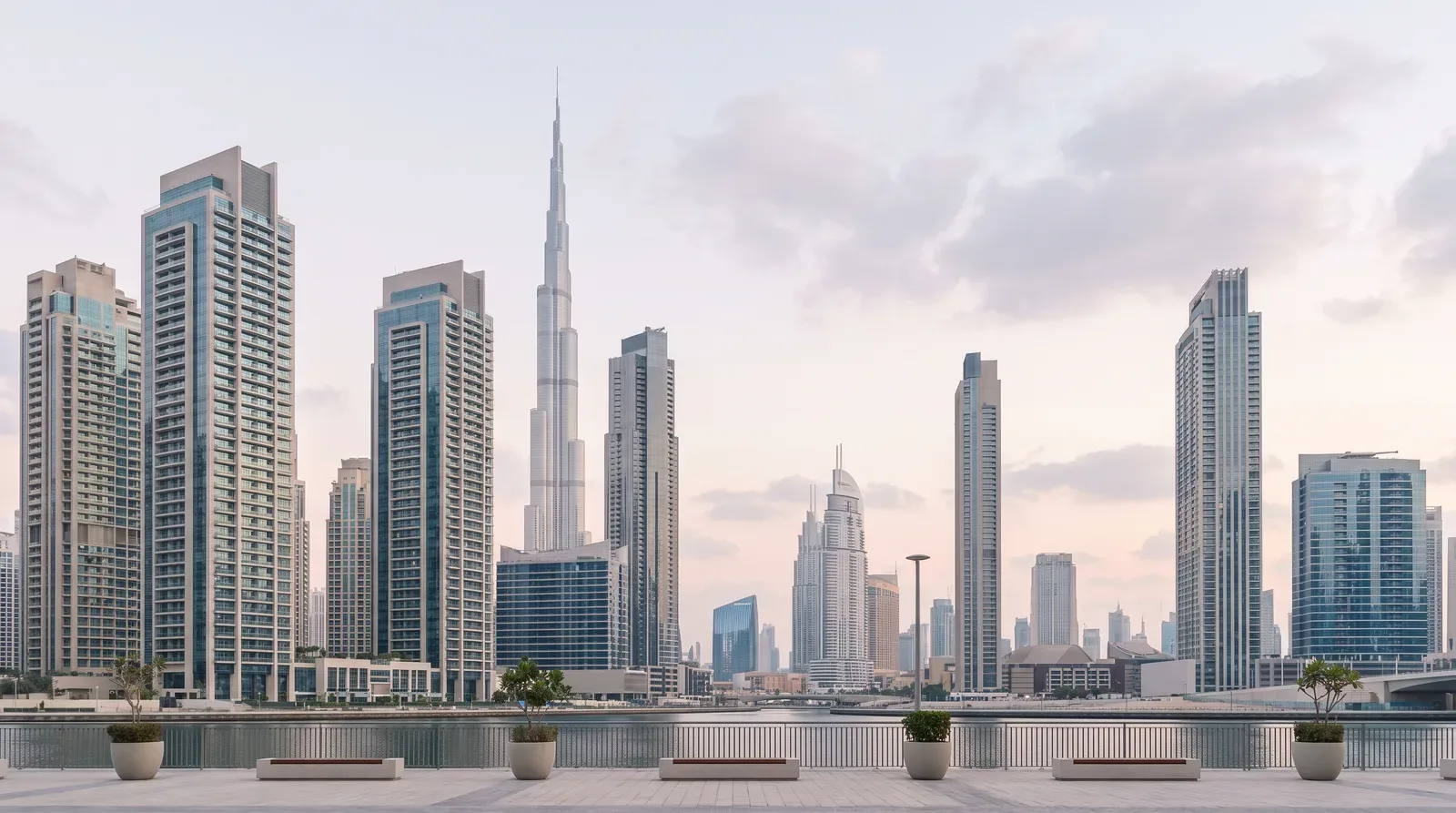
Dubai runs one of the most varied private school markets anywhere, and the scale surprises most Italian parents.
- 227 private schools across the emirate
- 17 different curricula, including British, American, IB and French
- Around 387,000 students from 185 nationalities
- Annual fees from under AED 10,000 to above AED 100,000
Every private school is licensed and inspected by KHDA. The regulator also oversees fee increases, inspection reports and the transfer certificate framework, which gives parents more published information than in most markets.
What Italian Families Usually Choose
With no Italian-curriculum option in Dubai, families generally pick on portability and fit.
The International Baccalaureate is the most common choice. It is designed for internationally mobile families, it is recognised worldwide, and it is the qualification Italian families abroad most often select when a return to Italy is possible. Dubai has a substantial number of IB schools, several rated highly by KHDA.
British curriculum schools are the largest single group in the city, running EYFS through GCSEs and A-Levels. American curriculum schools offer the High School Diploma alongside Advanced Placement.
For Italian language and culture, families typically combine school with supplementary provision. Private Italian tuition is available in Dubai, and the Italian Cultural Institute covering the UAE supports language and cultural programmes.
Families wanting an Italian-linked school environment sometimes look to Abu Dhabi, where a school with Italian language pathways operates within an IB framework. That is a commute rather than a Dubai option, so most families weigh it against the IB schools closer to home.
What School Fees Look Like
Fees vary widely by school and year group. Treat these as ranges rather than quotes.
| School type | Annual fees (AED) | Around, in EUR |
|---|---|---|
| Budget schools | From about 12,700 | From €2,921 |
| Mid-tier international | 30,000 to 60,000 | €6,900 to €13,800 |
| Premium and IB | 64,000 to 100,000 and above | €14,720 to €23,000 |
Budget beyond tuition. Registration fees, uniforms, bus transport and school trips sit on top, and first-year costs run higher because of one-off enrolment charges. Sibling discounts exist at many schools, so ask directly.
Fee increases are capped. KHDA sets an annual Education Cost Index, which was 2.35% for the 2025 to 2026 academic year, and schools may apply for rises up to that level.
How KHDA Ratings Work
KHDA inspects private schools and awards one of five ratings, running from Outstanding through Very Good, Good and Acceptable to Weak. Each school also receives a detailed report covering teaching, achievement, wellbeing, leadership and inclusion.
One timing point matters. KHDA paused full inspections for the 2024 to 2025 and 2025 to 2026 academic years, so most schools still carry ratings from the 2023 to 2024 cycle. Inspections are set to resume in 2026 to 2027.
Check the date on any rating before relying on it. A rating is a useful first filter, but curriculum fit, location, class sizes and your own child's needs matter just as much.
From License to School Place
School enrolment depends on residency, and residency starts with the company. The chain runs in one direction.
- A Meydan Free Zone trade license is issued, from AED 12,500, around €2,875, online from Italy in about one business day.
- The investor visa is initiated once company ownership is registered.
- Dependant visas follow for a spouse and children, handled through mResidency.
- Emirates ID and biometrics complete the residency file.
Schools need documents at each stage. The usual set includes passport copies, residence visa pages, Emirates ID for student and parents, an attested birth certificate, immunisation records, the last two years of school reports and passport photographs. A transfer certificate is required from Grade 2 or Year 3 upwards.
Italian documents need an apostille followed by UAE attestation, which typically takes four to eight weeks. Start that chain as soon as the move is decided.
Two practical notes. Schools can begin the admission process while visas are still being processed, and KHDA allows up to one academic year to upload a pending Emirates ID.
Bringing a Dubai Qualification Back to Italy
This is the part Italian parents should understand before choosing a school rather than afterwards.
A qualification earned abroad does not enter the Italian university system automatically. It needs formal recognition, and two routes exist.
The Dichiarazione di Valore is issued by the Italian consular network covering the country where the qualification was earned. It describes the qualification and its standing in that system.
A CIMEA statement of comparability is the alternative, issued by the Italian ENIC-NARIC centre, and Italian universities increasingly accept it. It is generally faster than the consular route.
Two things follow from this. Choose a qualification with clear international standing, which is a large part of why the IB is popular among Italian families abroad. And start the recognition process well ahead of Italian university deadlines, since neither route is instant.
Bringing It Together
Dubai gives Italian families genuine choice across 17 curricula, even without an Italian-curriculum school. The IB is the route most families choose, and it travels back to Italy through an established recognition process.
Start the company setup early and the rest sequences behind it. Begin document attestation as soon as the move is decided, since it is the longest single step. To plan your setup around the academic year, contact the Meydan Free Zone team.