
Table of Contents
Frequently Asked Questions
What does activity code 8129.08 cover in Dubai
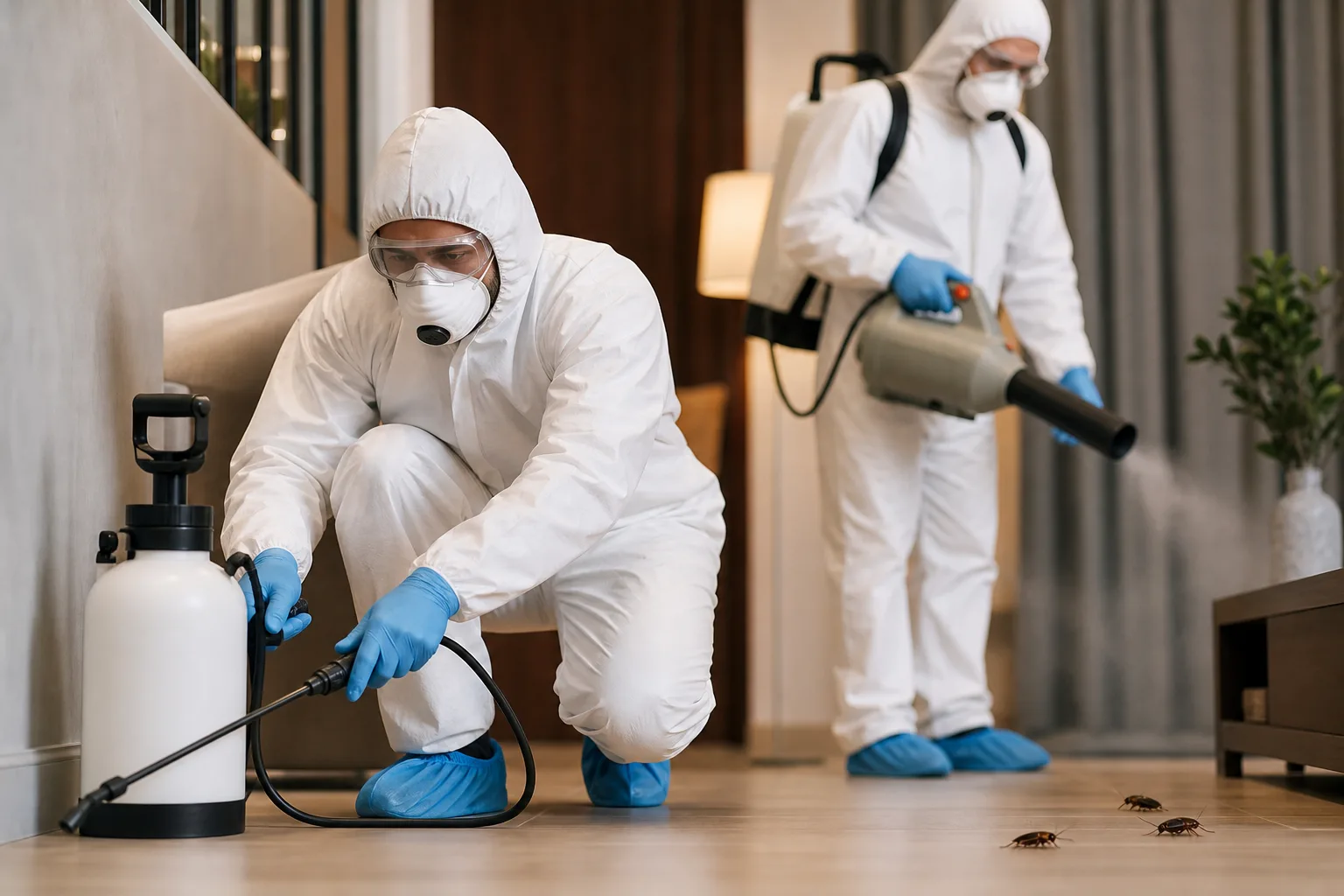
Activity code 8129.08 covers disinfecting and exterminating activities, including pest control, rodent extermination, fumigation, disinfection, and vector control services. It is a specialist category distinct from general cleaning services, which fall under activity code 8121.
Businesses operating under this code must employ trained technicians, use approved chemicals, and hold municipal certification. Core client segments include hotels, restaurants, hospitals, warehouses, construction sites, residential buildings, and food processing facilities.
Which regulatory bodies oversee disinfecting and exterminating businesses in Dubai
Three main bodies regulate this activity. The Dubai Department of Economy and Tourism (DED) issues the mainland trade licence, while the relevant free zone authority handles licences for free zone entities. The Dubai Municipality Environmental Health Department issues the mandatory Pest Control Permit separately from the trade licence.
The Ministry of Human Resources and Emiratisation (MOHRE) governs all employment matters, including labour contracts, Wages Protection System (WPS) registration, and Emiratisation quotas. All three approvals must be in place before operations can legally begin.
Is a Dubai Municipality Pest Control Permit required in addition to the trade licence
Yes. Operating legally requires both a trade licence and a separate Dubai Municipality Pest Control Permit. These run on parallel tracks and neither alone is sufficient to commence operations.
The Municipality permit is issued by the Environmental Health Department and must be renewed annually. Its issuance depends on individual-level certification — every field technician on the payroll must hold a valid Dubai Municipality pest control operator certificate. The application also requires a full chemical inventory, equipment list, and staff certification documents, followed by a physical inspection.
Can a foreign national own 100% of a disinfecting and exterminating company in Dubai
Yes. 100% foreign ownership is permitted for this activity. On the mainland, this became possible following the 2021 amendment to the UAE Commercial Companies Law, which removed the previous requirement for a local Emirati majority shareholder in most commercial categories.
Foreign investors can also establish fully foreign-owned entities through a relevant free zone authority, which has historically permitted 100% foreign ownership. The choice between mainland and free zone depends on operational needs, particularly whether the business intends to contract directly with government or municipality-regulated clients.
Why are pest control contracts considered mandatory rather than discretionary for many Dubai businesses
For a significant portion of the client base, engaging a licensed pest control operator is a legal requirement tied to their own operating licence. Under Dubai Municipality health and safety regulations, food-licensed premises must hold an active pest control contract with a Municipality-approved company in order to renew their food licence.
This creates a predictable, compliance-driven client base rather than one dependent purely on discretionary spending. Hotels, restaurants, and food processing facilities cannot legally operate without maintaining these contracts, which translates into recurring revenue for licensed service providers.
What are the staffing and employment compliance requirements for this activity
All field staff must hold a valid Dubai Municipality pest control operator certificate — without certified technicians on the payroll, the Municipality Pest Control Permit cannot be issued or maintained. Chemical handling and storage must comply with Dubai Municipality hazardous materials guidelines.
On the employment side, all staff are subject to MOHRE requirements, including formal labour contracts and registration with the Wages Protection System (WPS). Applicable Emiratisation quotas must also be met, and businesses should factor these obligations into their hiring and cost planning from the outset.
When does VAT registration become mandatory for a disinfecting and exterminating business in Dubai
VAT registration with the Federal Tax Authority (FTA) becomes mandatory once annual turnover exceeds AED 375,000. Below this threshold, registration is not required, though voluntary registration may be considered depending on the business's supplier and client relationships.
Given that this activity targets commercial clients such as hotels, hospitals, and food processors — many of whom operate on contract billing — businesses in this sector can reach the VAT threshold relatively quickly. Factoring VAT compliance into financial planning and invoicing processes from an early stage is advisable.
What market conditions support demand for disinfecting and exterminating services in Dubai in 2024–2025
Several structural factors drive consistent demand. Dubai recorded more than 148,000 hotel rooms in 2023, all subject to mandatory pest control compliance. Food-licensed premises across the emirate must maintain active pest control contracts as a condition of licence renewal, creating a large, stable client base.
The UAE facility management and hygiene services market is growing steadily, supported by ongoing construction and hospitality expansion. Gulf climate conditions — particularly intense summer heat — create predictable seasonal demand spikes, as heat accelerates pest activity. Together, these factors make the sector one with both recurring baseline contracts and identifiable peak periods.
Disinfecting and Exterminating Activities Setup in Dubai
Dubai's density, climate, and construction pace make pest control and disinfection services a steady, contract-driven business. The heat accelerates pest cycles. New builds create ongoing infestation risks. Hotels, hospitals, and food facilities need year-round service contracts. This is not a crowded market of easy entrants. Regulatory requirements, approved chemical lists, and technician certification create real barriers. Once you are through them, the demand is consistent and the contracts are long.
This guide covers the license, activity codes, jurisdiction choice, and compliance steps you need to set up a disinfecting and exterminating business in Dubai.
Key Stats at a Glance
| Sector | Disinfecting and Exterminating Activities |
|---|---|
| Primary activity code | 8129.94 (Pest Control and Disinfection Services) |
| Licensing authority | Dubai Department of Economy and Tourism (DET) |
| Sectoral regulator | Dubai Municipality and Ministry of Health and Prevention (MOHAP) |
| Foreign ownership | 100% on the mainland for most service activities since 2021 |
| Key client sectors | Hospitality, healthcare, food and beverage, facilities management, real estate |
| Minimum setup path | Trade license plus Dubai Municipality pest control approval |
What This License Covers

The core activity code for this sector covers pest control, fumigation, rodent control, and general disinfection services. Within that broad category, there are meaningful distinctions that affect which approvals you need and how you operate.
General disinfection work covers surface sanitisation, mould treatment, and routine hygiene services for buildings and facilities. Specialised extermination covers targeted pest elimination using regulated chemical agents, fumigation of enclosed spaces, and rodent eradication programmes. The two can sit under the same license, but the compliance requirements differ.
Some activities need extra approvals before you can operate. These include:
- Fumigation using scheduled chemical agents, which needs MOHAP registration
- Pest control in food handling environments, which needs Dubai Municipality Food Safety clearance
- Work in healthcare facilities, which may need Dubai Health Authority sign-off depending on the scope
- Handling, storing, or importing regulated pesticides, which triggers a separate MOHAP product registration process
Check the Business Activities List to confirm the exact codes that apply to your planned scope before you start the setup process. Picking the wrong code at the start causes delays later.
Who Your Clients Will Be
The strongest client base for a disinfecting and exterminating business in Dubai sits across four sectors: hospitality, food and beverage, healthcare, and facilities management. Each of these runs on service contracts, not one-off jobs.
Hotels need monthly pest control as a condition of their operating license. Restaurants and food production sites need documented treatment records to pass Dubai Municipality inspections. Hospitals and clinics need disinfection protocols that meet DHA standards. Facilities management companies often sub-contract pest control to approved specialists across their entire property portfolio.
Government contracts and large residential developers are also worth targeting. Dubai's real estate pipeline is substantial, and developers building at scale need pest control from the construction phase through to handover and beyond.
One thing to understand clearly: procurement here is formal. Clients in hospitality, healthcare, and government do not hire on a phone call. They run approved contractor lists. They want documented certifications, insurance, and references before they will consider you. Getting on those lists takes time, but once you are on them, the work is recurring and the relationships are sticky. Price matters less than reliability and compliance record.
Mainland vs Free Zone: Which Setup Works
For most operators in this sector, the mainland is the right answer. Here is why.
Pest control and disinfection is an on-the-ground service business. Your technicians drive to client sites, carry chemical kit, and operate inside buildings across Dubai. That physical presence, combined with the need to contract directly with hotels, hospitals, food businesses, and government bodies, points clearly to a mainland license.
A mainland license from DET lets you work directly with UAE government entities and any private sector client without restriction. Since 2021, 100% foreign ownership is available on the mainland for most service activities, so the old argument for free zones on ownership grounds no longer applies to this sector.
| Factor | Mainland (DET) | Free Zone (Meydan Free Zone) |
|---|---|---|
| Client access | Open UAE market, government contracts | Mainly international clients or B2B trading |
| On-site operations | Permitted across Dubai | Restricted – needs mainland commercial agent for direct service delivery |
| Foreign ownership | 100% for most service activities | 100% as standard |
| Office requirement | Physical office or approved address | Flexi-desk options available |
| Dubai Municipality approval | Required for pest control operations | Still required for any UAE-based service delivery |
| Best suited for | Operators delivering services on the ground in Dubai | Consultancy, product distribution, or international-facing operations |
Meydan Free Zone works well if your model is different: if you are distributing pest control products, running a consultancy, or managing operations that are primarily international. A free zone structure can also serve as a holding company above a mainland operating entity. But if you are sending technicians to client sites in Dubai, the mainland license is what you need.
Free Business Setup Cost Calculator
Calculate NowStep-by-Step Setup Guide
- Step 1, book your trade name: Use the DET e-Services portal for a mainland company. The name must not conflict with existing registrations and must comply with UAE naming rules. You can also check your company name availability before you start.
- Step 2, select your activity code: Confirm the pest control and disinfection code is approved for your chosen jurisdiction. If your scope covers fumigation or specialised chemical application, flag this at this stage. Adding codes later is possible but adds time and cost.
- Step 3, get initial approval from DET: Submit your application with the trade name reservation, activity code selection, and shareholder documents. Initial approval is the green light to proceed with the remaining steps.
- Step 4, apply for Dubai Municipality pest control approval: This is the most important sectoral step. Dubai Municipality issues the pest control operator approval that allows you to legally deliver services. You will need to submit your company details, the chemicals you plan to use, your technician certifications, and your storage and vehicle arrangements.
- Step 5, get MOHAP registration if using regulated chemical products: If your operations involve scheduled pesticides or fumigation agents, you need to register those products with MOHAP. This runs in parallel with the Municipality approval process.
- Step 6, hire certified technicians and register them: Dubai Municipality needs to see that your staff hold recognised pest control certifications before it will issue your operator approval. Recruit and certify your team before this step, not after.
- Step 7, set up your office and storage: You need a registered business address and compliant storage for chemicals. Storage must meet hazardous materials handling standards. This is checked during the Municipality inspection.
- Step 8, get your trade license and start operating: Once DET issues the trade license and Municipality approval is in hand, you can start taking contracts. Keep both documents current. They are what clients and procurement teams ask to see first.
If you want to handle the setup process without being in Dubai, remote business setup is possible for the company formation stage, though some Municipality inspections will need a local representative on the ground.
Compliance and What You Need in Place
This sector has more compliance layers than most. Running through them clearly before you start saves a lot of rework.
Approved chemicals Dubai Municipality maintains a list of approved pesticides and disinfectants. You can only use products on that list. Using anything outside it, even a product that is legal in your home country, is a breach that can result in fines and suspension of your operator approval. Check the approved list before you finalise your product sourcing.
Technician certification Every technician who carries out pest control or disinfection work needs documented training. For standard pest control, Municipality-recognised certification is the baseline. For work involving scheduled chemicals or fumigation, staff need qualifications that MOHAP recognises. Keep training records updated. Spot checks happen, and inspectors ask for them.
Vehicles and storage Your vehicles must be marked and equipped in line with hazardous materials transport rules. Chemical storage at your premises must be locked, ventilated, and separated from other materials. Both are inspected as part of the Municipality approval process and can be checked again during renewal.
Insurance Public liability insurance is not optional in this sector. Clients in hospitality and healthcare will ask for your certificate of insurance before signing any contract. Get cover that is appropriate for chemical application work, not just general contractor cover.
Annual renewal Your trade license and Municipality pest control approval both need annual renewal. Municipality renewal typically involves a compliance check. If your chemical list, staff roster, or storage arrangements have changed, update your records before the renewal date. Letting either document lapse stops you from operating legally and can cost you active contracts.
Corporate tax and VAT UAE corporate tax applies at 9% on taxable income above AED 375,000. If your annual revenue exceeds AED 375,000, VAT registration becomes mandatory. The Federal Tax Authority oversees both. Getting VAT registration support in place early avoids penalties for late registration.
Record keeping Dubai Municipality requires pest control operators to keep treatment records for every job. These include the date, location, chemicals used, application method, and technician name. Clients in food and healthcare need these records for their own inspections. Build a simple record system from day one.
Market Opportunity
Dubai's construction pipeline, tourism numbers, and food and beverage sector all drive consistent demand for pest control and disinfection services. The city added significant hotel and residential inventory in recent years and continues to do so. Each new building is a potential long-term service contract.
The healthcare sector is another steady source of demand. Dubai has expanded its hospital and clinic network substantially, and infection control is a non-negotiable part of healthcare facility management. Contracts in this space are formal, well-paid, and long-term.
The food and beverage sector is the most volume-driven client base. Every licensed restaurant, food production facility, and catering operation needs documented pest control to keep its Municipality food safety approval. That creates a large pool of recurring clients who cannot opt out of the service.
The barriers to entry, the approved chemical lists, the technician certification requirements, the Municipality approval process, work in your favour once you are through them. Operators who cut corners do not last. Those who get compliance right from the start build a reputation that opens the doors to the anchor contracts in hospitality, healthcare, and government.
Conclusion
Disinfecting and exterminating is a regulated, operationally grounded business in Dubai with consistent demand across hospitality, healthcare, and real estate. The compliance requirements are real, but they are manageable if you plan for them from the start. Get the license structure right, secure your Municipality approval, certify your staff, and build your approved vendor presence in the sectors that matter. That is the foundation for a business with long-term contract value and genuine barriers protecting it from low-quality competition.
Speak to the Meydan Free Zone team to confirm the right activity code and jurisdiction for your setup. Getting this right at the start is a lot cheaper than correcting it later.
Ready to Launch Your Business in Dubai?
Let's ConnectReferences
- Invest in Dubai
- Ministry of Health and Prevention (MOHAP)
- Federal Tax Authority (FTA)
- Dubai Department of Economy and Tourism (DET) e-Services