
Table of Contents
Frequently Asked Questions
What does the Geophysical & Geological Studies & Services licence in Dubai authorise a business to do
Activity code 7210.94 authorises a business to conduct geophysical surveys, seismic studies, subsurface mapping, soil investigations, mineral resource assessments, and geological consulting. It falls under ISIC Division 72, which covers scientific research and experimental development services focused on earth sciences.
It is important to note that this is a studies and advisory licence. It does not permit extraction, mining, or physical resource exploitation — those activities require separate, sector-specific licences. If your firm produces analysis and reports rather than operating extraction machinery, this is the correct classification.
Who are the typical clients for a licensed geoscience firm operating in Dubai
The client base for a Geophysical & Geological Studies & Services business in Dubai is broad. Regular commissioners of this work include oil and gas operators, construction developers, infrastructure contractors, environmental agencies, and government bodies.
International firms entering the region to support energy transition programmes or mega-infrastructure projects also represent a significant and growing segment. Ground investigation work is required for virtually every major construction project, utility corridor, and environmental impact assessment, making demand relatively consistent regardless of commodity price cycles.
What jurisdiction options are available for setting up this licence in Dubai
Businesses can establish under two main structures: a Dubai mainland licence issued by the DED, or a free zone licence such as through Meydan Free Zone or other UAE free zones. Both options accommodate scientific and technical consultancies.
Free zone setups typically offer faster processing (5–10 working days) and may not require a physical office at entry level, making them well suited to lean international operations. Mainland setups generally take 2–4 weeks but allow unrestricted access to the broader UAE market and public sector tenders without additional approvals.
Can a foreign national or company own 100% of this type of business in Dubai
Yes. 100% foreign ownership is available for Geophysical & Geological Studies & Services businesses in both free zone and mainland structures. Mainland eligibility for full foreign ownership was confirmed following the UAE's 2021 commercial companies law reforms, which removed the previous requirement for a local Emirati partner in many professional and scientific activity categories.
This makes Dubai an accessible base for international geoscience firms that want full operational and equity control without the need for a local sponsor or partner arrangement.
What is the typical timeline and minimum share capital required to set up this licence
The setup timeline varies by jurisdiction. A free zone licence can typically be established in 5–10 working days, while a Dubai mainland (DED) licence generally takes 2–4 weeks from document submission to licence issuance.
On share capital, most free zones impose no mandatory minimum for professional service licences of this type. Mainland requirements can vary depending on the specific structure chosen, so it is advisable to confirm the current threshold with the DED or a registered business setup adviser before proceeding.
What are the key steps to obtain a Geophysical & Geological Studies & Services licence in Dubai
The process follows a sequential path. The first step is to choose your jurisdiction — mainland DED or a free zone such as Meydan — based on your operational needs and target client base. Next, you reserve your trade name and confirm that activity code 7210.94 is approved under your chosen jurisdiction, which can be done online.
Following that, you prepare your incorporation documents, which typically include passport copies, a business plan, and any professional qualification certificates relevant to the geoscience activities. Subsequent steps involve submitting the application, paying the relevant fees, and receiving your licence. Working with a specialist business setup consultant can help avoid delays at each stage.
What is driving demand for geophysical and geological services in the UAE and wider GCC region
Demand is driven by the UAE's sustained investment across energy infrastructure, urban expansion, and environmental compliance. Unlike pure upstream oil and gas services, ground investigation and geoscience consulting is required for every major construction project, utility corridor, and environmental impact assessment — making it less vulnerable to commodity price swings.
At a regional level, the Middle East geophysical services sector continues to attract investment linked to both conventional hydrocarbon exploration and newer clean energy infrastructure requirements, according to IMARC Group. Public sector tenders, private developer contracts, and utility project scopes all represent viable and recurring revenue streams for a properly licensed firm based in Dubai.
What is the ISIC classification for activity code 7210.94 and why does it matter
Activity code 7210.94 is classified under ISIC Division 72 — Research and Experimental Development. ISIC (International Standard Industrial Classification) codes are used by UAE licensing authorities to categorise business activities consistently and determine which regulatory framework, fee structure, and ownership rules apply.
Confirming the correct ISIC classification before applying matters because it determines which jurisdictions will approve the activity, what professional qualifications may be required, and whether the licence falls under a professional or commercial category. Using an incorrect or approximate code can cause delays or result in a licence that does not fully cover the intended scope of work.
Geophysical & Geological Studies & Services License in Dubai
Dubai's infrastructure ambitions, energy sector, and construction pipeline create steady demand for geophysical and geological expertise that most founders overlook. The work is technical, the contracts are long, and the barriers to entry keep casual competition out.
This guide covers what the license covers, who your clients will be, how to choose the right jurisdiction, and what it takes to get set up and stay compliant.
Key Stats at a Glance
| License type | Professional / Technical Services |
|---|---|
| Jurisdiction options | Mainland (DET) or Meydan Free Zone |
| Foreign ownership | 100% permitted – Invest in Dubai |
| Typical setup time | 5 to 10 working days in a free zone |
| VAT threshold | AED 375,000 annual taxable turnover – Federal Tax Authority |
| Minimum visa allocation | Depends on office package chosen |
What This License Covers

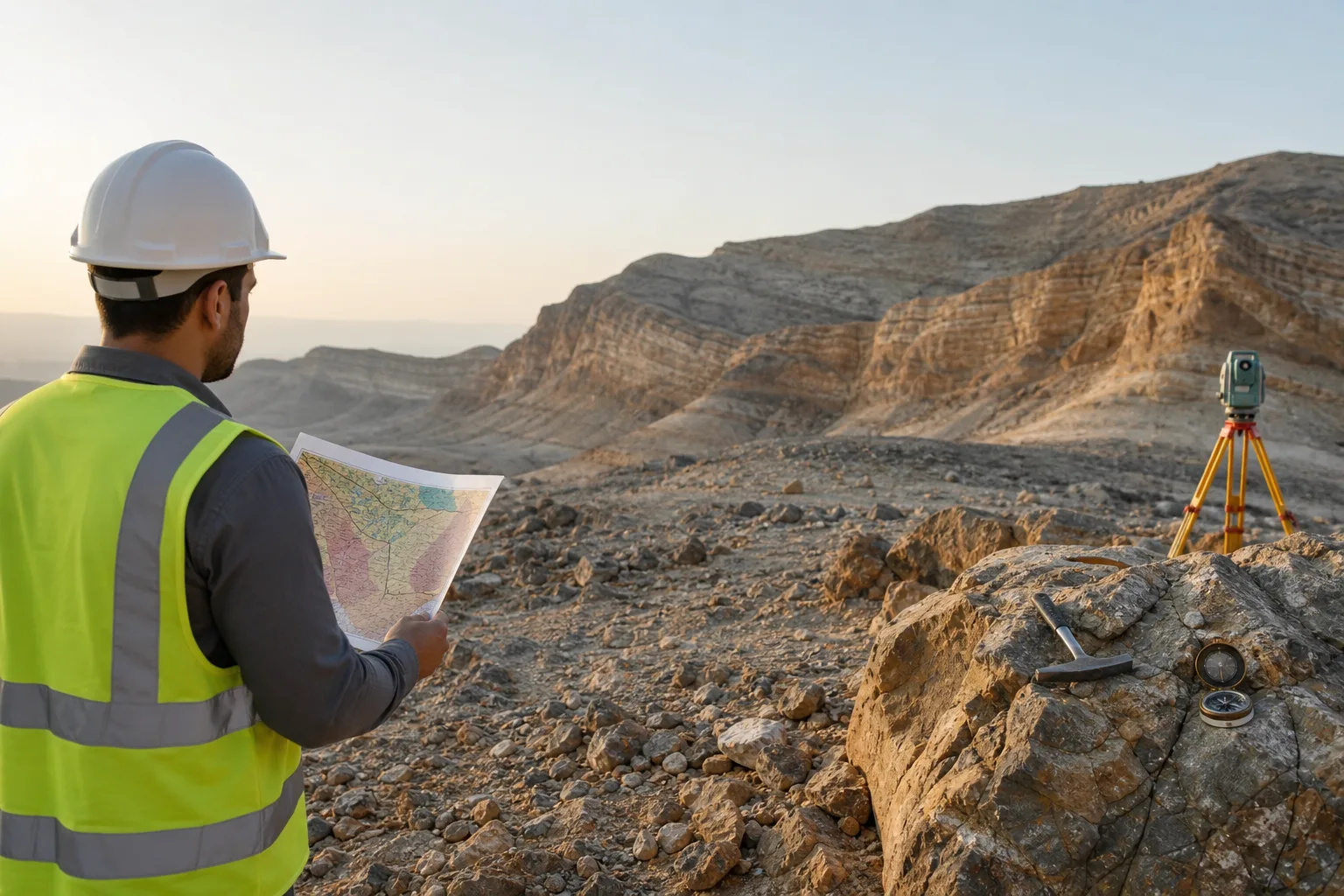
A geophysical and geological studies and services license lets you carry out technical earth science work on a commercial basis in Dubai. The core scope includes seismic surveys, soil investigations, subsurface mapping, geological assessments, and related technical studies. You can deliver this work as field surveys, lab analysis, desktop studies, or advisory services, depending on what your clients need.
The license sits within Dubai's professional and technical services category. It covers the full range of geoscience consultancy, from site characterisation reports for construction projects to seismic hazard assessments for infrastructure developers.
There are boundaries worth knowing before you apply.
What is not included
Drilling and extraction activities need a separate license. If your work moves into environmental remediation or waste management, that also needs its own code. If you plan to do both geotechnical studies and remediation work, you need to add the relevant activity codes at the point of setup. Missing one out creates compliance problems later.
Check the full Business Activities List before you apply to make sure all your intended services are covered under a single license or flagged for a second one.
Who Your Clients Will Be
Your primary clients are oil and gas operators, construction developers, infrastructure contractors, and government engineering bodies. These organisations need ground condition data before they commit capital to a project. They are not buying a commodity. They are buying technical certainty from someone who can stand behind their findings.
Secondary clients include environmental consultancies, real estate developers who need ground condition reports before breaking ground, and utilities firms planning underground infrastructure. As Dubai continues to expand its metro, road, and utility networks, this secondary market is growing steadily.
How procurement works here
Nobody in this sector buys on a phone call. Government bodies and large developers run formal tenders. They want you on their approved vendor list before a project even reaches procurement stage. Getting on that list takes time, so start early. Smaller private developers are more flexible, but they still expect documented credentials and professional indemnity cover.
What wins work
Technical credentials and relationships matter far more than price here. A developer commissioning a ground investigation for a AED 500 million project is not going to award it to the cheapest bidder. They want a licensed geologist or geophysicist on the team, a track record of similar work, and the insurance to back it up. If you have those things, you are competing seriously. If you do not, price will not save you.
Mainland vs Free Zone: Which Setup Works for You
This is the biggest choice you will make when setting up. Let your clients decide it, not the cost.
| Factor | Mainland (DET) | Free Zone (Meydan Free Zone) |
|---|---|---|
| Client access | Open UAE market, including government contracts | Mainly private sector and international clients |
| Foreign ownership | 100% in most professional activities | 100% across all activities |
| Office requirement | Physical office address required | Flexi-desk options available |
| Setup process | Through DET; more steps involved | Faster, often 5 to 10 working days |
| Visa allocation | Tied to office size | Tied to package chosen |
| Cost | Generally higher, especially with office lease | More cost-effective at early stage |
When mainland makes sense
A mainland license from DET lets you work directly with UAE government bodies and bid on public infrastructure contracts. If your pipeline is built around government engineering projects, road authorities, or public utilities, you need a mainland setup. There is no way around it. A free zone company cannot hold a direct government contract without a mainland presence.
When Meydan Free Zone makes sense
Meydan Free Zone suits firms focused on private sector clients, international project work, or founders who want 100% ownership with a simpler setup process. If your clients are private developers, oil and gas companies operating under their own procurement frameworks, or international firms bringing you in on cross-border projects, a free zone license is workable and significantly cheaper to start with.
You can also start a business remotely through Meydan Free Zone, which is useful if you are managing the setup from outside the UAE while still running project commitments elsewhere.
If you are not sure which route fits your situation, use the cost calculator to get a baseline figure, then speak to the team before you commit.
Free Business Setup Cost Calculator
Calculate NowHow to Get Set Up: Step by Step
- Step 1, book your trade name: Use the DET e-Services portal for a mainland company, or the Meydan Free Zone portal for a free zone one. Check your company name availability before you go further. Names that imply government affiliation or use restricted terms will be rejected.
- Step 2, confirm your activity code: Make sure the code covers everything you intend to do. If you plan to offer both geophysical surveys and geological advisory services, confirm both are included or add them now. Changing your activity scope after setup costs time and fees.
- Step 3, submit your application: You will need passport copies for all shareholders and directors, a brief business plan outline, and proof of relevant professional qualifications. Regulators in this sector expect to see that someone on the team holds genuine geoscience credentials, not just a trade name.
- Step 4, get initial approval and sort your office: For a free zone setup, this is where you choose your flexi-desk or office package. The package you choose sets your visa allocation, so think ahead about how many staff you need to sponsor.
- Step 5, pay license fees and collect your license: Once fees are paid and documents are in order, your license is issued. At Meydan Free Zone, this typically takes 5 to 10 working days.
- Step 6, apply for visas: Once your license is issued, you can apply for investor and employee visas. mResidency through Meydan Free Zone's visa services covers the full residency process, including medical fitness tests and Emirates ID.
- Step 7, open a corporate bank account: This is often the step that takes the longest. UAE banks want to understand your business model and client base before approving an account. Having your license, a clear scope of work, and professional credentials ready speeds the process up. Business banking support is available through mCore if you need help navigating this.
Compliance and What You Need in Place
Getting the license is the start. Staying compliant is what keeps you operating.
Professional qualifications
Regulators expect licensed geologists or geophysicists on the team. A trade name alone is not enough. Before you apply, make sure you can show that the people doing the technical work hold recognised professional qualifications. In some cases, you may also need to get those qualifications attested by the relevant authority before they are accepted.
Field survey kit
If you operate seismic or survey equipment in the field, you need to keep calibration records up to date. Equipment used on UAE project sites must meet the standards set by the relevant project authority. Government infrastructure projects in particular will ask for equipment certification as part of vendor registration. Keep those records current and accessible.
VAT registration
Once your annual taxable turnover crosses AED 375,000, you must register for VAT with the Federal Tax Authority. This threshold catches many specialist consultancies faster than expected, especially once a few long-term contracts are running. Register on time. Late registration draws penalties. The Federal Tax Authority portal handles registration directly. If you need support with VAT compliance, VAT registration support services are available through mAccounting.
Corporate tax
The UAE introduced a 9% corporate tax on taxable profits above AED 375,000. Most free zone companies can access a 0% rate on qualifying income if they meet the substance requirements. Make sure you understand which category your income falls into before your first filing period. Getting this wrong is costly to unwind.
Annual license renewal
Your license needs renewing every year. Missing the renewal window means your license lapses, which can void contracts and trigger visa problems for sponsored staff. Set a calendar reminder 60 days before expiry. A compliance review can be triggered if your actual business activity does not match the activities listed on your license, so keep your scope current.
Professional indemnity insurance
This is not a legal requirement for every setup, but it is a practical one. Most serious clients in this sector will ask for professional indemnity cover before they put you on an approved vendor list. Get it in place early, not after you have already won a contract.
Market Opportunity
Dubai's construction and infrastructure pipeline is substantial. Projects across transport, utilities, and urban development all need ground investigation work before they can proceed. The UAE's oil and gas sector continues to invest in exploration and field development, and that work generates consistent demand for geophysical survey services.
The barriers to entry here are real. You need qualified staff, proper kit, professional credentials, and the patience to get onto approved vendor lists. That is exactly what makes the market worth entering if you have those things. Firms that can demonstrate technical depth and a track record win long contracts. The work is not transactional.
International firms bringing regional expertise into the UAE market are well placed. Dubai's openness to foreign-owned businesses, combined with its position as a regional hub for energy and infrastructure, means you can use a UAE base to serve projects across the Gulf from a single entity.
Conclusion
A geophysical and geological services license in Dubai is a specialist play with real barriers to entry. That is exactly what makes it worth pursuing if you have the technical credentials and the right client relationships in place. The demand is steady, the contracts are long, and the competition is limited to those who can actually do the work.
Get your activity code right from the start, choose your jurisdiction based on your client base, and make sure your team's qualifications are documented and ready before you apply. Everything else follows from those three things.
Speak to the Meydan Free Zone team to confirm the right activity code for your scope of work and get a clear cost breakdown before you commit.
Ready to Launch Your Business in Dubai?
Let's Connect