
Table of Contents
Topic Summary
Choose the Right Activity Code First
Activity code 4773.d7 specifically licenses retail of life-saving equipment including life jackets, life rafts, lifebuoys, and distress beacons. Using the correct code from the start keeps your setup timeline clean and avoids rework during registration.
Understand Who Will Buy From You
Your core customers fall into three groups: maritime operators driven by SOLAS compliance cycles, industrial and construction safety buyers, and regional distributors using Dubai as a re-export hub for GCC, South Asia, and East Africa markets. Knowing your segment early shapes your product sourcing and sales approach.
Weigh Mainland Against Free Zone Setup
Mainland registration through DET gives you a direct route to UAE maritime and industrial contracts under standard commercial rules. Meydan Free Zone offers 100% foreign ownership, zero corporate tax on qualifying income, and a fully digital licensing process with no third-party pre-approval required.
Dubai's Growing Fleet Signals Strong Demand
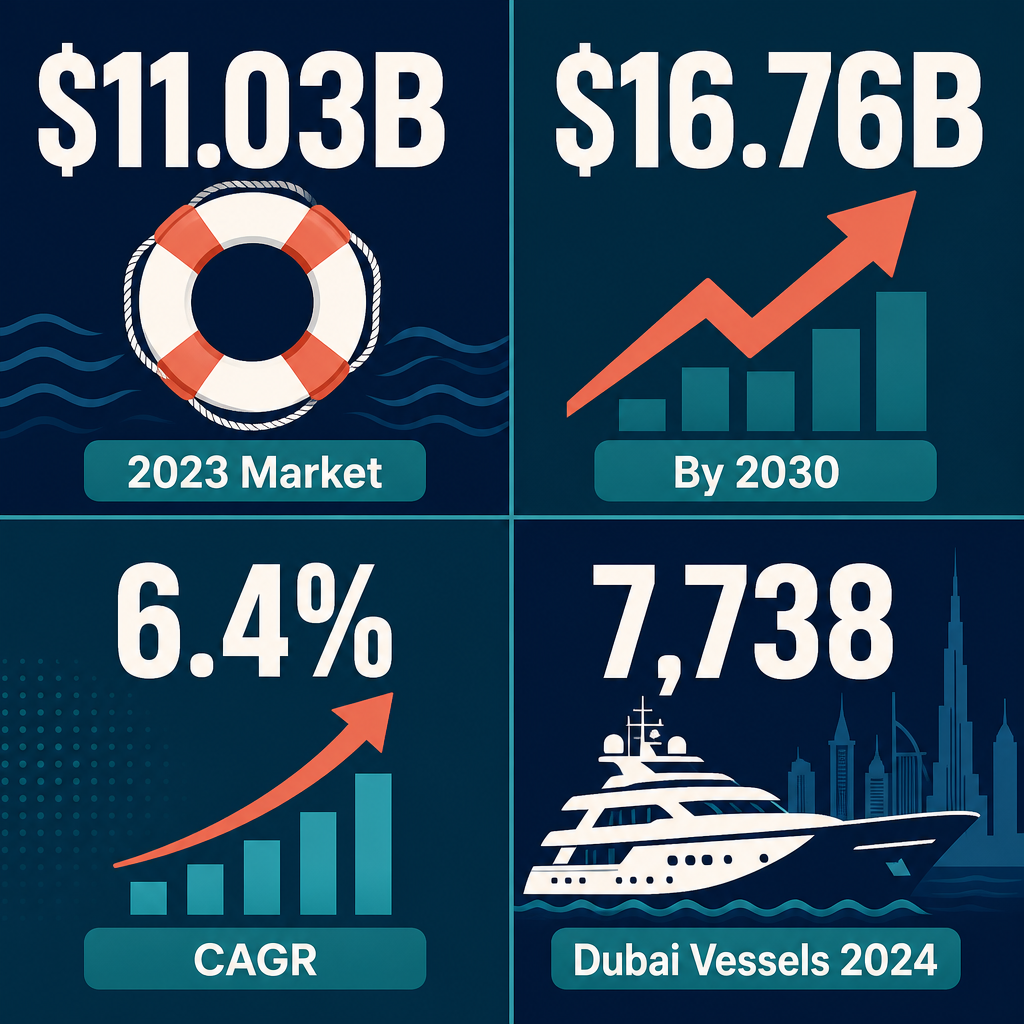
Dubai's registered marine fleet hit 7,738 vessels in 2024, a 14.4% year-on-year increase, with certified crew members up 22.8% to 12,226. This expanding fleet directly drives SOLAS-mandated procurement of life-saving appliances, creating a reliable and growing local customer base.
Prepare Four Key Documents Before Applying
You will need passport copies for all shareholders and directors, a clear outline of your intended product range, and a business plan summary. Having these ready before you begin the digital application process at Meydan Free Zone keeps approvals moving quickly.
Source Only SOLAS-Certified Products
Building supplier relationships with manufacturers whose equipment meets SOLAS standards is essential, since your maritime and industrial buyers are legally required to use compliant gear. Certified inventory protects your clients and positions your business as a credible, regulation-aware trader.
Tap Into a Fast-Growing Global Market
The global life safety appliance market was valued at USD 11.03 billion in 2023 and is projected to reach USD 16.76 billion by 2030 at a 6.4% CAGR. A Dubai-based operation places you at the center of a high-demand regional trade corridor with access to multiple growth markets from a single location.
How to Start a Life Saving Equipment Trading Business in Dubai with Meydan Free Zone
A life jacket that inflates on contact with water, a life raft that deploys in seconds, a distress beacon that keeps transmitting long after a vessel has gone down: this equipment exists for the single worst moment a crew or passenger might face, and it needs to work every time. A life saving equipment trader sources and sells this equipment to the shipping operators, industrial sites, and emergency response teams that depend on it.
This guide covers what activity code 4773.d7 lets you do, who your clients will be, and how you set the business up in Dubai.
Key Stats at a Glance
| Activity code | 4773.d7 |
|---|---|
| Global life safety appliance market | USD 11.03 billion in 2023, projected to reach USD 16.76 billion by 2030 at 6.4% CAGR, per Verified Market Research |
| Dubai registered marine vessels | 7,738 in 2024, up 14.4% year on year, per Dubai Maritime Authority |
| Certified crew members | 12,226, up 22.8% year on year, per Dubai Maritime Authority |
| Third-party approval | None needed for this activity |
What This License Covers
Activity code 4773.d7 licenses you to retail equipment designed to protect and preserve human life in emergency situations, life jackets, life rafts, lifebuoys, distress signals, and emergency beacons among them, to shipping operators, industrial sites, and emergency response buyers.
The UAE Maritime Safety Law, Federal Law No. 11 of 2023, administered through the Ministry of Energy and Infrastructure, mandates advanced safety systems on commercial vessels in UAE waters, enforcing SOLAS compliance, technical inspections, safe manning standards, and crew licensing. If you sell life saving appliances to shipping, industrial, or emergency response buyers, this is the code you need.
Who Your Clients Will Be
Your customer base splits into three groups. Maritime equipment suppliers sell life-saving appliances to shipping operators, vessel owners, and port facilities working through SOLAS-driven procurement cycles.
Safety equipment traders sell personal and institutional life-saving products across industrial, construction, and emergency response sectors. Regional distributors use the UAE as a re-export and distribution hub, moving stock onward to GCC, South Asia, and East Africa markets, an arrangement that lets a single Dubai-based operation serve several distinct regional markets from one warehouse.
Dubai's registered marine fleet reached 7,738 vessels in 2024, up 14.4% year on year, with certified crew members up 22.8% to 12,226, per Dubai Maritime Authority, a fast-growing fleet that keeps SOLAS-driven demand for life saving equipment rising alongside it.
Mainland or Free Zone
| Factor | Mainland (DET) | Free Zone (Meydan Free Zone) |
|---|---|---|
| Direct maritime and industrial contracts | Direct, standard route | Workable via approved distribution structuring |
| Foreign ownership | 100% | 100% |
| Corporate tax | Standard rate applies | 0% on qualifying income |
| Setup process | Standard commercial registration | Fully digital licensing |
Mainland registration through DET suits a trader working directly with UAE shipping operators and industrial buyers under standard commercial rules. Meydan Free Zone offers 100% foreign ownership, zero corporate tax on qualifying income, and a fully digital licensing process, and no third-party pre-approval is needed for this activity, which keeps your setup timeline simple.
[blockCTACostCalculator]
Step-by-Step Setup Guide
- Step 1, book your trade name: Check availability through DET or your chosen free zone authority, confirming activity code 4773.d7 is listed for your application.
- Step 2, prepare your setup documents: Passport copies of shareholders and directors, your intended product range, maritime, industrial, or emergency response equipment, and a business plan summary.
- Step 3, get your initial approval and license: Meydan Free Zone's fully digital process moves quickly once your documents are complete.
- Step 4, source your SOLAS-certified product range: Build relationships with manufacturers whose life saving equipment meets SOLAS and UAE Maritime Safety Law standards.
- Step 5, secure your warehouse: Proper storage for life saving equipment, much of which needs regular inspection and shelf-life tracking, is central to this activity, so plan for climate-controlled space and a clear inspection schedule from the outset.
- Step 6, register with MOHRE if you employ staff: This sets your visa quota and puts your team under Wage Protection System compliance from the outset.
Compliance and What You Need in Place
Third-party approval
No third-party approval is needed for this activity, which keeps your setup timeline focused on building a certified product range rather than extra regulatory sign-off.
Anti-money laundering compliance
This activity is exempt from anti-money laundering compliance duties, keeping your ongoing regulatory load lighter than higher-risk trading categories.
Product certification and SOLAS compliance
Every product you sell needs to meet SOLAS standards and the technical needs set under UAE Maritime Safety Law, so verify certification with every supplier before you commit to stock, particularly for equipment bound for commercial vessels.
Ongoing renewals
Renew your license every year, keep your product certifications current, and keep your MOHRE registrations up to date if you employ staff. Track expiry dates on certified stock closely too, since selling equipment past its inspection or service date could put a buyer's own compliance at risk.
Market Opportunity
The global life safety appliance market reached USD 11.03 billion in 2023 and is projected to grow to USD 16.76 billion by 2030 at a 6.4% CAGR, per Verified Market Research, a steady, real trend that reflects growing regulatory pressure on shipping and industrial operators worldwide.
Dubai's own registered marine fleet has grown 14.4% year on year to 7,738 vessels, with certified crew members up 22.8% to 12,226, per Dubai Maritime Authority, giving a life saving equipment trader a fast-expanding local customer base to sell into.
The UAE Maritime Safety Law's SOLAS-driven procurement cycles mean shipping operators must keep replacing and upgrading safety equipment on a defined schedule rather than as a one-off purchase, giving a trader with a reliable, certified product range a source of recurring, non-discretionary demand.
The UAE's position as a re-export hub for GCC, South Asia, and East Africa adds a further layer of opportunity beyond the domestic maritime and industrial market alone, letting a trader build volume across several markets rather than depending on UAE demand by itself.
Conclusion
Building a certified, well-documented product range from day one puts a new trader in a strong position to win business from shipping operators who cannot afford to compromise on safety equipment quality. A Life Saving Equipment Trading license under activity code 4773.d7 is a workable business anchored in a growing marine fleet and non-discretionary SOLAS compliance demand. Meydan Free Zone's foreign ownership, tax position, and digital setup process give a trader a practical route to serve shipping, industrial, and emergency response buyers across the UAE and the wider region.
[blockCTAContact]
Compliance
THIRD-PARTY APPROVAL
This activity requires pre-approval from the Security Industry Regulatory Agency (SIRA) / The Dubai Maritime Authority (DMA) before a business license can be issued by Meydan Free Zone.
ANTI-MONEY LAUNDERING COMPLIANCE
This business activity is exempt from AML compliance requirements.