
Table of Contents
Frequently Asked Questions
What is activity code 4774.03 and what does it permit you to sell
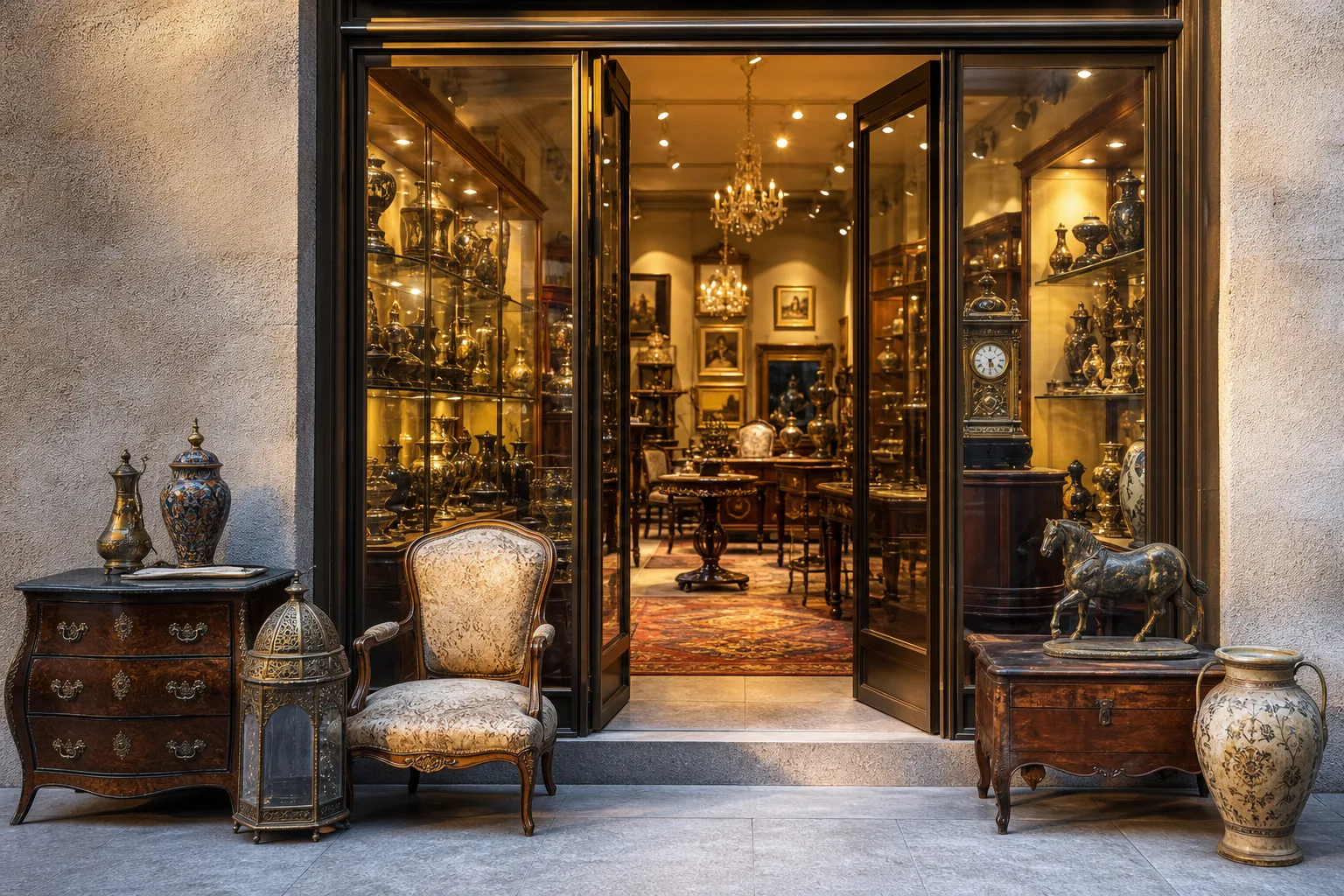
Activity code 4774.03 covers the Retail Sale of Antiques in Dubai. It permits the commercial sale of objects generally accepted as being over 100 years old, including furniture, decorative ceramics, coins, jewellery, silverware, textiles, maps, manuscripts, and fine art.
The licence does not extend to reproduction or vintage items unless they genuinely qualify as antiques under accepted trade definitions. Dealers should ensure their inventory meets this threshold to remain compliant with the licence scope.
Which free zone is recommended for setting up an antiques retail business in Dubai
The article specifically references Meydan Free Zone as the route through which activity code 4774.03 can be obtained. Free zone licences are one of two main options for antiques dealers, the other being a DED mainland licence.
The choice between mainland and free zone affects where you can trade directly, how you handle imports, and the overall cost structure of your business setup. Both routes are governed by standard UAE trade licence law.
What are the import duty and VAT obligations for antiques brought into Dubai
Antiques entering Dubai through DP World-operated ports or Jebel Ali Free Zone are subject to standard UAE customs procedures. Pieces entering the mainland typically attract a 5% import duty on their declared value.
UAE VAT is also set at 5%, which applies to retail sales of antiques. This is one of the lowest retail tax environments globally, making Dubai commercially attractive for dealers who source internationally and sell to high-net-worth buyers.
What provenance documentation do antiques dealers in Dubai need to maintain
Because the UAE is a signatory to international conventions on cultural property, all imported antiques should be accompanied by clear ownership history and, where applicable, export permits from the country of origin. This is considered standard professional practice rather than an unusual regulatory burden.
Customs classification and provenance documentation are particularly important for pieces sourced from regions such as the Middle East, South Asia, Europe, and East Africa — all common sourcing areas for Dubai-based dealers. Thorough records protect both the dealer and the buyer.
Is there a dedicated antiques regulatory authority in the UAE
There is no dedicated antiques regulatory authority in the UAE. The trade is governed by standard trade licence law — either a DED mainland licence or a free zone licence — combined with UAE customs rules administered by the Ports, Customs and Free Zone Corporation (PCFC).
The Dubai Culture and Arts Authority plays a supporting role in legitimising cultural commerce through policy and programming, situating antiques retail alongside gallery trade, auction activity, and heritage tourism, but it does not act as a sector-specific regulator.
Who are the main customer segments for an antiques retail store in Dubai
Activity code 4774.03 serves several distinct customer groups: private collectors, interior designers sourcing for residential and hospitality projects, tourists seeking authenticated pieces, and buyers involved in estate or auction-adjacent transactions.
Each segment has different purchasing behaviour, price sensitivity, and documentation requirements. Dubai's visitor base — exceeding 17 million international arrivals in 2023 — includes a significant proportion of buyers with disposable income and an appetite for provenance-backed objects, broadening the potential customer base beyond resident collectors alone.
What revenue models are available to a licensed antiques dealer in Dubai
Revenue models under activity code 4774.03 are flexible. Direct retail from a physical or online showroom is the most straightforward approach. Consignment arrangements — where the dealer sells on behalf of a private owner — are common in the sector and require clear contractual structures to protect both parties.
Private sales, where discretion is valued by high-net-worth clients, are also viable within the licence scope. Dealers can therefore combine multiple revenue streams, adapting to the purchasing behaviour of different customer segments without requiring additional licences.
Why is Dubai considered a commercially viable market for antiques retail
Dubai's position as a global trade hub and luxury destination creates consistent demand for authenticated antiques. The city benefits from high-net-worth residents, a growing collector community, and culturally engaged tourists. The UAE arts and collectibles sector is part of a global market valued at over USD 65 billion.
Structurally, Dubai offers low import duties, strong port infrastructure through DP World and Jebel Ali, and an international resident base that spans the key sourcing regions of the Middle East, South Asia, Europe, and East Africa. A 5% VAT rate — among the lowest globally — further enhances the city's appeal as a base for dealers operating across multiple markets.
How to Open an Antiques Retail Store in Dubai
Dubai sits where four sourcing regions meet. Pieces come in from the Middle East, South Asia, Europe and East Africa, and the buyers are already here: high-net-worth residents, interior designers fitting out homes and hotels, and visitors who want something with a history rather than another souvenir.
The trade is lightly regulated compared to most, the import duties are low, and the port infrastructure does the heavy lifting. This guide covers what activity code 4774.03 lets you sell, what paperwork each piece needs, and how to get licensed through Meydan Free Zone.
Key Stats at a Glance
| Activity code | 4774.03, Retail Sale of Antiques |
|---|---|
| What it covers | Objects generally accepted as being over 100 years old, including furniture, ceramics, coins, jewellery, silverware, textiles, maps, manuscripts and fine art |
| What it excludes | Reproduction and vintage items, unless they genuinely qualify as antiques under accepted trade definitions |
| Regulator | No dedicated antiques authority. Standard trade license law applies, with customs run by the Ports, Customs and Free Zone Corporation |
| Port route | Pieces arrive through DP World operated ports and Jebel Ali Free Zone |
| Import duty | Typically 5% of declared value on mainland entry |
| VAT | 5% on retail sales, with registration compulsory above AED 375,000 turnover a year – Federal Tax Authority |
| Visitors | Over 17 million international visitors in 2023 – Department of Economy and Tourism |
| Market size | The UAE arts and collectibles sector sits inside a global market worth over USD 65 billion |
| License speed | Approval typically within three to five working days, valid one year and renewable |
What This License Covers

Activity code 4774.03 covers the commercial sale of objects generally accepted as being over 100 years old. That takes in furniture, decorative ceramics, coins, jewellery, silverware, textiles, maps, manuscripts and fine art.
What it does not cover is reproduction or vintage stock, unless the piece genuinely meets accepted trade definitions of an antique. That line matters commercially as well as legally. Your license scope and your credibility with serious buyers rest on the same distinction, so be strict about it when you buy.
Who Your Clients Will Be
Private collectors
The established base. They know what they want, they check provenance carefully, and they come back when you have earned their trust once.
Interior designers
Sourcing for homes and hospitality projects. They buy on a brief and a deadline rather than on passion, which makes them steadier than collectors and more forgiving on price when the piece fits.
Tourists
Over 17 million international visitors came in 2023, and a good share have money to spend and an appetite for something with documented history. They buy once, they buy quickly, and they need the paperwork to travel home with them.
Estate and auction buyers
Transactions around estates and auctions bring a different rhythm again, often larger and slower.
How you sell is flexible. Direct retail from a showroom or online is the simplest. Consignment, where you sell on behalf of a private owner, is common in this trade and needs a clear written contract on both sides. Private sales suit clients who value discretion, and they sit comfortably inside the license.
Mainland or Free Zone
| Factor | Mainland (DET) | Free Zone (Meydan Free Zone) |
|---|---|---|
| Who you sell to | Any UAE customer, with no restriction | Direct sales to mainland customers go through a distributor or a permission |
| Import duty | Typically 5% on entry | Standard UAE customs procedures apply |
| Provenance paperwork | Needed on every imported piece | Needed on every imported piece |
| Physical showroom | Usually expected | A flexi-desk satisfies the address need |
| Setup route | Apply through DET | Apply online, remote setup possible |
The free zone route suits dealers who work through private viewings, online channels or partner showroom space rather than a permanent shopfront. If you hold a free zone license and sell straight to mainland customers, structure those sales through a mainland distributor or get the right permission first, depending on how you trade.
[blockCTACostCalculator]
Step by Step Setup Guide
- Step 1, confirm the activity: Select Retail Sale of Antiques, 4774.03, as your main activity. You can add complementary activities on the same license if your model includes art advisory or import trading.
- Step 2, choose your legal structure: Most individual founders take a Free Zone Establishment. An existing company opening a UAE presence can set up as a branch instead.
- Step 3, book your trade name: Submit three options in order of preference. Names referencing antiques, heritage or cultural trade are allowed, subject to standard UAE naming conventions.
- Step 4, send in your documents: Passport copy, a recent utility bill or bank statement, and a short business plan or description of the activity. Corporate applicants need extra entity documents.
- Step 5, pick your workspace: A flexi-desk satisfies the physical address need. That is enough if you work through private viewings, online channels or a partner showroom.
- Step 6, apply for visas: Meydan Free Zone licenses support investor and employment visas, and your allocation depends on the package you choose.
- Step 7, collect your license: Approval usually completes within three to five working days for a simple application. The license runs for one year and renews annually.
The whole process can be done remotely, so you can be licensed before you relocate.
Compliance and What You Need in Place
Provenance
Every imported piece should arrive with a clear ownership history and, where it applies, an export permit from the country of origin. The UAE has signed international conventions on cultural property, so this is the professional standard rather than an unusual burden. Good records protect you and your buyer equally, and they are what let a serious collector pay serious money.
Customs
Pieces coming through DP World operated ports or Jebel Ali Free Zone follow standard UAE customs procedures, and antiques entering the mainland typically attract 5% import duty on declared value. Customs coding and provenance paperwork travel together, so prepare them as one file per piece rather than two.
VAT
VAT runs at 5% on retail sales. Register with the Federal Tax Authority once annual taxable turnover passes AED 375,000. Unit values in this trade are high, so most dealers cross that line faster than they expect.
Market Opportunity
Dubai works as a base because the sourcing regions and the buyers overlap in one city. Antiques arrive from the Middle East, South Asia, Europe and East Africa, and the resident population spans those same places, which means you are selling to people who already know what a good piece from their region looks like.
The buyer base is also widening. Alongside established high-net-worth collectors, a younger set of interior designers and culturally curious tourists is generating new retail demand, and over 17 million visitors a year keeps that flow topped up. The UAE arts and collectibles sector sits inside a global market worth more than USD 65 billion, and the Dubai Culture and Arts Authority supports cultural commerce through policy and programming, which places antiques retail alongside gallery trade, auction activity and heritage tourism rather than off on its own.
Conclusion
Antiques retail in Dubai is commercially sound and the setup is simple. The regulatory path is clear, the import route through DP World and the PCFC is well worn, and the customers are already here and buying.
The work that actually decides whether you succeed is provenance discipline. Buy pieces you can document, keep the paperwork with the object, and you can sell to anyone. Skip it and you own stock you cannot move.
Use the cost calculator to estimate your license fees, or talk to the Meydan Free Zone team to confirm activity eligibility and start your application.
[blockCTAContact]
References
- Department of Economy and Tourism
- Dubai Culture and Arts Authority
- DP World
- Ports, Customs and Free Zone Corporation
- Federal Tax Authority