
Table of Contents
Frequently Asked Questions
What is activity code 4923.93 and what does it cover
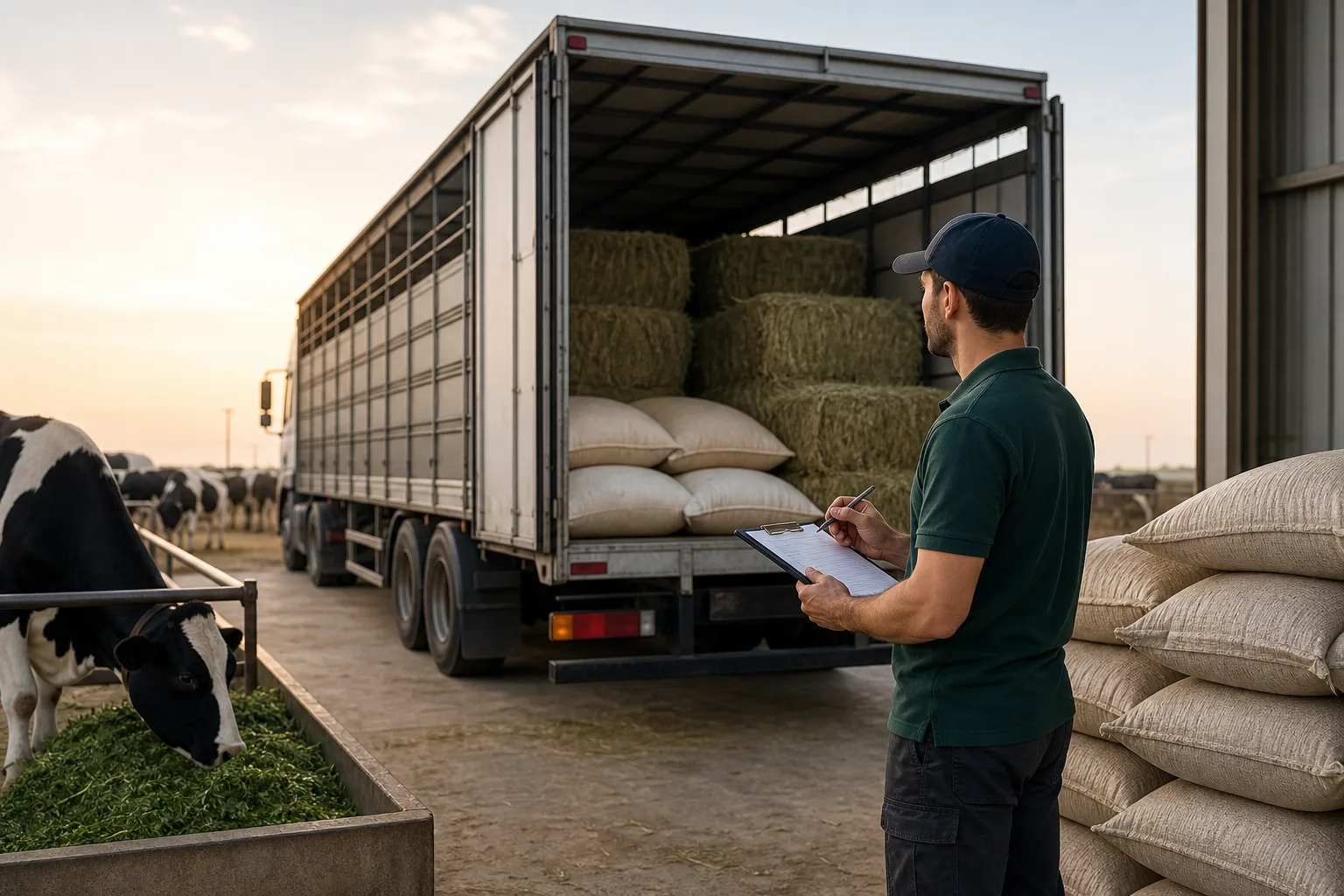
Activity code 4923.93 refers to Fodder and Animal Feed Transport, a distinct business classification in Dubai that covers the specialised haulage and delivery of fodder, hay, grain-based feeds, compound animal feed, and related agricultural inputs.
It is deliberately separated from general freight licensing because feed products have specific handling, storage, and routing requirements. Operators under this code are recognised as specialist logistics providers rather than standard cargo carriers.
Who are the typical customers for a fodder and animal feed transport business in Dubai
The customer base is broader than many new operators expect. Core clients include equestrian clubs and private stables, which generate consistent, high-volume, repeat orders year-round, as well as dairy and livestock farms across Dubai, Sharjah, and the Northern Emirates.
Other common customers include zoos and wildlife facilities requiring specialist feed types, pet food wholesalers managing last-mile delivery, and feed importers or trading companies that need contract haulage from port to warehouse. Each segment has different delivery frequencies, vehicle requirements, and contract structures.
What revenue model works best for an animal feed transport business in Dubai
The business can operate on contract haulage agreements, scheduled delivery routes, and spot logistics for importers. Margins improve significantly when the operation moves away from ad hoc jobs toward recurring contracts with farms or stables, which provide predictable income and allow better fleet utilisation.
A more integrated model is also possible. Setting up through Meydan Free Zone allows operators to pair a transport licence with complementary trading or warehousing activities, enabling a single entity to import, store, and deliver — capturing more of the supply chain margin.
What vehicle permits are required to operate commercially in Dubai for feed transport
Any goods vehicle operating commercially on Dubai roads must be registered under the correct permit category issued by the Roads and Transport Authority (RTA). For feed transport, fleet classification must align with the cargo type and weight requirements specific to agricultural goods haulage.
Operators should confirm with the RTA that their chosen vehicle categories — whether flatbed, refrigerated, or bulk-cargo configurations — match the permit conditions for the feed types they intend to carry. Misclassification can result in fines or operational restrictions.
How does customs clearance work when collecting feed from Jebel Ali port
Feed imports entering through Jebel Ali are subject to inspection and documentation requirements managed by the Ports, Customs and Free Zone Corporation (PCFC). A transport operator engaged at the point of port release needs familiarity with these clearance procedures or a reliable relationship with a licensed customs broker.
While the transport company is typically not the importer of record, understanding the clearance process helps avoid delays and allows the operator to give clients accurate timelines. Delays at port directly affect delivery schedules and client relationships.
What role does the Ministry of Climate Change and Environment play in animal feed imports
The Ministry of Climate Change and Environment (MOCCAE) oversees animal feed imports in the UAE, regulating feed composition, labelling standards, and import approvals. These rules apply primarily to importers and manufacturers rather than transport operators.
However, transport businesses benefit from understanding MOCCAE requirements because consignments that fail inspection or lack correct documentation cannot be released from port — directly affecting haulage schedules. Knowing what documentation clients need to have in order helps an operator manage expectations and avoid costly waiting time at collection points.
Why is Dubai specifically a strong base for an animal feed transport business serving the wider Gulf
Dubai handles over 14 million tonnes of cargo annually through its port network, including a significant share of agricultural commodities. As the GCC's primary logistics gateway, the majority of regional feed imports pass through Dubai before onward distribution — making it the natural operational base for transport businesses serving the wider Gulf market.
The UAE's structural dependency on imports, with over 80% of animal feed requirements met from overseas, creates a permanent logistics need. Combined with government food security mandates and a growing agri-sector, demand for specialist feed haulage is underpinned by policy as well as commercial activity.
At what turnover threshold does VAT registration become required for a feed transport business in Dubai
In the UAE, businesses are required to register for VAT once annual turnover exceeds AED 375,000. A fodder and animal feed transport business approaching or exceeding this threshold must register with the Federal Tax Authority and begin charging and remitting VAT on taxable supplies.
It is worth noting that some agricultural goods may carry different VAT treatment, so operators should confirm the applicable rate for their specific services with a UAE-registered tax adviser or accountant early in the business setup process to ensure correct invoicing from the outset.
How to Start a Fodder and Animal Feed Transport Business in Dubai
The UAE imports almost all of its animal feed. With little arable land and a livestock sector spanning dairy farms, camel herds, poultry operations and one of the world's most active equestrian industries, the whole country depends on feed arriving from somewhere else and reaching the right yard.
That last part is the business. Feed sitting in a warehouse at Jebel Ali does nothing for a stable in Al Ain or a dairy farm in Sharjah. This guide covers what activity code 4923.93 lets you do, who pays for it, and how to set up through Meydan Free Zone.
Key Stats at a Glance
| Activity code | 4923.93 |
|---|---|
| What it covers | Specialist haulage and delivery of fodder, hay, grain-based feeds, compound animal feed and related agricultural inputs |
| Why it is separate | Feed products have their own handling, storage and routing needs, so the code sits apart from general freight |
| Vehicle permits | Commercial goods vehicles must hold the correct permit category – Roads and Transport Authority |
| Customs route | Feed imports clear through the Ports, Customs and Free Zone Corporation |
| Import dependency | Over 80% of UAE animal feed needs are met through imports |
| Cargo volume | Dubai handles over 14 million tonnes of cargo a year through its port network |
| Market outlook | UAE animal feed market set to grow steadily through 2030 – IMARC Group |
| VAT | 5% on UAE transport services above AED 375,000 turnover – Federal Tax Authority |
What This License Covers

Code 4923.93 covers the specialist haulage and delivery of fodder, hay, grain-based feeds, compound animal feed and related agricultural inputs. It sits separately from general freight for a reason. Feed has its own handling, storage and routing needs, and the code recognises operators here as specialist logistics providers rather than ordinary cargo carriers.
That distinction is worth holding onto when you talk to clients. A farm is not buying a truck. It is buying feed that arrives dry, on time, and in the condition it left in.
Who Your Clients Will Be
The customer base is wider than most new operators expect:
- Equestrian clubs and private stables, which order consistently and in volume all year
- Dairy and livestock farms across Dubai, Sharjah and the Northern Emirates
- Zoos and wildlife facilities needing specialist feed types
- Pet food wholesalers and distributors handling last-mile delivery
- Feed importers and trading companies needing contract haulage from port to warehouse
Each of those groups delivers on a different rhythm, wants a different vehicle, and signs a different kind of contract. Stables are the steadiest of the lot.
Money comes from contract haulage agreements, scheduled delivery routes and spot logistics for importers. Margins improve a lot once you move away from ad hoc jobs and onto recurring contracts with farms or stables, because you can plan your routes and keep the fleet busy. Meydan Free Zone also lets you pair this transport license with trading or warehousing activities, which opens a more integrated model where one company imports, stores and delivers.
Mainland or Free Zone
| Factor | Mainland (DET) | Free Zone (Meydan Free Zone) |
|---|---|---|
| Who you serve | Open UAE market | Farms, stables, importers and distributors |
| Foreign ownership | Set by DET rules for the activity | 100% yours, no local sponsor |
| Structure | Mainland LLC | Free Zone Establishment (FZE) for one founder, Free Zone LLC (FZ-LLC) for several |
| Adding trading or warehousing | Apply through DET | Can be paired with the transport license |
| RTA vehicle permits | Needed | Needed |
A free zone license keeps ownership clean and lets you bolt on trading or storage later. A mainland license from the Department of Economy and Tourism makes more sense if you plan to sell straight into the local UAE market. Let your clients decide it, not the price.
[blockCTACostCalculator]
Step by Step Setup Guide
- Step 1, confirm your activity and structure: Select 4923.93 and settle whether you want an FZE or an FZ-LLC. Both allow 100% foreign ownership with no local sponsor.
- Step 2, book your trade name: Submit three options in order of preference. Names must follow UAE naming conventions, so no offensive terms and no references to political or religious bodies.
- Step 3, send in your application and documents: The whole application can be done remotely through the Meydan Free Zone online portal.
- Step 4, get your license: Once approved, the trade license is issued and that is your legal basis for operating.
- Step 5, open a corporate bank account: A clear business plan and projected transaction volumes will move this along faster.
- Step 6, sort visas and register your fleet: Get employment visas for your team, then register your vehicles with the RTA under the right commercial permit before you start.
What you need to submit is short: passport copies for all shareholders and the appointed manager, recent passport-size photographs, trade name approval, a brief business plan summary for some bank applications, and a No Objection Certificate from your current UAE sponsor if you already hold a residence visa.
Compliance and What You Need in Place
RTA vehicle permits
Any goods vehicle running commercially on Dubai roads must be registered under the correct permit category. For feed work, check that your fleet category matches the cargo type and weight rules for agricultural haulage. Whether you run flatbeds, refrigerated units or bulk-cargo configurations, confirm the permit conditions with the RTA before you buy. Getting the category wrong brings fines or restrictions on where you can operate.
Customs at the port
Feed imports clear through the Ports, Customs and Free Zone Corporation, with inspection and documentation at the point of release. You are usually not the importer of record, but if you are collecting at the port you need to know the process or have a licensed customs broker you trust. Delays at the quayside land directly on your delivery schedule.
MOCCAE and your clients
The Ministry of Climate Change and Environment oversees animal feed imports, covering composition, labelling and import approvals. Those rules bite on importers and manufacturers rather than on you. They still matter, because a consignment that fails inspection or arrives with the wrong paperwork cannot leave the port, and your truck waits. Knowing what your client should have in hand saves you waiting time you cannot bill for.
VAT
Register with the Federal Tax Authority once annual turnover passes AED 375,000. Transport services supplied inside the UAE are generally standard-rated at 5%.
Market Opportunity
The demand here rests on a fact that is not going to change. The UAE has limited arable land, so over 80% of its animal feed comes in from overseas. Every tonne of that needs moving from a port to an end user, and that is a permanent logistics job rather than a cyclical one.
IMARC Group has the UAE animal feed market on a consistent growth path through 2030, pushed along by government food security programmes, population growth and expanding agri-sector investment. The equestrian sector is a particular strength, one of the largest per capita anywhere, and it generates fodder and specialist feed orders every week of the year.
Dubai is the natural base for serving the wider Gulf. Its port network handles over 14 million tonnes of cargo a year, agricultural commodities included, and most regional feed imports come through here before moving on. You are positioned at the front of that flow rather than at the end of it.
Conclusion
Fodder and animal feed transport is a niche activity with structural demand behind it. Food security policy, a large equestrian sector and Dubai's position as the region's logistics corridor all point the same way, towards steady need for licensed, reliable operators.
Three things decide how smoothly this goes: matching your fleet to the right RTA permit category before you buy, knowing the port clearance process well enough to give clients honest timelines, and converting spot work into contracts. Sort those and the rest is routine.
[blockCTAContact]
References
- IMARC Group
- Roads and Transport Authority (RTA)
- Ports, Customs and Free Zone Corporation (PCFC)
- Federal Tax Authority (FTA)