
Table of Contents
Frequently Asked Questions
What does jewellery trading activity code 4773.11 in Dubai actually permit
Activity code 4773.11 covers the retail and wholesale buying and selling of gold, silver, platinum, diamonds, gemstones, and finished jewellery pieces. This includes fine jewellery, fashion jewellery, loose stones, and bullion-adjacent products sold as jewellery items.
The licence does not extend to manufacturing, assaying, or hallmarking. Those are distinct regulated activities that require separate approvals. If your business model involves production as well as trading, you will need to structure your activity list to reflect that from the outset.
Why is Dubai considered one of the world's top jewellery and gold trading hubs
Dubai consistently ranks among the world's top gold re-export centres and handles a significant share of global rough diamond trade flows. The combination of zero import duty on gold, a stable currency pegged to the US dollar, and world-class logistics infrastructure makes it a natural settlement point for international jewellery trade.
Structural demand drivers include a large expatriate population, high tourist arrivals, and deep wholesale re-export activity across the GCC, Africa, and Asia. The Dubai Gold Souk alone hosts over 300 retailers and draws millions of visitors annually, remaining a benchmark for global gold retail pricing.
What AML obligations apply to jewellery traders in Dubai
Dealers in precious metals and stones are subject to the UAE's anti-money laundering (AML) and counter-financing of terrorism (CFT) framework at the federal level. Obligations include customer due diligence, ongoing transaction monitoring, and mandatory registration on the goAML platform under Federal Decree-Law provisions.
These requirements are not optional. Non-compliance carries significant legal penalties, and operators who treat AML obligations as an afterthought create material legal exposure. Registration and compliance procedures should be addressed before trading commences, not after.
What business models can a jewellery trading licence in Dubai support
A jewellery trading licence supports multiple commercial models that can operate in parallel. Common structures include B2B wholesale supply to souk retailers and regional importers, B2C retail through tourist-facing boutiques or mall concessions, and re-export operations sourcing finished pieces or loose stones from markets such as India, Italy, or Turkey for redistribution into Africa and Asia.
E-commerce is a growing channel but carries specific customs documentation and VAT treatment requirements. Most successful operators in Dubai run more than one model simultaneously to diversify revenue across wholesale, retail, and export streams.
How does VAT apply to jewellery sales in Dubai
The Federal Tax Authority applies the standard 5% VAT rate to domestic jewellery sales in the UAE. Certain exports may qualify for zero-rating, but the documentation requirements to support that treatment are precise and must be maintained carefully.
It is strongly advisable to register for VAT early and confirm your VAT position with a qualified adviser before your first transaction. Getting the treatment wrong from the outset can create retrospective liability that is difficult and costly to unwind.
What hallmarking and quality standards apply to jewellery sold in Dubai
Hallmarking and quality standards for gold and precious metals sold domestically in the UAE are enforced by the Emirates Authority for Standardisation (ESMA). Products must meet prescribed purity and marking requirements before they can be offered for sale in the local market.
Traders importing finished jewellery need to ensure that products either arrive already compliant or are submitted for testing and marking before domestic distribution. Selling non-compliant products exposes operators to enforcement action and potential stock seizure.
What role does re-export play in Dubai's jewellery trading market
Re-export is a core pillar of Dubai's jewellery economy rather than a secondary activity. Traders source finished pieces or loose stones from manufacturing hubs such as India, Italy, and Turkey, consolidate inventory in Dubai, and redistribute into GCC, African, and South Asian markets.
This model is underpinned by Dubai's logistics infrastructure, including DP World's port and free zone facilities, which provide efficient transit and re-export processing. Re-export volumes remain strong year-round, making wholesale and distribution a viable standalone business model independent of local retail demand.
Which regulatory bodies oversee jewellery trading businesses in Dubai
Regulatory oversight spans several bodies. The UAE Government Portal outlines the federal framework, including AML obligations specific to dealers in precious metals and stones. ESMA enforces hallmarking and product quality standards for domestically sold jewellery.
Import and export documentation is processed through Dubai Customs, which applies its own requirements for goods moving in and out of the emirate. Traders operating across retail, wholesale, and re-export channels will typically interact with all three bodies and should map their compliance obligations across each before commencing operations.
How to Start a Jewellery Trading Business in Dubai
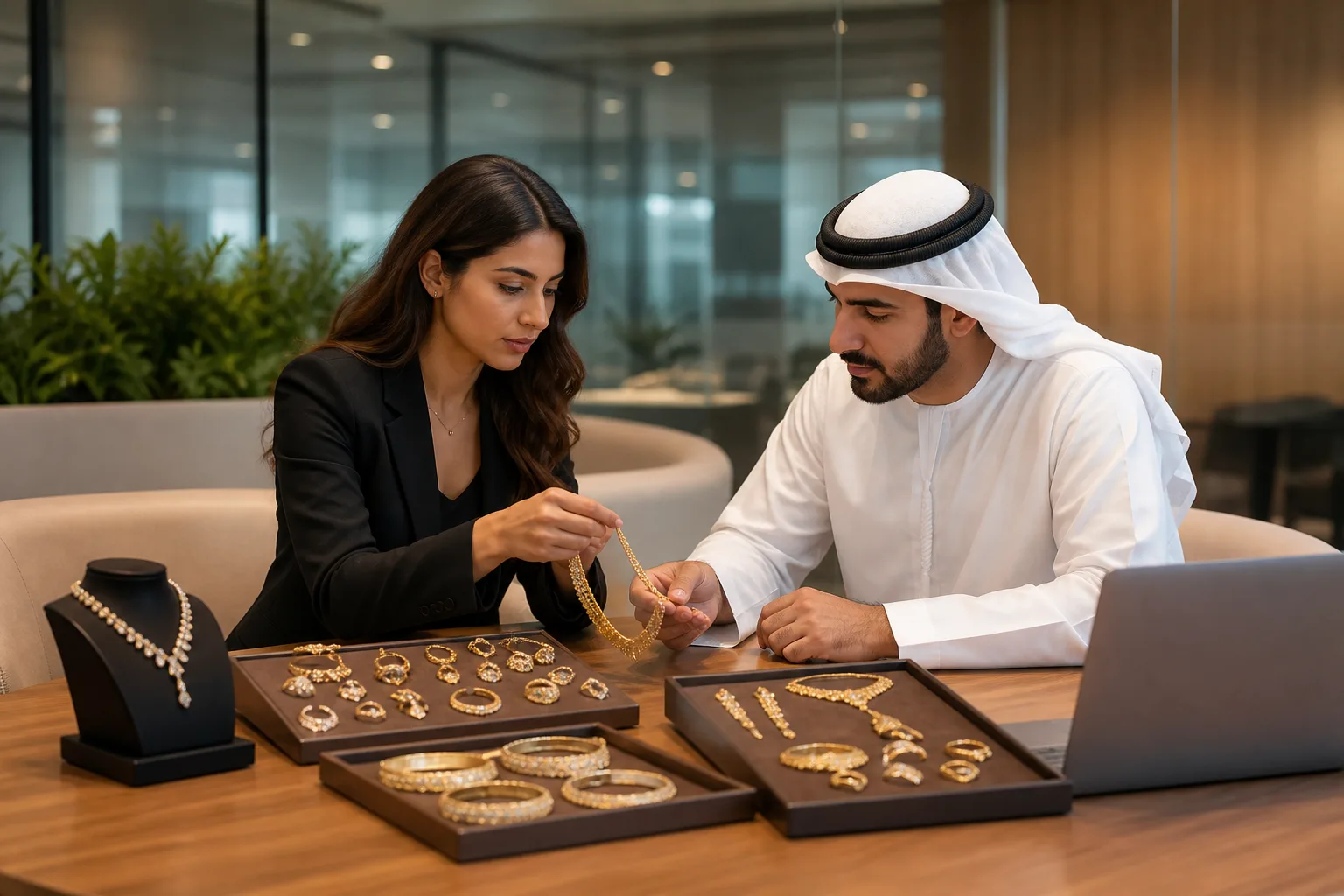
Dubai is one of the world's top three gold and jewellery trading hubs, handling billions of dollars in annual transactions through a mature, well-regulated market. For traders looking to establish a foothold in one of the most active precious metals and gemstone markets globally, the commercial case is straightforward.
According to IMARC Group, the UAE jewellery market continues on a strong growth trajectory, supported by rising tourist arrivals, a large expatriate population, and deep wholesale re-export activity across the GCC, Africa, and Asia. Dubai's Gold Souk alone draws millions of visitors annually and remains a benchmark for global gold retail pricing.
- UAE is consistently ranked among the world's top gold re-export centres
- Dubai handles a significant share of global rough diamond trade flows
- Tourism-driven jewellery spend remains a primary revenue driver for retail operators
- The Dubai Gold Souk hosts over 300 retailers across a single trading district
- Re-export volumes to GCC, Africa, and South Asia underpin wholesale demand year-round
Demand is structural, not cyclical. The combination of zero import duty on gold, a stable currency, and world-class logistics infrastructure through DP World makes Dubai a natural settlement point for international jewellery trade flows.
Free Business Setup Cost Calculator
Calculate NowWhat Jewellery Trading Activity Code 4773.11 Covers
Activity code 4773.11 — Jewellery Trading — permits the retail and wholesale buying and selling of gold, silver, platinum, diamonds, gemstones, and finished jewellery pieces. This includes fine jewellery, fashion jewellery, loose stones, and bullion-adjacent products sold as jewellery items.
The licence does not extend to manufacturing, assaying, or hallmarking. Those are distinct regulated activities requiring separate approvals. If your model involves production as well as trading, you will need to structure your activity list accordingly from the outset.
Regulatory oversight sits across several bodies. The Ministry of Economy outlines the federal framework, including anti-money laundering (AML) obligations that apply specifically to dealers in precious metals and stones. These are not optional — they carry reporting requirements, customer due diligence obligations, and registration with the UAE's goAML platform under Federal Decree-Law provisions. Operators who treat AML compliance as an afterthought create material legal exposure.
Business Model and Target Customers

The activity supports multiple commercial models operating in parallel. Most successful operators in Dubai run more than one.
| Model | Description |
|---|---|
| B2B wholesale | Supplying souk retailers, regional importers, and jewellery chains across the GCC and beyond |
| B2C retail | Tourist-facing boutiques, mall concessions, and direct-to-consumer online sales |
| Re-export | Sourcing finished pieces or loose stones from India, Italy, or Turkey; consolidating and redistributing into African and Asian markets |
| E-commerce | A growing channel with specific customs documentation and VAT treatment requirements |
On VAT, the Federal Tax Authority applies the standard 5% rate to domestic jewellery sales. Certain exports may qualify for zero-rating, but the documentation requirements are precise. Register early and get the VAT position confirmed before your first transaction.
Business Activities List
Explore Over 2,500+Regulatory and Compliance Considerations
Jewellery trading sits within a closely monitored compliance environment in the UAE. The AML/CFT framework for dealers in precious metals and stones is enforced at the federal level. Obligations include customer due diligence, transaction monitoring, and mandatory registration — non-compliance carries significant penalties.
Hallmarking and quality standards for gold and precious metals are enforced by the Emirates Authority for Standardisation (ESMA). Products sold domestically must meet prescribed purity and marking requirements.
For import and export, documentation is processed through Dubai Customs under the Ports, Customs and Free Zone Corporation (PCFC). Certificates of origin, valuation declarations, and HS code accuracy all matter — errors cause delays and can trigger audits.
A Meydan Free Zone licence permits international trade and re-export without restriction. For mainland UAE sales, you will either appoint a local distributor or explore the relevant dual-licensing route. Clarify this with your setup adviser before committing to a structure.
How to Set Up a Jewellery Trading Licence via Meydan Free Zone
The process is straightforward when documents are prepared correctly from the start.
| Step | Action | Key detail |
|---|---|---|
| 1 — Activity selection | Confirm activity code 4773.11 and select an FZ-LLC as your legal structure | Single-shareholder setups permitted with 100% foreign ownership |
| 2 — Trade name reservation | Check name availability against existing registrations | Must be done before submission |
| 3 — Document submission | Submit passport copies, proposed activity confirmation, and shareholder details | No physical office mandatory; flexi-desk satisfies address requirements |
| 4 — Licence issuance and banking | Receive your licence, then open a corporate bank account | Compliance documents in order from day one accelerates bank onboarding |
| 5 — Residence visa | Apply for UAE residence visas for shareholders and employees if required | Visa allocations are tied to your licence package |
Licence issuance typically takes three to five working days once documents are complete. Total setup costs depend on visa count, office requirements, and licence tier.
Ready to Launch Your Business in Dubai?
Let's ConnectConclusion
Dubai's jewellery trading sector offers genuine commercial depth — established trade infrastructure, strong re-export demand, and a regulatory framework that rewards compliant operators. The market is not without complexity; AML obligations, VAT structuring, and customs documentation require attention from day one. But for traders who come prepared, the entry barriers are low and the commercial upside is real.
A Meydan Free Zone licence provides a cost-efficient, fast entry point with full foreign ownership and no requirement for a local partner. Speak to the Meydan Free Zone team to confirm your activity scope and get a precise cost breakdown for your jewellery trading setup.