
Table of Contents
Frequently Asked Questions
What is activity code 1811.03 and what does it cover
Activity code 1811.03 refers to Printing On Labels Or Tags and covers three primary industrial printing technologies: lithographic, gravure, and flexographic printing. Each method is suited to different volume levels and substrate requirements.
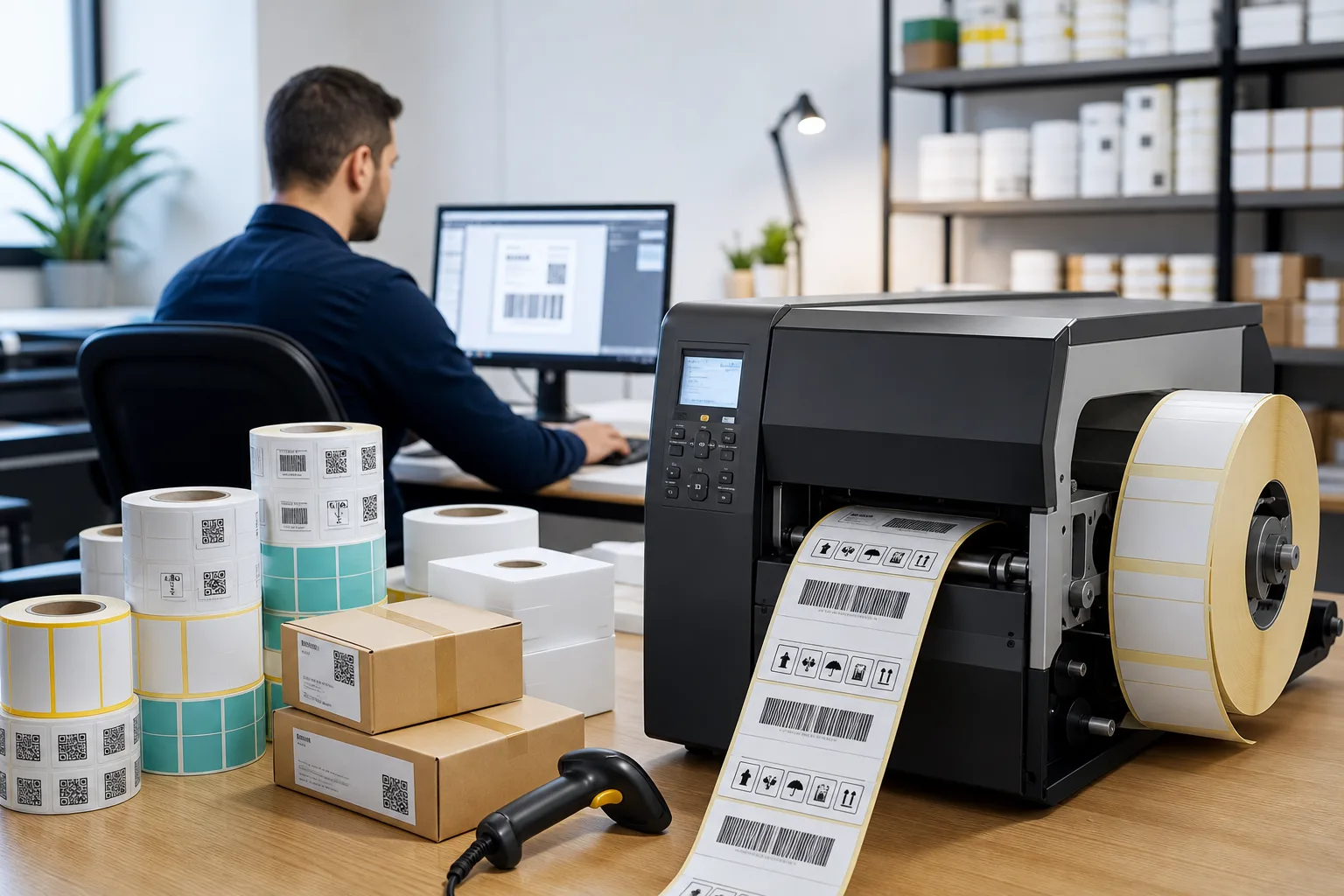
The activity encompasses a wide range of output, including product identification labels, barcode and QR tags, garment and care labels, compliance and regulatory labels, and logistics shipping labels. It is classified as an industrial and manufacturing activity under UAE licensing frameworks.
Why is demand for label and tag printing considered structural rather than cyclical in Dubai
Every product on a retail shelf, every parcel moving through a logistics hub, and every garment exported from a UAE facility requires professionally produced, compliant labelling. This need exists regardless of broader economic conditions, making demand structural rather than tied to seasonal or cyclical fluctuations.
Additional structural drivers include tightening regulatory labelling requirements across the GCC — particularly in food, health, and chemical categories — as well as the rapid expansion of e-commerce, which has increased demand for shipping and barcode labels at scale. Brand owners are also investing more in label quality as a point-of-sale differentiator.
What printing methods are covered under this business activity and how do they differ
Lithographic printing delivers high-quality output and is cost-effective at volume, making it well suited to product labels requiring detailed graphics and colour accuracy. Gravure printing is designed for very high-volume, continuous production runs and is common in flexible packaging and premium label work.
Flexographic printing is the most versatile and fastest method, and is the dominant technology for barcode labels, shipping tags, and food packaging labels. Choosing the right method depends on your target customers' volume requirements and the substrates involved.
Who are the primary target customers for a label and tag printing business in Dubai
The business model is fundamentally B2B, with volume-based contracts forming the commercial backbone. Key customer segments include food processors operating in industrial zones, pharmaceutical distributors, apparel exporters, and e-commerce fulfilment operators.
These businesses require reliable supply, consistent quality, and competitive per-unit pricing. Repeat order cycles are the norm, providing revenue predictability. White-label production — printing for brands without attribution — is also common and commercially straightforward to structure.
What role does Dubai's logistics infrastructure play in supporting this industry
Dubai's position within global supply chains creates consistent throughput demand for compliant labelling. Infrastructure such as DP World's port and logistics network supports the movement of goods that all require professionally produced labels and tags.
The UAE's role as a re-export hub, combined with its concentration of FMCG manufacturers and logistics operators, means that label printing businesses benefit from multiple overlapping demand sources rather than reliance on a single sector.
What are the key market size indicators for label printing in the UAE and region
The Middle East and Africa label printing market is expanding at a compound annual growth rate above 4%, with the UAE among the leading contributors, according to Mordor Intelligence. The UAE packaging market more broadly is projected to grow steadily, driven by food, pharma, and e-commerce demand, as reported by IMARC Group.
UAE non-oil trade exceeded AED 2.2 trillion in 2023, with manufacturing and logistics as primary drivers, underlining the scale of the underlying economy that generates label and tag demand — figures cited by Invest in Dubai.
Can a label and tag printing business be set up through Meydan Free Zone
Yes. Activity code 1811.03 — Printing On Labels Or Tags can be licensed via Meydan Free Zone, which is identified in this guide as a viable licensing route for this specific activity. Free zone licensing can offer advantages in terms of setup speed, ownership structure, and cost.
However, because this is classified as an industrial and manufacturing activity, operators must ensure their licence structure accommodates the physical production element. A flexi-desk licence alone will not suffice if printing equipment is being operated on-site.
When does VAT registration become mandatory for a label and tag printing business in the UAE
According to the Federal Tax Authority, VAT registration is mandatory once a business's taxable supplies exceed AED 375,000 annually. Given that label and tag printing operates on volume-based B2B contracts, many operators will reach this threshold relatively quickly once trading begins.
It is advisable to plan for VAT compliance from the outset rather than retrofitting systems later. This includes invoicing practices, record-keeping, and understanding which supplies may be zero-rated or exempt under UAE VAT rules.
How to Start a Label and Tag Printing Business in Dubai
Every product on a shelf carries a label. Every parcel moving through a logistics hub carries a tag. Every garment exported from a UAE factory carries a care label that has to say the right things in the right languages. None of that is glamorous work, and none of it stops when the economy slows.
This guide covers what activity code 1811.03 lets you do, who buys the work, and how to set up your license through Meydan Free Zone. One thing to settle early: this counts as an industrial activity, so a flexi-desk will not cover machines running on site.
Key Stats at a Glance
| Activity code | 1811.03 |
|---|---|
| Activity name | Printing On Labels Or Tags (lithographic, gravure, flexographic and other) |
| What it covers | Product identification labels, barcode and QR tags, garment and care labels, compliance labels, logistics shipping labels |
| Classed as | Industrial and manufacturing activity, so your license must cover the production side |
| Labelling standards | Ministry of Economy with the Emirates Authority for Standardisation and Metrology (ESMA) |
| Market outlook | Middle East and Africa label printing market growing at a compound annual rate above 4%, with the UAE among the leading contributors – Mordor Intelligence |
| Packaging market | UAE packaging market set to grow steadily on food, pharma and e-commerce demand – IMARC Group |
| UAE non-oil trade | Over AED 2.2 trillion in 2023, driven by manufacturing and logistics – Invest in Dubai |
| VAT threshold | AED 375,000 in taxable supplies a year – Federal Tax Authority |
| Foreign ownership | 100% in Meydan Free Zone |
What This License Covers

Activity code 1811.03 covers three industrial printing methods, each suited to different volumes and materials:
- Lithographic printing: high quality and cheap at volume, used for product labels that need fine graphics and accurate colour.
- Gravure printing: built for very high volume continuous runs, common in flexible packaging and premium label work.
- Flexographic printing: the fastest and most flexible of the three, and the standard choice for barcode labels, shipping tags and food packaging labels.
What comes off those presses is product identification labels, barcode and QR tags, garment and care labels, compliance labels and logistics shipping labels. Pick your method based on the volumes your target customers run and the materials they print on, because that choice decides what machines you buy.
Who Your Clients Will Be
This is a B2B trade built on volume contracts. Your buyers in Dubai are:
- Food processors working out of the industrial zones
- Pharmaceutical distributors
- Apparel exporters
- E-commerce fulfilment operators
What they want is reliable supply, consistent quality and a competitive price per unit. Repeat orders are the norm, which is what makes the revenue predictable. White-label work, printing for brands without your name on it, is common and simple to arrange.
Margins are thin by nature. You make money on repeat volume and on keeping the presses busy, not on any single order.
Mainland or Free Zone
| Factor | Mainland (DET) | Free Zone (Meydan Free Zone) |
|---|---|---|
| Who you sell to | Open UAE market | Contract, export and re-export work |
| Foreign ownership | Set by DET rules for the activity | 100% yours |
| Workspace | Industrial premises needed for production | Flexi-desk for admin; a unit or warehouse for machines |
| Labelling standards | Ministry of Economy and ESMA rules apply | Ministry of Economy and ESMA rules apply |
| Setup route | Apply through DET | Apply online, remote setup possible |
A free zone license keeps ownership and setup simple, and it suits work that moves in and out of the country. A mainland license from the Department of Economy and Tourism makes more sense if most of your customers are local and you want to sell straight into that market. Let your clients decide it, not the price.
[blockCTACostCalculator]
Step by Step Setup Guide
- Step 1, confirm your activity: Pick code 1811.03 from the Meydan Free Zone approved list. If you also plan to trade or import and export printed material, check whether you need a dual-activity license.
- Step 2, choose your workspace: A flexi-desk covers the admin and commercial side. If you plan to run presses inside the free zone you need a physical unit or warehouse, so measure your machine footprint before you commit.
- Step 3, prepare your documents: A passport copy for each shareholder, the completed application form, and for manufacturing activities a short business plan covering what you will produce and who will buy it.
- Step 4, submit and pay: Costs move with license type and how many visas you take. Use the cost calculator to model your first-year outlay before you commit.
- Step 5, sort visas and banking: Investor and employee visas can be processed in the same cycle as the license. The corporate bank account follows once the license is issued.
Compliance and What You Need in Place
Workspace and license type
Activity 1811.03 is an industrial and manufacturing activity. Your license structure has to cover the physical production side. A flexi-desk license on its own will not do if you are running printing machines on site.
Labelling standards
Labelling in the UAE is governed by the Ministry of Economy together with the Emirates Authority for Standardisation and Metrology. Labels for food, pharmaceutical or chemical products must meet set rules on content, language and format under UAE and GCC technical regulations. Learn those rules properly. If a compliance label does not conform, the customer's problem can come back to the printer.
Imports and customs
Inks, substrates and machines you bring in go through customs procedures and may carry duty. Work with your freight agent and check tariff codes with the Ports, Customs and Free Zone Corporation before you order, because a press stuck at the port earns nothing.
VAT and books
Register for VAT with the Federal Tax Authority once your taxable supplies pass AED 375,000 a year. On volume B2B contracts most printers cross that line quickly, so set up invoicing and record-keeping properly at the start instead of fixing it later.
Market Opportunity
Label and tag printing sits where manufacturing, logistics and retail meet, which are three pillars of Dubai's economy. It serves every industry that moves physical goods: food and beverage, pharmaceuticals, apparel, electronics and fast-moving consumer goods.
Several things are pushing demand up at once. E-commerce has multiplied the need for shipping and barcode labels. Labelling rules across the GCC are tightening, particularly for food, health and chemical products, which turns compliance into mandatory work for producers. Brand owners are also spending more on label quality to stand out on the shelf.
Mordor Intelligence puts the regional label printing market on a sustained climb, with the UAE among the leading contributors, helped by its role as a re-export hub and its cluster of FMCG manufacturers and logistics operators. DP World's port and logistics network keeps the goods moving, and all of them need labels. UAE non-oil trade passed AED 2.2 trillion in 2023 on figures cited by Invest in Dubai, which is the scale of economy generating that work.
Conclusion
Label and tag printing is a durable, volume-driven trade with clear demand across Dubai's manufacturing, logistics and retail base. It is not a high-margin business, but it is a high-repeat one with stable contracts, and tightening supply chain rules only point demand in one direction.
Meydan Free Zone offers a clear licensing path under code 1811.03, with flexibility on how you set up your workspace. Settle your activity scope, your floor space and your cost structure early. In this trade the operators who get the setup right are the ones who make the margins work.
[blockCTAContact]
References
- IMARC Group
- Mordor Intelligence
- Invest in Dubai
- Ministry of Economy
- DP World
- Ports, Customs and Free Zone Corporation
- Federal Tax Authority