Table of Contents
Frequently Asked Questions
What does activity code 3312 cover for a machinery repair business in Dubai
Activity code 3312 covers the repair and maintenance of industrial machinery, mechanical components, and related equipment. It sits within the manufacturing and industrial services classification and is broad enough to encompass routine servicing through to full mechanical overhaul.
Specific services that fall under this code include mechanical overhaul, hydraulic system repair, electrical component servicing, and preventive maintenance contracts. Equipment types covered range from cranes, compressors, and conveyors to hydraulic presses and warehouse forklifts.
Because the scope spans multiple industrial verticals, a single licence under code 3312 can serve construction firms, manufacturers, logistics operators, oil and gas contractors, and facility management companies simultaneously.
Is there strong demand for machinery repair services in Dubai
Yes. Dubai's expansion across construction, manufacturing, logistics, and energy sectors creates sustained, non-discretionary demand for specialist machinery repair. Equipment breakdowns do not pause when budgets tighten — in fact, operators often extend asset life rather than replace capital equipment, which increases repair frequency.
According to IMARC Group, the Middle East MRO (maintenance, repair, and overhaul) market is on a consistent growth trajectory driven by industrial diversification and infrastructure investment across the Gulf. Dubai's role as a regional logistics and trade hub amplifies this demand further.
High equipment utilisation rates across ports, warehouses, construction sites, and manufacturing plants translate directly into higher breakdown frequency and tighter turnaround requirements — conditions that favour established repair operators.
Who are the typical customers for a machinery repair business in Dubai
Customers are almost entirely B2B. The primary client base includes construction firms managing heavy plant equipment, manufacturers running production lines, and logistics operators maintaining forklifts and warehouse machinery.
Oil and gas contractors and facility management companies responsible for building systems also represent significant customer segments. These clients typically prioritise reliability and response time over price, which supports healthier margins compared to consumer-facing trades.
Long-term retainer contracts with industrial clients are common in this sector and provide a stable recurring revenue base from early in the business lifecycle.
What does the revenue model look like for a machinery repair business
A machinery repair business under code 3312 typically operates on two primary revenue tracks. Job-based billing covers reactive repairs — a client reports a breakdown, the operator fixes it, and invoices accordingly. This provides immediate cash flow but can be unpredictable.
Retainer maintenance contracts provide recurring revenue, usually structured on a monthly or quarterly basis, covering scheduled servicing and priority response commitments. These contracts deliver the revenue stability that makes the business commercially sound from year one.
A third revenue layer comes from spare parts supply, where operators stock and sell components alongside labour, adding a margin on parts to each job. Combining all three streams — reactive repairs, retainer contracts, and parts supply — creates a diversified and resilient income structure.
Can a foreign national own 100% of a machinery repair business in Dubai
Yes. 100% foreign ownership is permitted when setting up through Meydan Free Zone — no local sponsor or Emirati partner is required. This is a significant structural advantage for international entrepreneurs and investors entering the Dubai market.
Free zone licensing gives the business full operational control and simplifies profit repatriation. It is particularly well suited to B2B industrial services operations that do not require a physical retail presence or direct consumer-facing activity.
What are the VAT obligations for a machinery repair business in Dubai
VAT registration is mandatory once a business's taxable turnover exceeds AED 375,000. Registration and ongoing compliance are managed through the Federal Tax Authority.
For a B2B operation billing industrial clients at commercial rates, reaching this threshold can happen relatively quickly. It is advisable to plan for VAT compliance from the outset rather than treating it as a future consideration, as late registration carries penalties.
Standard UAE VAT is set at 5%. Most B2B industrial services are taxable supplies, so registered businesses must charge VAT on invoices and file periodic returns with the Federal Tax Authority.
What is the difference between a free zone licence and a mainland licence for this type of business
A free zone licence permits B2B operations across the UAE and is the structure discussed in this guide for setting up through Meydan Free Zone. It allows the business to serve industrial clients throughout the emirate and wider UAE without requiring a local sponsor.
However, a free zone licence does not cover direct retail or consumer-facing work. If a business wanted to operate a walk-in repair shop serving individual members of the public, a separate mainland licence issued through the Department of Economy and Tourism would be required.
For most machinery repair businesses targeting construction firms, manufacturers, and logistics operators, a free zone licence is sufficient and offers the added benefit of full foreign ownership.
How significant is Dubai's industrial base as a market for machinery repair services
Dubai hosts over 5,000 industrial and manufacturing establishments according to the Dubai Statistics Center, representing a substantial installed base of machinery and equipment that requires ongoing maintenance and repair.
Invest in Dubai identifies industrial services as a priority sector under the emirate's long-term economic diversification agenda, signalling continued government support and investment in the conditions that drive demand for repair operators.
The combination of a large existing industrial base, high equipment utilisation rates, and a policy environment favouring industrial growth makes Dubai one of the more commercially attractive locations in the region for a machinery repair business.
How to Start a Machinery Repair Business in Dubai
Machines break. They break whether the economy is good or bad, and when money is tight they break more often, because owners keep old kit running instead of buying new. That is the whole logic of this business, and it is why machinery repair holds up when other trades do not.
This guide covers what activity code 3312 lets you do, who pays for the work, how the money comes in, and how to get licensed through Meydan Free Zone. Every crane, compressor, conveyor and hydraulic press in the emirate eventually needs somebody qualified to fix it.
Key Stats at a Glance
What This License Covers

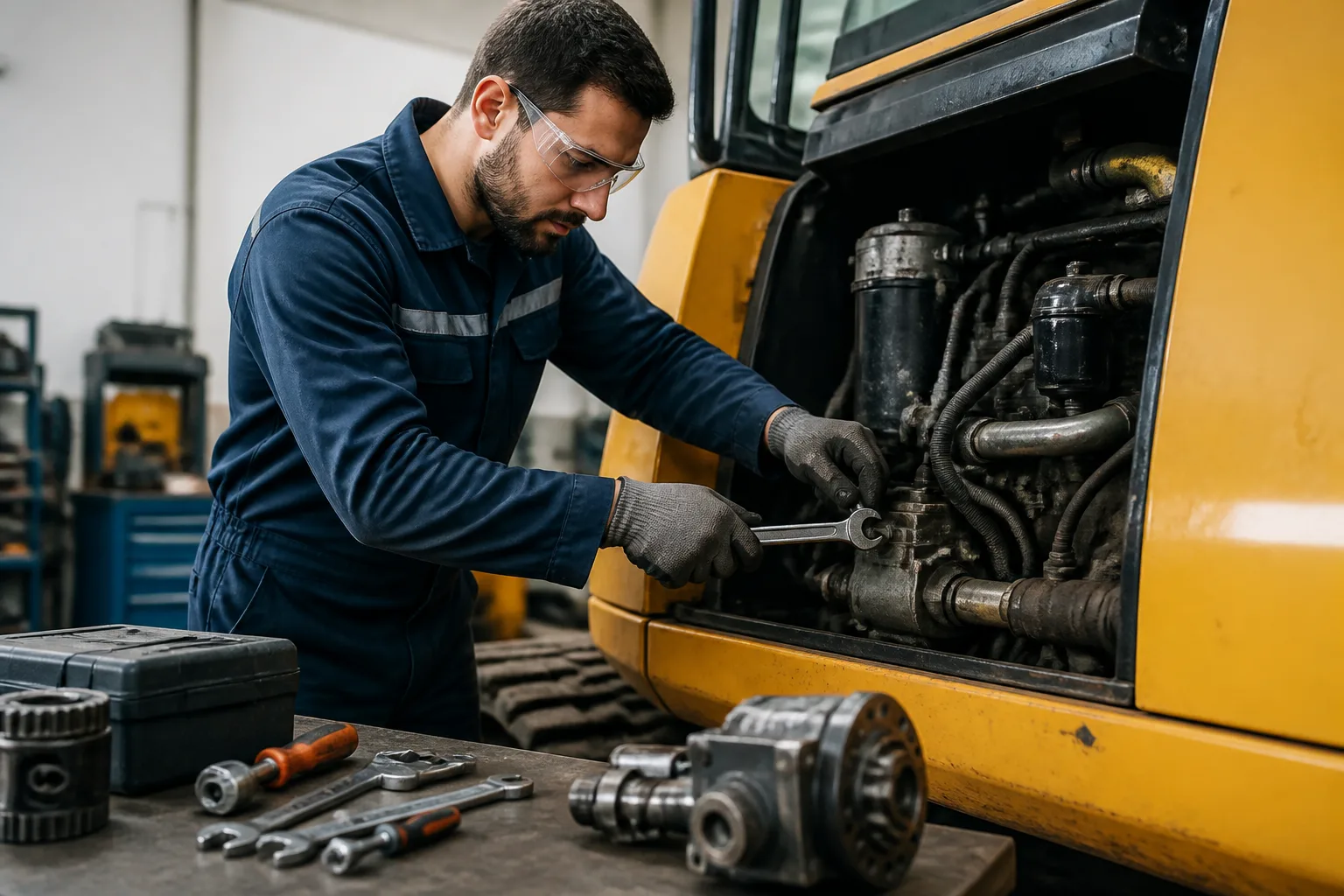
Activity code 3312 covers the repair and maintenance of industrial machinery, mechanical components and the plant around them. It sits under manufacturing and industrial services, and it stretches from a routine service visit all the way to a full mechanical overhaul.
Day to day that means mechanical overhaul, hydraulic system repair, electrical component servicing and preventive maintenance contracts, across cranes, compressors, conveyors, hydraulic presses and warehouse forklifts. The scope is wide enough that one license can serve construction firms, manufacturers, logistics operators, oil and gas contractors and facility managers at the same time, which is unusual and worth using.
Who Your Clients Will Be
This is a business to business trade from top to bottom.
- Construction firms running heavy plant on active sites
- Manufacturers keeping production lines moving
- Logistics operators with forklifts and warehouse machinery
- Oil and gas contractors
- Facility management companies looking after building systems
These clients care about reliability and response time far more than they care about your day rate, which is what protects the margin in this trade.
Money comes in on three tracks. Job-based billing covers reactive repairs: a client calls, you fix, you invoice, and the cash lands fast but the volume is hard to predict. Retainer maintenance contracts, usually monthly or quarterly, cover scheduled servicing and priority response, and they are the reason this business can be steady from year one. Spare parts supply adds the third layer, where you stock components and put a margin on parts alongside the labour. Run all three and the income holds up even when one goes quiet.
Mainland or Free Zone
A free zone license lets you work B2B right across the UAE, which covers almost everyone in this trade. If you want a walk-in repair shop serving members of the public, that is consumer-facing work and it needs a mainland license from the Department of Economy and Tourism instead. Let your clients decide it, not the price.
[blockCTACostCalculator]
Step by Step Setup Guide
- Step 1, confirm your activity code: Select 3312 and check the permitted scope with the Meydan Free Zone team. Some operators pair it with related maintenance activities, so clarify what one license covers before you go further.
- Step 2, pick your license package: A flexi-desk suits consultancy-led or project-management work. A physical workshop or a team of technicians on site calls for a larger unit or an outside premises arrangement.
- Step 3, send in your setup documents: Passport copies, a short business plan summary and an activity declaration. You do not have to be in Dubai to do it.
- Step 4, get your license and open a bank account: Once the license is issued you can open a UAE corporate account and apply for investor and employee visas under your allocation.
Meydan Free Zone supports 100% foreign ownership with no paid-up capital for most activity types, which is useful when you want to keep the structure lean and put the money into tools instead.
Compliance and What You Need in Place
License scope
A free zone license permits B2B work across the UAE. Direct retail or consumer-facing repairs sit outside it and need a separate mainland license. Know which side of that line your business model falls on before you take a booking.
VAT and books
Register for VAT with the Federal Tax Authority once taxable turnover passes AED 375,000. Billing industrial clients at commercial rates gets you there fast, so plan for it from the outset rather than treating it as next year's problem. The standard rate is 5% and most B2B industrial services are taxable supplies.
Staff and MOHRE
Hiring technicians brings Ministry of Human Resources and Emiratisation rules into play: proper employment contracts, visa quotas that match your license package, and Emiratisation duties as headcount grows. Technical staff need documentation that matches the work they will sign off.
Workshop and tooling
Depending on the scope of work you take on, you may need physical workshop space rather than a desk. Meydan Free Zone offers options from flexi-desk through to larger operational units, so match the space to the jobs you intend to quote for.
Market Opportunity
The base is already there. Dubai hosts over 5,000 industrial and manufacturing establishments according to the Dubai Statistics Center, and every one of them runs machinery that wears out on a schedule. Construction, manufacturing, logistics and energy all keep expanding across the emirate, and none of that activity is discretionary from a maintenance point of view. Kit stops working and somebody has to come out.
Dubai's role as a regional logistics and trade hub sharpens the effect. Ports, warehouses, construction sites and plants run their machines hard, and hard use means more breakdowns and tighter turnaround windows, which favours operators who can actually show up. IMARC Group puts the Middle East MRO market on a sustained growth path driven by industrial diversification and infrastructure spending across the Gulf, while Invest in Dubai names industrial services a priority sector under the emirate's long-term diversification plans. Demand and policy are pointing the same way.
Conclusion
Machinery repair is about as grounded as a business gets. The customers are named and countable, the work repeats, and the regulatory path is short. There is nothing speculative about it.
Meydan Free Zone gives you a practical route to a license with full foreign ownership and a setup you can finish without spending weeks on the ground. Three things decide how well it goes: the right activity scope confirmed up front, retainer contracts signed early rather than late, and enough workshop space for the jobs you actually want. Sort those and the phone does the rest.
[blockCTAContact]