Table of Contents
Frequently Asked Questions
What activity code covers relays and industrial controls repair in Dubai
The relevant activity code is 3314.04 — Repair and Maintenance of Relays and Industrial Controls. This code covers a clearly defined technical scope including fault diagnosis, repair, overhaul, calibration, and testing.
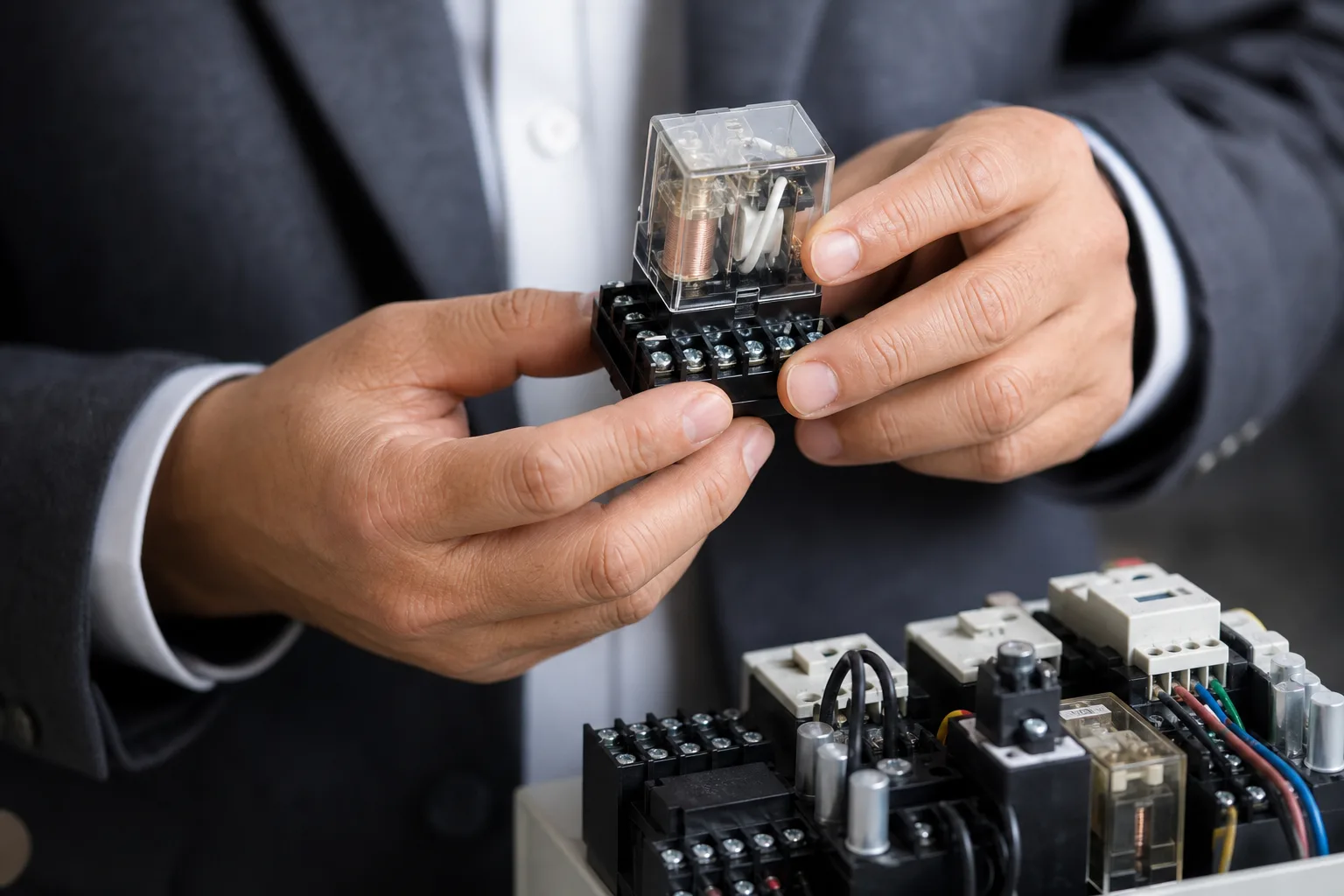
Equipment falling under this code includes relays, programmable logic controllers (PLCs), motor controllers, variable frequency drives (VFDs), switchgear, and industrial control panels. Ensuring your licence is issued under the correct activity code is essential for legal compliance and for winning contracts with regulated clients such as utilities and oil and gas operators.
Why is there strong demand for industrial controls repair in Dubai and the GCC
Demand is driven by two converging forces: the continued expansion of the UAE's manufacturing, energy, and infrastructure sectors under the national industrial strategy, and ongoing supply chain pressure that has extended lead times on new industrial control components from global suppliers.
When replacement parts carry long lead times and significant cost, a qualified local repair provider can resolve faults faster and at a fraction of the capital outlay. This is why procurement managers across the region increasingly prefer qualified repair providers over direct replacement.
Dubai's role as a regional logistics and services hub also means a business licensed there can serve clients across the GCC without needing separate entities in each market, amplifying the addressable opportunity considerably.
What is the projected growth rate of the Middle East industrial controls market
According to IMARC Group, the Middle East industrial controls and automation market is projected to grow at a compound annual rate exceeding 6% through 2030. This growth is underpinned by sustained infrastructure investment and the ongoing regional push to diversify economies away from oil dependency.
Mordor Intelligence similarly notes that the Middle East industrial automation market is on a sustained growth trajectory. These figures indicate a structurally expanding customer base for specialist repair and maintenance businesses entering the market now.
Who are the primary customers for a relays and industrial controls repair business in Dubai
Primary customers include manufacturing plants, power utilities, oil and gas operators, construction contractors, and facility management companies. These clients typically operate under tight uptime requirements, which creates urgency and justifies premium pricing for reliable, fast-turnaround repair work.
Secondary revenue sources include OEM warranty service contracts, support for industrial equipment resellers, and spare parts supply to other maintenance contractors. Dubai hosts hundreds of active industrial facilities across Jebel Ali, Dubai Industrial City, and Al Quoz — all requiring ongoing controls maintenance, providing a dense local customer base.
What are the main revenue streams for this type of repair business
The core revenue stream is repair and overhaul fees, charged per job or on a time-and-materials basis. Margins are shaped by technical complexity, turnaround speed, and the limited availability of competing qualified specialists in the market.
Annual Maintenance Contracts (AMCs) represent the most strategically valuable revenue layer. Clients with critical control systems prefer a contracted maintenance partner over ad hoc sourcing, and a portfolio of AMC clients creates recurring, forecastable income. Service delivery can be structured as workshop-based repair, on-site field service, or a combination of both.
What free zone is recommended for setting up this business in Dubai
The article specifically covers establishing a relays and industrial controls repair business via Meydan Free Zone in Dubai. Free zone licensing in Dubai allows businesses to operate with defined advantages including streamlined setup procedures and the ability to serve regional clients.
Because Dubai functions as a regional logistics and services hub, a business licensed there can serve clients across the GCC without establishing separate legal entities in each country — a significant commercial advantage for a repair operation targeting regional industrial facilities.
When does VAT registration become mandatory for this business in the UAE
VAT registration is mandatory once a business's taxable turnover exceeds AED 375,000 annually, as set by the Federal Tax Authority. Businesses approaching or exceeding this threshold must register and begin charging and remitting VAT accordingly.
For a repair business targeting industrial clients — who are typically VAT-registered themselves — being VAT-registered is also commercially important, as it signals a legitimate, compliant operation and allows clients to recover input VAT on invoices received.
How significant is the UAE manufacturing sector as a driver of demand
UAE manufacturing contributed approximately 9% of GDP, and the sector is targeted for significant further expansion under the UAE's industrial strategy, as noted by Invest in Dubai. This makes manufacturing one of the most important structural drivers of demand for industrial controls repair services.
As facilities age and the installed base of relays, PLCs, and switchgear grows, the volume of equipment requiring periodic maintenance, calibration, and repair increases in parallel. This creates a compounding demand dynamic that benefits specialist repair businesses operating in the emirate over the long term.
How to Start a Relays and Industrial Controls Repair Business in Dubai
When a control panel fails in a factory or a pumping station, the plant stops. Somebody has to work out which relay or drive has gone, fix it, and get the line running again. In Dubai that somebody is in short supply, and the factories, utilities and oil and gas sites that need the work keep growing.
This guide covers what activity code 3314.04 lets you do, who pays for the work, how to set up your license through Meydan Free Zone, and what you need in place before you start. It is a technical niche with few real competitors, which is exactly why it is worth looking at.
Key Stats at a Glance
What This License Covers

Activity code 3314.04, Repair and Maintenance of Relays and Industrial Controls, covers a tight technical scope: fault diagnosis, repair, overhaul, calibration and testing.
The kit you work on includes relays, programmable logic controllers, motor controllers, variable frequency drives, switchgear and industrial control panels. Getting your license issued under the right code matters more here than in most trades, because utilities and oil and gas buyers check it before they let you near a site.
Who Your Clients Will Be
These are buyers who cannot afford downtime, which is why they pay properly and quickly for good work.
- Manufacturing plants
- Power utilities
- Oil and gas operators
- Construction contractors and facility management companies
There is a second tier worth having: OEM warranty service contracts, support work for industrial kit resellers, and spare parts supply to other maintenance contractors.
Money comes from three places. Repair and overhaul fees are the core, charged per job or on time and materials, and your margin depends on how hard the job is, how fast you turn it round, and how few people can do it. Annual maintenance contracts are the layer worth building toward, because a client with critical control systems would rather have a named partner than ring around every time something breaks. A portfolio of those contracts gives you income you can forecast. Parts sourcing adds a third margin, and relationships with both authorised distributors and independent component suppliers have a place depending on what the client will accept.
Positioning matters too. A general electrical contractor cannot serve this niche properly. Certified technicians and a track record with recognised brands let you charge what commodity repair work never could.
Mainland or Free Zone
Activity 3314.04 sits under repair and maintenance of industrial machinery, so it works on either side. A free zone license is the usual choice for international founders because you keep the company outright and setup is quicker. A mainland license from the Department of Economy and Tourism makes more sense if most of your work will be on client sites across the emirate. Let your clients decide it, not the price.
[blockCTACostCalculator]
Step by Step Setup Guide
- Step 1, confirm your activity code: Check that code 3314.04 is in your license package and covers the full range of services you plan to sell.
- Step 2, book your trade name and send in documents: Passport copies, proof of address, and a basic business plan if the review team asks for one.
- Step 3, take initial approval and sign the license agreement: This is the point where Meydan Free Zone confirms your file and the paperwork becomes formal.
- Step 4, get your trade license: The whole stage can be done remotely, so you do not need to be in Dubai for it.
- Step 5, open a corporate bank account: Use a UAE-regulated institution. The Central Bank of the UAE keeps a directory of licensed banks, and timelines vary by bank and by applicant.
- Step 6, sort visas and workspace: Apply for investor and employee visas. A flexi-desk inside Meydan Free Zone covers the address side for most license types at the start.
Compliance and What You Need in Place
Licensing
There is no dedicated regulator for industrial controls repair in the UAE. Standard trade license conditions govern the work, plus civil works permissions where they apply to a particular site. That makes this one of the lighter regulatory loads in the industrial services space.
Corporate tax
Under the UAE corporate tax regime, qualifying free zone businesses get a 0% rate on qualifying income. Whether your revenue profile fits is worth checking with a tax adviser rather than assuming, because the definition of qualifying income is narrower than it first looks.
VAT
Register for VAT with the Federal Tax Authority once taxable supplies pass AED 375,000 a year. Voluntary registration below that line is also available, and it often makes sense here: your clients are VAT-registered industrial buyers who want to recover input VAT on your invoices, and being registered signals you are a real operation.
Staff and visas
Technician visas go through MOHRE, which also sets Emiratisation duties. For a small free zone operation at the early stage the duties are limited, but review where you sit as headcount grows rather than waiting to be told.
Technical credibility
Nothing in the rules forces you to hold certifications, but the market does. Utilities and oil and gas buyers want certified technicians and evidence you have handled their brands of switchgear before. Treat it as part of your compliance spend.
Market Opportunity
UAE manufacturing contributed roughly 9% of GDP, and Invest in Dubai points to further expansion under the national industrial strategy. As plants age and the installed base of relays, PLCs and switchgear grows, the volume of kit needing calibration and repair grows with it.
Repair also has a structural advantage right now. Lead times on new industrial control components from global suppliers are long, and replacement costs are heavy. A local operation that can fix a fault this week rather than order a part for next quarter wins on both time and money, which is why procurement teams across the region increasingly prefer a repair provider over a replacement.
IMARC Group projects the Middle East industrial controls and automation market to grow above 6% a year through 2030, and Mordor Intelligence describes the regional industrial automation market as on a sustained growth path. Dubai's position as a regional services hub means a company licensed here can serve GCC clients without setting up separately in each country.
Conclusion
Relays and industrial controls repair is a specialised, low-competition niche with steady repeat demand across Dubai's industrial base. Supply chain pressure, ageing plant and the cost of replacement all push work your way.
Meydan Free Zone gives you full ownership, a remote setup route and access to the UAE and GCC market from day one. Get your activity code right, build a base of annual maintenance contracts, and hire technicians you can put in front of a utility. The rest follows.
[blockCTAContact]