
Table of Contents
Frequently Asked Questions
What is activity code 4923.88 and what does it cover in Dubai
Activity code 4923.88 — Animals Transport is a specific Dubai business activity classification that covers the ground and logistics-linked transport of live animals. It is distinct from a general freight or courier licence and carries its own welfare, handling, and documentation obligations.
The activity encompasses the transport of pets, livestock, exotic animals, and racehorses, including domestic ground transport, airport handling and airside coordination, temperature-controlled vehicle transport, and veterinary transfer services between clinics, quarantine facilities, or hospitals.
Why is Dubai a commercially attractive location for an animal transport business
Dubai combines a high-spending, pet-owning expatriate population with a major equestrian industry and active livestock trade, making animal transport both in demand and underserved relative to general logistics services. Expatriates regularly require compliant, documented pet relocation services when arriving or departing the UAE.
The city's infrastructure reinforces the opportunity. DP World and Al Maktoum International Airport provide freight handling capacity that supports scaled live animal operations, including dedicated live animal facilities and cold-chain logistics. The GCC livestock import corridor and the UAE's equestrian sector — centred on Meydan Racecourse — add further consistent volume.
Which government bodies regulate animal transport businesses in the UAE
Animal transport in the UAE falls under the oversight of several regulatory bodies depending on your service format. The Ministry of Climate Change and Environment (MOCCAE) governs animal welfare standards, import and export permits for live animals, and CITES-related documentation for protected species. Any operator moving animals across UAE borders must comply with MOCCAE's framework.
The Roads and Transport Authority (RTA) classifies and regulates vehicles used for animal transport within Dubai. Specialist animal-carrying vehicles require appropriate classification and, in some cases, specific approvals before they can be used commercially.
Is an animal transport licence different from a standard freight or logistics licence in Dubai
Yes — activity code 4923.88 is not a general freight licence. It is specific to live cargo and carries distinct obligations that go well beyond standard logistics licensing. Operators must meet animal welfare legislation requirements, use specialist equipment, and employ trained animal handlers.
Attempting to operate animal transport under a general courier or freight licence would leave a business non-compliant with UAE regulations. The welfare, documentation, and vehicle requirements are sufficiently different that a dedicated activity code and corresponding approvals are necessary from the outset.
What types of animals and transport scenarios does this business activity typically serve
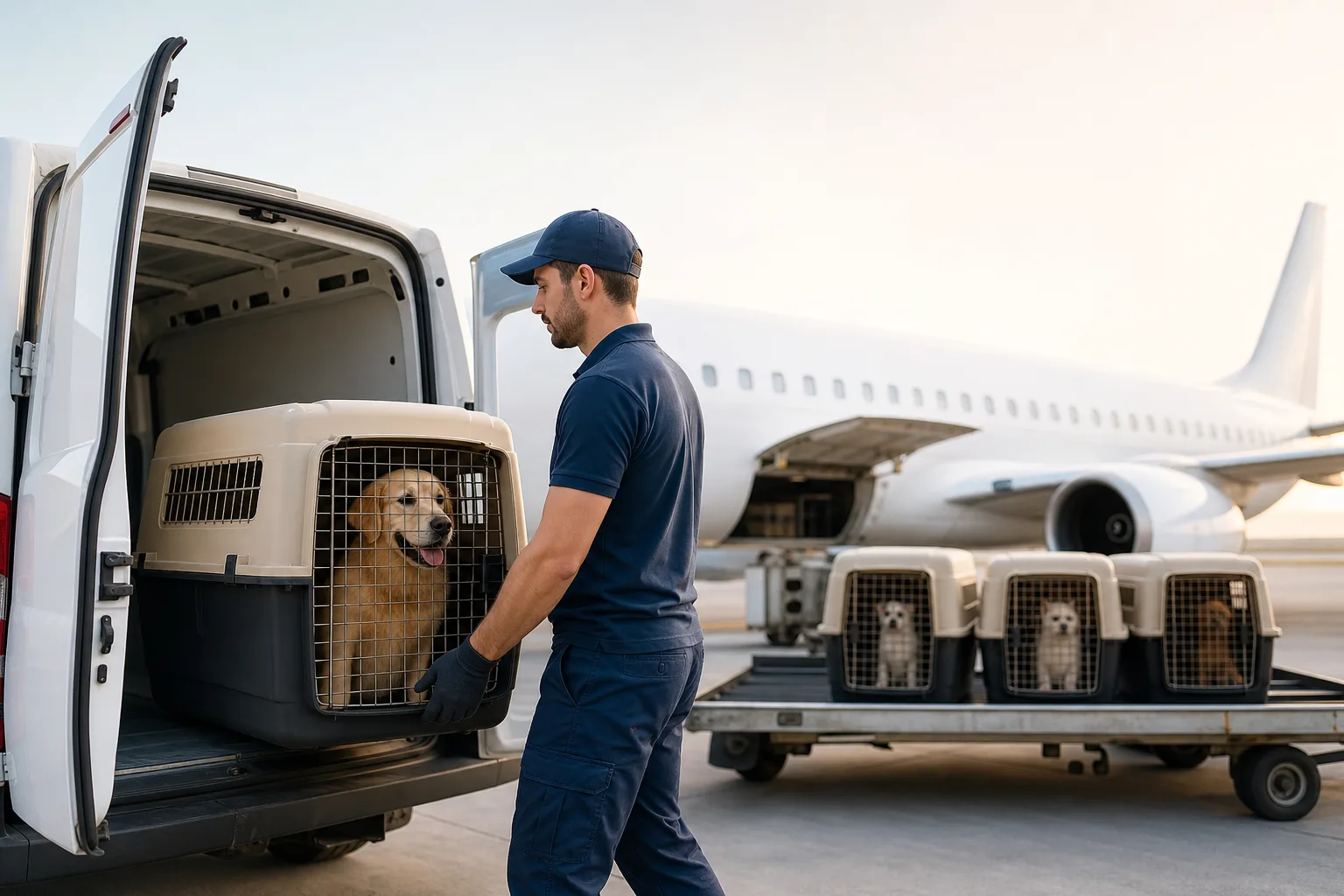
The activity covers a broad range of live animal transport scenarios. Common service formats include domestic ground transport of pets between residences, veterinary clinics, stables, or kennels; airport handling and airside coordination for international pet or livestock shipments; and temperature-controlled, ventilated vehicle transport for welfare-sensitive animals.
Beyond companion animals, operators may serve the equestrian sector — transporting racehorses across regional and international routes — as well as the livestock trade, which represents a significant multi-billion dollar GCC import corridor requiring compliant animal logistics.
What documentation is typically required when transporting animals in or out of the UAE
International animal movements require a structured set of documents to satisfy both UAE authorities and destination country requirements. Common requirements include health certificates issued by a licensed veterinarian, microchipping verification, and customs clearance documentation. For protected species, CITES permits managed through MOCCAE are mandatory.
Import and export permits for live animals must also be obtained through MOCCAE before cross-border movements take place. Operators should be prepared to coordinate with both UAE authorities and the relevant agencies of the origin or destination country to ensure full compliance at every stage of the journey.
What role does the UAE's logistics infrastructure play in supporting animal transport operations
Dubai's position as a global logistics hub provides animal transport operators with significant infrastructure advantages. Al Maktoum International Airport and Dubai International Airport together handle millions of tonnes of air freight annually, and both have facilities capable of supporting live animal shipments, including dedicated live animal handling areas.
DP World further extends the freight handling capacity available to operators working with sea or multimodal freight corridors. According to the Invest in Dubai portal, the UAE's logistics sector continues to attract substantial investment, with animal-related freight identified as a specialist growth segment within that broader market.
What specialist equipment and staffing considerations apply to an animal transport business in Dubai
Animal transport requires more than a standard commercial vehicle fleet. Operators must invest in temperature-controlled and ventilated vehicles appropriate to the species being transported, ensuring welfare conditions are maintained throughout the journey. Vehicle classification under RTA rules must reflect the specialist nature of the cargo.
Staffing is equally important. Trained animal handlers are required to manage live cargo safely and in compliance with UAE animal welfare legislation. For high-value animals such as racehorses or exotic species, additional expertise — and in some cases veterinary oversight — may be necessary to meet both regulatory requirements and client expectations.
How to Start an Animal Transport Business in Dubai
Dubai moves millions of animals each year. Racehorses fly in for the Dubai World Cup. Falcons travel with their owners across borders. Expat families relocate with pets. The logistics behind all of that movement is a licensed, regulated business with real commercial depth.
This guide covers the license you need, how to set up, who your clients will be, and what compliance looks like on the ground.
What an Animal Transport License Covers
An animal transport license covers the ground and air movement of live animals. That includes pets, livestock, and high-value animals such as racehorses and falcons. The activity spans two distinct areas: domestic transport within the UAE, and international import/export logistics involving customs clearance and cross-border permits.
These are not the same operation. Domestic transport is mainly road-based, regulated by the Roads and Transport Authority (RTA) and the Ministry of Climate Change and Environment (MOCCAE). International shipments involve MOCCAE import and export permits, airline coordination, and in some cases CITES documentation for protected species.
MOCCAE is the central authority for live animal movement in the UAE. You need their permits for every shipment, and their rules vary by species. Get familiar with their requirements before you apply for anything else.
| Activity | Animal transport (ground and air coordination, live animals) |
|---|---|
| Regulator | Ministry of Climate Change and Environment (MOCCAE); Roads and Transport Authority (RTA) for vehicle permits |
| Ownership | 100% foreign ownership available on mainland and in free zones |
| Jurisdiction options | Mainland (DET) or free zone – see comparison below |
| VAT threshold | AED 375,000 annual turnover – Federal Tax Authority |
Who Your Clients Will Be

The client base here is more varied than most people expect. Each segment has different needs, different procurement habits, and different service standards.
Expat pet owners
Dubai has one of the largest expat populations in the world, and many of them move with animals. Pet relocation is a steady, year-round segment. Clients need door-to-door coordination, vet documentation, and airline-approved crates. They pay well for reliability.
Equestrian and racing sector
Meydan Racecourse and the wider equestrian community in Dubai represent serious volume. Racehorses move regularly between the UAE, Europe, and the Far East. Private stables also need local transport between training facilities and competition venues. This segment demands specialist handling and a clean track record.
Falconry community
Falconry is part of UAE cultural heritage. Falcons travel with owners and also move through specialist clinics and breeding programmes. This is a niche within a niche, but it is well-funded and values discretion and expertise.
Veterinary clinics, zoos, and wildlife authorities
Government wildlife authorities, private zoos, and veterinary hospitals all need reliable live animal logistics. These clients run formal procurement processes. They want you on their approved vendor list before they call you.
Airlines and cargo handlers
Airlines carrying live animals need ground-side coordination at Dubai International and Dubai World Central. This is a B2B relationship, and it takes time to build. But once you are on an airline's approved handler list, the volume is consistent.
Mainland vs Free Zone: Which Setup Works for This Business
This is the biggest choice you will make when setting up. Let your clients decide it, not the price.
| Factor | Mainland (DET) | Free Zone (Meydan Free Zone) |
|---|---|---|
| Client access | Open UAE market, including government contracts | Mainly international clients and import/export operations |
| Office requirement | Physical office required | Flexi-desk options available |
| Cost profile | Higher setup and running costs | Lower entry cost; Dubai Trade License from AED 12,500 |
| RTA vehicle permits | Available directly | May need a mainland agent for road operations |
| MOCCAE permit eligibility | Direct application | Direct application |
| Foreign ownership | 100% permitted | 100% permitted |
Most operators serving the local UAE market, including pet owners, stables, and veterinary clinics, choose mainland. A mainland license from the Dubai Department of Economy and Tourism (DET) lets you work directly with UAE government bodies and sign contracts with local businesses without restrictions.
If your focus is international freight, import/export coordination, or you want to keep overheads low while you build the business, a free zone setup makes more sense. Meydan Free Zone offers 100% foreign ownership, a simple setup process, and a range of support services through mCore, mResidency, and mAssist that cover everything from banking to visa processing.
If you need to operate vehicles on Dubai roads and also handle international shipments, some operators run both a free zone entity and a mainland one. That adds cost and complexity. Only consider it if the volume justifies it.
Free Business Setup Cost Calculator
Calculate NowHow to Set Up: Step by Step
- Step 1, book your trade name: Use the DET e-Services portal for a mainland company, or the Meydan Free Zone portal for a free zone one. You can also check your company name availability before you apply.
- Step 2, pick your activity code: Confirm the code covers live animal transport in your chosen jurisdiction before you go further. Check the Business Activities List to verify which codes are available under your preferred structure.
- Step 3, get initial approval: Submit your application with shareholder documents, passport copies, and your chosen activity. Initial approval from DET or Meydan Free Zone comes before you can apply for sector-specific permits.
- Step 4, apply for your MOCCAE animal transport permit: This is a separate application to the Ministry of Climate Change and Environment. You will need to show your license, your vehicle specifications, and details of the animals you plan to transport. Species-specific rules apply.
- Step 5, get RTA vehicle permits: Vehicles used for live animal transport on Dubai roads need RTA approval. Standards cover temperature control, ventilation, and animal welfare. Have your vehicle specs ready before you apply.
- Step 6, open a business bank account: Have your license, lease agreement, and shareholder documents ready. Free zone companies sometimes find this step takes longer than expected. Business banking support through mCore can help you navigate this.
- Step 7, hire staff and sort visas: Staff handling animals need relevant qualifications. Check Ministry of Human Resources and Emiratisation (MOHRE) rules on visa quotas before you commit to a headcount. Clients in the equestrian and airline sectors will ask for staff credentials.
- Step 8, register for VAT if needed: Once your annual turnover reaches AED 375,000, you must register with the Federal Tax Authority. If you expect to hit that quickly, register early.
If you want to handle the setup without being in Dubai, Meydan Free Zone supports remote business setup, so you can get your license and initial approvals in place before you arrive.
Compliance: What You Need in Place Before You Start
Animal transport is more tightly regulated than most logistics activities. The rules exist to protect animal welfare and to control the movement of species that carry disease risk or conservation status. Breaking the rules here carries real consequences.
MOCCAE permits
Every live animal shipment needs a MOCCAE permit. The rules are species-specific. A dog travelling with a family has different documentation requirements from a racehorse or a falcon. Build permit lead times into your service model. Clients will ask how long it takes, and you need a reliable answer.
RTA vehicle standards
Vehicles used for live animal transport must meet RTA specifications. That means temperature control systems, proper ventilation, non-slip flooring, and secure containment. RTA inspects vehicles before issuing permits. Do not buy or lease a vehicle until you have confirmed it meets the standard, or you will spend money twice.
CITES compliance
CITES governs the international trade of endangered and protected species. If you ever handle falcons, exotic birds, reptiles, or any species on the CITES appendices, you need the correct documentation for every movement. Penalties for non-compliance are severe, and ignorance is not a defence. Check the Ministry of Economy and Tourism, Establishing companies for current CITES implementation rules in the UAE.
VAT registration
Once your turnover crosses AED 375,000, you must register with the Federal Tax Authority. If you are handling high-value shipments from the start, you may hit that threshold faster than you expect. Get your bookkeeping in order from day one.
Staff training and welfare documentation
Clients in the equestrian sector and airlines will ask for proof that your staff are trained in animal handling. Some will require it as a condition of the contract. Keep records of qualifications, training certificates, and any welfare protocols you follow. It protects you commercially and operationally.
Insurance
Standard commercial vehicle insurance does not cover live animals in transit. You need specialist cargo insurance that covers the animals themselves. For high-value animals like racehorses, clients will expect this as a minimum. Confirm your coverage before you take your first booking.
Market Opportunity
Dubai's position as a global hub for equestrian sport, falconry, and international pet relocation gives this sector a client base that does not shrink when the economy slows. Racehorses still need to move. Expats still relocate with pets. Falconers still travel.
The barriers to entry are real. MOCCAE permits, RTA vehicle approvals, CITES compliance, and the specialist knowledge required to handle high-value animals all keep casual operators out. That is good news once you are properly set up. You are competing on trust and capability, not just price.
The Roads and Transport Authority continues to develop Dubai's logistics infrastructure, which improves ground-side operations for specialist transport operators. As Dubai grows as an international destination for equestrian events and wildlife conservation programmes, demand for compliant, professional animal transport services will grow with it.
Conclusion
Animal transport in Dubai is a niche with real commercial demand, clear licensing routes, and high barriers to entry. The compliance requirements are serious, but they protect you once you meet them. Operators who cut corners do not last long in this sector, and clients know the difference.
Get your activity code right, secure your MOCCAE and RTA permits before you take any bookings, and build your client relationships in the equestrian and airline sectors from day one. The volume follows the trust.
Speak to the Meydan Free Zone team to confirm the right activity code and jurisdiction for your specific operation before you apply.
Ready to Launch Your Business in Dubai?
Let's Connect