
Table of Contents
Topic Summary
Know Your Buyer Base Before You Start
Photography processing materials serve a wider market than studios alone, including medical imaging centres, NDT operators, educational institutions, and wholesale distributors. Understanding which segments you are targeting shapes every other decision in your setup.
Choose Between Mainland and Free Zone Wisely
A mainland DET license lets you sell directly to any UAE buyer, including government entities, while Meydan Free Zone offers zero corporate tax and lower entry costs but requires a distributor for direct mainland sales. Let your sales model and client type drive this decision, not the setup price.
Free Zone Setup Suits Import and Re-Export Models
If your business focuses on importing materials and re-exporting to East Africa, South Asia, or other GCC states, a Meydan Free Zone structure is well suited to that flow. Dubai's logistics infrastructure makes it a practical regional hub for specialist consumables that are hard to source elsewhere.
100% Foreign Ownership Is Available Either Way
Both mainland and Meydan Free Zone structures now permit 100% foreign ownership for most trading activities, removing a historic barrier for international entrepreneurs. This gives you full control over your business without needing a local partner.
Flexi-Desk Options Lower Your Entry Costs
Meydan Free Zone allows trading operations to run from a flexi-desk rather than a dedicated physical office, keeping overhead low in the early stages. Dubai trade licenses through the free zone start from AED 12,500, making it an accessible entry point.
Factor In VAT and Customs Compliance Early
Businesses exceeding AED 375,000 in annual turnover must register for VAT with the Federal Tax Authority, and all import and export activity falls under oversight by the Ports, Customs and Free Zone Corporation. Getting these obligations in place before you start trading avoids costly corrections later.
Steady Demand Supports a Specialist Trading Business
UAE demand for photography processing materials is supported by an active commercial print sector, a growing healthcare industry, and a significant NDT market serving oil, gas, and construction. These are repeat-purchase, volume-driven segments that provide reliable revenue for a well-positioned trader.
How to Start a Photography Processing Materials Trading Business in Dubai with Meydan Free Zone
Photography processing materials — chemicals, papers, films, and darkroom supplies — move through the UAE as part of a broader professional imaging and print supply chain. The buyers are studios, labs, hospitals, and industrial operators. The trade is specialist, the volumes are steady, and the UAE's position as a regional logistics hub makes it a practical base for import, distribution, and re-export.
This guide covers what the trading activity involves, how to set it up through Meydan Free Zone, and what you need to have in place before you start.
| Activity | Photography Processing Materials Trading |
|---|---|
| Jurisdiction | Meydan Free Zone, Dubai |
| Foreign ownership | 100% |
| Corporate tax | Zero on qualifying free zone income |
| Office requirement | Flexi-desk available for trading operations |
| VAT registration threshold | AED 375,000 annual turnover – Federal Tax Authority |
| Customs oversight | Ports, Customs and Free Zone Corporation (PCFC) |
What This License Covers and Who Buys These Materials
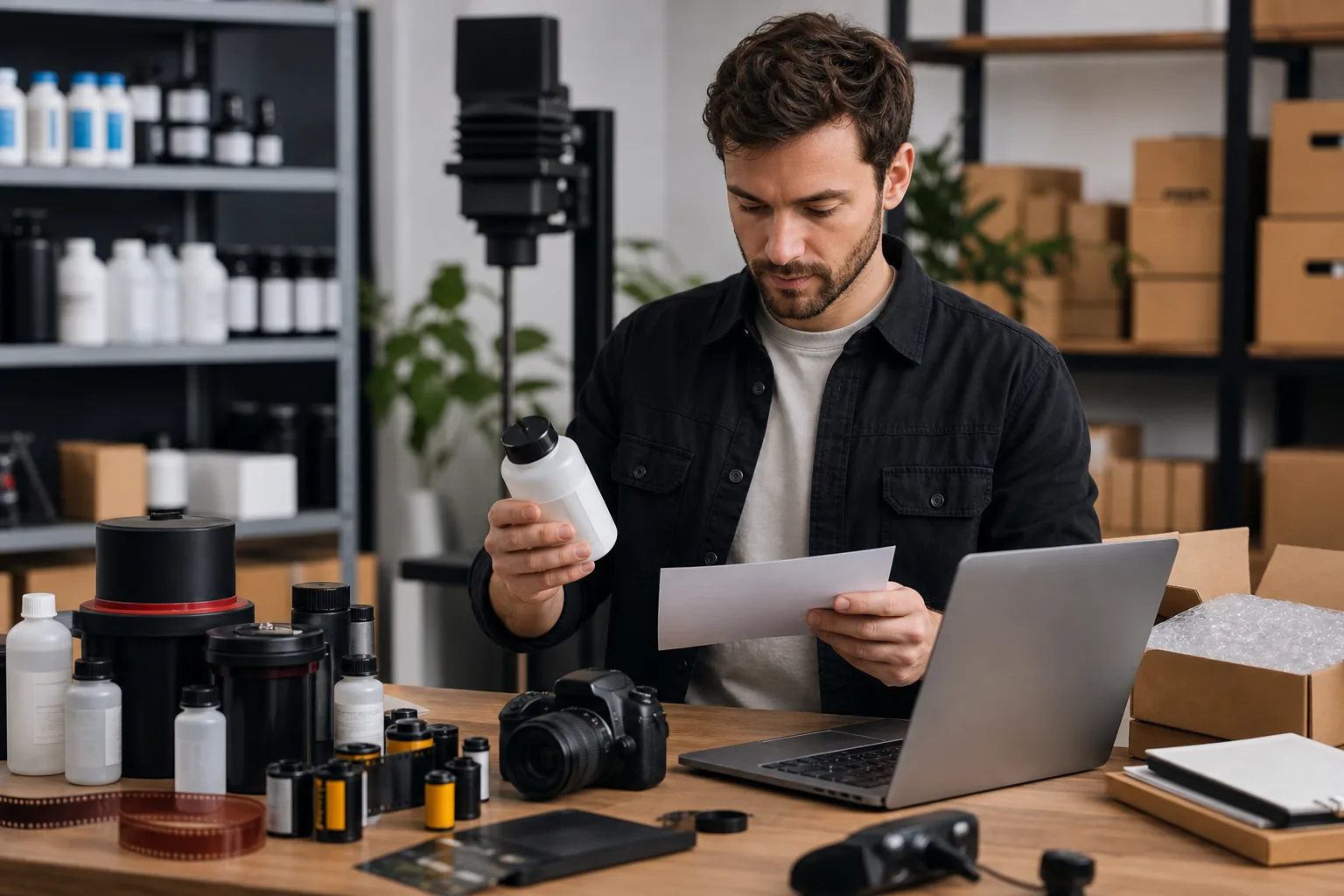
This trading activity covers the import, stocking, and sale of photography processing materials. That includes photographic chemicals such as developers, fixers, and stop baths, sensitised papers, analogue films, and darkroom consumables. Under Meydan Free Zone's Business Activities List, this falls within trading activities covering photographic and imaging supplies.
The buyer base is more varied than most people expect. It is not just photography studios. The main segments are:
- Professional photo labs and print studios needing consistent supply of chemistry and paper
- Medical imaging centres using X-ray processing chemicals and sensitised films
- Industrial non-destructive testing (NDT) operators who use radiographic film and processing materials
- Educational institutions running darkroom and imaging programmes
- Wholesale distributors supplying smaller retailers across the GCC
UAE demand for these materials holds up for a few reasons. The commercial print and events sector in Dubai is active and buys consistently. Medical imaging is growing as the healthcare sector expands. And the NDT market, which serves oil and gas, construction, and aerospace, uses specialist radiographic materials that are not easy to source locally in smaller markets.
Beyond domestic buyers, the re-export angle is real. Traders based in Dubai regularly supply East Africa, South Asia, and other GCC states with specialist consumables that are hard to source or expensive to import directly. Photography processing chemicals sit comfortably in that category.
Mainland vs Meydan Free Zone: Which Setup Works for You

This is the biggest choice you will make when setting up. Let your clients and your sales model decide it, not the price.
| Factor | Mainland (DET) | Free Zone (Meydan Free Zone) |
|---|---|---|
| Foreign ownership | 100% permitted in most trading activities | 100% always |
| UAE market access | Direct – sell to any UAE buyer | Needs local distributor or mainland entity to sell direct to UAE retail or government |
| Re-export and wholesale | Workable | Well suited |
| Corporate tax | Standard UAE corporate tax applies | Zero on qualifying free zone income |
| Office requirement | Physical office needed | Flexi-desk available |
| Setup cost | Generally higher | Lower entry point – Dubai Trade License from AED 12,500 |
A mainland license from the Dubai Department of Economy and Tourism (DET) lets you sell directly to any UAE buyer, including government entities and UAE retail clients, with no restrictions on where you operate. That matters if your model is direct B2C or you are supplying government hospitals and public sector labs.
Meydan Free Zone gives you 100% foreign ownership, zero corporate tax on qualifying income, and a simpler setup with flexi-desk options. The trade-off is that selling direct to UAE mainland buyers needs a local distributor or a separate mainland entity. If your model is import and re-export, or wholesale to other businesses and labs that handle their own customs clearance, the free zone structure works well.
For most international founders entering this trade, Meydan Free Zone is the practical starting point. You can always add a mainland entity later as your UAE client base grows.
Free Business Setup Cost Calculator
Calculate NowStep-by-Step Setup Guide with Meydan Free Zone
The process is more simple than most people expect. Here is how it runs in practice:
- Step 1, check and book your trade name: Use the Meydan Free Zone portal to check your company name availability before you go further. Names must not conflict with existing registrations or include restricted words.
- Step 2, confirm your activity code: Make sure the code you select covers photography processing materials trading. Meydan Free Zone's team can confirm this before you submit your application. Getting the code right at this stage avoids delays later.
- Step 3, choose your office package: For a trading operation where you are not holding physical stock on-site, a flexi-desk is enough. You do not need a dedicated office to get your license issued and start trading.
- Step 4, prepare your documents: You will need passport copies for all shareholders and directors, proof of address, and in some cases a basic business plan or outline of your trading activity. Meydan Free Zone will confirm the exact list for your application.
- Step 5, submit your application and get your license: Once documents are in order, Meydan Free Zone processes your application. You can complete much of this remotely. The remote business setup option means you do not need to be in Dubai to get started.
- Step 6, open your corporate bank account: You need a UAE business bank account to receive payments and manage supplier transactions. Business banking support through mCore can help you navigate this step, which is often where founders lose the most time.
- Step 7, get your import and export codes: Before you bring any goods into the UAE, you need an importer code from UAE Customs. This is a separate step from your license and is worth sorting early. The Ports, Customs and Free Zone Corporation (PCFC) oversees this process.
Timelines and fees are confirmed on the Meydan Free Zone portal. Use the cost calculator to get an indicative figure before you commit.
Compliance and What You Need in Place Before You Start
Photography processing chemicals are not straightforward goods to import. Some are classified as hazardous substances. Getting the compliance right before you start saves you from costly delays at the border.
Hazardous substance permits
Photographic developers, fixers, and some sensitisers contain chemicals that fall under UAE hazardous goods regulations. You need to check with UAE Customs and the PCFC whether your specific products need import permits or safety data sheet submissions before clearance. Do this product by product, not as a general category.
Storage and warehousing
If you hold stock in a UAE warehouse, the facility must meet the handling requirements for any hazardous chemicals in your inventory. This includes ventilation, containment, and labelling standards. Your warehouse operator will usually know the rules, but verify before you sign a storage agreement.
VAT registration
Once your annual turnover reaches AED 375,000, you must register for VAT with the Federal Tax Authority (FTA). If you expect to hit that threshold quickly, register early. Trading businesses often cross it faster than they plan for. Meydan Free Zone's mAccounting service covers VAT registration support if you need help with the process.
Supplier due diligence
Most reputable manufacturers of photographic chemicals and sensitised materials will ask for proof of a valid trading license before they agree to supply you. Have your license documents ready before you approach suppliers. Some will also ask for evidence of your storage and handling setup, particularly for hazardous chemistry.
Corporate tax
Free zone companies with qualifying income benefit from zero corporate tax. Make sure your accountant confirms your structure qualifies and that you are keeping the records needed to demonstrate compliance. If you need support, corporate tax services in Dubai through mAccounting can help you stay on the right side of the rules.
Market Opportunity and Why the UAE Makes Sense as a Base
The UAE is not the biggest market for photography processing materials in absolute terms. But it is one of the best-positioned bases for trading them regionally.
Dubai sits at a logistics crossroads for the GCC, East Africa, and South Asia. Specialist consumables that are hard to source or expensive to import directly into smaller markets move through Dubai regularly. Photography processing chemicals, radiographic films, and sensitised papers fit that pattern well. A trader based in Meydan Free Zone can import in volume, hold stock, and re-export to regional buyers efficiently using Dubai's road and air freight infrastructure.
The medical imaging sector is growing. As the UAE expands its healthcare capacity, demand for X-ray processing chemicals and radiographic films increases alongside it. The Dubai Health Authority has been driving expansion in diagnostic imaging services, and that creates consistent demand from labs and imaging centres that need a reliable local supplier rather than waiting on international lead times.
Dubai's commercial print and events industry also creates a steady pull for professional photo lab supplies. Studios, exhibition printers, and commercial photographers who work at volume need consistent access to chemistry and paper. A local trader who can guarantee supply and offer short delivery times has a real advantage over international suppliers shipping on long lead times.
The NDT market is a smaller but high-value segment. Oil and gas operators, construction firms, and aerospace maintenance businesses all use radiographic testing that depends on the same films and processing chemicals as conventional photography. These buyers are professional, they buy on contract, and they value reliability over price.
Conclusion
Trading photography processing materials from a Meydan Free Zone base is a workable model if your clients are businesses, labs, or export markets rather than UAE retail consumers. The setup is simple, ownership is fully yours, and the compliance load is manageable once you have sorted your import permits and VAT duties.
The key steps are confirming your activity code, getting your import codes in order early, and checking the hazardous goods rules for your specific product range before you bring your first shipment in. Do those three things before you start and you will avoid the delays that catch most new traders out.
Meydan Free Zone handles the setup, the license, and the ongoing administration. You focus on building supplier relationships and finding buyers. That is a practical division of effort for a trading business at any scale.
Ready to Launch Your Business in Dubai?
Let's ConnectReferences
- Federal Tax Authority (FTA), UAE
- Ports, Customs and Free Zone Corporation (PCFC)
- Dubai Health Authority (DHA)
- Invest in Dubai