
Table of Contents
Frequently Asked Questions
Can a photographer publish a photo of a stranger taken in a public place in the UAE?
Not safely without consent. Federal Decree-Law No. 34 of 2021 protects private life, and publishing an identifiable person's image without consent can lead to a criminal complaint, even when the photograph was taken in public. Written consent that covers the intended use is the safest position for any published image.
Does a model release need to be notarised in the UAE?
No. The law does not generally require a model release to be notarised. A signed and dated release naming the parties, permitted uses, territory, duration and payment is usually enough. Notarisation is worth considering only when a client, agency or platform asks for it.
Who owns the copyright when a client commissions a photoshoot?
Under Federal Decree-Law No. 38 of 2021, the photographer is generally the first holder of copyright, but commissioning terms can change that. The contract should state whether ownership is assigned or only licensed. If the contract is silent, both sides may claim the files.
Do photographers need a permit to shoot at Dubai landmarks?
Commercial productions in Dubai may need a filming permit from the Dubai Film and TV Commission, particularly where a crew or equipment is involved. Government buildings, military sites and some public venues also need permission. Secure permits before the shoot rather than after a complaint.
Can a photographer sign a release on behalf of a child?
No. A parent or legal guardian must sign the release for a minor. The release should name the child, the guardian and the permitted uses, and a signed copy should be stored with the image files.
What happens if a model withdraws consent after the photo is published?
The photographer should remove the image promptly on a valid request and keep a record of the request and the removal. The release should set out withdrawal terms in advance. Ignoring a request can expose the photographer to a complaint under UAE privacy and cybercrime provisions.
Do photographers need a separate permit to fly a drone?
Yes. In Dubai, drone photography needs a permit from the Dubai Civil Aviation Authority (DCAA), in addition to the business license. Aerial photography is also a distinct licensed activity, so the license should match the work.
Can a photographer use client images in a portfolio without a release?
Not if the images show identifiable people. Portfolio use counts as self-promotion, so the release should cover it expressly. Posting client images in a public reel or on social media without that consent creates privacy and takedown risk.
Topic Summary
What Photography Laws in the UAE Cover
Photography laws in the UAE are a mix of privacy, cybercrime, copyright and permit rules. They protect a person's image and private life, set who owns a photograph, and control shooting at certain locations. You need written consent before publishing identifiable people, and permits for restricted sites.
Photography Laws in the UAE That Govern Image Rights
Image rights in the UAE rest mainly on privacy protections in the cybercrime law. Photographing or publishing a person without consent, especially in a private setting, can be a criminal offence. Your consent should be specific, documented and tied to the intended use.
Who Owns the Photograph and Who Controls the Image
The photographer generally holds copyright in the photograph, while the person pictured keeps control over use of their likeness. These are separate rights. You can own the file and still need a model release to publish or sell it commercially.
How to Draft a Model Release That Holds Up
A valid model release names the parties, describes the shoot, defines permitted uses, sets territory and duration, states payment, and carries a signature and date. For minors, a parent or guardian must sign. Keep a signed copy with the image files. Photography laws in the UAE reward this paperwork.
Location Permits and Restricted Places for Photographers
Shooting at government buildings, military sites and some public venues needs permission. Commercial productions in Dubai may need a film permit, and drone work needs separate authorisation. Secure permits before the shoot, not after a complaint.
Publishing Images Online Without Breaching Privacy Rules
Posting an identifiable person online without consent can breach UAE privacy and cybercrime provisions, even when the shot was taken in public. Hold written consent, avoid tagging without permission, and remove images promptly on a valid request.
Licensing a Photography Business Under Meydan Free Zone
Meydan Free Zone licenses photography businesses digitally, and solo founders can use Fawri to receive a business license in under 60 minutes. The license covers the commercial activity. Releases, permits and copyright terms remain your responsibility on each job.
Conclusion
Photography laws in the UAE reward photographers who document consent, define ownership in writing and secure permits before shooting. Clients, banks and platforms ask to see a signed release and a clear contract. Build a standard release and client agreement first, then choose the photography activity that matches how you sell your work before applying for your business license with Meydan Free Zone.
Image Rights and Model Releases for UAE Photographers
A photographer’s portfolio looks like harmless creative work. Yet one published image of an identifiable person, taken without consent, can lead to a criminal complaint. Many new photographers assume a verbal yes at the shoot is enough. It isn't. This guide explains how photography laws in the UAE shape image rights and releases, so you can set up correctly before applying for your business license with Meydan Free Zone.
What Photography Laws in the UAE Cover
Photography laws in the UAE are a mix of privacy, cybercrime, copyright and permit rules. They protect a person's image and private life, set who owns a photograph, and control shooting at certain locations. You need written consent before publishing identifiable people, and permits for restricted sites.
How the Rules Are Structured
There's no single photography statute. Federal rules apply across all emirates, while emirate-level bodies handle location permits. A business license covers your commercial activity, not the legal exposure of each shoot.
Say a wedding photographer assumes the license covers every job. Each guest image they publish still needs its own consent.
Why Consent Drives Commercial Value
Consent protects your client relationship and your ability to license the image. Agencies, brands and platforms ask for proof of release on commercial work. Picture a brand rejecting a campaign set because you can't show releases for two background models. That's lost revenue, not a legal footnote. See the photography services setup in Dubai overview for the licensing side.
Photography Laws in the UAE That Govern Image Rights

Image rights in the UAE rest mainly on privacy protections in the cybercrime law. Photographing or publishing a person without consent, especially in a private setting, can be a criminal offence. Your consent should be specific, documented and tied to the intended use.
Privacy and Cybercrime Protections
Federal Decree-Law No. 34 of 2021 protects private life and restricts publishing images without consent. Online posting widens your exposure because the image travels. A street photographer who posts a candid portrait of a resident can face a complaint, even with good intentions.
Public Places and Privacy Expectations
- A public setting doesn't remove the need for consent when you publish identifiable people.
- Families, women and children call for extra caution.
- Government, military and sensitive sites are restricted.
- A tourism shoot on a public beach needs a plan for bystanders in frame.
Commercial Use Versus Personal Use
Advertising and resale need clearer, broader consent than a portfolio. Consent for one use doesn't cover another. A portrait taken for a profile page can't simply appear on a billboard later.
Who Owns the Photograph and Who Controls the Image
The photographer generally holds copyright in the photograph, while the person pictured keeps control over use of their likeness. These are separate rights. You can own the file and still need a model release to publish or sell it commercially.
Copyright Under Federal Law
Federal Decree-Law No. 38 of 2021 governs copyright and neighbouring rights. Commissioning terms can change ownership, so address it in writing. If an agency commissions a campaign and the contract is silent, both sides may claim the files. The guide to understanding intellectual property in the UAE covers the wider picture.
Likeness Rights Versus Copyright
Copyright covers the image. Likeness consent covers the person. Both must align before commercial licensing. A stock photographer owns the file but can't license it without a release.
How to Draft a Model Release That Holds Up
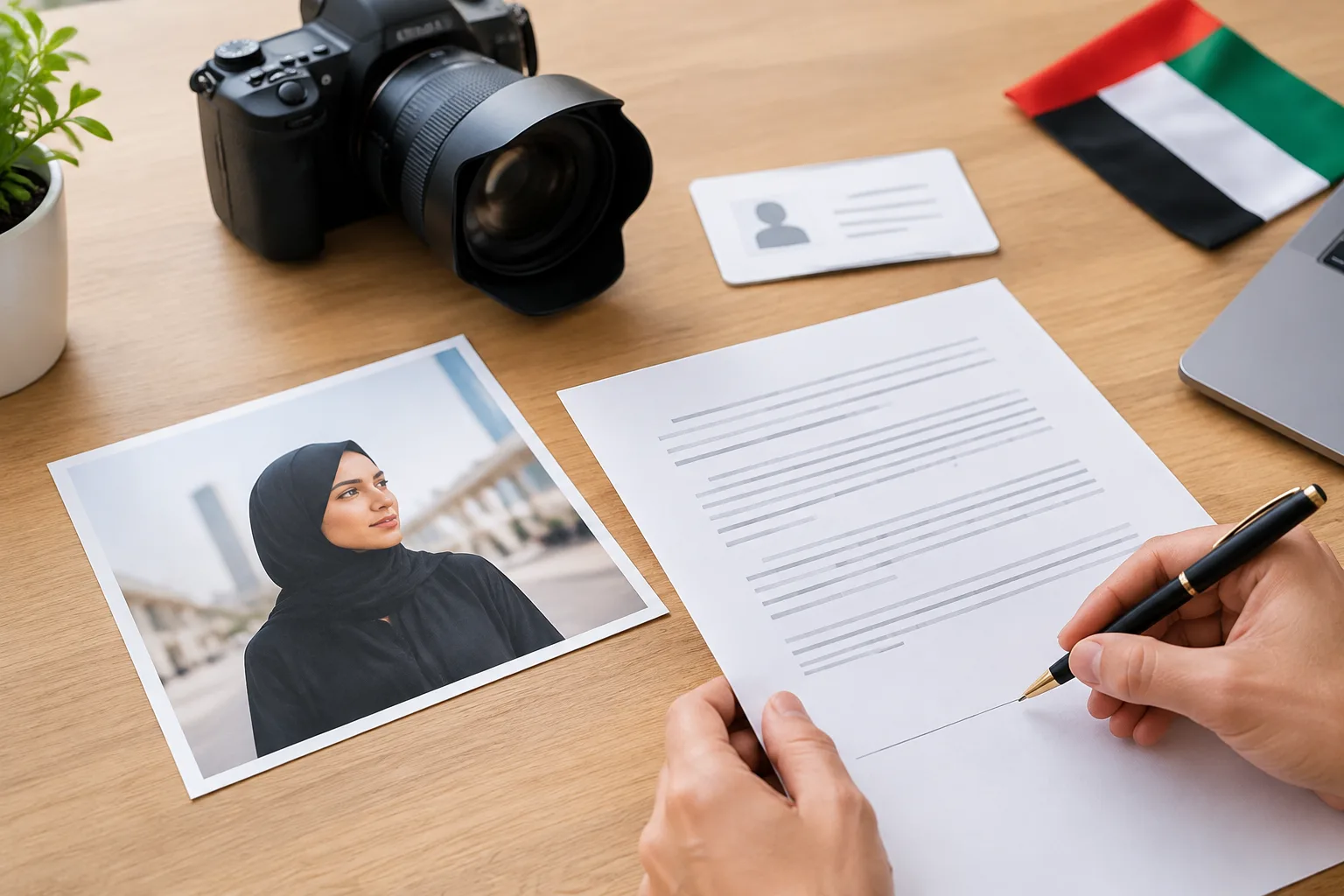
A valid model release names the parties, describes the shoot, defines permitted uses, sets territory and duration, states payment, and carries a signature and date. For minors, a parent or guardian must sign. Keep a signed copy with the image files. Photography laws in the UAE reward this paperwork.
Step 1: Identify the Parties and the Shoot
- Record full legal names and Emirates ID or passport details.
- State the date, location and purpose.
- Name every model, for example all three on a Dubai fashion editorial.
Step 2: Define Permitted Uses and Media
- List web, print, social or advertising use.
- Exclude sensitive or altered uses.
- A release limited to website and social media excludes outdoor advertising.
Consent and Permit Needs by Type of Shoot
| Type of Shoot | Typical Consent or Permit Need |
|---|---|
| Portrait session | Signed release covering portfolio and social use |
| Commercial brand shoot | Releases for every visible person, plus a film permit where required |
| Event coverage | Organiser agreement and guest notice; releases for featured individuals |
| Aerial or drone shoot | DCAA drone permit in Dubai, plus location approval |
| Shoots involving minors | Parent or guardian signature on a use-specific release |
Step 3: Set Duration, Territory and Compensation
- Choose time-limited or perpetual use, such as a 12-month term with renewal.
- State the fee in AED, or state that no fee applies.
- Add withdrawal terms.
Step 4: Sign, Store and Address Minors
- Get a guardian signature for minors, as on a school photo project.
- Add an Arabic version where it helps.
- Use notarisation only where a counterparty asks for it.
- Store releases with the image metadata.
Strong clauses matter here, and UAE contract law explains the common drafting errors.
Location Permits and Restricted Places for Photographers
Shooting at government buildings, military sites and some public venues needs permission. Commercial productions in Dubai may need a film permit, and drone work needs separate authorisation. Secure permits before the shoot, not after a complaint.
Commercial Shoots and Film Permits in Dubai
The Dubai Film and TV Commission handles filming permits. A brand shoot with a crew at a public landmark is the typical trigger.
Drone and Aerial Photography
In Dubai, drone flights need a permit from the Dubai Civil Aviation Authority (DCAA). A real estate photographer adding aerial shots also needs the right activity on the license, covered in the aerial photography services license in Dubai guide.
Publishing Images Online Without Breaching Privacy Rules
Posting an identifiable person online without consent can breach UAE privacy and cybercrime provisions, even when the shot was taken in public. Hold written consent, avoid tagging without permission, and remove images promptly on a valid request.
Portfolios, Social Media and Client Galleries
Portfolio use needs a release covering self-promotion. Private galleries still need access controls. A portrait studio that posts client images in a public reel without that clause takes on avoidable risk.
Takedown Requests and Dispute Handling
Remove content quickly on request. Keep a record of every request and your response. If a model withdraws consent for a social post, the written release and your takedown log become your defence.
Licensing a Photography Business Under Meydan Free Zone
Meydan Free Zone licenses photography businesses digitally, and solo founders can use Fawri to receive a business license in under 60 minutes. The license covers the commercial activity. Releases, permits and copyright terms remain your responsibility on each job.
Choosing the Right Photography Activity
Match the activity to the work, whether commercial production, event filming, aerial or photojournalism. That means you align the license with how the images are sold. A founder selling brand shoots and event coverage should review the right activities on one license, starting with the start photographic activities business page.
Support That Fits a Photographer's Workflow
- mCore: business bank account support, company stamps, e-commerce setup.
- mAccounting: bookkeeping, VAT, Corporate Tax and payroll.
- mResidency: residency visas, added on a pay-as-you-go basis.
- Meydan Free Zone Setup Cost Calculator: estimate setup and running costs.
Free Business Setup Cost Calculator
Calculate NowRegistered businesses are subject to Federal Tax Authority (FTA) rules, so keep records from the first invoice.
Conclusion
Photography laws in the UAE reward photographers who document consent, define ownership in writing and secure permits before shooting. Clients, banks and platforms ask to see a signed release and a clear contract. Build a standard release and client agreement first, then choose the photography activity that matches how you sell your work before applying for your business license with Meydan Free Zone.
Ready to Launch Your Business in Dubai?
Let's Connect