
Table of Contents
Frequently Asked Questions
Is a purchase order legally binding in the UAE?
A purchase order becomes a binding commercial record once the supplier accepts it, whether by written confirmation, signature or by performing the order. Silence is a weak basis to rely on, so keep the acceptance record filed with the order. If a dispute arises, that record helps prove what was agreed on price, quantity and delivery.
Can a purchase order replace a supplier contract?
A purchase order can cover a single, simple transaction, but it rarely replaces a contract for ongoing supply. A supplier contract sets standing terms such as liability, warranty, termination and the dispute forum. Each order then applies those terms to one delivery, so the order should reference the contract number.
Which document prevails if a purchase order conflicts with the supplier contract?
The contract usually controls unless it states otherwise. To avoid doubt, write an order of precedence clause into both documents. This also stops a supplier's pre-printed terms on an order from overriding the terms you agreed in the framework agreement.
Who is authorised to sign a purchase order for a company?
The signatory must hold authority under the company's Memorandum and Articles of Association. Anyone else, such as a sales manager, needs written authority from the company. A supplier can ask for the constitutional documents to confirm who may sign.
What details should a purchase order include?
It should name both parties with their license numbers and describe the goods precisely. It should also state the unit price and currency, delivery terms and dates, payment terms, and a reference to the supplier contract. Missing any of these is a common reason order disputes drag on.
Does a purchase order need a company stamp in the UAE?
A stamp is not the only way to authenticate an order, since a valid signature from an authorised signatory also works. Many companies still stamp orders because suppliers and banks expect it. mCore, part of Meydan Plus (mPlus), covers company stamps.
How should a purchase order match the tax invoice for VAT?
Item descriptions, quantities and prices on the order should match the later tax invoice. Mismatches can make it harder to reclaim input VAT cleanly. VAT registration is mandatory above AED 375,000 a year, so a VAT-registered supplier's TRN should appear on the invoice, as required by the Federal Tax Authority.
What should I do if a supplier ships goods without accepting the order?
Do not treat shipment as agreement on terms you never confirmed. Send written notice promptly stating the price and conditions you ordered, and record the delivery condition. Match the order, delivery note and invoice before paying, so any difference is documented.
Topic Summary
What a Purchase Order in the UAE Means
A purchase order is a written instruction from a buyer to a supplier to deliver specific goods or services at stated prices and quantities. Once the supplier accepts it, it forms a binding commercial record. The supplier contract sets the long-term rules; each order applies them to one transaction.
Supplier Contract Versus Order Terms
A supplier contract governs the relationship. A purchase order in the UAE governs one delivery. When they conflict, the contract usually controls unless it says otherwise, so write the order of precedence into both documents.
Terms Every Purchase Order in the UAE Should Carry
A sound order names both parties with license numbers, describes goods precisely, states unit price and currency, sets delivery terms and dates, defines payment terms and references the contract. Gaps here are the most common reason disputes drag on.
Steps to Issue a Purchase Order in the UAE
Issue an order in six steps: confirm the supplier's license and authority, check contract terms, draft the order, obtain internal approval, send it signed or stamped, and secure written acceptance before goods ship.
Payment Terms and Risk Controls
Payment terms decide who carries credit risk. Choose terms to match the supplier's track record and order value, then record them in both the contract and the order.
How Meydan Free Zone Companies Handle Supplier Paperwork
A Meydan Free Zone company issues purchase orders and signs supplier contracts in its own name under its Business License Meydan Free Zone issues the license, Certificate of Formation, Share Register and Memorandum and Articles of Association digitally.
Conclusion
A supplier contract protects the relationship, but each purchase order in the UAE protects a transaction. Fix precedence, signing authority, payment terms and invoice alignment, and most disputes disappear. Before applying for your business license with Meydan Free Zone, confirm your activity covers the goods you plan to buy, then build a contract and order template for your first shipment.
Supplier Contracts and Purchase Orders for UAE Companies
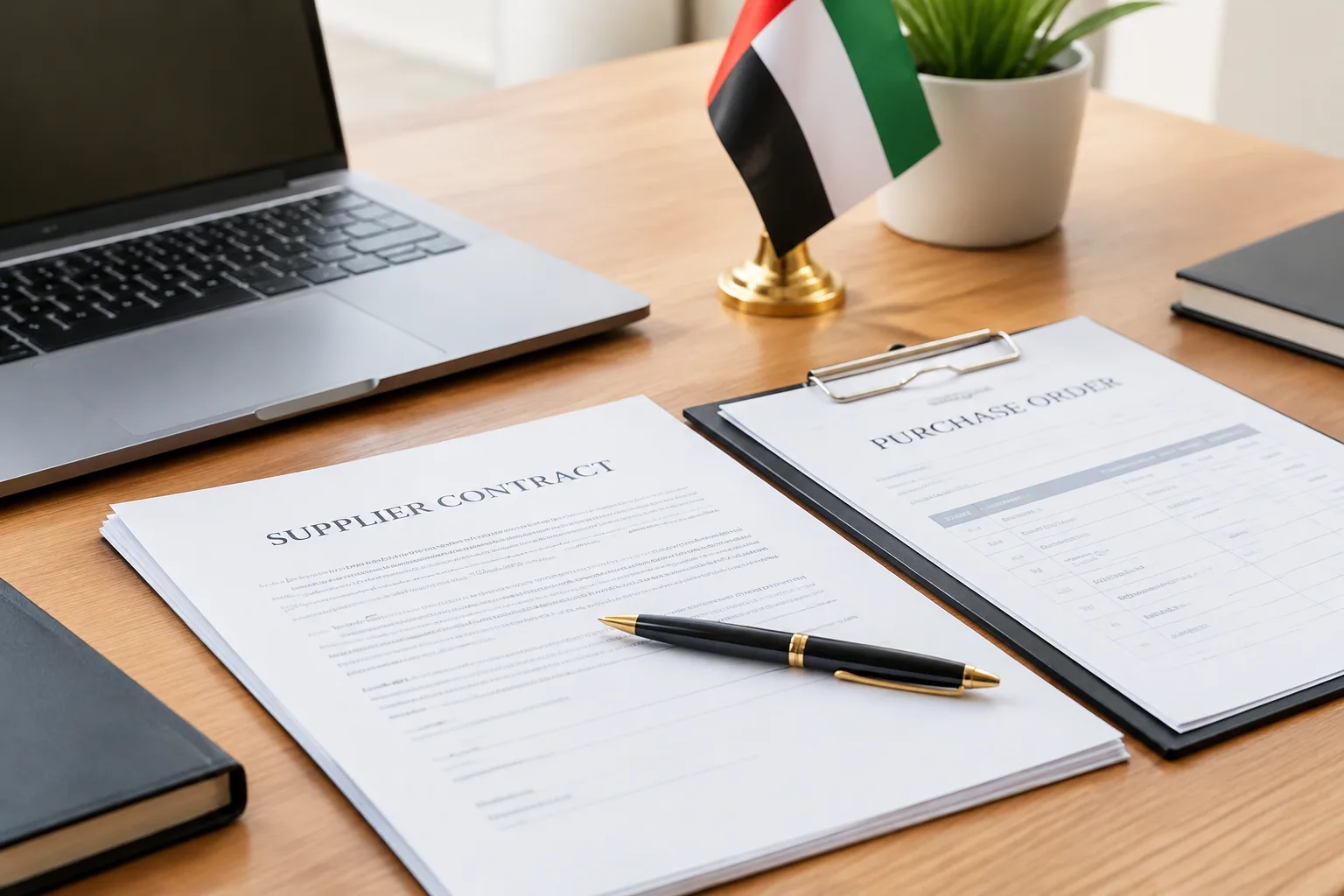
Many founders assume a signed supplier contract makes every later order a formality. It doesn't. A purchase order in the UAE often decides what was actually agreed on price, quantity and delivery. Say a trader signs a framework agreement, then raises orders by email. When a shipment is disputed, the trader has to prove which terms governed it. Our guide explains what each document does and what to settle before applying for your business license with Meydan Free Zone.
What a Purchase Order in the UAE Means
A purchase order is a written instruction from a buyer to a supplier to deliver specific goods or services at stated prices and quantities. Once the supplier accepts it, it forms a binding commercial record. The supplier contract sets the long-term rules; each order applies them to one transaction.
Purchase Order Versus Supplier Contract
The contract fixes liability, warranty, termination and the dispute forum. The order fixes item, quantity, price, delivery date and place. A Dubai trading company with a one-year framework agreement raises a separate order for each container, and each order should quote the contract number so the standing terms carry across.
Supplier Contract Versus Purchase Order
| Feature | Supplier Contract | Purchase Order |
|---|---|---|
| Scope | The whole supply relationship | One delivery |
| Duration | Fixed term, often one year or more | Until delivery and payment |
| Main terms | Liability, warranty, termination, governing law | Item, quantity, price, delivery date |
| Who signs | Authorised signatory of each company | Buyer's approver, accepted by the supplier |
| Typical use | Repeat supply of the same goods | Each container or batch |
When an Order Becomes Binding
Acceptance comes through written confirmation, signature or performance. Silence is a weak basis to rely on. If a supplier ships after an email order without confirming price, the buyer can later dispute the invoice. Keep the acceptance record with the order.
Supplier Contract Versus Order Terms

A supplier contract governs the relationship. A purchase order in the UAE governs one delivery. When they conflict, the contract usually controls unless it says otherwise, so write the order of precedence into both documents.
Order of Precedence Clause
State which document wins. Otherwise a supplier's pre-printed terms, which may cap liability below your framework agreement, can override yours. The Meydan Free Zone guide to UAE Contract Law clauses covers this in more detail.
Governing Law and Dispute Forum
Free zone, onshore and offshore forums work differently in practice. Choose one at signing. A Dubai free zone buyer contracting with a foreign supplier needs a forum both sides can enforce. The contract language also matters, and an Arabic translation may be needed.
Authority to Sign for the Company
The signatory must be authorised under the Memorandum and Articles of Association. A trusted representative needs written authority. A sales manager who signs a large order without it exposes the company to a challenge.
Terms Every Purchase Order in the UAE Should Carry
A sound order names both parties with license numbers, describes goods precisely, states unit price and currency, sets delivery terms and dates, defines payment terms and references the contract. Gaps here are the most common reason disputes drag on.
Price, Currency and Payment Terms
- State AED or the agreed currency.
- Say who bears exchange movements.
- Define the start of the payment period. "Net 30" means little without it.
- Agree late-payment treatment in advance.
Delivery, Inspection and Rejection
- Name the Incoterm or delivery point.
- Set an inspection window and rejection process.
- Say who carries transit risk. Damaged goods at Jebel Ali are a dispute if this is silent.
Tax Invoice and VAT Details to Align With Each Order
Order details should match the later tax invoice. Include the supplier's Tax Registration Number (TRN) where VAT applies. Registration is mandatory above AED 375,000 a year. If an invoice describes goods differently from the order, you may struggle to reclaim input VAT. See the UAE tax invoice requirements for mandatory fields.
Steps to Issue a Purchase Order in the UAE
Issue an order in six steps: confirm the supplier's license and authority, check contract terms, draft the order, obtain internal approval, send it signed or stamped, and secure written acceptance before goods ship.
Step 1: Verify the Supplier
- Check the trade license activity and validity.
- Match bank details to the licensed legal name.
- Request the TRN if VAT-registered.
Step 2: Draft and Approve the Order
- Use a numbered template.
- Reference the contract number.
- Require a second signatory above an internal value limit.
Step 3: Issue, Stamp and Record Acceptance
- Sign or stamp the order.
- File the supplier's written acceptance.
- Match order, delivery note and invoice before paying. Three-way matching catches a short delivery.
Payment Terms and Risk Controls
Payment terms decide who carries credit risk. Choose terms to match the supplier's track record and order value, then record them in both the contract and the order.
Comparing Payment Structures
| Structure | Buyer Risk | Supplier Risk |
|---|---|---|
| Advance payment | Highest | Lowest |
| Partial deposit | Shared | Shared |
| Open account | Lowest | Highest |
| Letter of credit | Bank-mediated | Bank-mediated |
A new buyer with no trade history may be asked for a deposit. A letter of credit, issued by a bank, is the alternative.
Remedies for Late Delivery or Non-Payment
Agree delay damages, termination triggers and notice periods up front. If a supplier misses a delivery date, you need documented written notice to claim. Without it, your position weakens.
How Meydan Free Zone Companies Handle Supplier Paperwork
A Meydan Free Zone company issues purchase orders and signs supplier contracts in its own name under its Business License. Meydan Free Zone issues the license, Certificate of Formation, Share Register and Memorandum and Articles of Association digitally.
Licensed Activity Must Match the Goods Ordered
Order only goods within your licensed activity. A company licensed for office supplies wholesale orders stock within that scope. Check activity scope before applying for your business license.
Company Stamp and Corporate Documents
Meydan Plus (mPlus) brings together Meydan Free Zone’s business support offerings, one of which is mCore, covering a company stamp and business bank account support. A supplier may ask for your Memorandum and Articles of Association to verify who can sign. Our free Setup Cost Calculator helps you estimate setup costs.
Free Business Setup Cost Calculator
Calculate NowConclusion
A supplier contract protects the relationship, but each purchase order in the UAE protects a transaction. Fix precedence, signing authority, payment terms and invoice alignment, and most disputes disappear. Before applying for your business license with Meydan Free Zone, confirm your activity covers the goods you plan to buy, then build a contract and order template for your first shipment.
Ready to Launch Your Business in Dubai?
Let's Connect