
Table of Contents
Frequently Asked Questions
Can a South African get an Emirates ID before moving to Dubai?
No. The Emirates ID cannot be applied for or collected from outside the UAE, because the medical test and biometrics must be done in person. You can start your company and visa application from South Africa or anywhere in the world, but the Emirates ID itself is completed once you are in Dubai.
How much does an Emirates ID cost?
The government card fee is AED 100 per year of your visa's validity, plus service and typing fees, for a typical total of around AED 170 to 370, roughly ZAR 748 to 1,628. If you want it handled for you, Meydan Free Zone's Emirates ID assistance starts from AED 750.
How long does it take to get an Emirates ID?
The full visa and Emirates ID process runs about two to three weeks end to end. The card itself is usually ready within a week or so of your biometrics appointment, and is delivered through Emirates Post or a chosen pickup point. With Meydan Free Zone's support it can move faster.
What do I need the Emirates ID for?
Almost everything in daily life: opening a bank account, getting a SIM card, registering a tenancy on Ejari, setting up utilities, accessing healthcare and insurance, and enrolling a child in school. Very little can be set up in the UAE without it.
Does Meydan Free Zone help with the Emirates ID?
Yes, end to end. Through mResidency, Meydan Free Zone opens your immigration file, triggers the Emirates ID application, books your biometric appointment, tracks it, and can deliver the finished card to its office or your location. A VIP fast-track option is available if you need it urgently.
Topic Summary
Check official rules first
Before any booking, verify the latest requirements on ICP, GDRFA Dubai, and Gov.ae. Forms, fees, approved centres, and appointment flows change, so a quick recheck helps you avoid outdated lists and repeat visits.
Your visa comes first
An Emirates ID follows an active residence visa route, not the other way around. For South African nationals, get the residence file moving first, whether you are applying as an employee, investor, or dependant.
Prepare the right documents
Keep your passport, visa or file reference, booking confirmations, phone number, and email ready in one folder. Matching details across each record matters, because small name or number differences can slow approval.
Expect medical and biometrics
Most adults need a medical exam plus biometrics before card production starts. Book early, bring the required reference details, and plan your Dubai visit around centre availability, holidays, and processing queues.
Track status at each stage
The sequence is simple: application submitted, checks completed, card produced, then delivery. Watch for status updates closely and act fast if a correction is requested, because delays usually come from missed notices or mismatched data.
Know what the ID unlocks
Once active, the Emirates ID becomes your everyday proof of identity for banking, leasing, telecom setup, health access, and government portals. The digital record may become usable before the physical card arrives, which helps you move faster.
Getting an Emirates ID (EID) in Dubai, UAE: Guide for South African Nationals
For a South African settling in Dubai, the Emirates ID is the document that turns a visa into a working life. It is the mandatory national identity card for every UAE resident, and almost nothing functions without it. No bank account, no SIM card, no tenancy, no utilities, no school place.
The good news is that it comes as part of your residence visa, not as a separate battle. This guide explains what the Emirates ID is, how you get one, what it costs in rands, and the one step that must happen in person.
The key thing to understand is that the Emirates ID is tied to your residence visa. You cannot get one without residency, and you cannot complete it from South Africa. Here is how it works.
Key Facts at a Glance
| What it is | The mandatory national ID card for every UAE resident |
| Who issues it | The ICP, the UAE's federal identity authority |
| How you get it | As part of your residence visa application |
| The in-person step | Medical test and biometrics, done in the UAE |
| Validity | Matches your residence visa, usually one to three years |
What the Emirates ID Is
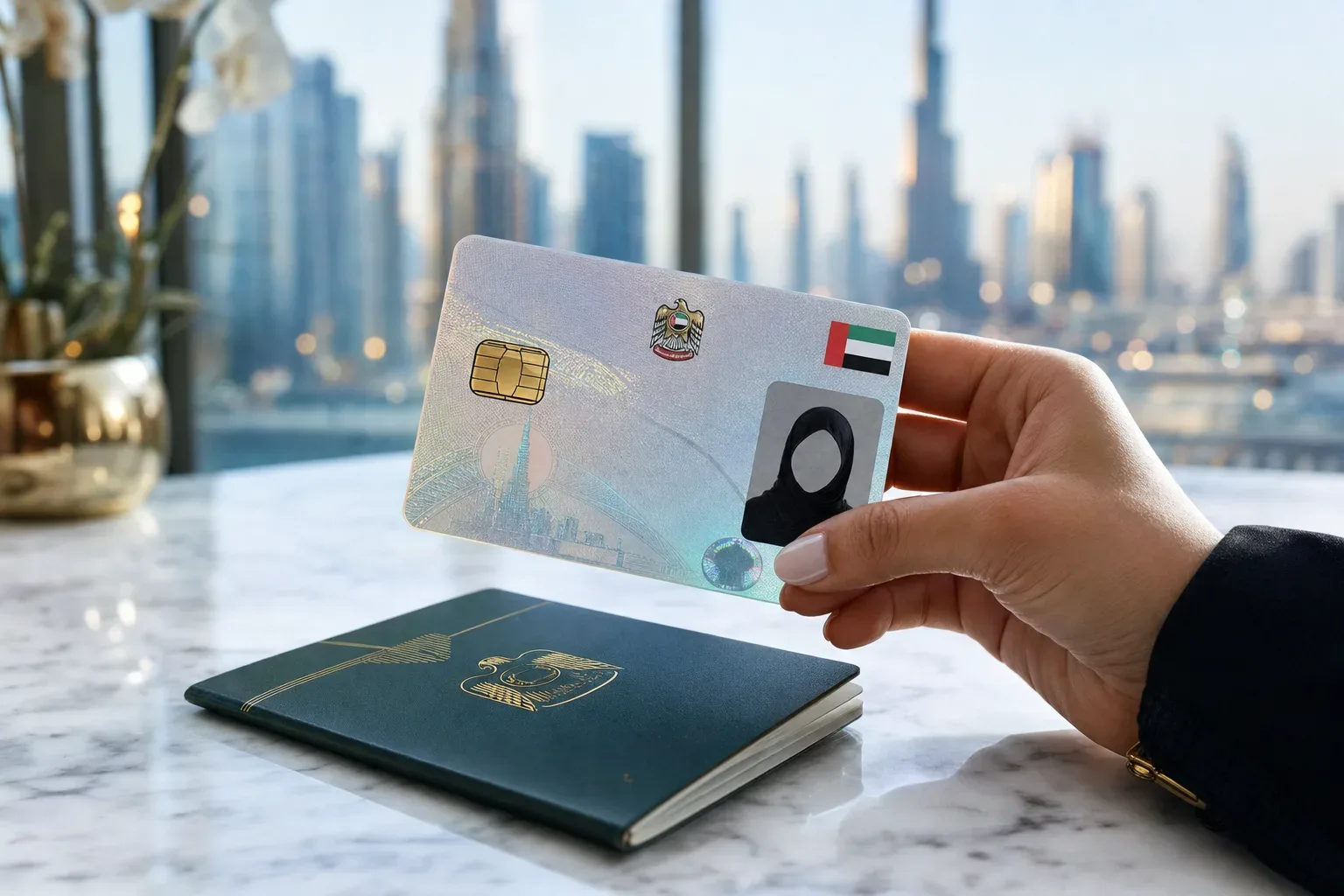
The Emirates ID is a smart card, issued by the Federal Authority for Identity, Citizenship, Customs and Port Security, known as the ICP. Every UAE resident must hold one.
The card carries a chip storing your fingerprints, photograph and personal details. It is your primary proof of identity and residency in the country. It also powers UAE Pass, the national digital identity, and the airport smart gates. In short, it is the single document that identifies you across the UAE, required by law for every resident.
Why You Need One
This is where a newcomer feels its importance, because the Emirates ID unlocks almost everything in daily life. Very little can be set up without it.
- Banking: You cannot open a personal bank account without it.
- A phone line: A postpaid SIM requires your Emirates ID.
- Your home: Registering a tenancy on Ejari and setting up DEWA both need it.
- Healthcare and insurance: It is required for medical care and health cover.
- Schooling: Enrolling a child links to your Emirates ID and residency.
Put simply, the Emirates ID is the key that makes the rest of your Dubai setup possible. That is why getting it early matters.
How You Get One

The Emirates ID is not a separate application you make on its own. It is built into the residence visa process, and it follows a fixed sequence.
- Get your entry permit: This is issued once your company and visa application are underway.
- Take the medical fitness test: Done at an approved centre in the UAE, it includes a blood test and chest X-ray.
- Give your biometrics: You attend an ICP centre for fingerprints and a photograph.
- Have your visa stamped: Your residence visa is finalised in your passport.
- Collect your card: The Emirates ID is printed and delivered, usually through Emirates Post.
The whole visa-and-ID process runs about two to three weeks end to end. The card itself is typically ready within a week or so of your biometrics.
Free Business Setup Cost Calculator
Calculate NowWhat It Costs
The Emirates ID fee is based on how long your visa lasts, plus small service fees. Here is the shape of it in rands.
| Item | Cost | Around, in ZAR |
|---|---|---|
| Card fee, per year of validity | AED 100 a year | ZAR 440 a year |
| ICP service fee | Around AED 40 | ZAR 176 |
| Typing or processing fee | AED 30 to 70 | ZAR 132 to 308 |
| Typical total | AED 170 to 370 | ZAR 748 to 1,628 |
A two-year visa, for example, carries roughly AED 200 in card fees, plus the service charges. The rand moves against the dirham, so treat the ZAR figures as a guide.
If you would rather have the process handled for you, Meydan Free Zone offers Emirates ID assistance on top of the government fees above.
| Meydan Free Zone service | Fee | Around, in ZAR |
|---|---|---|
| Emirates ID assistance | From AED 750 | ZAR 3,300 |
| Medical assistance only | From AED 2,000 | ZAR 8,800 |
| Medical and Emirates ID assistance | From AED 2,250 | ZAR 9,900 |
This covers the appointment booking, document handling and coordination, so you attend only the in-person steps. The medical packages include the mandatory fitness test, which is a separate cost from the Emirates ID card itself.
The Step You Cannot Do from South Africa
This is the honest limit worth planning around. The Emirates ID cannot be applied for or collected from outside the UAE.
The medical fitness test and the biometrics both have to be done in person, at approved centres in the UAE. So while you can set up your company and start the visa from South Africa, the Emirates ID itself waits until you are physically in Dubai. Most South Africans plan a trip around exactly this. You arrive to complete the medical, biometrics and stamping, then collect the card shortly after. Once you have it, your bank account, home and the rest of your setup can follow.
Keeping It Valid
A couple of practical points keep you out of trouble later. The Emirates ID is not a set-and-forget document.
Its validity always matches your residence visa, so renewing the visa renews the ID alongside it. You must apply within 30 days of your visa being stamped, and late renewals carry a fine of around AED 20 a day. Renewing 30 to 60 days before expiry avoids any gap. An expired ID can hold up everything from banking to travel.
How Meydan Free Zone Handles It for You
The Emirates ID is where the paperwork could get fiddly, and it is exactly the part Meydan Free Zone manages end to end, through mResidency.
- It starts with the license: Once your Meydan Free Zone license is issued, your immigration file is opened and the visa the Emirates ID is tied to begins.
- The Emirates ID is triggered for you: Your application is created in the ICP system automatically, with no separate form to hunt down.
- Your biometrics are booked and managed: You attend the medical and biometrics in person, but mResidency arranges the appointment and guides you, with a VIP fast-track option if you need the card urgently.
- The card comes to you: The finished Emirates ID can be delivered to the Meydan Free Zone office or your chosen location, not a post-office queue.
With this support, the visa and Emirates ID process can move in as little as a couple of business days once you are in Dubai, and even the in-person step is booked and guided for you.
Conclusion
For a South African, the Emirates ID is the document that makes Dubai work, the key to banking, a home, a phone and schooling. It comes with your residence visa, costs from around AED 170, and is tied to your visa's length. The one part you cannot do remotely is the medical and biometrics. Those wait until you are in the UAE.
Set up your company and start the visa from South Africa, then complete the Emirates ID on your first trip. To begin the process behind it, book a free consultation with a setup advisor at Meydan Free Zone.
Ready to Launch Your Business in Dubai?
Let's Connect