
Table of Contents
Frequently Asked Questions
1. How does UAE residency through company formation work for South African passport holders?
Your UAE company acts as your official sponsor for a residence visa. You register a UAE entity, obtain a Trade License, open the Immigration File (Establishment Card), and the company can apply for your Entry Permit, initiating the in-country residency steps that end with a visa stamped inside your passport, valid for two years.
2. What is the difference between a Free Zone and Mainland company for UAE residency purposes?
A Free Zone offers 100% foreign ownership, mandatory virtual or flexi-desk office arrangements, and packages tailored to international founders with international clients. A Mainland company is the appropriate structure when you want to trade directly within the UAE market and operate from any location, however, more complex setup requirements and physical office space apply.
3. How much does UAE residency through company formation cost in year one?
A simple Free Zone setup with one visa allocation costs between AED 15,000 and AED 25,000; however, more complex setup requirements with physical office space can cost over AED 50,000. Factor in recurring fees from year one: annual Trade License renewal, residence visa renewal every two years, and health insurance.
4. How long does it take to get a UAE residence visa through a business setup?
The timeline can run from four to eight weeks from company registration to visa stamping. Trade License issuance typically takes five to ten business days, opening a corporate bank account can add another two to four weeks due to strict anti-money laundering (AML) requirements.
5. What are the Corporate Tax and VAT obligations for South African founders operating a UAE company?
As of June 2023, a federal Corporate Tax rate of 9% applies to taxable profits above AED 375,000, startups below this threshold qualify for 0%. Businesses with annual revenues over AED 375,000 must register for VAT at 5% and file returns with the Federal Tax Authority. Dividends drawn from your UAE company are yours to keep at the personal level.
6. Do South African founders need to exit South African tax residency before setting up a UAE company?
Relocating to the UAE does not automatically resolve South African tax residency status, SARS applies its own residency tests, and seeking specialist advice is essential before you proceed. A South African founder who sets up a UAE company but does not formally exit South African tax residency remains liable for SARS on worldwide income, meaning the UAE structure delivers no tax benefit in that scenario.
Topic Summary
1. Your Company Sponsors Your Residency
UAE residency through company formation works because your own business provides the legal basis for your visa. The company registers, obtains a Trade License, opens an Immigration File, and the company can apply for your Entry Permit, each stage unlocks the next.
2. Free Zone or Mainland: Choose First
Free Zone offers 100% foreign ownership, mandatory virtual or flexi-desk office arrangements, and packages tailored to international founders. A Mainland company is the appropriate structure when you want to trade directly within the UAE market and operate from any location.
3. The Establishment Card Is Non-Negotiable
Without the Establishment Card, the company cannot sponsor anyone, including its own owner. This is a critical milestone that bridges the gap between company setup and visa eligibility, and skipping it stalls the entire residency process.
4. Realistic Costs: AED 15,000 to AED 50,000+
The primary cost drivers are the jurisdiction's fees for the Trade License, fees for opening the Immigration File, and visa process fees. Factor in recurring fees from year one: annual Trade License renewal, visa renewal every two years, and health insurance.
5. South African Tax Exit Requires Specialist Advice
UAE residency through company formation does not automatically resolve South African tax residency status. Seeking specialist advice before you proceed is essential, the UAE structure delivers no tax benefit in that scenario without completing the correct SARS exit process.
6. UAE Banks Need a Real Business Story
Opening a corporate bank account requires careful preparation. Due to strict anti-money laundering (AML) requirements, banks need expected revenue, key clients, and a summary of your projected annual revenue, not just a Trade License.
7. Six to Eight Weeks From Start to Residency
A South African founder who completes all pre-application preparation, documents organised, activity chosen, jurisdiction confirmed, can be well on the way to making their move to the UAE a reality within six to eight weeks, with corporate bank account opening adding another two to four weeks.
Getting a UAE Residency Through Company Formation for South African Business Owners
The Core Sponsorship Structure
In essence, your own business provides the legal basis for you to live and work in the UAE; your company is the official sponsor on record. You register a UAE entity, obtain a Trade License, and the company can then apply for your Entry Permit and residence visa, which are valid for two years. The process is logical and checkpoint-driven: each stage unlocks the next.
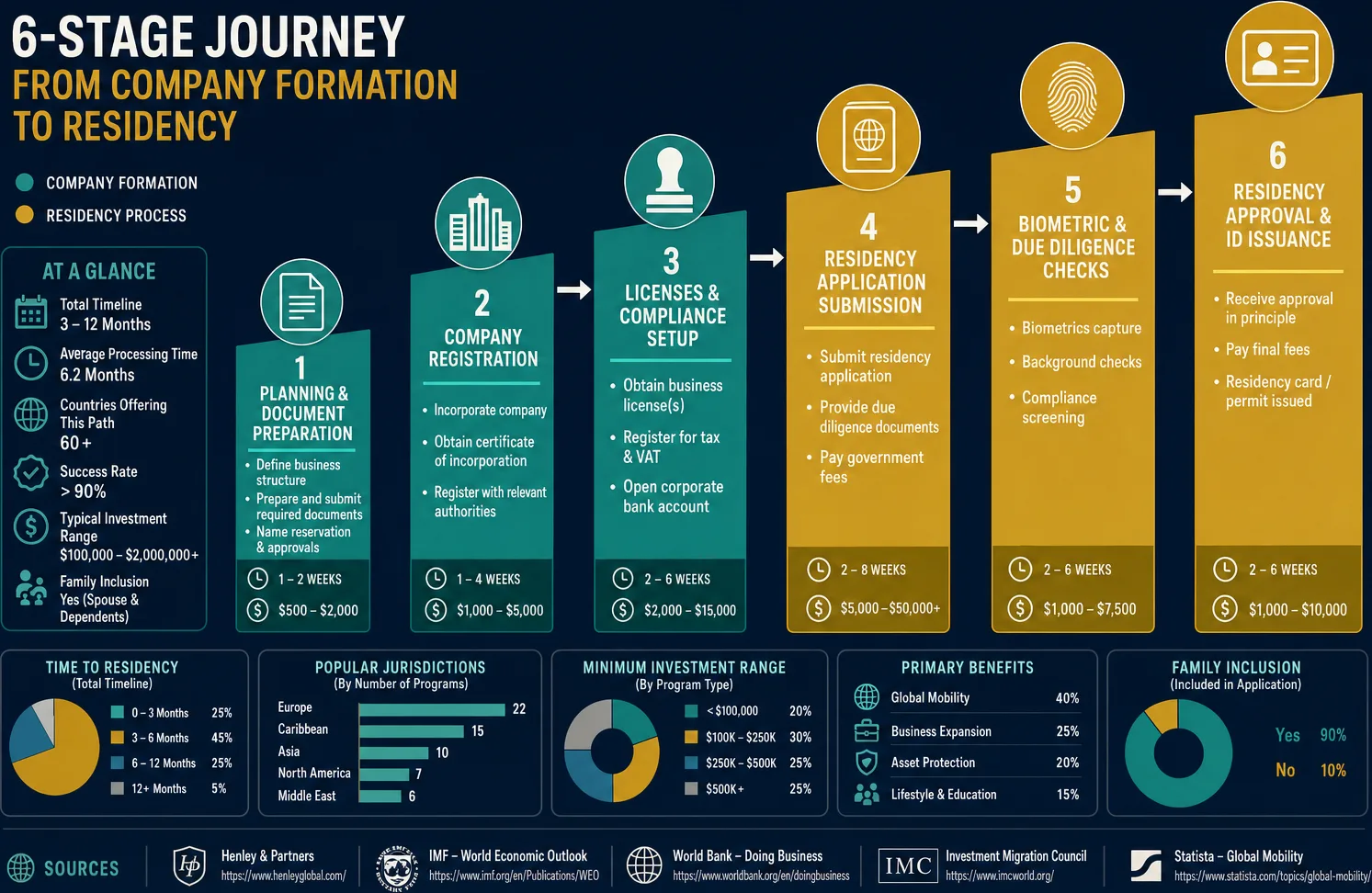
South African founders do not need a local Emirati partner in a Free Zone setup, 100% foreign ownership is standard. A South African management consultant registers a Free Zone company, obtains a Trade License, and the company can apply for their Entry Permit within days of the Immigration File being opened.
What the Company Actually Does in the Residency Steps
The company files the Immigration File (also known as the Establishment Card stage), which is the gateway to sponsoring any visa. Without this file, the company cannot sponsor anyone, including its own owner. Once the Immigration File is opened and functional, the company can apply for the owner's Entry Permit, the document that allows a South African passport holder to enter the UAE and complete the remaining residency steps.
Prerequisites: What You Need Before You Proceed
Identity Requirements and Document Preparation
Your passport must have at least six months' validity. You'll need a clear, colour copy of your passport, a high-quality digital photograph with a white background, a professional email, phone number ready, and a summary of your projected annual revenue for banking purposes. Having these basic documents organised before engaging any authority saves time and avoids delays.
Business Activity and Jurisdiction Clarity
You can't just pick a generic "consulting" license; you must select a specific activity from a government-approved list, this choice dictates the type of license you get (e.g., trading, professional, How many visas will you need? Do you want to trade directly within the UAE market? Will a flexi-desk suffice?
Choose Jurisdiction: Free Zone or Mainland
Free Zone: Right Fit for Most South African Founders
Free Zones like Meydan cater heavily to consultants, tech entrepreneurs, digital nomads, and international founders. Free Zone offers 100% foreign ownership, packages tailored to visa allocation and license activity, with mandatory virtual or flexi-desk office arrangements keeping overhead low. For most South African founders who don't rely on a physical UAE storefront and serve clients with international clients, a Free Zone is often a perfect fit.
Mainland: When the Appropriate Structure Demands It
A mainland company is the appropriate structure when you want to trade directly within the UAE market and operate from any location, rent certain office types, or take on government contracts. However, more complex setup requirements, regulated by the Department of Economic Development, come with higher recurring costs. A South African restaurant operator or local logistics provider finds that a Free Zone company limits their ability to operate commercially inside the UAE.
Core Differences Between Free Zone and Mainland at a Glance
Each has distinct rules regarding ownership, office space, visa allocation, and scope of business you can conduct. These are not interchangeable structures.
Step-by-Step: How to Get UAE Residency Through Company Formation
Steps 1 and 2: Company Registration and Trade License
Reserve the company name, submit documents, and pay fees to get the Trade License. You'll also receive a Memorandum of Association and Certificate of Incorporation, these are proof that the company is legally formed and has its official permit to operate. This typically takes five to ten business days for standard processing.
Step 3: Open the Immigration File (Establishment Card)
With critical milestone that bridges the gap between company formation and visa eligibility. Without this file, the company cannot sponsor anyone. The Establishment Card is issued to the company, registering it as an authorised sponsor within the UAE immigration system.
Steps 4, 5, and 6: Entry Permit, In-Country Steps, and Visa Stamping
The company can apply for the owner's Entry Permit, the document that unlocks the remaining residency steps. Once issued, the Entry Permit is valid for a defined period, you must enter the UAE within that window or it lapses. The process requires you to complete a medical fitness test, which screens for communicable diseases, then proceed with biometrics, an Emirates ID process at an ICP service centre. Your residence visa is stamped inside your passport, typically valid for two years.
Cost and Timeline: What to Realistically Plan For
Primary Cost Drivers in Year One
The primary cost drivers are the jurisdiction's fees for the Trade License, fees for opening the Immigration File, and visa process fees. A simple Free Zone setup with one visa allocation costs between AED 15,000 and AED 25,000 in year one; however, more complex setup requirements with physical office space can cost over AED 50,000. Factor in recurring fees from year one: annual Trade License renewal, visa renewal every two years, and health insurance.
Realistic Timeline From Start to Residency
Company registration to Trade License: five to ten business days for standard processing. Immigration File opening to Entry Permit: this part can run from three to seven business days. In-country steps, medical fitness test, Emirates ID process, and visa stamping, typically take five to ten business days. Opening a corporate bank account can add another two to four weeks due to strict anti-money laundering (AML) and Know Your Customer requirements.
Tax Considerations for South African Founders in the UAE
Corporate Tax and VAT Reporting Obligations
As of June 2023, a federal Corporate Tax rate of 9% applies to taxable profits above AED 375,000, startups below this threshold qualify for a 0% rate. Businesses with annual revenues over AED 375,000 must register for VAT at 5% and file returns with the Federal Tax Authority. Dividends drawn from your UAE company are yours to keep at the personal level, the UAE does not levy personal income tax on salaries or dividends.
South African Tax Exit: Seeking Specialist Advice
Relocating to the UAE does not automatically resolve South African tax residency status, SARS applies its own residency tests, and seeking specialist advice is essential before you their South African tax exit obligations remains liable for SARS on worldwide income. The UAE structure delivers no tax benefit in that scenario without the correct exit process being completed.
Opening a Corporate Bank Account and Ongoing Administration
Corporate Banking: What UAE Banks Actually Require
Opening a corporate bank account requires careful preparation. Due to strict anti-money laundering (AML) and Know Your Customer checks, banks need to account for legitimate business activity: expected revenue, key clients, and a summary of your projected annual revenue. Having a professional online presence, a signed contract or letter of intent, and corporate documents organised significantly improves approval rates.
Ongoing Administration to Maintain Residency Without Interruption
Your Trade License must be renewed annually, if it lapses, the company's ability to sponsor visas is suspended. The residence visa must be renewed every two years, and you must maintain health insurance for yourself and any sponsored dependents. A South African founder who lets the Trade License lapse in year two finds their visa renewal blocked, good administration avoids fines and legal complications.
Success Criteria and Next Steps for South African Business Owners
How to Know the Residency Steps Are Complete
- Your Trade License is active and in good standing
- Your Immigration File (immigration file) is opened and functional
- Your Entry Permit was used to enter the UAE
- Your residence visa is stamped inside your passport
- Your Emirates ID is issued and in your possession
- Your corporate bank account is opened and functional
Defining Your Next Steps
Define your business activity and choose jurisdiction (Free Zone or Mainland), this is the decision that determines cost, timeline, and visa allocation. Gather your documents: clear, colour copy of your passport, professional photograph, professional email, phone number ready, and a summary of your projected annual revenue. Contact a specialist who can provide a detailed cost proposal, one that reflects your specific activity, visa allocation, and office requirements, before you proceed. A South African founder who completes these steps in week one is well on the way to making their move to the UAE a reality within six to eight weeks.