
Table of Contents
Frequently Asked Questions
What does Activity Code 7110.76 cover for model making in Dubai
Activity Code 7110.76 covers the physical production of scale models and maquettes for architectural, urban planning, real estate, and infrastructure projects. It sits within ISIC Division 71 — Architectural and Engineering Activities and Related Technical Consultancy.
This is a technical fabrication and production licence, not a design consultancy classification. If your business physically produces the model rather than only designing it, this is the correct activity code to apply for.
Who are the typical clients for a Building Maquette and Model Making business in Dubai
Clients for this type of technical service typically include:
- Property developers and real estate companies
- Architecture and urban planning firms
- Government agencies and master planners
- Exhibition organisers requiring presentation-grade physical models
Demand is considered structural rather than cyclical in Dubai, driven by the city's ongoing pipeline of mixed-use developments, transport infrastructure, and urban expansion projects through 2030.
Should I set up a mainland DED or free zone licence for model making services in Dubai
The right jurisdiction depends on your target clients and how contracts are structured. A mainland DED licence allows direct contracting with UAE government entities, public-sector infrastructure bodies, and semi-government developers without restrictions — making it the practical choice if government tendering is part of your business model.
A free zone licence, particularly through Meydan Free Zone, offers lower setup costs, full foreign ownership, faster incorporation, and defined visa packages. This suits studios targeting international architecture firms, private developers, and exhibition clients where direct government contracting is not a priority.
Why is Meydan Free Zone recommended for model making studios in Dubai
Meydan Free Zone is recommended for independent studios and boutique technical service providers because it offers competitive annual costs, a straightforward digital setup process, and faster incorporation timelines compared to many other jurisdictions.
It is centrally located in Dubai and provides full foreign ownership along with defined visa packages, making it a cost-efficient default for businesses that do not require direct UAE government contracting rights.
What are the steps to obtain a Building Maquette and Model Making licence in Dubai
The process follows a linear sequence. Key steps include: confirming the correct activity classification (Activity Code 7110.76) to avoid approval delays; choosing between a DED mainland or free zone jurisdiction; and reserving a trade name via the DED portal or your chosen free zone.
You will then need to submit incorporation documents, which typically include passport copies, current visa status documentation, a No Objection Certificate (NOC) if you are currently employed, and a brief business plan summary where required. Working through each step in sequence helps avoid delays at the approval stage.
What is the overall value of the UAE construction sector and why does it matter for model makers
The UAE construction sector is valued at over AED 230 billion, sustaining consistent demand for presentation models used in project approvals, developer launches, and public display purposes.
Dubai's real estate project pipeline remains among the largest globally through 2030, meaning model making studios benefit from a structurally strong demand environment rather than one dependent on short-term market cycles.
What is the difference between a model making licence and a design consultancy licence in Dubai
The key distinction is in the nature of the service delivered. A model making licence under Activity Code 7110.76 covers the physical fabrication and production of scale models and maquettes — it is a technical production service.
A design consultancy licence, by contrast, covers the conceptual and design advisory work that may precede physical production. If your business produces the finished physical model, Activity Code 7110.76 is the correct classification, regardless of whether some design input is involved in the process.
What documents are typically required to incorporate a model making business in Dubai
Standard incorporation documents for this type of technical services licence typically include passport copies for all shareholders or directors, documentation confirming current visa status, and a No Objection Certificate (NOC) if the applicant is currently employed in the UAE.
A brief business plan summary may also be required depending on the jurisdiction chosen. Ensuring all documents are prepared before submission helps avoid amendment fees and delays at the approval stage.
Building Maquette & Model Making Technical Services License in Dubai
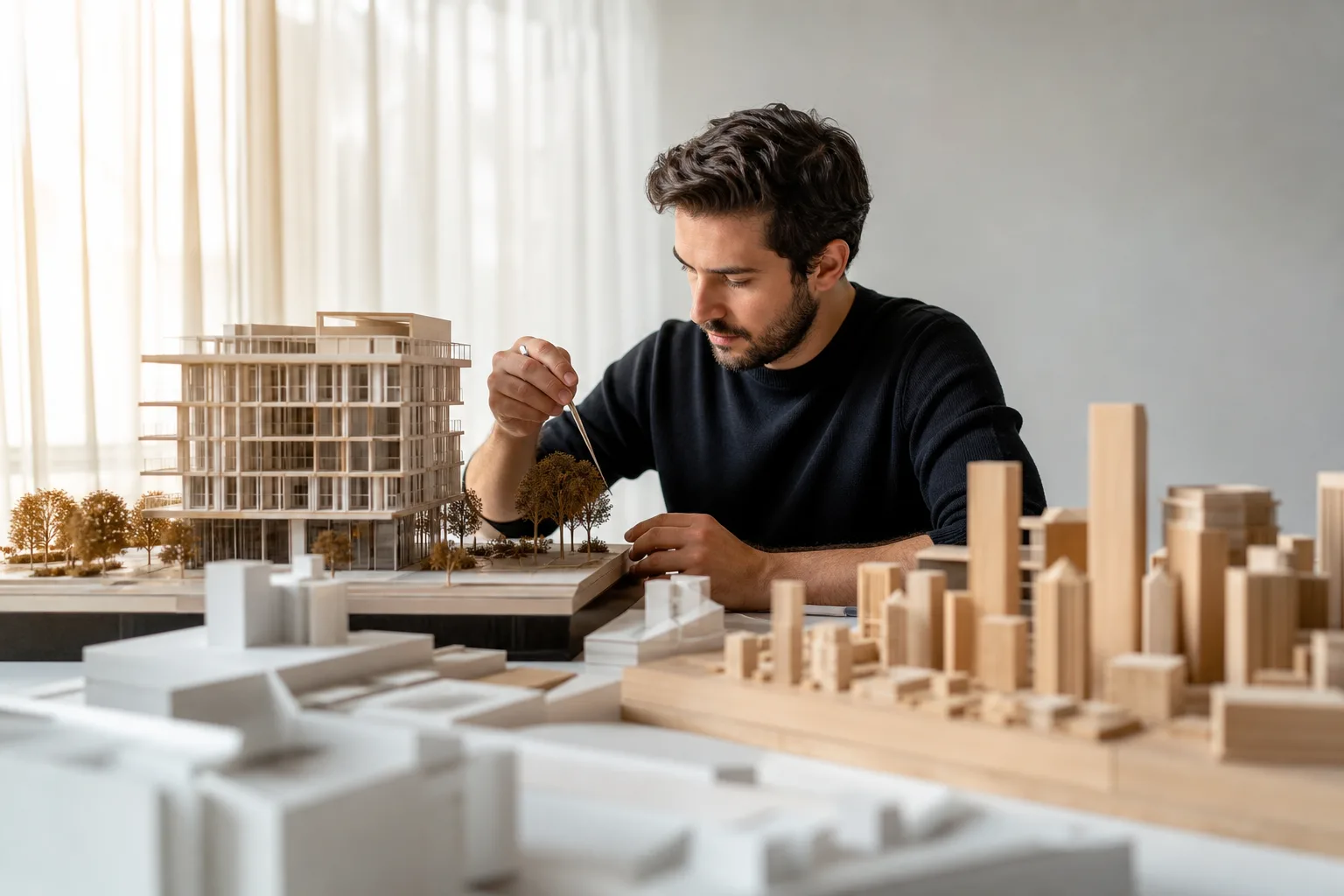
Every large Dubai development gets presented as a physical model before it gets built: to a planning committee, to investors, to buyers in a sales suite. Activity code 7110.76 is the license for making those models.
The word to hold onto is production. This is a technical fabrication license, not a design consultancy one. If your business physically builds the model, this is your code, even where some design input goes into the process. This guide covers what the license allows, who commissions the work, how mainland and free zone compare, the setup steps, and what it costs to run.
Key Stats at a Glance

What This License Covers
Code 7110.76 sits in ISIC Division 71, architectural and engineering activities and related technical consultancy. It covers the physical production of scale models and maquettes for architectural, urban planning, real estate and infrastructure projects.
The distinction from design consultancy is the whole point of the code. A design consultancy license covers the conceptual and advisory work that may come before a model exists. This one covers making the object. If your business produces the finished physical model, 7110.76 is the right code no matter how much design thinking goes into it.
Getting that right at application stage matters practically, not just tidily. Putting the wrong code on the application causes approval delays and can bring amendment fees.
Who Your Clients Will Be
Four groups commission presentation-grade models:
- Property developers and real estate companies
- Architecture and urban planning firms
- Government agencies and master planners
- Exhibition organisers
They buy for three purposes: project approvals, developer launches and public display. That matters commercially, because each purpose carries its own deadline pressure and its own tolerance for cost. An approval model has to be accurate. A launch model has to be beautiful. An exhibition model has to survive being looked at by thousands of people.
Demand here is structural rather than cyclical. Dubai's continuing pipeline of mixed-use developments, transport infrastructure and urban expansion keeps model making studios occupied through the cycle rather than only in boom years.
Mainland or Free Zone
This decision is commercial rather than administrative, and it turns on who your clients are and how their contracts work.
A mainland license from the Department of Economy and Tourism lets you contract directly with UAE government entities, public-sector infrastructure bodies and semi-government developers with no restrictions. If tendering for government-linked projects is part of the plan, that is the route.
Meydan Free Zone gives you lower setup costs, full foreign ownership, faster setup and defined visa packages, with a central Dubai location and a digital process. It fits a studio serving international architecture firms, private developers and exhibition clients where direct government work is not a priority, and it is a sensible default for an independent or boutique studio entering the market. Let your clients decide it, not the price.
[blockCTACostCalculator]
Step by Step Setup Guide
- Step 1, confirm your activity code: Check that 7110.76 is correctly listed on the application. Getting this wrong delays approval and can bring amendment fees.
- Step 2, choose your jurisdiction: Mainland DET if government tendering matters. Free zone for cost and speed if it does not.
- Step 3, book your trade name: Submit through the DET portal or your free zone. The name should read as a technical and professional service.
- Step 4, submit your setup documents: Passport copies, current visa status paperwork, a No Objection Certificate if you are employed, and a short business plan summary where it is asked for.
- Step 5, sort your premises: Free zone applicants can use a flexi-desk or shared workspace. Mainland applicants need a tenancy contract registered on Ejari, and office size directly sets your visa quota.
- Step 6, get initial approval and pay the fees: Once documents are checked and fees settled, the trade license is issued. Free zone timelines are usually faster, often a few working days.
- Step 7, open a corporate bank account: Allow four to eight weeks. Take a clear business plan, your license, and any client or contract paperwork to support the application.
- Step 8, apply for visas: Investor and partner visas go through the relevant authority, and employee visas follow once your establishment card is active.
Compliance and What You Need in Place
Your code, precisely stated
Because this is a production license rather than a consultancy one, the wording on your application should describe fabrication. Studios that describe themselves loosely as design businesses create a mismatch that shows up at approval.
Annual renewal
Renew the license every year with the issuing authority. It is not optional, and it is the easiest thing to let slip.
VAT
Register with the Federal Tax Authority once revenue passes AED 375,000. For a studio winning a few large developer contracts, that threshold arrives faster than the number of jobs suggests.
Books and records
Keep accurate bookkeeping and financial records. In a fabrication business with materials, labour and fit-out costs running through it, clean records also make your own job costing possible.
Visas and permits
Visa renewals and employee permit management are ongoing rather than one-off. On the mainland this ties back to office size, so plan headcount and premises together.
Costs beyond the license
Budget separately for fit-out and kit. A model making studio needs workshop space and machinery, and neither the mainland nor the free zone figures above include those.
Market Opportunity
The scale underneath this activity is the UAE construction sector, valued at over AED 230 billion. Every large project inside that number needs presentation models at some point, whether for approvals, launches or public display.
The timeline matters as much as the size. Dubai's real estate project pipeline is among the largest in the world through 2030, which turns a busy market into a visible one. A studio can plan capacity against a pipeline rather than guess at demand.
The client mix adds resilience. Developers, architecture practices, government agencies and exhibition organisers do not all commission at the same point in a project, or at the same point in a cycle, so a studio with all four on its list has work arriving from different directions.
Conclusion
This is a focused, well-defined activity with clear regulatory standing and consistent demand from developers, planners and exhibition clients.
The one thing to get exactly right is the code. This is fabrication, not consultancy, and the license should say so.
After that the choice is jurisdiction. Free zone is faster and cheaper to establish. Mainland is what you need if government contracts sit at the centre of the business. Both work, and the answer follows your client list.
[blockCTAContact]