
Table of Contents
Frequently Asked Questions
What is activity code 4759.01 and what does it permit for furniture retailers in Dubai
Activity code 4759.01 covers the Retail Sale of Household Furniture — specifically furniture intended for domestic use. This includes sofas, beds, wardrobes, dining sets, coffee tables, and storage units sold directly to end consumers or residential buyers.
The activity does not cover office furniture retail, wholesale trade, or interior fit-out contracting, each of which requires its own separate licence classification. Keeping these boundaries clear is important when structuring your initial licence application.
Within its scope, the activity is broad enough to support a physical showroom, an e-commerce platform, a catalogue-based ordering system, or a combination of all three. Complementary activities such as home accessories, soft furnishings, and decorative items can often be bundled under the same licence at the time of application.
Why is Dubai considered a strong market for household furniture retail
Dubai's furniture retail sector benefits from structural, not merely cyclical, demand. The city's population exceeds 3.6 million residents, with consistent household formation recorded by the Dubai Statistics Center. Every new resident, hotel opening, serviced apartment launch, and short-term rental listing generates furniture procurement needs.
The UAE furniture and home furnishings market has shown consistent year-on-year growth driven by both residential and hospitality construction pipelines. The IMARC Group has reported continued expansion in furniture demand across the Gulf region.
Dubai also functions as a regional distribution hub. Furniture imported through Jebel Ali and the wider port network moves efficiently into retail channels serving the UAE, GCC, and beyond, giving locally licensed operators a meaningful logistical advantage.
What are the main business models available for a furniture retail store in Dubai
Several viable business models exist for household furniture retail in Dubai. These include import-and-retail (sourcing from established manufacturing markets and selling direct to consumers), franchise operations under an international brand, private label product ranges, and online-first models with third-party fulfilment.
Each model carries a different capital requirement and margin profile. Import-and-retail typically requires higher upfront inventory investment but offers stronger margin control, while franchise models reduce sourcing complexity at the cost of royalty obligations.
Online-first models benefit from lower showroom overhead and can be operated effectively through a free zone licence structure, which supports e-commerce channels directed at UAE consumers without requiring a separate mainland retail licence, subject to applicable regulations.
Who are the primary customer segments for a household furniture retailer in Dubai
The core customer segments for household furniture retail in Dubai include expat households furnishing new residences, property developers fitting out units for sale or rent, and short-term rental operators equipping apartments for platforms such as Airbnb.
Hospitality procurement teams outfitting hotels and serviced residences represent an additional high-volume segment. Dubai's buoyant hospitality pipeline — driven by ongoing hotel and serviced apartment development — means this segment generates consistent bulk purchasing demand.
High expat turnover is itself a structural demand driver. As residents relocate in and out of Dubai, furniture procurement cycles repeat regularly, creating a recurring customer base rather than a one-time market.
When does a furniture retailer in Dubai need to register for VAT
VAT registration with the Federal Tax Authority becomes mandatory once a business's annual turnover reaches AED 375,000. For a growing furniture retail operation, this threshold can be reached relatively quickly, particularly if wholesale or developer supply contracts are included in revenue.
The standard UAE VAT rate applied to retail sales is 5%. While the rate is low by international standards, compliance requires consistent record-keeping from the first day of trading, not just from the point of registration.
Building VAT obligations into your financial model at the outset — rather than retrofitting compliance later — avoids administrative complications and potential penalties as the business scales.
What logistical advantages does Dubai offer furniture importers and retailers
Dubai's proximity to DP World's Jebel Ali facility, one of the world's largest container ports, gives locally licensed furniture retailers a genuine supply chain advantage. The port network, managed under the Ports, Customs and Free Zone Corporation, enables efficient movement of imported goods into UAE retail channels and onward to GCC markets.
Free zone entities benefit from the ability to hold bonded inventory, defer import duty, and manage re-export without the additional friction that mainland customs structures can introduce. This is particularly valuable for retailers sourcing from high-volume manufacturing markets in Asia or Europe.
For businesses operating an import-and-retail model, these logistical efficiencies can have a meaningful impact on landed cost and, consequently, on retail margin.
Can a furniture retail licence in Dubai cover online sales as well as a physical showroom
Yes. Activity code 4759.01 permits retail operations across multiple channels simultaneously. A single licence can cover a physical showroom, an e-commerce platform, and a catalogue-based ordering system without requiring separate licences for each channel.
A free zone licence structure supports online sales directed at UAE consumers without mandating a separate mainland retail licence, subject to the applicable regulations in force at the time of operation. This makes free zone licensing an efficient starting point for omnichannel retail models.
Retailers planning to operate both online and in-store should confirm the exact permitted activity scope with their chosen free zone — such as Meydan Free Zone — during the activity selection stage of their application.
What complementary activities can be added to a household furniture retail licence
Complementary retail activities — including home accessories retail, soft furnishings, and decorative items — can often be bundled under the same licence as activity code 4759.01 at the time of application. This allows a retailer to offer a broader product range without holding multiple separate licences.
The exact list of permitted complementary activities varies by free zone and is confirmed during the activity selection stage. It is advisable to discuss your intended product range with the licensing authority — for example, Meydan Free Zone — before submitting your application to ensure all relevant activities are captured from the outset.
Adding complementary activities at the application stage is generally more straightforward and cost-effective than amending a licence after it has been issued, so thorough planning of your product scope early in the process is worthwhile.
How to Open a Household Furniture Retail Store in Dubai
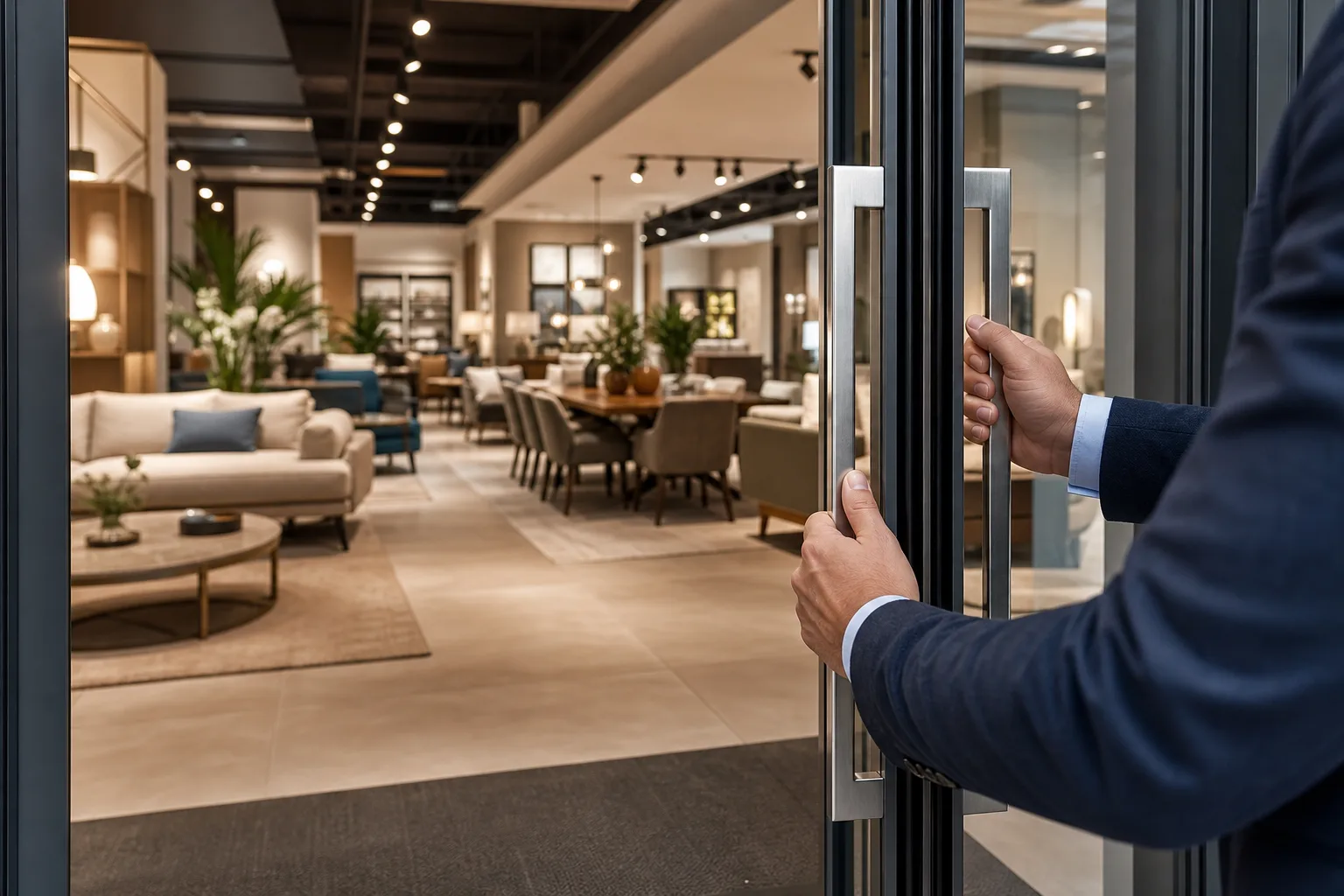
Every new resident needs a bed. Every hotel opening, serviced apartment launch and short-term rental listing needs a full fit-out. With Dubai's population above 3.6 million and household formation rising steadily, furniture demand here is structural rather than cyclical.
This guide covers what activity code 4759.01 lets you sell, where the boundaries sit, who buys, and how the import side works in your favour from a free zone base.
Key Stats at a Glance

What This License Covers
Activity code 4759.01 covers retail sale of household furniture: furniture meant for domestic use, sold direct to the person who will live with it. Sofas, beds, wardrobes, dining sets, coffee tables, storage units and related household items all sit inside it.
Where the boundaries are
Office furniture retail is a separate code. So is wholesale trade, and so is interior fit-out work. Those three catch out more applicants than anything else, because a furniture business drifts naturally towards all of them. Decide at the start which you actually want, because adding an activity to a live license costs more than including it in the first application.
Channels
One license covers a physical showroom, an e-commerce platform, a catalogue-based ordering system, or all three at once. A free zone structure supports online sales aimed at UAE consumers without a separate mainland retail license, subject to the rules in force when you trade. Complementary lines such as home accessories, soft furnishings and decorative items can usually be bundled at application, so map your full product range before you apply.
Who Your Clients Will Be
Expatriate households
Your volume base. People arrive, furnish a home, and leave again a few years later, which means the same demand repeats rather than saturating. High turnover is the friend of this trade.
Property developers
Units furnished for sale or rent are bought in batches on contract terms. Fewer customers, far bigger orders, and a buying cycle you can plan around.
Short-term rental operators
Apartments equipped for platform letting need full sets fast, and then replacements as wear shows. A practical, repeat segment with real urgency behind each order.
Hospitality procurement
Hotels and serviced residences buy in bulk, and Dubai's development pipeline keeps that flowing. Long lead times, large volumes, demanding specifications.
Which of these you chase decides your model. Import-and-retail ties up more capital in stock but gives you margin control. Franchising an international brand cuts sourcing work in exchange for royalties. Private label sits in between. An online-first model with third-party fulfilment carries the lightest overhead of all.
Mainland or Free Zone
This is the biggest choice you will make when setting up, and for furniture it turns on stock as much as on customers.
Furniture is bulky, imported and duty-bearing, which is exactly where a free zone earns its keep. Holding bonded inventory, deferring duty until goods move, and re-exporting without extra friction all improve your landed cost, and landed cost is what your retail margin is built on. Meydan Free Zone also gives you full ownership, no local sponsor and full profit repatriation, which matters when the founder is an expatriate importing from overseas.
A mainland license makes more sense if your model depends on a large walk-in showroom in a prime retail location.
[blockCTACostCalculator]
Step by Step Setup Guide
- Step 1, book your trade name: Choose a name that follows UAE naming conventions and reserve it.
- Step 2, confirm your activity and add-ons: Lock in 4759.01 plus any complementary lines such as home accessories or soft furnishings while you are still applying.
- Step 3, submit your papers: Passport copies for all shareholders and directors, a summary business plan, and confirmation of your starting capital.
- Step 4, collect your license: Once papers are approved and fees paid, the trade license is typically issued within a few working days.
- Step 5, choose your workspace: A flexi-desk suits a lean operation running through e-commerce or third-party showrooms. Take warehouse and storage space if you will hold stock, and check the option matches your customs plans before committing.
- Step 6, set up your import chain: Appoint a freight forwarder who knows furniture, so your HS codes and duty calculations are right the first time.
- Step 7, sort visas and banking: Your license package sets your visa allocation, so match it to the headcount you actually plan to hire.
Compliance and What You Need in Place
Product standards
Furniture sold in the UAE must meet consumer protection and product safety standards. Get country-of-origin certificates and compliance declarations from your suppliers before you import, not after the container lands.
Customs and documentation
Import clearance runs through the Ports, Customs and Free Zone Corporation framework at Jebel Ali. Getting your HS codes and duty calculations right is where errors get expensive, which is the argument for a forwarder who handles furniture regularly.
VAT
Registration becomes mandatory at AED 375,000 of annual turnover, and retail sales carry VAT at 5%. Worth knowing: voluntary registration below the threshold can pay for itself if you are reclaiming input VAT on sizeable import costs. Keep records from your first sale either way.
Staff
If you hire, MOHRE rules apply: employment contracts, Wages Protection System payroll registration, and Emiratisation targets as your headcount grows.
Market Opportunity
The demand behind this trade is easy to read. Dubai's population is over 3.6 million and household formation keeps rising, so IMARC Group reports continued growth in furniture demand across the Gulf on the back of both residential and hospitality construction.
What makes it durable rather than merely large is turnover. Expatriates cycle in and out of the city constantly, and each move triggers another furnishing round. Layer the hospitality pipeline on top, with hotels and serviced apartments in continuous development, and you get demand that renews itself instead of being satisfied once.
The second advantage is position. Dubai works as a regional distribution hub, and goods arriving through Jebel Ali move efficiently into UAE retail and onward into the GCC. For an import-and-retail model, that shortens your supply chain and cuts landed cost, and from a free zone base you can hold stock in bond and pay duty only when goods move to market. In a category where shipping and duty eat margin, that is where the money is made.
Conclusion
Household furniture retail is one of the more accessible activities to license in Dubai. The code is clear, the channels are flexible enough to cover showroom and online under one license, and the demand rests on population growth and expatriate turnover rather than fashion.
Two things decide how well it goes. Get your activity scope right at application, including the complementary lines and the boundaries around office furniture, wholesale and fit-out work. Then build your import chain properly, because in furniture retail the margin is won at the port, not on the shop floor.
[blockCTAContact]