
Table of Contents
Frequently Asked Questions
What activity code covers consumer electronics repair in Dubai
Consumer electronics repair businesses in Dubai operate under activity code 9521. This code covers a broad range of repair services including smartphones, tablets, laptops, audio-visual equipment, and domestic electronic devices.
Operators can expand their service scope over time, but it is common practice to focus on a core offering — such as smartphone and tablet repair — before broadening into more specialist categories like motherboard-level repairs or data recovery.
Can I set up a consumer electronics repair business in a Dubai free zone
Yes. Meydan Free Zone is one of the licensing options available for setting up a consumer electronics repair business in Dubai under activity code 9521. Free zone licensing can offer streamlined setup processes and specific operational benefits depending on your business model.
It is worth comparing free zone and mainland licensing structures, as each affects where you can physically operate, who you can trade with directly, and what additional approvals may be required.
How large is the market opportunity for electronics repair in Dubai
The market opportunity is substantial. The UAE has a smartphone penetration rate consistently above 90%, and Dubai alone has a resident population of over 3.6 million, according to the Dubai Statistics Center. This creates a large base of device-dependent customers who need repair services.
Beyond residents, the UAE receives over 17 million tourist arrivals annually, many of whom carry devices requiring servicing. Corporate demand from SMEs and enterprises managing staff device fleets adds a further recurring revenue layer that independent operators can target.
What services and revenue streams can a repair business offer under activity code 9521
Activity code 9521 supports a wide range of revenue streams. Core income typically comes from device repair fees — screen replacements, battery swaps, and motherboard repairs — alongside spare parts retail sold to end customers or trade buyers.
Higher-margin opportunities include data recovery services, which face relatively low competition, as well as extended warranties, service contracts, and corporate device fleet management retainers. Corporate contracts take longer to close but generate predictable, recurring revenue with a different margin profile to walk-in B2C work.
Who are the main customer segments for an electronics repair business in Dubai
The customer base is genuinely mixed. B2C walk-ins from residents and tourists form the baseline, particularly in high-footfall retail corridors such as Downtown Dubai and Deira, where independent repairers can capture demand without competing directly with authorised brand service centres.
B2B opportunities exist with SMEs managing staff device fleets, hospitality operators maintaining in-room AV equipment, and insurance companies seeking approved repair partners for device claims. Each channel carries a different margin profile and sales cycle, so most operators benefit from pursuing both simultaneously.
What regulatory bodies does an electronics repair business in Dubai need to be aware of
The Telecommunications and Digital Government Regulatory Authority (TDRA) oversees electronic devices and telecommunications equipment in the UAE. Any business handling, modifying, or repairing regulated devices — particularly those involving SIM functionality or radio frequency components — should confirm current TDRA technical compliance requirements.
Customs procedures for importing spare parts are governed by the Ports, Customs and Free Zone Corporation (PCFC). Duty rates vary by component, so confirming the correct HS codes before building a cost model is essential. VAT compliance is managed by the Federal Tax Authority (FTA), with mandatory registration once annual taxable turnover exceeds AED 375,000.
How does Dubai's logistics infrastructure benefit spare parts sourcing for repair businesses
Dubai's position as a global logistics and trade hub gives electronics repair operators a meaningful cost and efficiency advantage when sourcing spare parts. World-class freight infrastructure operated through DP World enables fast, cost-competitive importation of components from major manufacturing regions.
This makes it practical to maintain leaner inventory while still achieving fast repair turnaround times — a key competitive differentiator against both authorised service centres and less professionally run independent competitors.
How does the competitive landscape break down between authorised service centres and independent repairers
The market splits into two distinct segments. Authorised service centres operate under brand restrictions, follow manufacturer-set pricing, and typically carry longer turnaround times due to parts sourcing requirements. They serve customers who prioritise warranty preservation or brand assurance.
Independent repairers can offer faster turnaround and lower costs, and face no brand restrictions on the devices they accept. The independent segment has significant room for professional operators who invest in quality parts and certifiable technicians, as this distinguishes them from lower-quality competitors and builds the trust needed to win corporate and insurance-linked contracts.
How to Start a Consumer Electronics Repair Business in Dubai
Almost everyone in Dubai carries a device they cannot manage without, and a cracked screen is a bad morning rather than a reason to buy a new phone. That habit, repair before replace, is what the trade runs on.
This guide covers what activity code 9521 lets you service, who brings you work, and how to get licensed through Meydan Free Zone. Demand comes from three directions at once: residents, tourists passing through, and companies with staff devices to look after.
Key Stats at a Glance
| Activity code | 9521, Repair of Consumer Electronics |
|---|---|
| What it covers | Smartphones, tablets, laptops, audio-visual equipment and domestic electronic devices |
| Smartphone penetration | Above 90% of the population, among the highest in the world – Statista |
| Dubai population | Over 3.6 million residents – Dubai Statistics Center |
| Tourist arrivals | More than 17 million a year, many carrying devices that need servicing |
| Main regulator | Telecommunications and Digital Government Regulatory Authority |
| Parts imports | Customs handled by the Ports, Customs and Free Zone Corporation |
| VAT threshold | AED 375,000 taxable turnover a year, repairs rated at 5% – Federal Tax Authority |
| Foreign ownership | 100% in Meydan Free Zone, with no office needed to start |
What This License Covers

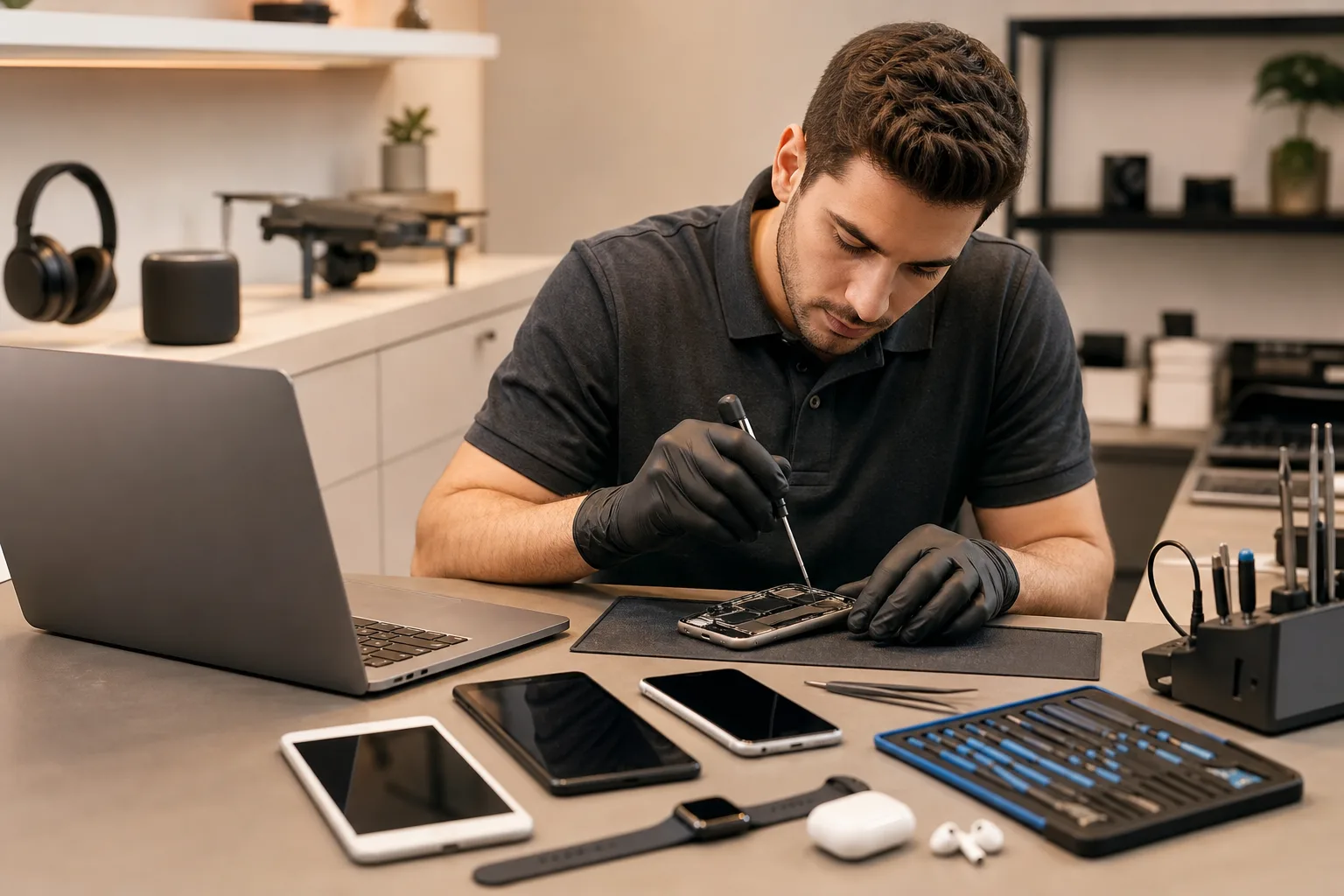
Activity code 9521 covers the repair of consumer electronics broadly: smartphones, tablets, laptops, audio-visual equipment and domestic electronic devices.
In practice, do not try to do all of it at once. Most well-run shops pick a core offering, usually smartphone and tablet repair, get good at it, then widen into the specialist end later. Motherboard-level work and data recovery are where the margin sits, but they are also where you need proper skill before you take somebody's only copy of their photographs.
If you also intend to sell parts rather than just fit them, check whether a trading activity needs adding to your license.
Who Your Clients Will Be
Your buyers split into two channels. On the consumer side you get walk-ins from residents and from tourists, especially in high-footfall retail corridors such as Downtown Dubai and Deira. That is your baseline volume, and it is available without going head to head with the authorised brand service centres.
On the business side your buyers fall into three groups:
- SMEs looking after fleets of staff devices
- Hospitality operators maintaining in-room AV equipment
- Insurance companies wanting an approved repair partner for device claims
The two channels behave differently. Corporate contracts take longer to close but pay predictably every month, and they justify holding stock and hiring properly. Walk-in work pays today. Most operators want both. Money comes from repair fees, screen replacements, battery swaps and motherboard work, plus spare parts sold to customers or trade buyers. Data recovery is the high-margin corner with the least competition, and extended warranties, service contracts and corporate fleet retainers sit on top.
Mainland or Free Zone
| Factor | Mainland (DET) | Free Zone (Meydan Free Zone) |
|---|---|---|
| Who you serve | Open UAE market, including a retail counter | Service contracts and B2B work |
| Foreign ownership | Set by DET rules for the activity | 100% yours |
| Premises | Set by DET | No physical office needed to begin |
| TDRA compliance | Applies | Applies |
| Setup route | Apply through DET | Apply online, licenses issued in a few working days |
Each structure affects where you can physically work, who you can trade with directly, and what extra approvals apply, so this is worth settling before you apply rather than after. If your plan centres on a shopfront catching walk-in trade, that points one way. If it centres on corporate fleets and insurance work, a free zone license through Meydan Free Zone fits better and costs less to start. Let your clients decide it, not the price.
[blockCTACostCalculator]
Step by Step Setup Guide
- Step 1, pick your business activity: Confirm code 9521, Repair of Consumer Electronics, is in your license scope. If you plan to sell parts as well, ask whether a trading activity should be added.
- Step 2, book your trade name: Choose a name that meets UAE naming rules, with nothing offensive, no reference to government bodies, and nothing already registered.
- Step 3, send in your setup documents: Typically passport copies, proof of address and the completed application forms. Most nationalities need no notarised documents at this stage.
- Step 4, get your trade license: Meydan Free Zone issues licenses quickly, often within a few working days once the paperwork is in order.
- Step 5, apply for visas and open a bank account: The license lets you sponsor yourself and staff for UAE residency. Build standard UAE banking due diligence timelines into your launch plan.
Compliance and What You Need in Place
TDRA
TDRA oversees electronic devices and telecommunications equipment in the UAE. If you handle, modify or repair regulated devices, check the current TDRA technical compliance rules, above all for anything involving SIM functionality or radio frequency components. Those are the categories where a repair can quietly put a device outside what is legally operable.
Importing parts
Spare parts come in under customs procedures governed by the Ports, Customs and Free Zone Corporation. Duty rates vary by component, so confirm the HS codes for your main parts categories before you build a cost model. Getting this wrong does not just cost duty, it distorts your pricing from day one.
VAT
Register with the Federal Tax Authority once annual taxable turnover passes AED 375,000. Repair services are standard-rated at 5%, and imported parts attract VAT at the point of entry. Account for both, because the second one catches people out.
Staff
Running a workshop means MOHRE compliance: employment contracts, work permits, and Emiratisation quotas that apply once your headcount reaches the relevant level.
Quality
Not a legal duty, but the one that decides your ceiling. Quality parts and certifiable technicians are what separate a professional operator from the rest of the independent field, and they are what insurance companies and corporate buyers check before they sign anything.
Market Opportunity
The UAE consumer electronics market keeps expanding on high disposable income and strong device adoption. People upgrade often, and they also repair when cost or convenience points that way. Smartphone penetration sits above 90% of the population, among the highest anywhere, and Dubai alone has over 3.6 million residents. That is a very large base of device-dependent customers in a small area.
On top of the resident market, the UAE takes more than 17 million tourist arrivals a year, and a fair share of them arrive with something that needs fixing. Corporate demand adds a third layer, with SMEs and larger firms managing staff device fleets on a recurring basis.
Dubai's position as a logistics and trade hub helps on the supply side. World-class freight infrastructure operated through DP World makes parts sourcing fast and cost-competitive, which means you can hold leaner stock and still turn repairs around quickly. That speed is the main thing you have over the authorised service centres, who work under brand restrictions, manufacturer-set pricing and longer parts sourcing times. The independent segment has real room for operators who invest in quality parts and proper technicians.
Conclusion
Consumer electronics repair is a commercially sound, low-barrier business to run in Dubai. The demand is structural, driven by a tech-reliant population, heavy tourist volumes and growing corporate device dependency.
Three things decide how it goes: TDRA compliance on regulated devices, correct HS coding for your parts, and technicians good enough to win the corporate and insurance work rather than only the walk-ins.
[blockCTAContact]