
Table of Contents
Frequently Asked Questions
What does activity code 3315.99 cover for a light aircraft maintenance business in Dubai?
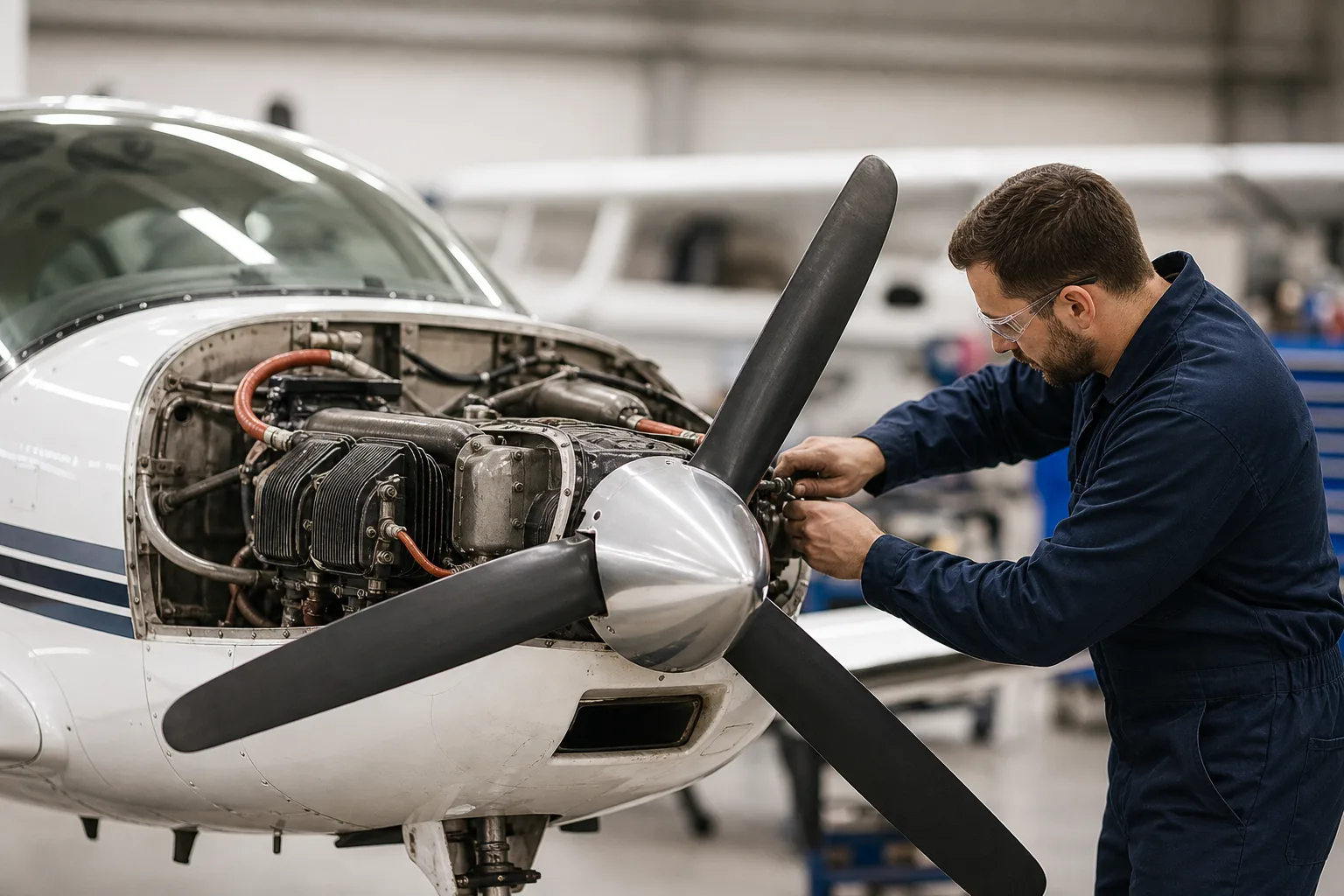
Activity code 3315.99, Light Aircrafts Maintenance & Repair, covers the inspection, servicing, repair, and overhaul of light aircraft and their components. This includes airframe work, piston and turboprop engine maintenance, avionics systems, landing gear, and structural repairs on aircraft that fall below commercial category thresholds.
Who are the typical customers for a light aircraft maintenance business in Dubai?
The customer base is well-defined and spans several segments. Private aircraft owners holding UAE-registered or foreign-registered light aircraft need regular inspections and ad hoc repairs. Flight training academies operating fleets of Cessna, Piper, Diamond, or similar aircraft require scheduled maintenance to keep aircraft airworthy.
What is the typical revenue model for a light aircraft maintenance business?
The revenue model combines two streams. The first is scheduled maintenance contracts, annual inspections, 100-hour checks, and component overhauls, which provide predictable, recurring workflow. The second is ad hoc repair work and parts supply, which varies in volume but often carries strong margins.
What is the difference between a trade license and a maintenance approval in the UAE?
These are two entirely separate authorisations. A trade license, issued through a free zone such as Meydan or a mainland authority, gives you the legal right to operate a business under the relevant activity code. It does not, on its own, permit you to carry out aircraft maintenance work.
What regulatory body oversees aircraft maintenance in the UAE?
All aircraft maintenance activity in the UAE falls under the oversight of the Dubai Civil Aviation Authority (DCAA). The DCAA provides the approval a business must hold before legally carrying out maintenance work on aircraft.
Why is there a commercial opportunity specifically in light aircraft maintenance in Dubai?
Most large MRO operators in the UAE are structured around commercial aircraft, leaving light aircraft owners and operators underserved. Flying clubs, training academies, and private individuals frequently lack access to cost-effective, specialist maintenance providers, creating a clear gap in the market.
What operational requirements are needed to run a light aircraft maintenance business?
Three core operational requirements must be in place. First, you need access to a hangar or certified workshop that meets DCAA facility standards. Second, you must maintain a certified tooling inventory appropriate to the scope of work your DCAA approval covers.
What role does Meydan Free Zone play in licensing this type of business
Meydan Free Zone is one of the licensing authorities through which a light aircraft maintenance business can be incorporated and issued a trade license in Dubai. It provides the commercial and legal framework, company registration, activity code assignment under 3315.99, and the trade license itself.
How to Start a Light Aircraft Maintenance Business in Dubai
The UAE sits under one of the busiest air corridors in the world. Most of the attention goes to the big carriers and the large hangars that service them. Underneath all that sits a quieter, steadier run of work: private planes, training fleets and small charter aircraft, all of which need servicing on a fixed schedule whether the market is busy or not.
This guide covers what activity code 3315.99 lets you do, who pays for the work, what the Dubai Civil Aviation Authority requires, and how to get licensed through Meydan Free Zone. Your trade license is only half of it; the DCAA approval behind it is what actually lets you work on an aircraft. Getting that order right before you start will save you months.
Key Stats at a Glance
| Activity code | 3315.99 |
|---|---|
| What it covers | Inspection, servicing, repair and overhaul of light aircraft and their components |
| Approving authority | Dubai Civil Aviation Authority (DCAA) |
| Pre-approval | DCAA pre-approval required before the licence is issued |
| Certifying staff | Licensed Aircraft Maintenance Engineers (AMEs) |
| Aircraft in scope | Light aircraft below commercial category thresholds |

What This License Covers
Activity code 3315.99, Light Aircrafts Maintenance and Repair, covers the inspection, servicing, repair and overhaul of light aircraft and the parts that go into them. In practice that means airframe work, piston and turboprop engine maintenance, avionics systems, landing gear and structural repairs.
The line is drawn at commercial category thresholds. This code is scoped to general aviation, so private planes, training fleets and small charter aircraft. Airline maintenance is a different business with a different approval behind it, and it is not what this license buys you.
Who Your Clients Will Be
The customer list in this trade is short and easy to name.
- Private aircraft owners, flying either UAE-registered or foreign-registered light aircraft
- Flight training academies running Cessna, Piper, Diamond or similar fleets
- Flying clubs with shared aircraft that need regular airworthiness checks
- Charter operators doing sightseeing, aerial photography or short private hops
Money arrives in two forms. Scheduled work gives you a book you can plan around: annual inspections, 100-hour checks and component overhauls. Ad hoc repairs and parts supply move up and down month to month, but they carry the better margins. Sign-offs and airworthiness certificate renewals come round every year on their own.
Margins here beat commercial MRO for a simple reason. The work is specialist, and very few outfits in the UAE are qualified to do it.
Mainland or Free Zone
| Factor | Mainland (DET) | Free Zone (Meydan Free Zone) |
|---|---|---|
| Who you serve | Open UAE market | Owners, academies, clubs and charter operators under contract |
| Foreign ownership | Set by DET rules for the activity | 100% yours |
| DCAA pre-approval | Needed | Needed |
| Hangar or workshop | Arranged separately | Arranged separately |
| Setup route | Apply through DET | Apply online, remote setup possible |
Either route gets you a company. Neither one gets you the right to touch an aircraft. Let your clients and your hangar decide which you pick, not the price. Most people in this trade start in a free zone because the setup is quick and the company is fully theirs, then put their energy into the DCAA file, which is the part that actually takes time.
[blockCTACostCalculator]
Step by Step Setup Guide
- Step 1, confirm your activity code: Check that 3315.99, Light Aircrafts Maintenance and Repair, sits on the Meydan Free Zone approved activity list, and book your trade name while you are there.
- Step 2, secure DCAA pre-approval: This activity needs pre-approval from the Dubai Civil Aviation Authority before the trade license is issued, so start it early.
- Step 3, send in your setup documents: Passport copies for every shareholder and director, the application forms, and the professional credentials of whoever will run the technical side.
- Step 4, get the trade license: Once the DCAA pre-approval is in place, Meydan Free Zone issues the commercial license. That gives you a legal company in Dubai. It does not yet let you work on an aircraft.
- Step 5, complete your operational approval: Obtain the operational approval to maintain aircraft, which takes in a facility inspection and a written exposition of how you work.
- Step 6, sort visas and banking: Apply for investor and employee visas under your license allocation, then open a corporate bank account with the license and your setup papers.
- Step 7, fit out and staff up: Secure the workshop or hangar, bring licensed AMEs on board, and finish the tooling and paperwork the inspector will ask to see.
Meydan Free Zone supports remote setup, so shareholders outside the UAE can clear the first stage without flying to Dubai.
Compliance and What You Need in Place
Regulatory approval
The Dubai Civil Aviation Authority sets the approval requirement for this activity, and its pre-approval is needed before the trade license is issued. Your trade license is commercial approval. The operational approval to maintain aircraft is separate, and you cannot legally maintain an aircraft without it. It carries its own facility inspection and document review.
AME licenses
Every person who signs off work must hold a recognised Aircraft Maintenance Engineer license covering the aircraft category in question. This is not a nice-to-have. Without qualified AMEs on the payroll, the company cannot sign an inspection or issue an airworthiness certificate, whatever else it holds.
Maintenance organisation exposition
The MOE is your quality and procedures manual. You write it, you submit it as part of your operational approval application, and you then work to it. Inspectors read it and check that the shop floor matches what is on the page.
Continued airworthiness
Work has to follow the applicable Civil Aviation Regulations, known as the CARs, which set the maintenance standards you are held to over the life of each aircraft.
Facility and tooling
You need a hangar or certified workshop that meets the required facility standards, plus a certified tooling inventory that matches the scope of work on your approval. Both are inspected. Get them wrong and the approval stalls.
Market Opportunity
The gap in this market is specific. Most large MRO operators in the UAE are built around commercial aircraft, which leaves light aircraft owners short of options. Flying clubs, training academies and private owners often have no cost-effective specialist to call. That is the commercial opening, and it has not closed.
The volume behind it keeps growing. The UAE has several active general aviation airports, including Al Maktoum International and Sharjah International. Dubai hosts a number of licensed flight training academies running light aircraft fleets that need constant servicing. Private and business aviation activity has risen steadily since 2020, and the wider Middle East MRO market is set to grow at a CAGR of over 4% through the late 2020s.
Conclusion
Light aircraft maintenance is technical work with a high bar to entry, and that bar is the point. Once you are through it, the pool of people who can compete with you is small.
The path itself is clear enough. A Meydan Free Zone license gives you the company and full ownership of it, once DCAA pre-approval is in place. The operational approval gives you the right to do the work. You need both, and the second one takes longer, so start it early.
Three things decide how smoothly this goes: your operational approval, licensed AMEs on staff, and a facility that passes inspection. Sort those and the rest is routine.
[blockCTAContact]
References
- Dubai Civil Aviation Authority
- Mordor Intelligence
- Ministry of Economy and Tourism, Establishing companies