
Table of Contents
Frequently Asked Questions
What business activity code covers aircraft seats upholstery in Dubai
Aircraft seats upholstery businesses in Dubai operate under activity code 3315.94, which falls within the repair and maintenance of transport equipment classification. This is a specialist niche within the broader MRO sector.
The code can be registered via free zone authorities such as Meydan Free Zone, which permits 100% foreign ownership and provides a commercially practical setup for international entrepreneurs entering the UAE aviation services market.
Is 100% foreign ownership allowed for an aircraft upholstery business in Dubai
Yes. Under UAE free zone regulations, 100% foreign ownership is permitted. This makes free zones like Meydan an attractive option for international investors who want full control of their business without requiring a local Emirati partner.
This ownership structure is a significant advantage compared to many other jurisdictions in the region, and it applies directly to businesses registered under activity code 3315.94.
What role does the GCAA play in regulating aircraft upholstery work in the UAE
The UAE General Civil Aviation Authority (GCAA) oversees any work that touches certified aircraft components. Operators must confirm whether their specific scope of work requires direct GCAA approval or falls under the certification held by a contracting MRO facility.
In most commercial arrangements, the MRO facility holds Part 145 approval and subcontracts upholstery work to specialist operators. Understanding exactly where your liability and compliance obligations sit is essential before signing any contracts or beginning operations.
What are the main services an aircraft seats upholstery business would offer
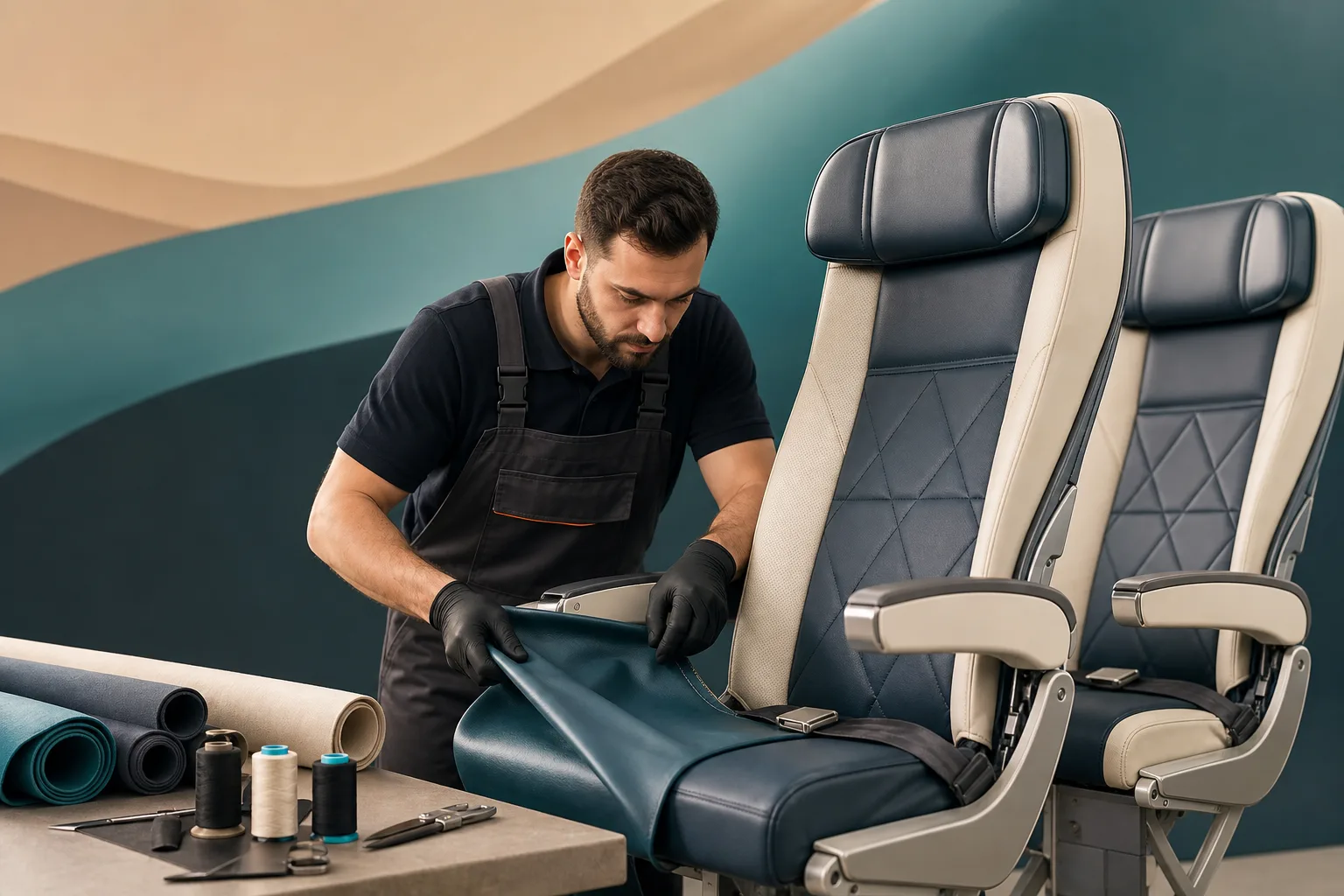
Core services include seat re-upholstery, leather and fabric replacement, foam padding renewal, headrest refurbishment, and armrest restoration. These form the foundation of any aircraft interior refurbishment offering.
Operators with sufficient technical capacity may also extend into related cabin interior work such as bulkhead panels, galley linings, and carpet replacement. Expanding the service range can improve revenue per project and strengthen relationships with airline and MRO clients.
Who are the typical customers for an aircraft upholstery business in Dubai
Target customers include commercial airlines, private jet operators, charter companies, MRO facilities, and aircraft brokers preparing aircraft for resale. Each segment has a distinct commercial relationship and margin profile.
Airlines typically offer longer-term contracts or tender-based work, providing volume stability. VIP and private jet operators commission bespoke, high-margin projects. MRO facilities act as intermediaries and can serve as consistent channel partners for ongoing subcontracted work.
What material compliance standards apply to aviation upholstery suppliers
All aviation-grade leather and fabrics used in aircraft interiors must comply with FAA and EASA flammability standards. These regulations are non-negotiable and significantly limit the pool of approved suppliers available to operators.
This compliance requirement means that established procurement relationships with certified materials suppliers represent a genuine competitive advantage. New entrants should prioritise building these supplier connections early, as sourcing delays or non-compliant materials can stall projects and damage client relationships.
When is VAT registration mandatory for a UAE business in this sector
According to the Federal Tax Authority, VAT registration is mandatory for UAE businesses that exceed AED 375,000 in annual turnover. This threshold applies to aircraft upholstery businesses operating in Dubai just as it does to other commercial activities.
Operators should factor VAT obligations into their financial planning from the outset, particularly if they anticipate reaching this threshold quickly through MRO contracts or airline partnerships, which can generate significant revenue in a short period.
Why is Dubai considered a strong location for launching an aircraft upholstery business
Dubai benefits from a combination of factors that make it structurally well-suited for this business. Dubai International Airport handled over 86 million passengers in 2023, and the UAE MRO market is supported by fleet expansion across Emirates, flydubai, and Air Arabia, creating consistent demand for maintenance and refurbishment services.
The city also hosts a significant VVIP and private aviation market, where owners of business jets and wide-body VIP aircraft regularly commission full cabin refurbishments. Infrastructure at both Al Maktoum International and Dubai International gives operators logistical advantages over regional competitors in markets such as Jordan, Egypt, or Turkey.
How to Start an Aircraft Seats Upholstery Business in Dubai
Aircraft seats wear out. Fabric fades, foam flattens, leather cracks, and none of it can be left alone because cabins have to meet airworthiness and comfort standards. That makes this work recurring rather than optional, which is a good place to build a business.
Dubai adds two things on top. It is a major MRO base with airlines on the doorstep, and it has a large private and VIP aviation market where owners refit whole cabins. This guide covers what activity code 3315.94 allows, who pays for the work, and how to get licensed through Meydan Free Zone.
Key Stats at a Glance
What This License Covers

Activity code 3315.94 sits inside repair and maintenance of transport equipment. It is a narrow niche, and that is part of its appeal, because there are not many people doing it well.
Your core work is:
- Seat re-upholstery
- Leather and fabric replacement
- Foam padding renewal
- Headrest refurbishment
- Armrest restoration
If your workshop can handle it, the job often widens into other cabin work: bulkhead panels, galley linings and carpet replacement. Adding those raises what each project is worth and makes you more useful to an airline or MRO that would rather deal with one supplier than three.
Who Your Clients Will Be
Five groups buy this work, and each behaves differently:
- Commercial airlines, usually through longer contracts or formal tenders, which gives you volume and predictability
- Private jet and VIP operators, who commission one-off work to their own taste and pay well for it
- Charter companies keeping cabins presentable between clients
- MRO facilities, who subcontract upholstery out and can become steady channel partners
- Aircraft brokers smartening up a cabin before a sale
The mix matters. MRO partnerships give you a base load of work, while direct airline and private jet clients give you margin. Most operators want both.
Pricing works differently across the two. Airline work is quoted per seat or per shipset against a tender, so your costs have to be worked out precisely before you bid. VIP work is quoted per project, and the client is buying a finish rather than a unit price. Knowing which conversation you are in changes how you quote.
Mainland or Free Zone
Two rows there are the same whichever route you take. Regulatory position and airside access depend on the work itself, not on where the license comes from.
[blockCTACostCalculator]
Step by Step Setup Guide
- Step 1, confirm the activity: Check 3315.94 on the Meydan Free Zone activity list, along with anything else you want to bundle onto the same license.
- Step 2, check your license category: Clarify whether a professional or industrial license better fits the physical work you plan to do, because your scope decides this.
- Step 3, pick a package with enough visas: Upholstery needs several skilled technicians, so choose an office or flexi-desk package that gives you the headcount you need.
- Step 4, send your documents: Trade name reservation, passport copies for all shareholders, and a short business plan. The whole application is handled remotely.
- Step 5, get your license, then your bank account: Once the license is issued you can move on to visas and banking. Have your license, shareholder documents and a clear account of how you make money ready for the bank.
Compliance and What You Need in Place
Where you sit with the GCAA
Any work touching certified aircraft components falls under GCAA oversight. In most commercial arrangements the MRO facility holds the Part 145 approval and subcontracts the upholstery to a specialist. Confirm whether your scope needs its own GCAA approval or sits under the contracting facility's certificate, and get that settled before you sign anything. Knowing exactly where your liability sits is the single most useful thing you can do early.
Materials
All aviation-grade leather and fabric must meet FAA and EASA flammability standards. That rules out most suppliers straight away. Build relationships with certified materials suppliers before you need them, because a sourcing delay stalls a project and costs you the client's trust.
Staff
Employment contracts and labour cards fall under MOHRE. Skilled upholstery technicians with aviation certification are the people you want, and hiring them from abroad is simple from a free zone company as long as your visa allocation was planned properly at the start.
Airside access
If your technicians need to get into airport facilities, you need airside access permits from the relevant airport authority. Build that into your timeline rather than discovering it the week before a job.
VAT
Register with the Federal Tax Authority once turnover passes AED 375,000 a year. You are invoicing airlines and MRO providers, so accurate VAT handling is not something you can be casual about.
Market Opportunity
Dubai has the traffic. More than 86 million passengers moved through Dubai International in 2023, and fleets at Emirates, flydubai and Air Arabia keep growing. Airlines have been accelerating cabin upgrade cycles since the pandemic, which pulls refurbishment work forward.
IMARC Group valued the global aircraft MRO market at around USD 81 billion in 2023, and interior refurbishment is a growing slice of it. On top of the commercial fleets sits Dubai's VVIP market, where owners of business jets and wide-body VIP aircraft commission full cabin refits and seats are always part of the job.
The infrastructure at Dubai International and Al Maktoum International also puts you ahead of workshops based in Jordan, Egypt or Turkey when an operator is deciding where to send an aircraft.
Conclusion
Aircraft seats upholstery is a small, defensible niche. Competition is limited, the technical barriers are real, and your customers care far more about reliability and certification than about being the cheapest quote. That protects your margin if you get the credentials and the supplier relationships right early.
Settle your GCAA position, lock in certified materials suppliers, and hire technicians who can prove their work. Do those three and the rest is delivery.
[blockCTAContact]