Table of Contents
Frequently Asked Questions
What exactly does a dismantling and parts resale license cover in the UAE
This license covers the purchase of end-of-life or damaged automobiles, computers, televisions, and other equipment for the purpose of stripping them for usable parts and reselling those parts to buyers who need them at below-new prices.
It does not cover recycling raw materials or processing scrap metal. The focus is strictly on recovering and reselling components that still have functional value, such as working screens, engine parts, circuit boards, or mechanical components.
If you plan to expand into raw material recycling or scrap processing, you would need a separate or additional license activity. Always check the Meydan Free Zone Business Activities List to confirm the specific activity codes that apply to your planned scope.
Who are the typical customers for a dismantling and parts resale business in the UAE
Your buyers generally fall into a few clear groups depending on what you are dismantling and where you are operating.
- Auto workshops and garages looking for affordable replacement parts instead of buying new
- Electronics repair shops sourcing screens, motherboards, and components
- Scrap traders buying materials you cannot sell as functional parts
- Export buyers shipping recovered parts to markets across Africa, South Asia, and the Gulf
The UAE's position as a regional logistics hub means you are not limited to the local market. Strong re-export demand from neighbouring regions makes international buyers a significant revenue stream for well-positioned operators.
Why is the UAE a strong location for a dismantling and parts resale business
The UAE is one of the highest per-capita consumers of vehicles and electronics in the region. Residents upgrade regularly, and turnover of end-of-life stock is fast, creating a reliable and steady supply of raw material for dismantling operations.
On the demand side, the UAE's port infrastructure — particularly through DP World — makes re-exporting recovered parts to Africa, South Asia, and the wider Middle East straightforward and cost-effective. You benefit from both strong inbound supply and strong outbound logistics.
The country also generates millions of tonnes of end-of-life vehicles, electronics, and industrial equipment annually, meaning the market for recovered, resaleable parts is growing rather than shrinking.
What is the difference between setting up on the mainland versus in Meydan Free Zone for this type of business
A mainland license from the Dubai Department of Economy and Tourism allows you to sell directly to UAE-based workshops, dealers, garages, and government entities without needing a local distributor. If your primary market is local customers, mainland gives you open access. The trade-off is higher setup costs and a requirement for a physical office or approved facility from day one.
A Meydan Free Zone license suits operators focused on re-export, international buyers, or those who want to keep initial setup costs lower while building the business. You get 100% foreign ownership, a faster setup process, and access to business setup support services covering banking and company documentation.
The key limitation of a free zone setup is that selling directly into the UAE retail or workshop market requires either a local distributor or a separate mainland entity. Your operating model and primary customer base should drive this decision, not the headline license cost alone.
Can a foreign national own 100% of a dismantling and parts resale company in the UAE
Yes. 100% foreign ownership is available for this type of business in Meydan Free Zone, which is standard across UAE free zones. This means you do not need a local Emirati partner or sponsor to hold a share of the company.
On the mainland, 100% foreign ownership is now also available for most activities following regulatory reforms — this can be confirmed through Invest in Dubai. The specific activity and its classification will determine whether full foreign ownership applies in a mainland context.
Is there a minimum share capital requirement to set up this business
For most free zone setups, including through Meydan Free Zone, there is no minimum share capital requirement. This reduces the upfront financial barrier to incorporation significantly compared with some other jurisdictions.
However, requirements can vary depending on the jurisdiction and the specific license type you choose. It is always advisable to confirm the current share capital rules directly with your chosen free zone or mainland authority before proceeding with registration.
When does a dismantling and parts resale business need to register for VAT in the UAE
VAT registration becomes mandatory once your taxable turnover crosses AED 375,000. This threshold applies to businesses operating in the UAE regardless of whether they are set up on the mainland or in a free zone.
Once registered, you will need to charge VAT on applicable sales, file regular VAT returns, and maintain compliant records. The relevant authority is the Federal Tax Authority (FTA), which provides guidance on registration, filing obligations, and exemptions that may apply to specific types of transactions such as exports.
How does Meydan Free Zone support the setup process for a dismantling and parts resale business
Meydan Free Zone offers a structured setup process designed to reduce the time and complexity involved in getting a new business licensed and operational. This includes access to mCore business setup services, which cover company documentation, banking support, and guidance through the registration steps.
The free zone provides 100% foreign ownership, competitive license packages with varying visa allocations, and a faster incorporation timeline compared with many mainland options. Visa eligibility depends on the license package chosen and the size of the office or facility associated with the license.
For operators in the dismantling and parts resale sector, the free zone environment also simplifies re-export operations given the UAE's strong port and logistics infrastructure. You can confirm applicable activity codes and package options directly through the Meydan Free Zone portal.
Dismantling of Automobiles, Computers and Equipment for Usable Parts License in Dubai
The UAE generates millions of tonnes of end-of-life vehicles, electronics, and industrial equipment every year. The market for recovered, resaleable parts is growing fast. Workshops need affordable spares. Export traders need reliable supply. And the UAE sits at the centre of a trade network that reaches Africa, South Asia, and the wider Middle East.
This guide covers what the dismantling and parts resale license covers, who buys from you, how to choose the right jurisdiction, and how to set up through Meydan Free Zone.
What This License Covers and Who Your Customers Are
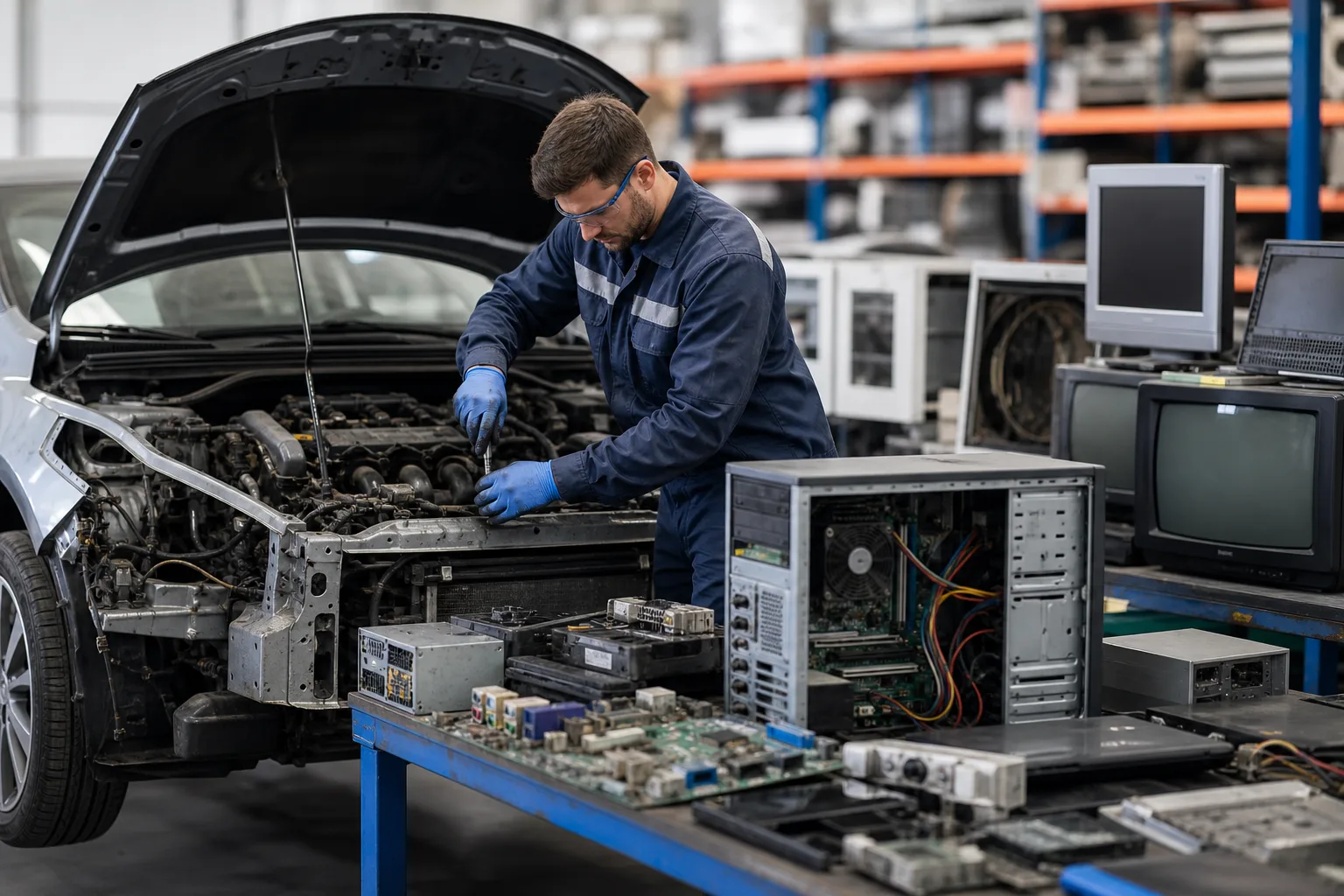
This activity covers the purchase of end-of-life or damaged automobiles, computers, televisions, and other equipment. You strip them for usable parts, then sell those parts on. The license does not cover recycling raw materials or processing scrap metal. It covers the recovery and resale of parts that still have functional value.
The revenue model is simple. You source written-off vehicles, old electronics, or redundant industrial kit. You dismantle them. You sell what works to buyers who need it at a price below new.
Who buys from you
Your buyers fall into a few clear groups:
- Auto workshops and garages looking for affordable replacement parts
- Electronics repair shops sourcing screens, boards, and components
- Scrap traders buying what you cannot sell as functional parts
- Export buyers shipping recovered parts to markets across Africa, South Asia, and the Gulf
Why the UAE works for this business
The UAE is one of the highest per-capita consumers of vehicles and electronics in the region. Turnover is fast. Residents upgrade regularly. That creates a steady flow of end-of-life stock. At the same time, the UAE's port infrastructure, particularly through DP World, makes it straightforward to re-export parts to markets where demand for affordable spares is strong. You are not just serving the local market. You are sitting at a logistics hub for the whole region.
Check the full Business Activities List on the Meydan Free Zone portal to confirm which specific activity codes apply to your planned scope of operations.
Key Stats at a Glance

| Activity | Dismantling of automobiles, computers, televisions and other equipment to obtain and re-sell usable parts |
|---|---|
| Foreign ownership | 100% in free zone; 100% on the mainland now also available for most activities – Invest in Dubai |
| Visa eligibility | Visa allocation depends on license package and office or facility size |
| Share capital | No minimum share capital for most free zone setups; confirm with your chosen jurisdiction |
| VAT registration | Mandatory once taxable turnover crosses AED 375,000 – Federal Tax Authority (FTA) |
| Key market context | The UAE is a major generator of end-of-life vehicles and e-waste, with strong re-export demand to Africa, South Asia, and the Middle East |
Mainland vs Meydan Free Zone: Which Setup Works for You
This is the biggest choice you will make when setting up. Let your clients and your operating model decide it, not the headline license cost.
Mainland
A mainland license from the Dubai Department of Economy and Tourism lets you sell directly to UAE-based workshops, dealers, garages, and government entities. If your primary market is local, mainland gives you open access to it. You can sign contracts with any UAE business without a local distributor. The trade-off is that mainland setup typically costs more, and you will need a physical office or approved facility from day one.
Meydan Free Zone
A free zone license suits operators who are focused on re-export, international buyers, or who want to keep setup costs lower while they build the business. You get 100% foreign ownership, a fast setup process, and access to mCore business setup services that cover everything from banking support to company documentation. The limitation is that selling directly into the UAE retail or workshop market requires a local distributor or a separate mainland entity.
Most dismantling operators with a UAE retail or workshop client base choose mainland. Export-focused operators, or those testing the market before committing to a larger facility, choose a free zone.
| Factor | Mainland (DET) | Free Zone (Meydan Free Zone) |
|---|---|---|
| Client access | Open UAE market, including government | Mainly international and re-export clients |
| Foreign ownership | 100% available for most activities | 100% |
| Office or facility requirement | Physical office or approved yard required | Flexi-desk options available; yard needed for operations |
| Customs duty on UAE sales | Standard UAE rates apply | Duty applies when goods enter UAE mainland |
| Setup speed | Varies by activity and approvals needed | Fast; often within days for the license itself |
| Visa allocation | Based on office size and activity | Based on license package chosen |
Free Business Setup Cost Calculator
Calculate NowHow to Set Up: Step-by-Step
The steps below apply to a Meydan Free Zone setup. If you are going mainland, the process runs through the DET e-Services portal, but the logic is the same.
- Step 1, book your trade name: Use the Meydan Free Zone portal to search and reserve your preferred name. Check availability first using the Company Name Check tool. Names must not conflict with existing registrations and must follow UAE naming rules.
- Step 2, confirm your activity code: Make sure the dismantling and parts resale activity code is approved in your chosen jurisdiction before you go further. Some activity combinations need extra approvals. Confirm this early.
- Step 3, choose your license package and workspace: Meydan Free Zone offers a range of packages. A flexi-desk covers your license address, but dismantling operations need an approved yard or warehouse. You may hold the license through the free zone and operate the physical facility under a separate facility agreement or in a designated industrial area.
- Step 4, submit your documents: Standard requirements include a passport copy for each shareholder and director, a completed application form, and sometimes a basic business plan. Meydan Free Zone will confirm exactly what is needed for your activity.
- Step 5, get your license issued and open a bank account: Once the license is issued, you can open a corporate bank account. Business banking support through mCore can help you navigate the bank selection and application process, which is often the slowest part of the whole setup.
- Step 6, get your facility approvals before you start: Do not begin dismantling operations until your yard or warehouse has the relevant approvals from the local municipality and any other authority that covers waste handling or environmental compliance in your area. Operating without these approvals is a real risk to your license.
You can use the Cost Calculator on the Meydan Free Zone website to get an early read on license costs before you commit.
Compliance, Facilities, and What You Need in Place
The license is the starting point. What keeps you operating legally is everything that sits behind it. This section covers the main compliance duties for a dismantling and parts resale business.
Approved yard or warehouse
Dismantling cannot run from a desk. You need a physical facility, and that facility needs approval. In Dubai, the relevant authority will inspect the site before you can start. The yard must meet safety and environmental standards. If you are handling end-of-life vehicles, the Roads and Transport Authority may also have requirements. Check the Roads and Transport Authority (RTA) website for the current rules on vehicle disposal and parts recovery.
Environmental and waste handling rules
Dismantling generates waste: fluids, batteries, tyres, and non-recoverable materials. The local municipality sets the rules on how these must be stored, handled, and disposed of. You cannot leave this to chance. Breaching waste handling rules can result in fines and facility closure. Get the requirements confirmed before you open the yard.
Staff visas and MOHRE registration
If you employ technicians, yard workers, or drivers, you need to register with the Ministry of Human Resources and Emiratisation. Each employee needs a valid work permit and residence visa. Visa allocation is tied to your license package and facility size. The mResidency service through Meydan Free Zone covers visa processing and related government steps for your team.
VAT registration
Once your taxable turnover crosses AED 375,000, you must register for VAT with the Federal Tax Authority. Parts sales in the UAE are generally taxable at the standard rate. If you are exporting, zero-rating rules may apply, but you need proper documentation to support any zero-rated claim. Get this right from the start. The FTA does not accept gaps in records. If you need help, VAT registration support is available through mAccounting.
Corporate tax
The UAE introduced corporate tax in 2023. Most businesses with taxable income above AED 375,000 are subject to the standard rate. Free zone entities may qualify for a zero rate on qualifying income, but this depends on the nature of the activity and whether the business meets the substance requirements. Check with a tax adviser before assuming you qualify.
Export documentation and customs compliance
If you are re-exporting parts, each shipment needs the correct customs documentation. This includes a certificate of origin, commercial invoice, and packing list at minimum. Some destination countries have import restrictions on used parts. Know your destination market's rules before you ship. The Ports, Customs and Free Zone Corporation oversees customs procedures in Dubai. Check the Ports, Customs and Free Zone Corporation (PCFC) for current requirements.
Bookkeeping and audit
Keep clean records from day one. A dismantling business handles high volumes of transactions across different part categories and buyers. Without proper records, VAT filings become difficult and any audit becomes a problem. Bookkeeping services through mAccounting can keep your records in order without the cost of a full-time finance hire.
Market Opportunity
The UAE's vehicle fleet is large and turns over quickly. Electronics consumption is high. Industrial equipment cycles through fast in a market that builds and expands constantly. All of that creates supply for a dismantling business.
On the demand side, workshops across the UAE, and buyers across the region, are always looking for affordable, functional parts. New parts are expensive. Imported alternatives face long lead times. A local dismantler with good stock and reliable quality has a real advantage.
The re-export angle adds another layer. African and South Asian markets have strong demand for used vehicle and electronics parts. The UAE's port network, including DP World's operations, makes it one of the best places in the world to run a parts export business. You are not limited to the local market. You are positioned to serve a much larger one.
For operators who want to keep initial costs low while building their customer base, a Dubai Trade License from AED 12,500 through Meydan Free Zone gives you a legal trading entity quickly, while you work through the facility approvals in parallel.
Conclusion
Dismantling and parts resale is a real, workable business in the UAE. Demand is there from workshops, traders, and export buyers across the region. The supply of end-of-life vehicles and electronics is consistent. And the UAE's location gives you access to markets that few other bases can match.
The setup itself is not complicated, but the compliance layer is real. You need the right license, an approved facility, proper waste handling procedures, and clean financial records. Get those in place before you start, and you have a business with strong margins and long-term demand.
Speak to Meydan Free Zone to confirm the right activity code, license package, and facility setup for your operation before you start.
Ready to Launch Your Business in Dubai?
Let's ConnectCompliance
THIRD-PARTY APPROVAL
This activity requires post-approval from the DM (Dubai Municipality) before a business license can be issued by Meydan Free Zone.
ANTI-MONEY LAUNDERING COMPLIANCE
This business activity is exempt from AML compliance requirements.
References
- Invest in Dubai
- Federal Tax Authority (FTA)
- Roads and Transport Authority (RTA), Dubai
- Ports, Customs and Free Zone Corporation (PCFC)