
Table of Contents
Topic Summary
Target the Right Hide Categories First
The wholesale hides and skins license covers bovine, ovine, caprine, and exotic animal hides in all preserved forms including wet-salted, dried, and pickled. Knowing which category aligns with your supply chain — cattle hides from Brazil or sheepskins from East Africa — helps you build supplier relationships and price competitively from day one.
Dubai Sits at a Structural Trade Crossroads
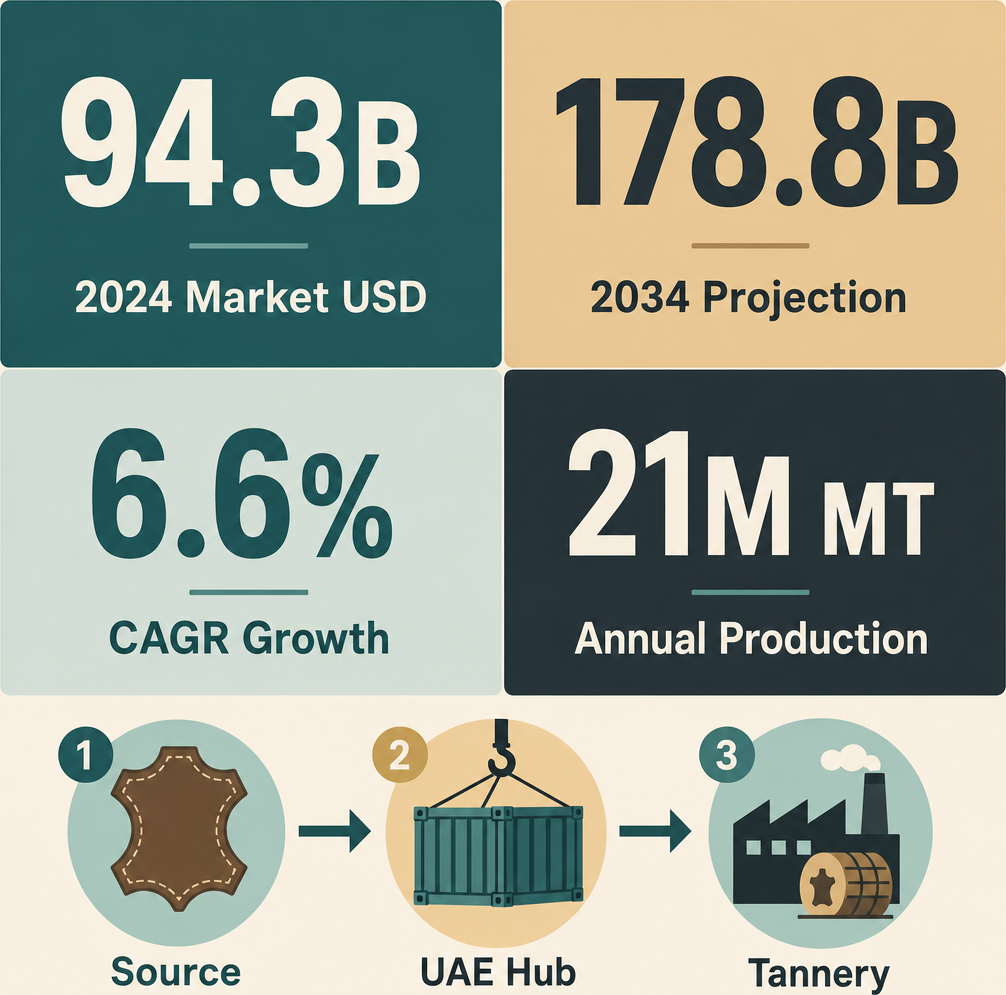
Dubai has emerged as a key transit node connecting East African hide producers in Kenya and Ethiopia with tanneries across Asia and Europe. This geographic position gives wholesalers a built-in margin advantage without needing to be close to either the livestock source or the finished leather market.
A USD 94 Billion Market With Room to Grow
The global raw hides and skins market was valued at USD 94.3 billion in 2024 and is projected to reach USD 178.8 billion by 2034 at a 6.6 percent CAGR. With China alone consuming 2.8 million tons of cattle hides annually, demand from major processing hubs is both massive and consistent.
Local UAE Demand Is Steady and Premium-Driven
The UAE's automotive and hospitality sectors create reliable domestic demand for high-grade leather used in vehicle interiors, hotel furnishings, and upholstery. Established players like Al Makhraj Trading already serve these sectors, signaling a proven local buyer base for quality wholesale suppliers.
Understand Exactly What the License Covers
Activity code 4620.05 licenses you to buy and sell raw, unprocessed animal hides and skins in bulk — from slaughterhouses and farms to tanneries and leather processors. It explicitly excludes finished leather goods and textile fibres, so your business model must stay on the raw material side of the supply chain.
Exotic and Specialty Skins Offer Niche Margins
Camel, ostrich, and crocodile hides fall within the scope of this license and supply a growing luxury goods manufacturing segment. Dubai's position as a luxury trade hub makes it a natural base for connecting specialty hide sources with high-end European and Asian manufacturers.
GCC Intermediary Role Adds Regional Scale
Saudi Arabia hosts a significant number of tanneries, and UAE-based wholesalers can act as intermediaries between African raw material exporters and GCC processors. This regional arbitrage opportunity allows a single Dubai operation to serve multiple downstream markets without expanding physical infrastructure.
How to Start a Hides and Skins Wholesale Business in Dubai with Meydan Free Zone
Before leather is luxury, it is a raw hide on a loading dock. And the business of moving it from origin to tannery is where the margin lives.
Global Market Insights¹ values the raw hides and skins market at USD 94.3 billion in 2024, projected to reach USD 178.8 billion by 2034 at a 6.6 percent CAGR, with global production at approximately 21 million metric tons annually. The Business Research Company² projects the broader market to reach USD 148.51 billion by 2030.
IndexBox³ reports that China alone consumes 2.8 million tons of cattle hides annually, 27 percent of global demand, and The National⁴ reports that Dubai has become a key node for bovine hides flowing out of East Africa, connecting producers in Kenya and Ethiopia with tanneries across Asia and Europe. Locally, the UAE's automotive and hospitality sectors drive consistent demand for high-grade leather.
Whether you are wholesaling bovine hides from East African producers, trading sheepskins from the Middle East, or supplying exotic skins to luxury manufacturers, the UAE's position between origin and processing markets gives you a structural advantage.
Who is this for?
| Audience Segment | Profile |
|---|---|
| Raw hide and skin traders | Firms buying untreated bovine, sheep, goat, and exotic hides from slaughterhouses, farms, and cooperatives and selling them in bulk to tanneries and leather processors across the region and globally. |
| Leather supply chain intermediaries | Businesses that source preserved hides (wet-salted, dried, or pickled) from origin markets in Africa, South Asia, and South America and distribute them to manufacturing hubs in China, India, Italy, and Turkey. |
| Automotive and hospitality leather suppliers | Wholesalers supplying premium hides to the UAE's car manufacturers, hotel operators, and furniture producers who require high-grade leather for interiors, upholstery, and accessories. |
4620.05 - Wholesale of Hides and Skins
Under this activity, you are licensed to wholesale raw hides and skins as an agricultural raw material. This covers untreated and preserved animal hides and skins, including bovine (cattle), ovine (sheep), caprine (goat), and other animal hides traded in bulk before tanning or finishing.
You buy from slaughterhouses, livestock farms, cooperatives, or origin-market exporters and sell to tanneries, leather processors, and manufacturers. This is trade in the raw material, not in finished leather goods.
| Category | Scope |
|---|---|
| Bovine (cattle) hides | Raw cattle hides in all preserved forms: wet-salted, dried, pickled Wholesale bovine hides sourced from major cattle-producing regions (Brazil, US, Australia, East Africa) to tanneries and leather processors globally. FAMOUS UAE LEATHER TRADERS Al Makhraj Trading (leather supplier for auto, furniture, and interior decoration sectors), Al Khaznah Tannery (Abu Dhabi, camel leather to international standards); the UAE's automotive and hospitality sectors are major local consumers of high-grade leather. |
| Sheep and goat skins | Sheepskins and goatskins traded as raw agricultural material Trade sheepskins and goatskins from Middle Eastern, African, and South Asian origins to manufacturers producing garments, gloves, and footwear. REGIONAL OPPORTUNITY Saudi Arabia is a significant regional leather producer with a large number of tanneries; UAE wholesalers serve as intermediaries between African raw material suppliers and regional processors across the GCC. |
| Exotic and specialty skins | Camel, ostrich, crocodile, and other specialty hides traded in bulk Supply specialty and exotic hides to luxury goods manufacturers and niche leather processors. UAE CONTEXT Dubai is a growing hub for bovine hides from East Africa, connecting producers in Kenya and Ethiopia with tanneries across Asia and Europe. |
This activity has defined boundaries. It excludes the wholesale of textile fibres.
In short: if you are buying and selling raw, unprocessed animal hides and skins in bulk, moving them from livestock producers to tanneries and leather manufacturers, this is your activity. If you are trading textile fibres, that’s out of your scope.
Third-Party Approval
No third-party approval is required for this business activity.
Anti-Money Laundering Compliance
This business activity is exempt from AML compliance requirements.
References
- ¹ Global Market Insights. (2025). Raw Hides and Skins Market Size & Share 2025–2034. gminsights.com
- ² The Business Research Company. (2026). Skin and Hide Market Report 2026, Overview and Research Insights.thebusinessresearchcompany.com
- ³ IndexBox. (2026). Global Raw Hides and Skins of Cattle Market Report 2026. indexbox.io
- ⁴ The National. (2021). UAE leads local leather trade. thenationalnews.com