

Table of Contents
Topic Summary
UAE Oilseed Market Offers Structural Growth
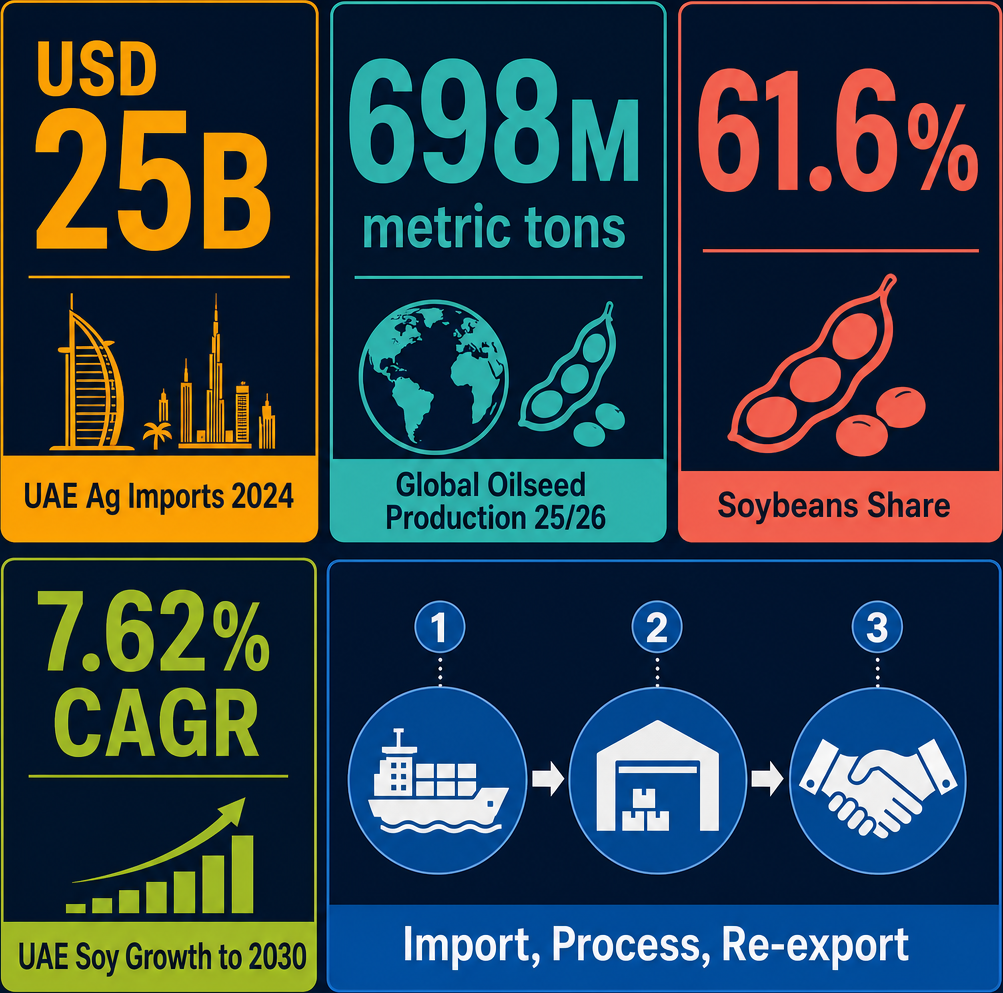
The UAE imported over USD 25 billion in agricultural products in 2024, a 12 percent year-on-year increase. The soybean market alone is projected to grow at a 7.62 percent CAGR through 2030, driven by feed, food processing, and plant-based protein demand.
Choose the Right Licensed Activity First
Activity code 4620.02 covers the wholesale of oleaginous fruits, meaning bulk trade in raw oilseeds and oil-bearing crops such as soybeans, palm kernels, rapeseed, sunflower seeds, and copra. This license covers trade in the raw commodity, not processed or refined oils.
Soybeans Dominate Global Oilseed Supply
Soybeans account for 61.6 percent of global oilseed production and are forecast to reach 427 million metric tons in the 2025/26 season. UAE wholesalers typically source from Brazil, the US, or Argentina and supply regional crushers and feed producers.
Palm Kernels and Copra Serve Key Regional Inputs
Palm kernels from Indonesia and Malaysia, along with copra from the Philippines, are critical inputs for kernel oil and lauric acid production. The UAE is a major importer of palm oil products, with operators like Abu Dhabi Vegetable Oil Co. and United Foods Company active in the market.
Black Sea Origins Supply Rapeseed and Sunflower Seeds
Argentina, Canada, the EU, and Black Sea exporters are major sources of rapeseed and sunflower seeds for GCC oil refiners and food processors. The UAE's logistics infrastructure makes it a natural re-distribution hub for these commodities across the Middle East and Africa.
UAE Acts as a Regional Re-Export Hub
The UAE imports raw oilseeds and crude oils, processes them locally, and redistributes across the GCC, Africa, and South Asia. Its port infrastructure and trade agreements give commodity brokers and re-export operators a significant logistical advantage.
Meydan Free Zone Suits Oilseed Wholesale Operations
Establishing under a free zone like Meydan gives wholesalers access to streamlined licensing, 100 percent foreign ownership, and proximity to UAE trade corridors. This structure suits commodity traders, edible oil importers, and agricultural brokers targeting regional markets.
How to Start an Oleaginous Fruits Wholesale Business in Dubai with Meydan Free Zone
The UAE imported over USD 25 billion in agricultural products in 2024, a 12 percent increase from the previous year according to the USDA Foreign Agricultural Service¹. A significant share of that is oilseeds and the products derived from them.
The UAE consumes around 3 million metric tons of grain and forage products annually according to the USDA¹, and imports soybean meal alongside other agricultural raw materials to feed 4.8 million head of livestock and supply 44 poultry farms. Bonafide Research² projects the UAE soybean market to grow at a 7.62 percent CAGR through 2030, driven by rising demand from the feed, food processing, and plant-based protein sectors.
At the global level, the USDA⁴ forecasts total oilseed production to reach 698 million metric tons in the 2025/26 season, with soybeans accounting for 427 million tons alone. The UAE sits at the centre of this supply chain: it imports raw oilseeds and crude oils from Brazil, Indonesia, Malaysia, and Ukraine, processes them locally, and re-distributes across the GCC, Africa, and South Asia.
Whether you are wholesaling soybeans to feed compounders, supplying palm kernels to regional crushers, or trading sunflower seeds into the GCC food processing chain, this is a commodity business with structural demand and a UAE infrastructure built to support it.
Who is this for?
| Audience Segment | Profile |
|---|---|
| Commodity traders and oilseed wholesalers | Firms buying and selling oilseeds in bulk, sourcing from producers in South America, Southeast Asia, and Africa and supplying to crushers, refiners, and food manufacturers across the GCC and wider region. |
| Edible oil importers and distributors | Businesses importing crude or refined vegetable oils and oleaginous raw materials for distribution to food processors, hospitality operators, and industrial end-users in the UAE and neighbouring markets. |
| Agricultural commodity brokers and re-export operators | Intermediaries leveraging the UAE's port infrastructure and trade agreements to move oilseeds and oil-bearing commodities between producing regions and consuming markets across the Middle East, Africa, and South Asia. |
4620.02 - Wholesale of Oleaginous Fruits
Under this activity, you are licensed to wholesale oleaginous fruits, meaning the bulk buying and selling of oilseeds and oil-bearing crops. This covers soybeans, palm kernels, rapeseed (canola), sunflower seeds, peanuts (groundnuts), copra, cottonseed, and other crops grown primarily for their oil content.
You buy from producers, cooperatives, or origin-market exporters and sell to crushers, refiners, food manufacturers, feed producers, or other wholesalers. This is trade in the raw commodity, not in the processed oil.
| Category | Scope |
|---|---|
| Soybeans | Soybeans in all forms traded as raw oilseed Wholesale soybeans sourced from Brazil, the US, or Argentina to regional crushers and feed producers. Soybeans account for 61.6 percent of global oilseed production according to USDA data¹. MAJOR UAE OILSEED TRADERS Al Ghurair Resources International (region's largest oilseed crusher, trades 9M metric tons of grain and oilseed annually), IFFCO Group (operates across 80+ countries, major edible oils producer). |
| Palm kernel and copra | Palm kernels and copra (dried coconut flesh), both key inputs for kernel oil and lauric acid production Trade palm kernels from Southeast Asian producers (Indonesia, Malaysia) and copra from the Philippines and Pacific Islands into GCC and African markets. UAE CONTEXT The UAE is a major importer of palm oil products from Malaysia and Indonesia according to Grand View Research⁵; Abu Dhabi Vegetable Oil Co. and United Foods Company are key operators. |
| Rapeseed (canola) and sunflower seeds | Rapeseed, canola, and sunflower seeds traded as raw oilseed Supply rapeseed and sunflower seeds from Black Sea and European origins to regional oil refiners and food processors. REGIONAL OPPORTUNITY Argentina, Canada, and the EU are major exporters of sunflower seeds and rapeseed; the UAE's logistics infrastructure positions it as an intermediary for these oilseeds moving into Middle Eastern and African markets. |
| Peanuts (groundnuts) and cottonseed | Peanuts (groundnuts) and cottonseed traded as raw oilseed Wholesale peanuts and cottonseed to edible oil producers, snack manufacturers, and animal feed compounders. UAE CONTEXT The UAE has signed 24 CEPAs covering approximately 2.5 billion people, opening preferential access for wholesalers sourcing peanuts and cottonseed from African and South Asian producers. |
However, there’s one boundary to note. This activity excludes the wholesale of textile fibres.
In short: if you are wholesaling the raw oilseed or oil-bearing crop in bulk, this is your activity.
Third-Party Approval
No third-party approval is required for this business activity.
Anti-Money Laundering Compliance
This business activity is exempt from AML compliance requirements.
References
- ¹ USDA Foreign Agricultural Service. (2025). Exporter Guide Annual — Dubai, United Arab Emirates. fas.usda.gov
- ² Bonafide Research. (2025). UAE Soybean Market Overview, 2030. bonafideresearch.com
- ³ SkyQuest Technology. (2025). Oilseeds Market Size, Share — Growth Forecast [2033]. skyquestt.com
- ⁴ USDA Foreign Agricultural Service. (2026, April 12). Oilseeds: World Markets and Trade. fas.usda.gov
- ⁵ Grand View Research. UAE Palm Oil Market Size, Share — Industry Analysis Report, 2018–2025.grandviewresearch.com